브레이크뉴스 김충열 정치전문기자 = 국회미래연구원(원장 김기식)은 11월 27일. 국회의원회관 제8간담회의실에서 『제8회 국회외교안보포럼』을 열고 “전환기 남북관계의 성찰과 과제”를 주제로 심도 있는 발제와 토론을 진행했다.
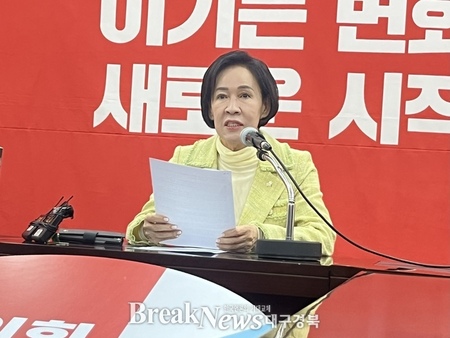
 ▲ 김기식 원장은 “미·중 전략 경쟁의 고착화, 북·중·러 협력 강화, AI 시대 군비경쟁 심화 등 구조적 변화 속에서 한국 외교안보정책의 근본적 방향을 재점검해야 한다”며, “남북관계를 대결이 아닌 안정과 공존의 관점에서 재해석하고, 새 정부가 직면한 제약과 기회를 토대로 중장기 전략과 실질적 정책대안을 마련해야 한다”고 강조했다. © 김충열 정치전문기자 |
이어 서울대학교 이정철 교수와 이화여자대학교 박원곤 교수는 ‘핵·진영·두 국가론: 변화한 정책환경과 한국의 비핵·선경 전략’을 주제로 발제를 진행했다.
두 교수는 북한이 러시아·중국과의 연계 진영주의와 ‘적대적 두 국가론’을 내세워 핵·군사력 고도화를 지속하는 가운데, 한국 사회 내부에서는 특히 청년층을 중심으로 통일 필요성에 대한 회의가 심화되고 있다고 진단했다. 이에 따라 한국의 대북정책은 진보·보수 정권 교체에 따른 단순한 관여·억제의 진동을 넘어, 한미 확장억제 제도화를 축으로 한 ‘핵·재래식 통합(CNI)’ 억제와 북한의 선경·체제안전 보장을 유도하는 관여를 병행하는 복합전략으로 전환해야 한다고 제안했다.
또한 러시아-우크라이나 전쟁, 미·중 전략 경쟁, 생성형 AI 확산 등으로 북한 문제가 글로벌 안보·기술 질서와 직결된 만큼, 다자 협력을 통한 국제 공조 강화와 북한 핵의 전략적 효용 약화를 설득하는 외교가 필요하다고 강조했다. 아울러 북한의 통일 포기·두 국가론 공식화와 국내 통일 여론 약화라는 제약 속에서도 헌법 4조의 평화통일 원칙을 견지하면서, 환경·문화·기술·AI를 아우르는 「한반도 통일 2050 구상」과 같은 미래형 통일 비전을 마련해야 한다고 강조했다.
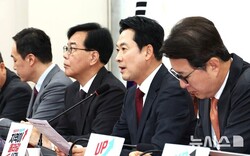
패널 토론은 문정인 연세대학교 석좌교수가 좌장을 맡아 진행됐으며, 윤건영 더불어민주당 의원, 유용원 국민의힘 의원, 김상기 통일부 장관정책보좌관, 김병연 서울대학교 교수, 이제훈 한겨레신문 선임기자, 이호령 한국국방연구원 책임연구위원, 안경모 국방대학교 교수, 김태경 국회미래연구원 부연구위원 등이 참여해 남북관계 정세와 중장기 대북 전략을 놓고 활발한 논의를 이어갔다.
이번 포럼에는 ‘북한 그리고 통일’ 권영세 대표의원과 ‘한반도 평화 네트워크’ 김영호 대표의원이 축사를 전했으며, 소병훈 의원, 홍기원 의원 등 국회의원과 각계 전문가들이 참석해 의미를 더했다. 이번 포럼은 남북관계를 단순한 대결 구도가 아닌 안정과 공존의 틀에서 재해석하고, 중장기 전략을 마련해야 한다는 공감대를 형성한 자리였다.
한편, 국회미래연구원은 이번 포럼 이후 연말에 ‘포럼 컨센서스 발표회’를 개최할 예정이라고 밝혔다. hpf21@naver.com
*아래는 위 기사를'구글 번역'으로 번역한 영문 기사의[전문]입니다. '구글번역'은 이해도 높이기를 위해 노력하고 있습니다.영문 번역에 오류가 있을 수 있음을 전제로 합니다.*The following is [the full text] of the English article translated by 'Google Translate'. 'Google Translate' is working hard to improve understanding. It is assumed that there may be errors in the English translation.
The National Assembly Future Research Institute Hosts Forum on "Reflection on Inter-Korean Relations in a Transitional Period and Challenges"
Inter-Korean Relations Must Seek Mid- to Long-Term Strategies for Stability and Coexistence
Break News, Political Reporter Kim Choong-Lyoul = On November 27, the National Assembly Future Research Institute (President Kim Ki-sik) held the 8th National Assembly Foreign Affairs and Security Forum in Conference Room 8 of the National Assembly Members' Hall. The forum featured in-depth presentations and discussions on the topic "Reflection on Inter-Korean Relations in a Transitional Period and Challenges."
In his opening remarks, President Kim Ki-sik stated, "Amidst structural changes such as the entrenched US-China strategic competition, strengthened cooperation among North Korea, China, and Russia, and the intensifying arms race in the AI era, we must reexamine the fundamental direction of South Korea's foreign affairs and security policy." He emphasized, "Inter-Korean relations must be reinterpreted from the perspective of stability and coexistence, not confrontation. The new administration must develop mid- to long-term strategies and practical policy alternatives based on the constraints and opportunities it faces."
Professor Lee Jeong-cheol of Seoul National University and Professor Park Won-gon of Ewha Womans University then presented on the topic, "Nuclear, Bloc, and Two-State Theory: The Changing Policy Environment and South Korea's Denuclearization and Preemptive Strategy."
The two professors assessed that while North Korea continues to advance its nuclear and military capabilities, advocating for a "two-state" approach and a "hostile two-state theory" based on its alliance with Russia and China, skepticism about the need for unification is deepening within South Korean society, particularly among the youth. Accordingly, they proposed that South Korea's North Korea policy should move beyond the simple oscillations of engagement and deterrence following the shift in progressive and conservative administrations. It should instead shift to a complex strategy that combines "nuclear and conventional integration (CNI) deterrence" centered on the institutionalization of the ROK-US extended deterrence system, with engagement aimed at ensuring North Korea's preemptive and regime security.
Furthermore, given that the North Korean issue is directly linked to the global security and technological order due to the Russia-Ukraine War, the US-China strategic competition, and the proliferation of generative AI, they emphasized the need for strengthened international cooperation through multilateralism and diplomacy to persuade North Korea to weaken the strategic utility of its nuclear weapons. Furthermore, despite the constraints of North Korea's abandonment of unification, the officialization of the two-state theory, and weakening domestic public opinion on unification, he emphasized the need to uphold the principles of peaceful unification stipulated in Article 4 of the Constitution and develop a future-oriented unification vision, such as the "Korean Peninsula Unification 2050 Initiative," encompassing the environment, culture, technology, and AI.
The panel discussion was moderated by Professor Moon Chung-in of Yonsei University. Participants included Representative Yoon Kun-young of the Democratic Party of Korea, Representative Yoo Yong-won of the People Power Party, Policy Advisor to the Minister of Unification Kim Sang-ki, Professor Kim Byung-yeon of Seoul National University, Senior Reporter Lee Je-hoon of the Hankyoreh, Senior Research Fellow Lee Ho-ryeong of the Korea Institute for Defense Analyses, Professor Ahn Kyung-mo of the National Defense University, and Associate Research Fellow Kim Tae-kyung of the National Assembly Future Research Institute. The discussion focused on the current state of inter-Korean relations and mid- to long-term strategies toward North Korea.
Congratulatory remarks were delivered by Representative Kwon Young-se of "North Korea and Unification" and Representative Kim Young-ho of the "Korean Peninsula Peace Network." The presence of Representatives So Byeong-hoon and Hong Ki-won, along with other National Assembly members and experts from various fields, further enhanced the forum's significance. This forum served as a platform for building consensus on the need to reinterpret inter-Korean relations not as a simple confrontational framework but as a framework of stability and coexistence, and to develop a mid- to long-term strategy.
The National Assembly Future Research Institute announced plans to hold a "Forum Consensus Presentation" later this year, following this forum. hpf21@naver.com