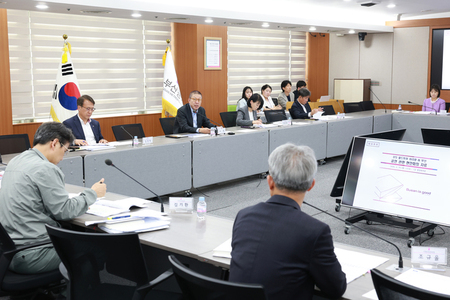
▲ 국가균형발전을 위한 '5극 3특' 정책이 5극 중심으로 설계돼 전북 등 3개 특별자치도가 제도적 사각지대에 놓일 위험이 크다는 분석이 나왔다. (전북연구원 이슈브리핑 캡처) / 자료제공 = 전북특별자치도청 © 박동일 기자 |
국가균형발전을 위한 '5극 3특' 정책이 5극 중심으로 설계돼 전북 등 3개 특별자치도가 제도적 사각지대에 놓일 위험이 크다는 분석이 나왔다.
8일 전북연구원은 이슈브리핑을 통해 "정부의 5극 3특 국가 균형성장 전략이 명칭과 달리 실제 추진구조는 '5극 중심, 3특 주변부'의 비대칭 구조로 설계돼 있다"며 "초광역 특별계정 신설 과정에 3특 포함 여부가 명확히 제시돼 있지 않아 전북이 재정지원에서 소외될 우려가 있다"고 밝혔다.
특히 "'5극 3특'이라는 정책 명칭이 무색하게 3특이 배제되는 구조는 국가 균형성장의 가치에 위배된다"며 "조속한 법 개정 및 제도 개선을 통해 진정한 '5극 3특'균형성장이 실현돼야 한다"고 제시했다.
이어 "전북특별자치도는 재정자립도 23.6%로 전국 17개 시ㆍ도 가운데 최하위이자, 3특 중에도 가장 열악한 조건"이라며 "제주와 세종은 보통교부세 특례를 가졌지만, 전북은 재정특례 입법 노력이 연이어 좌절된 상황에 초광역 특별계정마저 배제된다면 이는 사실상 국가 균형성장 전략에서 소외를 의미할 수 있다"고 덧붙였다.
해결 방안으로 지방자치분권 및 지역균형발전법 제2조 제7호 개정을 제시했다.
현행 초광역권 정의에 특별자치도가 독자적 발전 전략 수립 또는 인접 지역과 연계 및 협력을 위해 설정한 권역(특별광역권)을 추가하는 방안이다.
천지은 연구위원은 "법 개정을 통해 전북특별자치도가 자립적인 초광역권으로 인정받게 되면, 단순한 재정 확충을 넘어 패키지형 지원과 초광역 특별협약 체결 등 '5극 3특'에 관한 중앙정부 및 지자체 간 거버넌스 구조 안에 자연스러운 편입이 가능하다"고 강조했다.
또 "초광역 특별계정 운용 지침에 3특 최소 배분 비율을 명시하고 부처 직접편성과 지자체 자율 편성의 이중 트랙으로 운영해 3특도 실질적 혜택을 받을 수 있도록 해야 한다"고 제안했다.
한편 '5극 3특'전략은 ▲ 수도권 ▲ 동남권 ▲ 대경권 ▲ 중부권 ▲ 호남권 등 5개 초광역권별 특별지방자치단체를 구성하고 제주ㆍ강원ㆍ전북 등 3개 특별자치도의 자치 권한과 경쟁력을 강화하는 특별법 제정을 추진하는 방안을 담고 있다.
지방시대위원회가 지난 9월 발표한 '5극 3특 국가 균형성장 추진 전략'에 따르면, 2026년부터 10조 6천억 원 규모의 포괄보조금과 함께 초광역 특별계정이 신설될 예정이다.
하지만 현행 '지방자치 분권 및 지역 균형 발전에 관한 법률'은 초광역권을 '2개 이상의 지방자치단체가 협의하여… 시ㆍ도 행정구역을 넘어서는 권역'으로 정의했다.
단일 광역자치단체인'3특'은 국토 공간 상 구심력을 가지는 초광역권 구성이 어려운 상황이다.
실제로 지방시대위원회 '5극 3특 설계도'의 주요 전략사업별 투자계획을 살펴보면, AI 혁신거점 3조 1억 원 가운데 전북은 일부만 포함됐다.
초광역 교통망 구축은 '5극'중심으로 언급됐고 지역 성장 펀드 3조 5천억 원도 '권역별 조성'으로 명시돼 '3특'의 포함 여부가 명확하게 제시돼 있지 않다.
☞ 아래는 위 기사를 구글 번역이 번역한 영문 기사의 '전문' 입니다.
구글 번역은 이해도를 높이기 위해 노력하고 있으며 영문 번역에 오류가 있음을 전제로 합니다.
【Below is the 'full text' of the English article translated by Google Translate.
Google Translate is working hard to improve understanding, and assumes that there are errors in the English translation.】
Jeonbuk Province's '5-pole, 3-special policy' is likely to be neglected
The presence of the 3rd Special Zone is fading… Legal revisions are needed to recognize the super-wide area
Reporter Park Dong-il
Analysis suggests that the '5-pole, 3-special' policy for balanced national development is designed around the 5-pole system, leaving three special autonomous provinces, including Jeollabuk-do, at risk of being left in an institutional blind spot.
On the 8th, the Jeollabuk-do Research Institute stated in an issue briefing, "Contrary to its name, the government's 5-pole, 3-special national balanced growth strategy is actually structured asymmetrically, with the 5-pole system at the center and the 3-special system at the periphery."
The researcher added, "Since the process for establishing the super-metropolitan special account does not clearly specify whether the 3-special system will be included, there is concern that Jeollabuk-do will be left out of financial support."
In particular, he suggested that "the structure in which the three special features are excluded, making the policy name '5-pole 3-special' meaningless, runs counter to the value of balanced national growth," and that "true '5-pole 3-special' balanced growth must be realized through swift legal revisions and institutional improvements."
He continued, "Jeonbuk Special Self-Governing Province has the lowest fiscal self-sufficiency rate among the 17 cities and provinces nationwide at 23.6%, and the worst conditions among the three special provinces."
He added, "Jeju and Sejong have special provisions for general grants, but Jeonbuk has seen successive thwarted efforts to legislate fiscal special provisions. If even the super-wide area special account is excluded, this could effectively mean exclusion from the national balanced growth strategy."
As a solution, they proposed amending Article 2, Paragraph 7 of the Local Autonomy and Balanced Regional Development Act.
This proposal would add to the current definition of a metropolitan area the area designated by a special autonomous province for the purpose of establishing its own development strategy or for linking and cooperating with neighboring regions (a special metropolitan area).
Research Fellow Cheon Ji-eun emphasized, "If the Jeonbuk Special Self-Governing Province is recognized as an independent metropolitan area through legal revisions, it will be able to naturally integrate into the governance structure between the central government and local governments regarding the '5-pole, 3-special' initiatives, beyond simple fiscal expansion. This will include packaged support and the signing of special agreements for metropolitan areas."
She also proposed, "The guidelines for operating the metropolitan area special account should specify a minimum allocation ratio for the 3-special and operate it under a dual track of direct allocation by ministries and autonomous allocation by local governments, ensuring that the 3-special areas also receive tangible benefits."
Meanwhile, the '5-pole, 3-special' strategy includes a plan to establish special local governments in five metropolitan areas: the Seoul Capital Area, Southeast Region, Greater Seoul Region, Central Region, and Honam Region, and to promote the enactment of special laws to strengthen the autonomous authority and competitiveness of three special autonomous provinces: Jeju, Gangwon, and Jeollabuk-do.
According to the '5-Polar, 3-Special National Balanced Growth Strategy' announced by the Local Government Era Committee last September, a comprehensive subsidy of 10.6 trillion won and a special account for super-metropolitan areas will be established starting in 2026.
However, the current "Act on Local Autonomy Decentralization and Balanced Regional Development" defines a super-metropolitan area as "an area established through consultation between two or more local governments, extending beyond the administrative boundaries of a city or province."
As a single metropolitan autonomous body, the "3 Special" governments face difficulties in establishing super-metropolitan areas with a central focus on national space.
Indeed, examining the investment plans for each key strategic project in the "5-pole 3 Special Blueprint" of the Local Era Committee, only a portion of the KRW 3.1 trillion AI innovation hub is included in North Jeolla Province.
The construction of a super-metropolitan transportation network is primarily focused on the "5 Special" governments, and the KRW 3.5 trillion regional growth fund is also stated as "regional creation," leaving the inclusion of the "3 Special" governments unclear.
원본 기사 보기:브레이크뉴스 전북판