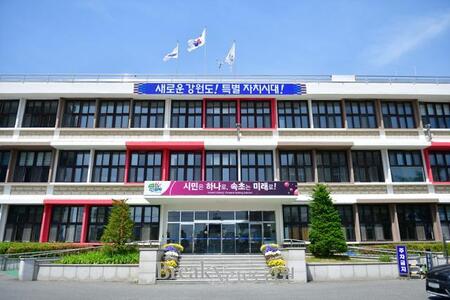
▲ 권익현 군수가 부안읍성의 고성으로 밝혀진 '상소산성' 발굴 현장을 찾아 조사단(전라문화유산연구원)과 전북특별자치도 기념물 지정을 위한 방향 등을 논의하고 있다. / 사진제공 = 부안군청 © 이한신 기자 |
 ▲ 산 정상 평탄지에 축조된 길이 332m 테뫼식 토성지와 토성지를 감싸고 있는 길이 810m의 중성ㆍ조선시대 축조된 부안읍성인 외성의 3중 구조를 갖춘 성곽인 '상소산성' 위치도 및 발굴 조사 지역. / 사진제공 = 부안군청 © 이한신 기자 |
고려시대부터 조선시대 전기까지 읍성의 일부로 사용됐고 현재까지 성곽이 비교적 양호한 상태로 보전돼 지역 향토문화재로 지정된 전북 부안 '상소산성(관리번호 2021-1호)'에서 통일신라 제철 유적이 발견됐다.
도내 지역에서 통일신라 제철 유적으로 전주 찰방유적 1호 폐기장이 유일해 학계에 비상한 관심을 모으고 있다.
권익현 부안군수가 지난 15일 부안읍성의 고성으로 밝혀진 '상소산성'발굴 현장을 찾아 조사단(전라문화유산연구원)과 전북특별자치도 기념물 지정을 위한 방향 등을 논의하고 안전 지침 준수 여부 및 미비점 등을 점검하는 시간을 가졌다.
이 자리에서 권 군수는 "발굴 조사에서 통일신라시대 생산된 제철 관련 유구가 도내에서 두 번째로 밝혀지는 등 치소성의 기능을 입증하는 명문 기와 및 백제~조선시대 성(城)의 전모를 밝힐 수 있는 유구가 발견된 것은 매우 의의가 높은 성과"라며 노고를 격려했다.
특히 "이번 성과는 부안의 도시 정체성과 미래 경쟁력을 만들어 가는 중요한 문화자원으로 향후 도(道) 기념물로 지정될 수 있도록 지속적인 관심과 행정적 지원을 아끼지 않겠다"고 밝혔다.
'상소산성'은 산 정상 평탄지에 축조된 길이 332m 테뫼식 토성지와 토성지를 감싸고 있는 길이 810m의 중성ㆍ조선시대 축조된 부안읍성인 외성의 3중 구조를 갖춘 성곽으로 조사됐다.
부안의 치소가 읍성으로 확장되기 전 치소성으로 사용됐던 매우 중요한 성곽이다.
이번 발굴 조사를 통해 성 내부에서 삼국시대의 토기편ㆍ고려~조선시대 와편이 다량 수습돼 삼국시대에 축조된 이후 조선시대까지 운영된 것으로 파악됐다.
또 '俾司洪書방(비사홍서방)ㆍ~官(관)'등의 명문 기와와 제철 관련 부산물 및 목탄이 섞인 퇴적토가 발견돼 주목을 끌었다.
명문기와 '俾司洪書方'은 '瓦俾(와비 = 기와를 굽는 사람과 지붕에 기와 이는 일을 하는 사람을 통틀어 이르는 말)'라는 와장과 와공을 아울러 이르는 단어가 있다는 점에서 '기와를 제작하는 부서의 洪書方'으로 해석된다.
제철 관련 유구는 조사 지역 내 구릉 상부를 기준으로 경사면을 따라 퇴적 상태로 발견됐고 노내재ㆍ단면상 기포가 형성되거나 유리질화된 유동재ㆍ단야공정 흔적의 물방울 모양 입상재와 미세 철편 등이 관련 부산물로 발굴됐다.
'상소산성'에서 제철 관련 부산물이 다양하고 많은 양이 출토된 것은 제련ㆍ정련ㆍ단야(鍛冶) 등 모든 과정이 이뤄진 시설이 자리했던 것으로 추정됐고 관련 유구에서 '~官(관)' 자명 기와 편이 발견돼 통일신라에 운영된 것으로 확인된다.
☞ 아래는 위 기사를 구글 번역이 번역한 영문 기사의 '전문' 입니다.
구글 번역은 이해도를 높이기 위해 노력하고 있으며 영문 번역에 오류가 있음을 전제로 합니다.
【Below is the 'full text' of the English article translated by Google Translate.
Google Translate is working hard to improve understanding, and assumes that there are errors in the English translation.】
Buan County Governor Kwon Ik-hyeon inspects the excavation site
Discussions on the direction of designating Sangsosanseong Fortress as a local cultural asset and a provincial monument
Reporter Lee Yo-han
Remains of a Unified Silla ironworks complex have been discovered at Sangsosanseong Fortress (Management No. 2021-1), located in Buan, North Jeolla Province, which served as part of a town wall from the Goryeo Dynasty to the early Joseon Dynasty.
The fortress walls remain in relatively good condition and have been designated a local cultural asset.
The Jeonju Chalbang Site No. 1 waste disposal site is the only Unified Silla ironworks site in the province, attracting significant academic interest.
On the 15th, Buan County Governor Kwon Ik-hyeon visited the excavation site of 'Sangso Mountain Fortress', which was revealed to be the old castle of Buan-eupseong, and discussed with the investigation team (Jeolla Cultural Heritage Research Institute) the direction for designating it as a Jeollabuk-do Special Self-Governing Province monument, and had time to check whether safety guidelines were being followed and any shortcomings.
At this location, Governor Kwon said, "It is a very meaningful achievement that the excavation has uncovered the second iron-related relics from the Unified Silla period in the province, as well as inscribed roof tiles proving the function of the royal tomb and relics that can reveal the entirety of the castle from the Baekje to Joseon periods." He encouraged their hard work.
In particular, he stated, "This achievement is a significant cultural resource that will shape Buan's urban identity and future competitiveness. We will continue to provide our attention and administrative support so that it can be designated as a provincial monument in the future."
Sangsosanseong Fortress was found to have a triple-layered structure: a 332-meter-long earthen fortification built on the flat land at the top of the mountain, and an 810-meter-long outer wall, a Buan-eup fortress built during the Joseon Dynasty, surrounding the earthen fortification.
This fortress was a crucial element, serving as the administrative center of Buan before its expansion into a town wall.
This excavation revealed numerous pottery fragments from the Three Kingdoms Period and roof tiles from the Goryeo and Joseon Dynasties, indicating that the fortress was constructed during the Three Kingdoms Period and operated until the Joseon Dynasty.
Also, the discovery of inscribed roof tiles, such as '俾司洪書방 (Bisa Hongseobang)ㆍ~官 (Gwan)', and sedimentary soil mixed with iron-making byproducts and charcoal, attracted attention.
The inscribed roof tiles and '俾司洪書方'are interpreted as '洪書方 of the tile-making department,'given that the term '瓦俾'(wabi = a general term for both tile-makers and roof tile installers) refers to both the tile-making and roof-installing departments.
The remains related to ironmaking were found in a deposited state along the slope based on the upper part of the hill within the survey area, and related by-products include furnace ash, fluidized ash with bubbles or glassy cross-sections, droplet-shaped granular ash with traces of the forging process, and fine iron fragments.
The fact that a large amount of various by-products related to ironmaking were excavated from 'Sangso Mountain Fortress' suggests that a facility where all processes, including smelting, refining, and forging, were carried out was located here. In addition, a piece of roof tile with the inscription '~官(official)' was discovered among the related remains, confirming that it was operated during the Unified Silla period.
원본 기사 보기:브레이크뉴스 전북판