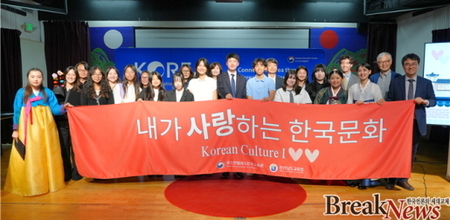
▲K-한글 응원가 ‘대한민국 나르샤’ 를 발표한 허준혁 UN피스코 사무총장 |
2026년은 대한민국 문화사, 특히 한글과 관련해 전례 없는 의미가 겹치는 '문화 뿌리의 해'다. 훈민정음 반포 580주년, 한글날 지정 100주년, 한글점자 100주년에 이어, 영화 아리랑 개봉 100주년, 헐버트 박사의 아리랑 악보 채록 130주년, 주시경 선생 탄신 150주년, 손기정 옹의 베를린 올림픽 마라톤 우승 90주년까지, 문자·문학·음악·영화·체육을 아우르는 주요 기념이 한 해에 집중돼 돌아오는 것이다.
이런 흐름 속에서, 최초의 한글노래 <용비어천가>와 전통 민요 <아리랑>을 기반으로 한 <K-한글 응원가 (대한민국 나르샤)>가 공개돼 화제가 관심을 끌고 있다. 제작진은 “2026년을 상징하는 문화 콘텐츠이자, 한글의 창제 정신과 한국인의 연대 의식을 동시에 담는 작품”이라며 기획 배경을 설명했다.
<K-한글 응원가 (대한민국 나르샤)>는 <용비어천가>의 대표 구절 “뿌리 깊은 나무는 바람에 아니 뮐세, 샘이 깊은 물은 가뭄에 아니 그칠세”를 현대적 음악 언어로 재해석한 것이 출발점이다. 훈민정음 창제 직후 집현전 학자들이 기록한 이 문장은 한글 창제 정신과 한국인의 끈질긴 생명력을 상징한다.
민요 <아리랑> 역시 재구성됐다. 기존 가사 “나를 버리고 가시는 님은 십리도 못 가서 발병난다” 대신, “나를 버리고 우리 하나 되어 대한민국 아리랑 꽃길 간다”로 공동체적 희망과 연대의 메시지를 강화했다.
기획과 작사 노래를 맡은 허준혁 UN피스코 사무총장은 “한글의 철학과 지구촌 곳곳에 계신 세계 한인들의 흔들리지 않는 정신을 응원가의 중심에 두고 싶었다”고 밝혔다. 이에 따라 민요 '아리랑' 역시 새로운 방식으로 재해석했다. 기존 가사 “나를 버리고 가시는 님은 십리도 못 가서 발병난다” 대신, “나를 버리고 우리 하나 되어 대한민국 아리랑 꽃길 간다”라고 공동체적 메시지를 강화했다. "세계에서 가장 아름다운 선율 아리랑을 국민구호 '대~한민국'과 합쳐, 아리랑에 깃든 '한'을 '흥'으로 승화시키고 싶었다”는 것이다.
작곡을 맡은 이순교 씨는 “전통 선율과 현대적 사운드를 어떻게 균형 있게 엮어낼지 고민이 컸다”며 “아리랑의 정서와 한글의 언어 리듬은 별개의 문화처럼 보이지만 결합했을 때 특별한 힘을 갖는다”고 말했다. 편곡은 ‘잊혀진 계절’ 등으로 잘 알려진 이범희 음악감독이 맡아 응원가에 필요한 리듬감과 대중성을 확보했다.
 ▲ 한글과 아리랑을 연결한 세계한인 K-한글 응원가 |
한글 응원가에 대한 한글단체들도 환영 일색이다.
한글학회 산하 한말글협회 리대로 대표는 “용비어천가와 아리랑을 현대적으로 재해석한 점이 인상적"이라면서 "한글을 새로운 문화 콘텐츠로 발전시켰다는 점에서 가치가 높다”라며 환영했다.
세종문화기념사업회 최홍식 회장은 “한글 창제 정신과 현대적 음악을 연결한 의미 있는 시도"라면서 "특히 '육룡이 나르샤'를 '대한민국 나르샤'로 재해석한 시도는 세종대왕의 얼을 현대적으로 승화시킨 쾌거"라며 반겼다.
세종국어문화원 김슬옹 원장은 “한글과 아리랑이 결합한 응원가는 단순한 기념곡을 넘어, 문화유산을 현대적으로 재생산하는 사례"라며, "앞으로 한글 행사와 교육 프로그램에도 활용되어 문화적 영향력이 클 것”이라며 기대감을 드러냈다.
김동진 헐버트박사기념사업회 회장도 "헐버트 박사께서 우리민족의 상징이자 대표 민요인 '아리랑'을 최초로 서양 악보로 채록하신 130주년을 앞두고, 한글과 아리랑을 현대적으로 접목시킨 아름다운 노래"라고 밝혔다.
해사한 전영준 대표도 "한글을 통해 세계한인과 국민 모두 하나 되자는 메시지를 전달하고자 한다는 점에서 매우 의미 있다"라면서 "특히 어린 세대가 쉽게 따라 부를 수 있어 한글의 대중화와 정체성 확산에 큰 역할을 할 것으로 기대"한다고 응원을 보탰다.
■ 2026년을 문화 날개의 해로
문화계 전문가들은 2026년을 단순한 기념의 해로 보지 않는다. 이병진 경동기획 대표는 “한글, 아리랑, 체육, 영화 등 한국적 상징이 한 해에 모이는 현상은 문화적 전환점을 보여준다”며 “이런 흐름 속에서 ‘대한민국 나르샤’와 같은 통합 콘텐츠가 등장한 것은 필연적”이라고 평가했다.
학계에서는 이를 ‘문화 르네상스의 가능성’으로 해석한다. 한국어·한글·민요·영화·체육이라는 다양한 기호가 동시에 주목받으면서, 한국 사회가 ‘자기 정체성을 재확인하는 시기’라는 점에서 의미가 크다는 것이다.
해외동포책보내기운동협의회 최용기 이사장은 “‘대한민국 나르샤’는 전통과 대중성, 세계화를 동시에 추구한 드문 사례”라며, “특정 행사에 국한되지 않고 국민적 상징으로 확장될 가능성이 높다”고 분석했다.
세종대왕국민위원회 이윤태 이사장은 “단순한 행사용 노래가 아니라, 한글과 한국인의 정체성을 체험할 수 있는 통합 문화 콘텐츠”라고 강조하면서 "향후 한글날 기념식, 국제 스포츠 경기, 해외 한류 축제, 지자체 홍보영상, 온라인 캠페인 등에서 크게 활용될 것"으로 전망했다.
한글은 단순한 문자 체계가 아니라, 창제 당시부터 ‘백성을 위한 실용 문자’였다. 아리랑 역시 단순한 민요를 넘어, 떠남과 그리움, 저항과 희망이라는 정서를 담은 한국인의 문화적 DNA다. 두 상징을 하나의 응원가로 묶은 '대한민국 나르샤'는 한국이 세계 문화 무대에서 정체성을 확장하는 흐름과 맞물린다는 점에서 의미가 크다.
K-한글 응원가 ‘대한민국 나르샤’는 한글 창제 정신과 아리랑의 정서를 오늘의 음악 언어로 재구성해, 한국 문화의 뿌리와 미래를 연결하는 상징적 매개로 자리 잡고 있다. 전문가들은 “단순한 기념곡을 넘어, 한국 문화와 정체성을 세계에 전파하고 세계한인을 묶는 상징적 콘텐츠로 자리매김할 수 있다”라고 입을 모은다.
2026년을 단순한 기념의 해가 아니라, 한국 문화의 정체성이 집약되고 확산되는 해를 만들기 위해 지금부터 뜻과 힘을 모아야 할 때이다.
st_srars@naver.com
*아래는 위 기사를 '구글 번역'으로 번역한 영문 기사의 [전문]입니다. '구글번역'은 이해도 높이기를 위해 노력하고 있습니다. 영문 번역에 오류가 있을 수 있음을 전제로 합니다.<*The following is [the full text] of the English article translated by 'Google Translate'. 'Google Translate' is working hard to improve understanding. It is assumed that there may be errors in the English translation.
K-Hangul Cheering Song "Daehanminguk Narsha" Carries the Korean Spirit in 2026
- Unprecedented cultural celebrations coincide with the 580th anniversary of the promulgation of Hangeul, the 100th anniversary of Hangeul Day, and the 100th anniversary of Arirang
- K-Hangul Cheering Song "Daehanminguk Narsha" Reinterprets Traditional Narratives
- Culture Columnist Kang Soon-ye
2026 is the "Year of Cultural Roots," a year of unprecedented significance for the cultural history of the Republic of Korea, especially Hangeul. Following the 580th anniversary of the promulgation of Hunminjeongeum, the 100th anniversary of Hangeul Day, and the 100th anniversary of Hangeul Braille, the 100th anniversary of the release of the film "Arirang," the 130th anniversary of Dr. Hulbert's recording of the "Arirang" score, the 150th anniversary of the birth of Joo Si-gyeong, and the 90th anniversary of Sohn Kee-chung's victory in the Berlin Olympic marathon, major commemorations spanning writing, literature, music, film, and sports are concentrated in one year.
Amidst this trend, the release of "K-Hangeul Cheer Song (Daehanminguk Narsha)"—based on the first Hangeul song, "Yongbieocheonga" (Yongbieocheonga), and the traditional folk song, "Arirang"—has garnered significant attention. The production team explained the project's rationale, stating, "This work is a cultural piece symbolizing the year 2026, simultaneously embodying the spirit of Hangeul's creation and the solidarity of Koreans."
begins with a modern musical reinterpretation of the representative verse from : "A tree with deep roots will not be shaken by the wind, and the water of a deep well will not stop in drought." Recorded by scholars of the Jiphyeonjeon immediately after the creation of Hunminjeongeum, this phrase symbolizes the spirit of Hangul's creation and the tenacious vitality of the Korean people.
The folk song has also been reimagined. The original lyrics, "A person who abandons me will fall ill before he can even reach ten li," have been replaced with "Let's abandon me and become one, walking the flowery path of the Republic of Korea's Arirang," reinforcing the message of communal hope and solidarity.
UNPISC Secretary-General Huh Joon-hyuk, who planned, wrote, and composed the song, stated, "I wanted to center the cheering song on the philosophy of Hangul and the unwavering spirit of Koreans around the world." Accordingly, the folk song "Arirang" has also been reinterpreted in a new way. The original lyrics, "He who abandons me will fall ill before he can even travel ten miles," were replaced with "Let's abandon me and become one, walking the flowery path of Arirang, the Republic of Korea," reinforcing the communal message. "I wanted to combine Arirang, the world's most beautiful melody, with the national slogan 'Daehanminguk,' and elevate the 'han' (sorrow) inherent in Arirang into 'heung' (excitement)."
Lee Soon-kyo, who composed the song, said, "I put a lot of thought into how to balance traditional melodies with modern sounds. The sentiment of Arirang and the rhythm of Hangul (Korean alphabet) may seem like separate cultures, but when combined, they possess a special power." Music director Lee Beom-hee, known for his work on "Forgotten Season," handled the arrangement, ensuring the rhythm and popular appeal necessary for a cheering song.
Korean language groups are also welcoming the Hangul cheering song. Lee Dae-ro, head of the Korean Language Association under the Korean Language Society, welcomed the song, saying, "The modern reinterpretation of Yongbieocheonga and Arirang is impressive," and that it "has great value in developing Hangeul into a new cultural content."
Choi Hong-sik, president of the Sejong Cultural Foundation, said, "This is a meaningful attempt to connect the spirit of Hangeul's creation with modern music." He added, "In particular, the reinterpretation of 'Six Flying Dragons' as 'Daehanminguk Narsha' is a remarkable achievement that sublimates the spirit of King Sejong the Great into a modern context."
Kim Seul-ong, director of the Sejong Korean Language and Culture Center, expressed his anticipation, saying, "The cheer song, combining Hangeul and Arirang, goes beyond mere commemorative music and exemplifies the modern reproduction of cultural heritage. He added, "This song will likely be utilized in Hangeul events and educational programs, further enhancing its cultural impact."
Kim Dong-jin, Chairman of the Hulbert Memorial Society, also praised the song, saying, "This is a beautiful song that combines Hangul and Arirang in a modern way, as we approach the 130th anniversary of Dr. Hulbert first transcribing 'Arirang,' a symbol and representative folk song of our people, into Western sheet music."
Jeon Yeong-jun, CEO of Haesahan, also expressed his support, saying, "It is very meaningful in that it conveys the message of unity among Koreans and all Koreans around the world through Hangul." He added, "I anticipate that it will play a significant role in popularizing Hangul and spreading its identity, especially since it's easy for younger generations to sing along."
■ 2026: The Year of Cultural Wings
Cultural experts do not view 2026 as a mere commemorative year. Lee Byung-jin, CEO of Kyungdong Planning, commented, "The convergence of Korean symbols like Hangeul, Arirang, sports, and film in one year signals a cultural turning point. The emergence of integrated content like 'Daehanminguk Narsha' within this trend was inevitable."
Academics interpret this as a potential cultural renaissance. They argue that the simultaneous attention given to diverse symbols like the Korean language, Hangeul, folk songs, films, and sports is significant in that it marks a time when Korean society is "reaffirming its own identity."
Choi Yong-gi, Chairman of the Overseas Korean Book Campaign Council, commented, "'Daehanminguk Narsha' is a rare example of simultaneously pursuing tradition, popularity, and globalization. It has a high potential to expand beyond a specific event into a national symbol."
Lee Yoon-tae, chairman of the King Sejong National Committee, emphasized that "Hangeul is not simply a song for ceremonies, but rather an integrated cultural content that allows people to experience Hangeul and Korean identity." He predicted that "it will be widely utilized in future Hangeul Day ceremonies, international sports events, overseas Hallyu festivals, local government promotional videos, online campaigns, and more."
Hangeul is not simply a writing system; from its creation, it has been a "practical writing system for the people." Arirang, too, is more than just a folk song; it embodies the cultural DNA of Koreans, embodying emotions of departure, longing, resistance, and hope. "Daehanminguk Narsha," which combines these two symbols into a single cheering song, is significant in that it aligns with the trend of Korea expanding its identity on the global cultural stage.
The K-Hangeul cheering song "Daehanminguk Narsha" reimagines the spirit of Hangeul's creation and the sentiment of Arirang in today's musical language, establishing itself as a symbolic medium connecting the roots of Korean culture with the future. Experts agree, "More than a mere commemorative song, it can establish itself as a symbolic content that spreads Korean culture and identity to the world and unites Koreans worldwide."
Now is the time to gather our strength and resolve to make 2026 not simply a year of commemoration, but a year in which Korean cultural identity is concentrated and expanded.
st_srars@naver.com