지난 1월 1일, 오세훈은 국민의힘 지도부를 향해 12·3 비상계엄에 대한 진정성 있는 사과와, 6·3 지방선거 승리를 위한 범보수 대통합을 공개적으로 요구했다. 그의 발언은 당내 권력 구도나 차기 정치 일정을 겨냥한 것이 아니었다. 더 늦어질 경우 선거에서 회복 불가능한 선을 넘게 된다는 판단, 그리고 그 책임이 지도부에 있다는 정치적 경고였다. “기다릴 만큼 기다렸고, 참을 만큼 참았다”는 말은 감정의 분출이 아니라 시한을 정한 통보에 가까웠다.
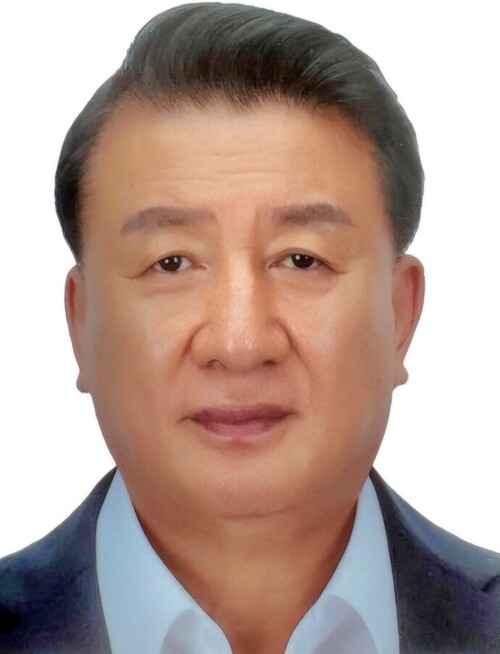
 ▲ 오세훈 서울시장. ©뉴시스 |
문제는 이제 분명해졌다. 장동혁의 정치, 무엇이 문제이며 왜 지금 바뀌어야 하는가. 정당 대표는 말을 아끼는 자리가 아니다. 방향을 제시하고, 선을 긋고, 책임을 감당하는 자리다. 그런 점에서 최근 장동혁 지도부의 행태는 국민의힘이 처한 위기와 정확히 맞닿아 있다. 문제는 개인의 성향이 아니라, 그의 정치 방식이 지금의 정치 환경과 정면으로 충돌하고 있다는 데 있다.
장동혁 체제의 가장 두드러진 특징은 회피와 유보의 반복이다. 계엄 논란 앞에서 그는 명확한 사과도, 분명한 절연도, 정치적 정리도 하지 않았다. 대신 “지켜보자”, “시간이 필요하다”, “당내 논의가 먼저다”라는 말만 이어졌다. 그러나 헌정 질서와 민주주의의 선을 묻는 문제는 조직 관리의 영역이 아니다. 이 지점에서 지도자의 침묵은 중립이 아니라 하나의 정치적 입장이 된다.
이 과정에서 그의 태도는 강경 지지층의 정서에 편승한 것으로 비쳤다. 극단적 주장에 분명한 선을 긋지 않음으로써 ‘관리자’로 남으려 했지만, 대중의 시선에서 그는 점점 ‘동조자’에 가까워졌다. 정치에서 의도는 면책 사유가 아니다. 특히 헌정 질서의 경계선 앞에서 지도자의 ‘의도하지 않음’은 책임 회피로 인식된다. 침묵은 가장 과격한 해석을 허용하는 공간이 되고, 정당의 입장은 지도부가 아니라 가장 큰 목소리에 의해 규정된다. 정치는 의도가 아니라 인식으로 평가받는다.
더 큰 문제는 이러한 태도가 외연 확장과 정면으로 배치된다는 점이다. 수도권과 충청, 부울경의 중도적이고 합리적인 유권자에게 계엄 논란은 이념의 문제가 아니라 상식의 문제다. 이 순간 국민의힘은 더불어민주당과 경쟁하는 정당이 아니라, 스스로의 헌정 인식을 해명해야 하는 정당으로 전락했다. 장동혁 체제에서 당이 얻은 것은 결집이 아니라 고립에 가깝다.
지금 바뀌지 않는다면 문제는 장동혁 개인의 리더십에 그치지 않는다. 국민의힘은 다시 한 번 선명하지만 이길 수 없는 정당의 길로 들어서게 된다. 강경 지지층의 환호는 얻을 수 있을지 몰라도, 국정을 맡길 수 있는 대안 세력이라는 신뢰는 회복하기 어렵다. 보수 정당의 존재 이유는 투쟁이 아니라 관리이며, 선동이 아니라 책임이다.
변화의 방향은 분명하다.
첫째, 계엄에 대한 명확한 사과와 절연이다. 이는 과거를 부정하라는 요구가 아니라, 헌법 가치 위에 서겠다는 정치적 선언이다.
둘째, 강경 지지층과 당의 공식 입장을 분명히 구분해야 한다. 당 대표는 특정 지지층의 대변인이 아니라 국민 전체를 향한 얼굴이다.
셋째, 통합의 언어를 선택해야 한다. 배제와 낙인의 정치는 외연 확장의 수단이 될 수 없다.
마지막으로, 민생으로 돌아가야 한다. 물가·주거·일자리라는 구체적 의제에서 보수의 실력을 증명해야 한다.
정치는 성향의 문제가 아니라 적합성의 문제다. 지금의 장동혁식 정치가 이 시기, 이 상황의 국민의힘에 적합한가라는 질문 앞에서 그는 답해야 한다. 침묵으로 시간을 벌 수는 있어도, 방향 없는 리더십은 시간을 아군으로 만들지 못한다.
정당은 지도자의 말을 통해 방향을 얻고, 유권자는 그 말을 통해 신뢰를 판단한다. 장동혁이 변하지 않는다면, 당은 결국 그를 넘어 변화의 요구에 직면하게 될 것이다. 지금 필요한 것은 해명이 아니라 전환이다. Jeongkeekim@naver.com
 ▲ 필자/김정기 '대한민국과 세계 이야기(도서출판 책미듬)'의 저자. ©브레이크뉴스 |
*필자/김정기
● 학력
- 뉴욕주립대학교(Stony Brook) 정치학과 수석 졸업
- 마케트대학교(Marquette) 로스쿨 법학박사
- 하버드대학교(Harvard) 케네디스쿨 최고위 과정
- 베이징대학교(Peking) 북한학 연구학자
● 경력
- 세계스마트시티기구(WeGO) 사무총장 (현)
- 유엔 국제전기통신연합 (UN ITU) 가상세계 및 AI 글로벌 이니셔티브 집행위원(현)
- 아시아태평양지방정부네트워크(CityNet) 대표
- 제8대 주상하이 대한민국 총영사(13등급 대사)
- 2010 상하이엑스포 대한민국관 정부대표
- 제17대 대선 한나라당 이명박 대통령 후보 국제위원장
- 제20대 대선 국민의힘 윤석열 대통령 후보 정치개혁 공약 총괄
- 제21대 대선 국민의힘 김문수 대통령 후보 외교고문
- 자유한국당 오세훈 당대표 후보 SH전략회의 총괄 및 조직본부 총괄본부장
- 자유한국당 서울시장 예비후보
- 법무법인 대륙아주 중국 총괄 미국변호사\
- 난징대학교 국제경제연구소 객좌교수
- 동국대학교 경영전문대학원 석좌교수
- 숭실사이버대학교 총장
● 저서
1. 대학생을 위한 거로영어연구[전 10권](거로출판사)
2. 나는 1%의 가능성에 도전한다(조선일보사)
3. 한국형 협상의 법칙(청년정신사)
4. 대한민국과 세계 이야기 (도서출판 책미듬)
5. Korea and the World (Advance Reader Copy)
*아래는 위 기사를 '구글 번역'으로 번역한 영문 기사의 [전문]입니다. '구글번역'은 이해도 높이기를 위해 노력하고 있습니다. 영문 번역에 오류가 있을 수 있음을 전제로 합니다.<*The following is [the full text] of the English article translated by 'Google Translate'. 'Google Translate' is working hard to improve understanding. It is assumed that there may be errors in the English translation.>
Oh Se-hoon's Warning... "Leadership, Apologize for Martial Law and Unify the Conservatives!"
- Kim Jeong-gi, Columnist
On January 1st, Oh Se-hoon publicly demanded a sincere apology from the People Power Party leadership for the December 3 martial law declaration and a grand, pan-conservative unification to secure victory in the June 3 local elections. His remarks weren't aimed at the party's power structure or the upcoming political schedule. They were a political warning, a judgment that any further delay would lead to an irreversible overturn in the elections, and that the leadership would be held accountable. His words, "We've waited long enough, we've endured long enough," were less an outpouring of emotion and more akin to a deadline.
The question is now clear: What is wrong with Jang Dong-hyuk's politics, and why must change now? A party leader is not a position to be reserved. It's a position to set direction, draw boundaries, and assume responsibility. In this sense, the recent behavior of Jang Dong-hyuk's leadership is precisely in line with the crisis facing the People Power Party. The problem isn't his personal inclinations, but rather that his political style clashes head-on with the current political landscape.
The most striking characteristic of Jang Dong-hyuk's regime is his repeated evasions and reservations. In the face of the martial law controversy, he offered no clear apology, no clear severance of ties, or any political reconciliation. Instead, he simply responded with, "Let's wait and see," "We need time," and "Intra-party discussion comes first." However, the question of the line between constitutional order and democracy is not within the realm of organizational management. At this point, the leader's silence becomes not neutrality but a political stance.
Throughout this process, his stance was perceived as pandering to the sentiments of his hard-line supporters. While he attempted to remain a "manager" by not drawing a clear line between extreme claims, he increasingly came across as a "sympathizer" in the public eye. In politics, intention is not a justification for responsibility. Especially when facing the boundaries of constitutional order, a leader's "unintentional" actions are perceived as an evasion of responsibility. Silence becomes a space for the most extreme interpretations, and the party's position is defined not by the leadership but by the loudest voices. Politics is judged by perception, not intention.
The bigger problem is that this attitude directly contradicts the expansion of the party's influence. For moderate and rational voters in the Seoul metropolitan area, Chungcheong, and Busan, Ulsan, and Gyeongsang provinces, the martial law controversy is not an ideological issue, but a matter of common sense. At this point, the People Power Party has been reduced from a party competing with the Democratic Party of Korea to a party that must explain its own understanding of the constitution. What the party has gained under Jang Dong-hyuk is not unity, but rather isolation.
If things don't change now, the problem goes beyond Jang Dong-hyuk's personal leadership. The People Power Party will once again embark on a path of being a clear-cut but invincible party. While it may win the support of hardliners, it will be difficult to restore trust as an alternative force capable of governing. The raison d'être of a conservative party is not struggle, but management; not agitation, but accountability.
The direction of change is clear.
First, a clear apology and severance of ties with martial law. This is not a demand to deny the past, but a political declaration to stand on constitutional values.
Second, there must be a clear distinction between the hardliners and the party's official stance. The party leader is not a spokesperson for a specific group of supporters, but rather the face of the entire nation.
Third, the language of unity must be chosen. The politics of exclusion and stigma cannot be a means of expanding the party's influence.
Finally, we must return to the people's livelihood. We must demonstrate the conservatives' capabilities on specific issues such as prices, housing, and jobs.
Politics is not a matter of inclination, but of suitability. He must answer the question of whether the current style of politics is suitable for the People Power Party at this time and in this situation. Silence can buy time, but directionless leadership cannot turn time into an ally.
A political party gains direction from its leader's words, and voters judge their trustworthiness through those words. If Jang Dong-hyuk remains unchanged, the party will ultimately face demands for change beyond him. What is needed now is not an explanation, but a transformation. Jeongkeekim@naver.com
*Author/Kim Jeong-gi
● Education
- Summa Cum Laude, Department of Political Science, State University of New York (Stony Brook)
- Doctor of Law, Marquette Law School
- Harvard Kennedy School, Executive Program
- North Korean Studies Research Scholar, Peking University
● Career
- Secretary General of the World Smart Cities Organization (WeGO) (current)
- Executive Committee Member, Virtual World and AI Global Initiative, International Telecommunication Union (ITU)
- Representative, Asia-Pacific Local Government Network (CityNet)
- 8th Consul General of the Republic of Korea in Shanghai (Ambassador, Class 13)
- Government Representative, Republic of Korea Pavilion, 2010 Shanghai Expo
- Chairman of the International Affairs Committee, Grand National Party (GNP) Presidential Candidate Lee Myung-bak in the 17th Presidential Election
- Chief of Political Reform Pledges, People Power Party (PPP) Presidential Candidate Yoon Seok-yeol in the 20th Presidential Election
- President Kim Moon-soo of the People Power Party in the 21st Presidential Election Foreign Affairs Advisor to the Candidate
- Oh Se-hoon, Liberty Korea Party Candidate for Party Leadership, SH Strategy Council, and Head of the Organization Headquarters
- Liberty Korea Party Candidate for Seoul Mayor
- American Attorney, Head of China, Continental Law Firm
- Visiting Professor, Nanjing University International Economics Institute
- Distinguished Professor, Dongguk University Graduate School of Business
- President, Soongsil Cyber University
● Books
1. Georo English Studies for College Students [10 Volumes] (Georo Publishing)
2. I Challenge the 1% Chance (Chosun Ilbo)
3. The Law of Korean Negotiation (Chungnyeon Jeongshinsa)
4. Stories of Korea and the World (Chaekmidum Publishing)
5. Korea and the World (Advance Reader Copy)