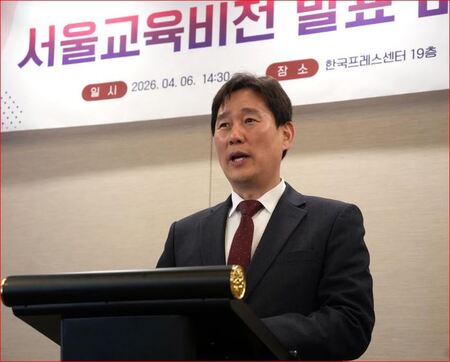
▲ 충남교육청, '2026 중학교 함께 만드는 교육과정 배움자리' 연수 진행 장면 © 충남교육청 제공 |
충남교육청이 중학교 교육과정의 실질적 운영 역량을 높이기 위한 현장 중심 연수를 마련했다. 교과 편성과 운영을 학교 단위에서 주도적으로 설계하도록 지원하는 데 방점이 찍혔다.
충남교육청은 12일 도내 중학교 교감과 교무부장, 교육지원청 장학사 등 380명을 대상으로 ‘2026 중학교 함께 만드는 교육과정 배움자리’를 운영했다. 이번 연수는 제도 설명에 그치지 않고, 학교 교육과정 운영 사례와 현장의 고민을 공유하며 실제 적용 가능성을 높이는 방향으로 구성됐다.
연수에서는 진로연계교육 운영 사례를 비롯해 학교자율시간 활용, 고시 외 과목 개설과 승인 절차 등 학교 현장에서 수요가 높은 주제가 집중적으로 다뤄졌다. 특히 충남교육청이 2025년 신설 승인한 학교자율시간 과목을 중심으로 과목 개발 취지와 교육과정 구성 방향, 운영 시 유의점이 구체적으로 안내돼, 학교 여건과 학생 특성을 반영한 교육과정 설계에 참고 자료로 활용될 수 있도록 했다.
아울러 자유학기·진로연계교육 예산 운용 방안과 고교학점제 정책에 대한 이해를 함께 다루며, 중학교 단계 교육과정이 고등학교 교육과 자연스럽게 이어질 수 있는 구조적 연계 가능성도 점검했다. 이는 중학교 교육과정이 단절된 학습이 아닌 진로 기반 학습의 출발점으로 기능해야 한다는 정책 방향을 반영한 것으로 풀이된다.
충남교육청은 이번 배움자리를 계기로 학교 교육과정이 행정적 관리 대상이 아니라, 학생의 삶과 진로를 중심에 둔 교육 설계의 핵심 영역으로 자리 잡을 수 있을 것으로 기대하고 있다. 교육과정의 자율성과 책무성을 함께 강화해 나가는 것이 향후 과제로 남는다.
*아래는 위 기사를 '구글 번역'으로 번역한 영문 기사의 [전문]입니다. '구글번역'은 이해도를 높이기를 위해 노력하고 있습니다. 영문 번역에 오류가 있을 수 있음을 전제로 합니다.<*The following is [the full text] of the English article translated by 'Google Translate'. 'Google Translate' is working hard to improve understanding. It is assumed that there may be errors in the English translation.>
The Chungnam Office of Education has organized a field-oriented training program to enhance practical operational capabilities for middle school curricula. The program focuses on supporting schools to proactively design curriculum organization and implementation.
On the 12th, the Chungnam Office of Education hosted the "2026 Middle School Curriculum Learning Center" for 380 participants, including vice-principals, academic affairs directors, and school superintendents from education support offices in the province. This training program went beyond simply explaining the system and focused on sharing school curriculum implementation cases and practical concerns to enhance practical applicability.
The training focused on topics with high demand in schools, including examples of career-related education, the use of school-based time, and the creation and approval process for non-exam courses. Specifically, the program focused on the newly approved school-based time courses in 2025, providing detailed guidance on the purpose of course development, curriculum composition, and operational considerations. This information can serve as a reference for curriculum design that reflects school conditions and student characteristics.
Furthermore, the meeting discussed budget management plans for free semesters and career-related education, as well as the high school credit system policy, and examined the structural potential for seamless integration between the middle school curriculum and high school education. This reflects the policy direction that the middle school curriculum should serve as a starting point for career-based learning, rather than a disconnected learning experience.
The Chungnam Office of Education expects this learning event to pave the way for the school curriculum to become a core area of educational design centered on students' lives and career paths, rather than a subject of administrative management. Strengthening both autonomy and accountability within the curriculum remains a future challenge.
원본 기사 보기:브레이크뉴스대전세종충청