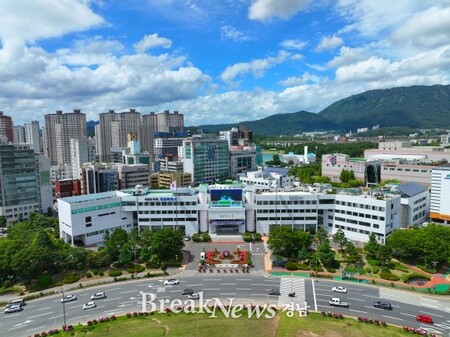
▲ 창원시 수질연구센터 전경.(창원시=제공) |
[브레이크뉴스=이성용 기자] 최근 일부 온라인 커뮤니티와 여론을 중심으로 수돗물의 '소독 냄새(잔류염소)'와 소독 부산물인 '총트리할로메탄(THMs)'에 대한 우려가 제기되자, 창원특례시 상수도사업소가 과학적 데이터에 기반한 '팩트체크'에 나섰다.
결론부터 말하면 창원시 수돗물은 '수질 골든타임'을 지키기 위한 최적의 상태로 관리되고 있으며, 시민들이 우려하는 물질들은 인체에 무해한 수준이거나 간단한 방법으로 제거 가능한 것으로 확인됐다.
▲ 염소 냄새는 '안전하다'는 증거
수돗물을 틀었을 때 나는 특유의 소독 냄새는 불쾌할 수 있지만, 역설적으로 "이 물에는 세균이 살 수 없다"는 가장 확실한 안전 보증수표다.
잔류염소는 정수장에서 가정의 수도꼭지까지 물이 이동하는 동안 미생물 번식을 막는 핵심 역할을 한다. 2025년 기준 창원시 수돗물의 잔류염소 농도는 0.1 ~ 1.0 mg/L로 유지되고 있다. 이는 법적 기준인 4.0 mg/L보다 훨씬 낮으면서도, 소독 효과를 내기 위한 최소 기준(0.1 mg/L)을 충족하는 '적정 범위'다.
시 관계자는 "관로 끝부분(관말지역)까지 염소가 남아있다는 것은 상수도관 내부가 멸균 상태로 안전하게 유지되고 있다는 뜻"이라고 설명했다.
▲ 총트리할로메탄, 기준치 절반 이하... '안심 수준'
염소 소독 과정에서 필연적으로 발생하는 부산물인 '총트리할로메탄(THMs)'에 대한 공포도 과장된 측면이 크다.
창원시 수도꼭지의 평균 THMs 농도는 약 0.040 mg/L로 측정됐다. 이는 먹는물 수질기준(0.1 mg/L)의 절반에도 미치지 않는 40% 수준이다. 특히 원수 수질 변동이 심한 낙동강 수계를 이용하는 타 지자체 정수장들과 비교해도 유사하거나 양호한 수준으로, 고도정수처리 시설이 정상적으로 작동하고 있음을 보여준다.
▲ 수돗물, 더 맛있고 건강하게 마시는 방법
그럼에도 불구하고 화학물질에 민감한 시민들을 위해 창원시 상수도사업소는 잔류 물질을 '0'에 가깝게 만드는 생활 속 꿀팁을 공개했다. 핵심은 '휘발성'을 이용하는 것이다.
△물을 5분 이상 팔팔 끓이면 잔류염소와 총트리할로메탄은 열과 수증기에 의해 거의 100% 제거된다. △끓이기 번거롭다면 뚜껑을 연 채로 1시간 정도만 받아두어도 공기 중으로 자연 휘발되어 냄새가 사라진다.
▲ 창원시의 약속 "여름철 수질 방어 총력"
창원시는 앞으로 다가올 하절기 수질 관리에도 선제적으로 대응한다. 조류 발생 등으로 원수 수질이 나빠질 경우, ▲응집 효율 강화 ▲고도정수처리(오존+활성탄) 강화 ▲관말지역 재염소 설비 운영 등 정수 공정을 탄력적으로 조정해 빈틈없는 수질 방어선을 구축할 계획이다.
정규용 상수도사업소장은 “현재 창원시 수돗물은 먹는물 수질기준에 적합하게 공급하고 있으며, 잔류염소와 총트리할로메탄은 수돗물을 받아놓고 공기 중에 방치하거나 끓이면 안전하게 마실 수 있으니 안심하고 음용하길 바란다”고 당부했다.
*아래는 위 기사를 '구글 번역'으로 번역한 영문 기사의 [전문]입니다. '구글번역'은 이해도 높이기를 위해 노력하고 있습니다. 영문 번역에 오류가 있을 수 있음을 전제로 합니다.
*Below is the [full text] of the English article translated using ‘Google Translate’.‘Google Translate’ is working to increase understanding.It is assumed that there may be errors in the English translation.
[Special Feature] "Tap Water Disinfection Odor? It's a 'Safety Signal' That Kills Bacteria"... Changwon City, Scientific Data-Based 'Safety'
"Residual chlorine acts as a preservative to protect the 'shelf life' of tap water... Safety Management Within Legal Standards"
Recently, concerns have been raised in online communities and public opinion regarding the 'disinfection odor' (residual chlorine) in tap water and the presence of 'total trihalomethanes (THMs),' a disinfection byproduct, leading the Changwon Special City Waterworks Authority to launch a 'fact check' based on scientific data.
In short, Changwon City's tap water is managed in optimal conditions to protect the 'golden water quality period,' and the substances citizens are concerned about are either harmless to the human body or can be easily removed.
▲ Chlorine Odor: Evidence of 'Safety'
The distinctive disinfection odor emitted when turning on the tap may be unpleasant, but paradoxically, it is the most reliable assurance of safety: "This water cannot harbor bacteria."
Residual chlorine plays a key role in preventing microbial growth as water travels from the water purification plant to the tap. As of 2025, the residual chlorine concentration in Changwon City's tap water remains at 0.1 to 1.0 mg/L. This is significantly lower than the legal limit of 4.0 mg/L, yet still within the "appropriate range" that meets the minimum standard (0.1 mg/L) for effective disinfection.
A city official explained, "The fact that chlorine remains at the end of the pipe (the pipe end area) means that the inside of the water pipes is safely maintained in a sterile state."
▲ Total Trihalomethanes: Less than Half the Standard... "Reassuring Level"
Concerns about total trihalomethanes (THMs), an inevitable byproduct of the chlorine disinfection process, are largely exaggerated.
The average THM concentration in Changwon City's taps was measured at approximately 0.040 mg/L. This represents a 40% level, less than half the drinking water quality standard (0.1 mg/L). Compared to other local government water purification plants that use the Nakdong River basin, which experiences significant fluctuations in raw water quality, this level is similar or better, demonstrating the normal operation of advanced water purification facilities.
▲ How to Make Tap Water Tastier and Healthier
Nevertheless, for citizens sensitive to chemicals, the Changwon City Waterworks Office has released a series of tips for reducing residual substances to near zero. The key is to utilize "volatility."
△Boil water vigorously for more than five minutes, and the heat and steam will remove almost 100% of residual chlorine and total trihalomethanes. △If boiling is too much trouble, simply leave the water uncovered for about an hour, and the odor will naturally evaporate into the air.
▲ Changwon City's Promise: "All-Out Water Quality Protection for Summer"
Changwon City is also proactively addressing water quality management for the upcoming summer season. In the event of deterioration of raw water quality due to algae blooms or other factors, the city plans to flexibly adjust the water purification process to establish a seamless water quality defense line. This includes strengthening coagulation efficiency, strengthening advanced water treatment (ozone + activated carbon), and operating rechlorination facilities at the pipe end.
Director Jeong Gyu-yong of the Waterworks Division stated, "Currently, Changwon City's tap water meets drinking water quality standards. Residual chlorine and total trihalomethanes can be safely removed by allowing tap water to airflow or boiling it. Please drink with confidence."
원본 기사 보기:브레이크뉴스경남