연산천의 '쉼' |
연산 천과 호남선 철도가 평행을 이루며 황산벌을 가로지르며 흐른다. 얼음 사이를 흐르는 맑은 물줄기에 느릿하게 하늘을 가르던 황새가 날개를 접고 고요하다.
한가로운 천변과 이어진 시골길을 따라가다 보면 이곳은 여전히 시간의 속도를 잊고 사는 땅임을 자연스레 받아들이게 된다. 발걸음도 생각도 자연히 느려진다. 그 길 끝에 옛 명성을 뒤로하고 소박하게 자리한 연산역이 그림처럼 자리 잡고 있다.
.
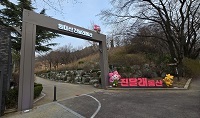
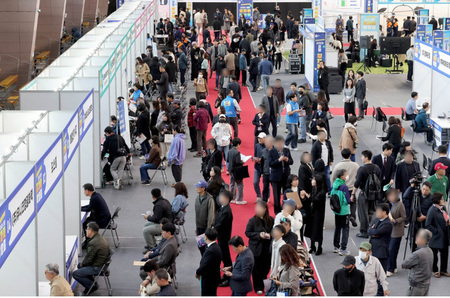
문화 창고, 소박한 이름 속에 전시관이 있다. 외관은 겸손하고 크지 않지만 문을 여는 순간, 이곳이 품고 있는 시간의 밀도는 결코 가볍지 않다. ‘한국현대미술거장展’
 한국현대미술거장전(1월27일~3월29일) |
“그림처럼 정확한 나의 분신은 없다. 난 나의 그림에 고백하고 나를 녹여서 넣는다.“라는 장욱진, ”내가 그리는 선, 하늘 끝에 더 갔을까? 눈을 감으면 환히 보이는 무지개보다 더 환해지는 우리 강산“이라던 김환기의 작품에서 공감하며 많은 상상을 이끌어 본다.
박수근의 투박하고 따뜻한 인간 군상, 유영국의 단단한 색 면과 산의 추상, 이대원의 생명력 넘치는 농원 풍경, 작년 둘째 딸과 손잡고 국립현대미술관 전시에서 보았던 김창열의 물방울은 연산천 위에 맺힌 아침 이슬을 떠올려 아름답다.
박서보, 천경자, 이왈종 등 한국 근현대 미술을 대표하는 거장들의 작품들이 이 작은 시골 전시관에 나란히 걸려 있다. 도시의 미술관처럼 화려한 설명도 붐비는 관람객도 없다.

|

|

|

|

|

|
대신 작품 앞에 오래 서 있을 수 있는 여백이 있다. 아무도 재촉하지 않는 시간 속에서 그림과 대화가 가능하다. 그래서 이곳에서 문화는 ‘소비’가 아니라 ‘동행’에 가깝다.
구부러진 세상의 길을 한 방향으로 바라보며 함께 걷고 있는 사랑스러운 아내와 모든 전시공연을 함께 한다.
더하여 우리의 따뜻한 시선이 닿는 곳에는 서울에서 내려와 하늘의 별마다 운명이 있다고 믿고 하늘의 언어를 같이 헤아릴 줄 아는 조카내외의 행복하고 호기심 가득한 발걸음도 함께 하였다.
연산의 들녘과 하천, 시골길의 면사무소, 간이역 배경을 지나 몸과 마음이 그대로 전시장 안으로 들어와 작품과 만난다. 예술은 특별한 날을 위해 차려입고 가야 할 대상이 아니라, 일상의 산책 끝에서 자연스럽게 마주하는 풍경이 된다.
황새가 날아오르고, 연산천이 흐르고, 그 곁에서 한국 현대미술의 깊은 시간이 숨 쉬고 있다. 도시에서 멀어질수록 문화도 멀어진다는 통념은 이곳에서 힘을 잃는다. 연산의 한적한 길 위에서, 예술은 가장 자연스러운 모습으로 우리 곁에 와 있었다.
 © 솔향 김종태 |
< 솔향 김종태 약력 >
픽모아문화관광뉴스 회장
대전바둑협회 부회장
동구, 대덕구축제위원회위원, 위원장
대전세종연구원소비자자문위원
대전정보문화산업진흥원경영혁신위원
대전킥복싱연맹고문/ 스포츠공정위원
대전척수장애인협회 허브센터장
CMB대전방송 /TRA미디어위원
대전폴리텍대학홍보대사
`93대전엑스포동우회 간사
*아래는 위 기사를 '구글 번역'으로 번역한 영문 기사의 [전문]입니다. '구글번역'은 이해도를 높이기를 위해 노력하고 있습니다. 영문 번역에 오류가 있을 수 있음을 전제로 합니다.<*The following is [the full text] of the English article translated by 'Google Translate'. 'Google Translate' is working hard to improve understanding. It is assumed that there may be errors in the English translation.>
The Flapping of Storks' Wings, Art in the Countryside
The Yeonsancheon Stream and the Honam Line run parallel, cutting through Hwangsan Plain. The storks, lazily gliding across the sky on the clear waters flowing through the ice, fold their wings and fall silently.
Following the country road that connects the tranquil riverbank, one naturally comes to accept that this is a land where time still seems to have vanished. Both footsteps and thoughts naturally slow down. At the end of the road, Yeonsan Station, a picturesque, unassuming space, leaves its former glory behind.
A cultural warehouse, its humble name belies its exhibition hall. The exterior may be modest and unassuming, but the moment you open the door, the density of time it holds is anything but insignificant. ‘Masters of Modern Korean Art Exhibition’
“There is no other self as precise as a painting. I confess and melt myself into my paintings,” said Jang Wook-jin. Kim Hwan-ki’s work, “Did the lines I draw reach the edge of the sky? Our rivers and mountains become brighter than the rainbow that appears when I close my eyes,” resonates with me and inspires my imagination.
Park Soo-keun’s rugged yet warm human figures, Yoo Young-kuk’s solid colors and abstract mountains, Lee Dae-won’s vibrant farm landscapes, and Kim Tschang-yeol’s water droplets, which I saw at the National Museum of Modern and Contemporary Art last year with my second daughter, are beautiful, reminiscent of the morning dew on the Yeonsancheon Stream.
Works by leading figures of modern and contemporary Korean art, including Park Seo-bo, Chun Kyung-ja, and Lee Wal-jong, are displayed side by side in this small, rural gallery. Unlike urban art galleries, there are no elaborate explanations or crowded audiences.
Instead, there is ample space to linger before the artworks. Unhurried, the exhibition allows for a dialogue with the paintings. So, here, culture is closer to "accompaniment" than "consumption."
I attend all exhibitions and performances with my lovely wife, who walks alongside me, looking in the same direction along the crooked path of the world.
Furthermore, our warm gaze reaches out to my niece and nephew, who have come down from Seoul and believe that each star in the sky has its own destiny, and who know how to interpret the language of the heavens together.
Passing through the fields and streams of Yeonsan, the township office on a country road, and the backdrop of a small station, we enter the exhibition hall, body and soul intact, and encounter the works. Art is not something to be dressed up for special occasions, but rather a natural landscape encountered at the end of an everyday walk.
Storks soar, the Yeonsancheon Stream flows, and beside them, the profound time of Korean contemporary art breathes. The common belief that culture fades as one moves away from the city loses its force here. On the quiet streets of Yeonsan, art comes to us in its most natural form.
원본 기사 보기:브레이크뉴스대전세종충청