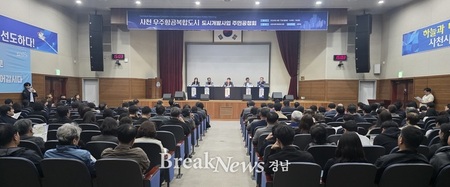
▲ 부산시는 5일 ‘부산형 공공지원 시장정비 통합기획’을 본격 추진을 위해 16개 구·군과 (재)부산경제진흥원, 상인연합회와 업무협약(MOU)을 맺고 있다. © 배종태 기자 |
[브레이크뉴스=배종태 기자] 부산시는 5일 16개 구·군과 (재)부산경제진흥원, 상인연합회와 업무협약(MOU)을 맺고 ‘부산형 공공지원 시장정비 통합기획’을 본격 추진한다고 밝혔다.
시는 협약을 통해 공공은 정책 수립과 제도 개선, 기술 및 재정 지원을 담당하고, 부산경제진흥원은 컨설팅 등 전문 기술지원을, 상인연합회는 상인 의견 수렴과 참여를 맡는 역할 분담 체계를 구축한다. 아울러, 협약기관 간 협의체를 구성해 사업 추진 과정의 주요 현안과 현장 애로사항을 공유하고, 제도 개선 과제를 지속 논의할 계획이다.
‘공공지원 시장정비 통합기획’은 노후화, 공실 증가, 소비환경 변화 등으로 침체된 전통시장을 지역경제의 핵심 거점으로 재도약시키기 위한 사업이다. 공공이 초기 단계부터 기획과 분석, 조정에 참여해 사업의 속도와 안정성을 높이고, 공공성과 사업성을 동시에 확보한다는 목표다.
부산에는 총 189개의 전통시장이 있으며, 이 중 107곳이 노후화로 정비가 필요한 상태다. 과거 민간 중심으로 추진된 정비 사업은 사업성 판단의 어려움과 이해관계 충돌로 장기 지연되거나 중단되는 경우가 많았다. 시는 이런 문제를 해소하기 위해 사업 초기 단계부터 ‘전문가 컨설팅’을 새로 도입한다.
전문가 컨설팅에는 건축, 도시계획, 법률, 부동산, 사업성 분석 등 분야별 전문가가 참여한다. 대상지 여건을 종합 분석해 ▲사업 가능성 ▲공공성 확보 방안 ▲상인 보호 전략 ▲상가 활성화 방향 ▲공공시설 연계 가능성 등을 검토한다. 이를 통해 유통 트렌드 변화와 디지털 환경을 반영한 현실적 사업 구조를 설계하고, 시장·주거·공공시설이 어우러지는 기능 복합화 모델과 창의적 건축 디자인도 검토한다.
시는 전문가 컨설팅 결과를 향후 사업추진계획 수립의 기초 자료로 활용하고, 공공이 지원하는 사업추진계획 수립 용역으로 연계할 방침이다. 이달 중 컨설팅 대상지를 공모해 수요를 파악한 뒤, 사업비를 단계적으로 확보해 추진 범위를 확대한다.
 ▲ 부산시가 5일 시청 대회의실에서 16개 구·군과 (재)부산경제진흥원, 상인연합회와 업무협약(MOU)을 맺고 ‘부산형 공공지원 시장정비 통합기획’추진에 대해 브리핑하고 있다. © 배종태 기자 |
또 시장정비 사업이 일관되고 체계적으로 추진되도록 운영기준과 표준 가이드라인을 마련한다. 기획부터 설계, 인허가, 착공, 운영까지 전 과정의 절차와 적용 기준, 공공지원 범위를 명확히 해 행정 혼선을 줄이고 예측 가능성을 높인다. 시는 단순한 판매시설 정비를 넘어 주민생활과 밀접한 사회기반시설(SOC) 기능을 갖춘 지역 거점공간으로 시장을 전환할 계획이다.
박형준 부산시장은 “이번 통합기획은 공공이 먼저 기획의 길을 열고, 민간과 상인, 주민이 함께 시장의 미래를 완성해 가는 새로운 정비모델”이라며 “상인에게는 안정적인 삶터를, 시민에게는 나은 도시환경을 제공해 전통시장이 다시 지역의 중심이 되도록 시가 끝까지 함께하겠다”고 말했다.
[Here’s an English news version of the story] Busan Launches Integrated Public Support Plan for Market Redevelopment, Signs MOU with Districts and Merchant Groups
Busan City on Thursday signed a memorandum of understanding with 16 district offices, the Busan Economic Promotion Agency, and the Busan Federation of Market Merchants to push forward its “Integrated Public Support Plan for Traditional Market Redevelopment.”
Under the agreement, the city will lead policy development, institutional improvements, and financial support, while the Busan Economic Promotion Agency will provide technical consulting services. The merchants’ federation will collect market vendors’ opinions and promote participation. The partners will form a consultative body to share field issues and coordinate system improvements during project execution.
The initiative aims to transform the city’s aging traditional markets—many suffering from vacancies and changing consumer habits—into active community hubs. By applying public planning expertise in the early stages, the city seeks to accelerate project progress while ensuring both public interest and business viability.
Of Busan’s 189 traditional markets, 107 are considered in need of redevelopment. Previous private-led projects often stalled due to feasibility concerns, conflicts of interest, and prolonged delays. To address these weaknesses, the new initiative introduces an “expert consulting” process from the start, engaging specialists in architecture, urban planning, law, real estate, and business evaluation.
These experts will assess each site’s conditions and propose strategies for business feasibility, public benefit, merchant protection, retail activation, and integration with public facilities. The city plans to design realistic business models that reflect modern distribution trends and digital transformation, exploring mixed-use spaces that combine market, residential, and public functions.
Consulting outcomes will serve as baseline data for future project implementation plans, which may receive additional public support. Busan will begin accepting applications for consulting projects this month and gradually expand funding based on demand.
To ensure consistency, the city will also prepare operational standards and guidelines covering all stages—from planning to design, permitting, construction, and operation—clarifying public support scope and administrative procedures. The plan aims to shift redevelopment from simple physical repairs to the creation of multi-functional community infrastructure.
Mayor Park Heong-joon said the initiative “opens the path for public-led planning so that merchants, residents, and the private sector can shape the future of traditional markets together,” adding that the city “will work to provide stable livelihoods for merchants and a better urban environment for citizens, making traditional markets once again vibrant regional anchors.”
원본 기사 보기:부산브레이크뉴스