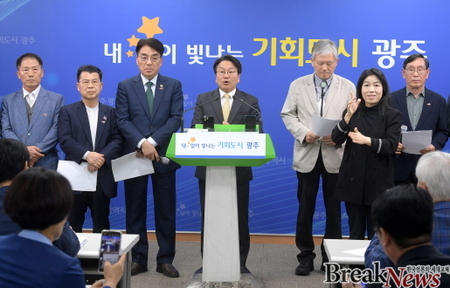
▲ 박형준 부산시장이 12일 긴급 브리핑을 열고 “기획예산처가 도시철도 정관선 사업의 예비타당성조사를 통과시켰다”며 “동부산권 순환철도망 완성의 첫 관문을 통과했다”고 밝히고 있다. © 배종태 기자 |
[브레이크뉴스=배종태 기자] 부산 기장군과 동부산권의 숙원사업인 도시철도 ‘정관선’ 건설이 정부 예비타당성조사를 통과했다. 박형준 부산시장은 설 연휴를 앞둔 12일 긴급 브리핑을 열고 “기획예산처가 도시철도 정관선 사업의 예비타당성조사를 통과시켰다”며 “동부산권 순환철도망 완성의 첫 관문을 통과했다”고 밝혔다.
정책적 의미와 배경
정관선은 부산~양산~울산 광역철도와 동해선을 연결하는 '동부산권 순환철도망의 핵심 노선'으로, 도시철도 서비스가 닿지 않던 기장군의 교통 불편 해소가 기대된다.
박 시장은 “인구 규모와 수요만으로 경제성을 확보하기 어려웠지만, 정관신도시와 동부산권을 하나의 생활권으로 묶어 시민 이동권과 정주 여건 개선의 필요성에 초점을 맞췄다”고 설명했다.
부산시는 2022년 8월 예비타당성조사 재신청 후 관계 부처 협의와 유관 기관 검토를 지속하며 사업 타당성을 보완해 왔다. 박 시장은 “경제성 중심의 기준을 넘어 시민 삶의 질과 지역 균형발전을 함께 고려한 정책 판단의 결과”라고 강조했다.
사업 개요
‘도시철도 정관선’은'기장군 정관읍 월평리에서 동해선 좌천역까지 총연장 12.8㎞' 구간을 연결하며, 총사업비는 4,794억 원이다.
총 13개 정거장이 신설될 예정이며, 무가선 트램(친환경 신교통수단)도입이 추진된다. 정관선은 정관신도시 교통망을 개선하고 향후 부산~양산~울산 광역철도와 연계되어 동남권 광역 생활권 형성에 기여할 것으로 전망된다.
부산시는 올해 상반기 내 타당성 평가 및 기본계획 수립 용역에 착수할 예정이다. 설계 및 행정절차를 거쳐 2028년 착공, 2032년 개통이 목표다. 박 시장은 “부산~양산~울산 광역철도 사업과 추진 시기를 맞춰 시너지를 높이겠다”며 “속도감 있게 준비하겠다”고 밝혔다.
 ▲ 도시철도 정관선 위치도 © 배종태 기자 |
파급효과 및 연계사업
정관선 개통 후에는 기장읍과 정관신도시, 좌천·좌동 일대의 '도시철도 접근성이 크게 개선'될 전망이다. 부산~양산~울산 광역철도와 연계를 통해 ‘부산·양산·울산 1시간 생활권’ 구축이 가능해지고, 기장군은 향후 동남권 교통 중심지로 부상하게 된다. 또한 정관선은 동부산권 주요 개발 사업과 연계되어 지역 성장 잠재력을 높이는 기폭제가 될 것으로 기대된다.
부산시는 이날 예타 통과를 포함해 최근 잇따른 교통 인프라 성과를 ‘도시 이동혁신의 전환점’으로 평가했다. 박형준 시장은 “우리시는 부산의 동서를 10분에 연결하는 만덕~센텀 대심도 개통에 이어, 가덕도 신공항에서 북항을 15분에 연결하는 BuTX 사업(부산 전기트램) 의 민자 적격성조사 통과, 중부산에서 동부산으로 이동 시간을 30분이나 단축하는 반송터널의 정부 혼잡도로 개선 사업 확정, 그리고 오늘 부산~양산~울산 광역철도와의 연계를 통해 부산·양산·울산을 1시간 생활권으로 만들 도시철도 정관선 예비타당성조사 통과로 부산 교통이 획기적으로 개선되는 혁신의 발판을 마련했다”고 말했다.
이어 그는 “시민의 이동권을 보장하고, 부산과 경남·울산이 하나의 생활권으로 발전하는 데 기여할 교통 정책들이 완성되는 그날까지 부산시는 책임 있는 자세로 최선을 다하겠다”고 강조했다.
[Here is anl English version of the article] Busan’s Jeonggwan Line Rail Project Clears Key Feasibility Hurdle, Paving Way for Eastern Transit Upgrade
Construction of the Jeonggwan Line, a long-awaited urban rail project for Busan’s Gijang County and the eastern part of the city, has cleared the central government’s preliminary feasibility study. Mayor Park Hyung-joon announced at an emergency briefing on the 12th, ahead of the Lunar New Year holiday, that “the Ministry of Economy and Finance has approved the preliminary feasibility study for the Jeonggwan Line urban railway project,” adding that “this marks the opening of the first gateway to completing the eastern Busan circular rail network.”
In terms of policy significance, the Jeonggwan Line is positioned as a “core link in the eastern Busan circular rail network,” connecting the Busan–Yangsan–Ulsan metropolitan railway with the Donghae Line and addressing long-standing transit gaps in Gijang, which until now has had no urban rail service. Park noted that “it was difficult to secure economic feasibility based solely on population size and ridership forecasts, but we focused on the need to integrate Jeonggwan New Town and the eastern Busan area into a single living zone and to improve residents’ mobility rights and living conditions.”
According to the city, Busan resubmitted the project for preliminary feasibility review in August 2022 and has since worked with central ministries and related agencies to shore up the project’s justification. Park stressed that the approval “reflects a policy decision that goes beyond narrow economic indicators to consider residents’ quality of life and balanced regional development.”
The Jeonggwan urban rail line will run 12.8 kilometers from Wolpyeong-ri in Jeonggwan-eup, Gijang County, to Jwacheon Station on the Donghae Line, with a total project cost of 479.4 billion won. The plan calls for 13 new stations and the introduction of catenary-free trams as an eco-friendly, next-generation transit mode, a move expected to significantly upgrade Jeonggwan New Town’s local transit network and, in the longer term, support the creation of a wider Busan–Yangsan–Ulsan living sphere.
Busan plans to launch feasibility assessment and master-plan studies for the line within the first half of this year, then move into design and other administrative procedures. The city is aiming to break ground in 2028 and open the line in 2032, with Park saying it will “synchronize the Jeonggwan Line’s schedule with the Busan–Yangsan–Ulsan metropolitan railway to maximize synergies” and that the city will “push the project forward at full speed.”
Once the line opens, neighborhoods including Jeonggwan-eup, Jeonggwan New Town and the Jwacheon–Jwadong area are expected to see a dramatic improvement in access to urban rail. Linked to the Busan–Yangsan–Ulsan metropolitan railway, the Jeonggwan Line is also projected to help establish a “one-hour living zone” tying together the three cities, with Gijang emerging as a key transport hub for the broader southeast region.
City officials frame the Jeonggwan Line’s approval as part of a broader shift in Busan’s transport map. Park pointed to the recent opening of the Manduk–Centum deep underground expressway, which cuts east–west travel time in the city to about 10 minutes, the completion of a private-investment eligibility review for the BuTX electric tram project linking the new Gaduk Airport to North Port in around 15 minutes, and central government approval of congestion-relief upgrades for the Bansong Tunnel that will shave roughly 30 minutes off trips from central to eastern Busan.
“With today’s preliminary feasibility approval for the Jeonggwan Line, which will connect with the Busan–Yangsan–Ulsan metropolitan railway to create a one-hour living zone for Busan, Yangsan and Ulsan, we have laid the groundwork for a step-change in Busan’s transportation system,” Park said.
He added, “Until the day these transport policies are fully in place—policies that guarantee citizens’ right to mobility and help Busan and neighboring Ulsan in South Gyeongsang Province grow into a single living sphere—the city will do its utmost with a strong sense of responsibility.”
원본 기사 보기:부산브레이크뉴스