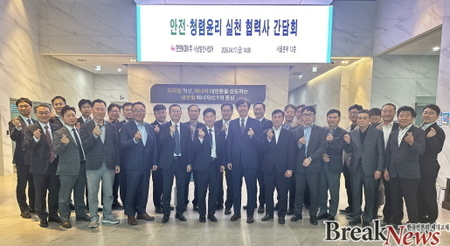
▲ 손재일 한화에어로스페이스 대표이사와 차재병 KAI 대표이사가 지난 2월 서울 중구 한화빌딩에서 ‘K-방산 글로벌경쟁력 강화를 위한 미래 핵심 사업 공동 협력 협약’ 체결식 이후 기념촬영하고 있다. © 한화 |
브레이크뉴스 문홍철 기자= 한화시스템이 한국항공우주산업(KAI) 지분 0.58%를 취득했다.
금융감독원 전자공시시스템에 따르면 한화의 한화시스템은 지난 해 11월 KAI 보통주 56만6635주를 약 599억원에 매입했다. 이는 KAI 전체 주식의 0.58%에 해당하는 규모다.
통상 지분율 5% 미만은 주식 대량 보유 공시 대상에 해당되지 않아 매입 당시에는 공개되지 않았다. 한화시스템 사업보고서를 통해 이번에 공개됐다.
한화 계열사가 KAI 지분을 보유하는 것은 2018년 한화에어로스페이스가 KAI 보유 지분 5.99%를 전량 매각한 후 7년만이다.
한화와 KAI는 KF-21 보라매 전투기 개발 사업에서는 협력 관계이도 하지만, 초소형 위성체계 등 우주 사업에서는 경쟁업체이기도 하다.
이번 지분 투자를 두고 업계에서는 비록 0.58% 소수에 불과하지만, 향후 양사간의 협력 시너지에 주목하고 있다. 최근 전장 산업 환경이 우주로까지 확대되면서 경쟁보다는 협력 강화에 무게를 두고 있는 것.
실제, 육·해·공·우주를 통합한 ‘전 영역 작전’ 개념이 글로벌 방산의 핵심 전략으로 자리 잡고 있으며, 발사체부터 위성·데이터까지 아우르는 이른 바 ‘한국형 스페이스X’도 부상하고 있다.
일론 머스크의 우주기업 ‘스페이스X’는 이 같은 배경에 더 힘을 싣고 있다. 2002년 설립된 ‘스페이스X’는 위성 발사 비용을 획기적으로 낮추며 민간 우주산업의 판도를 변화시키는 등 현재는 위성인터넷에서 방산 솔루션까지 아우르는 복합 안보 기업으로 성장했다.
한국 역시 이에 대응하기 위헤서는 ‘발사-위성-데이터’가 하나의 사업과 생태계로 돌아가는 ‘한국판 스페이스X’ 필요하다는 이유다.
특히, 한화와 KAI는 협력 강화 시 시너지가 기대되는 ‘최적의 조합’으로 평가된다. 사업영역 역시 서로 보완관계에 놓여 있어 중복과 독과점 영역에서도 비교적 자유로운 상태다.
한화는 2021년 ‘스페이스 허브’를 출범시키며, ‘발사체(한화에어로스페이스)-위성 제조(한화시스템)-영상 판매’로 이어지는 우주 사업 수직 계열화를 추진해 왔다.
KAI는 차세대 중형위성 개발과 양산을 주도해 왔으며, 핵심 부품 및 탑재체 기술 자립화에 성공했다. 또한, 정지궤도복합위성과 다목적실용위성 본체·시스템 개발을 수행하는 등 중대형급 위성 기술을 갖추고 있는 것으로 평가된다.
한화의 발사체 기술과 KAI의 위성 본체·시스템 개발 경험이 결합되면 ‘발사-위성-데이터-서비스’로 이어지는 우주 밸류체인이 구축될 가능성도 높아진다.
한편, KAI의 민영화 논의도 이번 지분 취득을 두고 부상하고 있다. KAI의 최대주주는 한국수출입은행으로(26.41%)이며, 다음으로 국민연금공단이 8.20% 보유하고 있다. 정부 지분이 사실상 30%를 넘어가는 구조다.
그러나, 현재 부채비율이 450%를 넘어가는 등 재무 부담이 지적되면서 민영화 목소리도 지속적으로 나오고 있다.
단, 지분 취득과 관련, 한화는 우주항공·방산 분야 사업 협력 강화를 위한 일반 투자라는 입장으로 전해졌다.
break9874@naver.com
*아래는 위 기사를 '구글 번역'으로 번역한 영문 기사의 [전문]입니다. 구글번역'은 이해도 높이기를 위해 노력하고 있습니다. 영문 번역에 오류가 있을 수 있음을 전제로 합니다.<*The following is [the full text] of the English article translated by 'Google Translate'. 'Google Translate' is working hard to improve understanding. It is assumed that there may be errors in the English translation.>
Hanwha Systems Acquires 0.58% Stake in Korea Aerospace Industries
Hanwha Systems has acquired a 0.58% stake in Korea Aerospace Industries (KAI).
According to the Financial Supervisory Service's electronic disclosure system, Hanwha Systems, a subsidiary of Hanwha, purchased 566,635 common shares of KAI for approximately 59.9 billion won last November. This represents 0.58% of KAI's total outstanding shares.
Typically, shareholdings of less than 5% are not subject to disclosure requirements for large stock holdings, so the purchase was not disclosed at the time. It was recently revealed through Hanwha Systems' business report.
This marks the first time a Hanwha affiliate has held a stake in KAI in seven years, since Hanwha Aerospace sold its entire 5.99% stake in the company in 2018.
While Hanwha and KAI are partners in the development of the KF-21 Boramae fighter jet, they are also competitors in the space sector, including microsatellite systems. Regarding this equity investment, the industry is paying close attention to the potential synergies for future cooperation between the two companies, even though the stake is merely a small fraction of 0.58%. As the battlefield industry environment has recently expanded into space, the focus is shifting toward strengthening cooperation rather than competition.
In fact, the concept of "All-Domain Operations," which integrates land, sea, air, and space, has established itself as a core strategy in the global defense industry. Furthermore, a so-called "Korean SpaceX"—encompassing everything from launch vehicles to satellites and data—is emerging.
Elon Musk's space company, SpaceX, is adding further weight to this backdrop. Founded in 2002, SpaceX has grown into a complex security enterprise encompassing everything from satellite internet to defense solutions, having revolutionized the private space industry by drastically lowering satellite launch costs.
The reasoning is that to respond to this, Korea also needs a "Korean SpaceX" where "launch, satellite, and data" operate as a single business and ecosystem. In particular, Hanwha and KAI are considered the "optimal combination" expected to generate synergy when cooperation is strengthened. Their business areas are also complementary, placing them relatively free from overlap and monopolistic practices.
Hanwha launched its "Space Hub" in 2021 and has been pursuing vertical integration of its space business, extending from launch vehicles (Hanwha Aerospace) to satellite manufacturing (Hanwha Systems) and image sales.
KAI has led the development and mass production of next-generation medium-sized satellites and has successfully achieved technological independence in core components and payloads. Furthermore, it is assessed to possess medium-to-large-sized satellite technology, having carried out the development of geostationary composite satellites and the bodies and systems for multi-purpose satellites.
The combination of Hanwha's launch vehicle technology and KAI's experience in satellite body and system development increases the likelihood of establishing a space value chain extending from launch to satellite to data and services.
Meanwhile, discussions regarding the privatization of KAI are also emerging in light of this equity acquisition. The largest shareholder of KAI is the Export-Import Bank of Korea (26.41%), followed by the National Pension Service with 8.20%. This structure effectively results in the government holding over 30% of the shares.
However, as financial burdens are being pointed out, such as the current debt ratio exceeding 450%, calls for privatization are continuously being raised.
Regarding the share acquisition, however, Hanwha has reportedly stated that it is a general investment aimed at strengthening business cooperation in the aerospace and defense sectors.