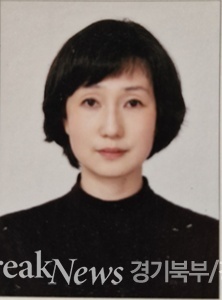
▲필자/김정기 칼럼니스트. ©브레이크뉴스 |
정치에는 경쟁이 있다. 그러나 경쟁이 전략을 향하지 않을 때 정치는 권력을 만드는 과정이 아니라 감정을 소비하는 과정이 된다. 요즘 홍준표(전 대구시장)의 정치가 바로 그런 모습이다. 그는 연일 오세훈 서울시장을 공격하고 있다. “서울시장 4번 했으면 이제 그만하라”는 말까지 했다. 이미 정계 은퇴를 선언했던 정치인의 발언치고는 지나치게 집요하다. 문제는 말의 거칠음이 아니다. 그 말 속에 정치적 전략이 보이지 않는다는 점이다.
이 장면을 이해하려면 2006년 한나라당 서울시장 경선을 떠올릴 필요가 있다. 당시 서울시당 48개 당협위원장 구도는 맹형규 약 30명, 홍준표 약 13명, 박진 약 3명, 이재오 약 2명 정도였다. 그러나 민주당 강금실이 급부상하면서 판세가 흔들렸다. 여론조사는 냉정했다. 기존 후보 가운데 누구도 강금실을 이길 수 없었다. 결국 오세훈이 호출됐고, 당은 본선 승리 가능성을 기준으로 그를 선택했다. 홍준표에게 그 경선은 단순한 패배 이상의 의미를 남겼다. 정치에서 패배는 교훈이 되기도 하지만 때로는 심리적 흔적으로 남는다.
정치심리학자 해럴드 라스웰(Harold Lasswell)은 정치 행동의 중요한 동기 가운데 하나로 지위 불안(status anxiety)을 지적했다. 권력 중심에서 배제되었다고 생각하는 정치인은 전략적 판단보다 심리적 보상 행동에 더 쉽게 끌릴 수 있다는 것이다.
내가 정치학을 공부했던 뉴욕주립대학교 스토니브룩(Stony Brook University)은 정치심리학 연구로 세계적으로 알려진 대학이다. 미국 정치학계에서는 이 분야에서 미시간대학교(University of Michigan)와 함께 대표적인 연구 중심지로 평가받는다. 정치 지도자의 언어와 행동을 개인 심리와 권력 구조의 관계 속에서 분석하는 연구가 이곳에서 오래 축적되어 왔다.
정치심리학의 관점에서 보면 정치인의 공격적 언어는 단순한 정치 기술이 아니다. 그것은 권력 위치와 개인 심리가 결합된 정치 행동의 한 형태로 이해된다.
홍준표의 정치 경로를 보면 이러한 심리 구조가 읽힌다. 그는 가난한 어린 시절을 거쳐 사법시험을 통해 사회적 상승을 이룬 인물이다. 그러나 급격한 사회적 상승은 종종 강한 경쟁 심리와 함께 상대적 박탈감(relative deprivation)을 남긴다. 개인이 자신의 위치를 객관적 기준이 아니라 주변 엘리트와 비교하면서 형성되는 정치심리다.
검찰 시절 그의 경력도 상징적이다. 한국 검찰에서 권력의 중심은 중수부와 특수부다. 권력형 사건을 다루는 핵심 라인이다. 그러나 홍준표는 주로 강력부 검사로 활동했다. 살인, 강도 같은 형사 사건을 다루는 분야다. 중요한 역할이지만 검찰 조직의 권력 중심과는 일정한 거리가 있는 자리였다. 정치권에서도 상황은 크게 다르지 않았다. 보수정당 내부에서 그는 늘 중심 권력과 일정한 거리를 둔 정치인이었다. 김영삼, 이명박, 박근혜, 윤석열 등 역대 보수 정권의 대통령 가운데 그를 임명직으로 중용한 경우는 단 한 번도 없었다. 조선·중앙·동아로 대표되는 보수 엘리트 언론 역시 그를 보수 정치의 중심 인물로 대우하지 않았다. 당내 정치 네트워크에서도 그는 늘 변방에 가까운 위치였다.
변방의 경험은 정치인의 언어를 바꾼다. 권력의 중심에 서 있는 정치인은 품격을 이야기한다. 그러나 권력의 주변에 머문 정치인은 공격을 이야기한다.
정치에는 두 종류의 정치인이 있다. 권력을 만드는 정치인과 권력을 잃는 정치인이다. 권력을 만드는 정치인은 전략을 이야기하고 사람을 모은다. 반대로 권력을 잃는 정치인은 정치적 에너지를 갈등과 공격에 소비한다. 지금 홍준표 정치가 보여주는 모습은 분명하다. 정치를 만드는 언어라기보다 정치적 감정을 배출하는 언어다. 정치에서 가장 위험한 것은 적이 아니라 왜곡된 인식 구조다. 적은 전략으로 대응할 수 있지만 왜곡된 인식은 전략 자체를 만들지 못한다. 그래서 지금 보수 정치가 시간을 잃고 있는 것이다. 문제는 경쟁자가 강해서가 아니다. 보수 정치가 스스로의 감정과 싸우느라 미래와 싸우지 못하고 있기 때문이다. 정치의 시간은 감정으로 흐르지 않는다. 전략으로 흐른다. Jeongkeekim@naver.com
*필자/김정기
● 학력
- 뉴욕주립대학교(Stony Brook) 정치학과 수석 졸업
- 마케트대학교(Marquette) 로스쿨 법학박사
- 하버드대학교(Harvard) 케네디스쿨 최고위 과정
- 베이징대학교(Peking) 북한학 연구학자
● 경력
- 세계스마트시티기구(WeGO) 사무총장 (현)
- 유엔 국제전기통신연합 (UN ITU) 가상세계 및 AI 글로벌 이니셔티브 집행위원(현)
- 법무법인 대륙아주 중국 총괄 미국변호사
- 동국대학교 경영전문대학원 석좌교수
- 숭실사이버대학교 총장
- 칼럼니스트
● 저서
1. 대학생을 위한 거로영어연구[전 10권](거로출판사)
2. 나는 1%의 가능성에 도전한다(조선일보사)
3. 한국형 협상의 법칙(청년정신사)
4. 대한민국과 세계 이야기 (도서출판 책미듬)
5. Korea and the World (Advance Reader Copy).
*아래는 위 기사를 '구글 번역'으로 번역한 영문 기사의 [전문]입니다. '구글번역'은 이해도 높이기를 위해 노력하고 있습니다. 영문 번역에 오류가 있을 수 있음을 전제로 합니다.<*The following is [the full text] of the English article translated by 'Google Translate'. 'Google Translate' is working hard to improve understanding. It is assumed that there may be errors in the English translation.>
Politician Hong Joon-pyo’s Aggressive Politics... “Why Does Conservatism Lose Time?”
- Columnist Kim Jung-ki
Competition exists in politics. However, when competition does not lead to strategy, politics becomes a process of consuming emotions rather than a process of building power. This is exactly what Hong Joon-pyo (former Mayor of Daegu)’s politics looks like these days. He is attacking Seoul Mayor Oh Se-hoon day after day. He even went so far as to say, “You’ve served as Seoul Mayor four times; stop it now.” For a politician who had already declared his retirement from politics, his remarks are excessively persistent. The problem is not the roughness of his language. It is that no political strategy is visible in those words.
To understand this scene, one needs to recall the 2006 Grand National Party (GNP) Seoul mayoral primary. At the time, the composition of the 48 district chapter chairmen in Seoul was approximately 30 for Maeng Hyeong-gyu, 13 for Hong Joon-pyo, 3 for Park Jin, and 2 for Lee Jae-oh. However, the landscape was shaken as Kang Geum-sil of the Democratic Party rapidly rose to prominence. Public opinion polls were cold and objective. None of the existing candidates could defeat Kang Kum-sil. Ultimately, Oh Se-hoon was called upon, and the party selected him based on his potential to win the general election. For Hong Joon-pyo, that primary held significance beyond a mere defeat. In politics, defeat serves as a lesson, but sometimes it leaves behind psychological scars.
Political psychologist Harold Lasswell identified status anxiety as one of the key motivations for political behavior. This suggests that politicians who feel excluded from the center of power may be more easily swayed by psychological reward behaviors than by strategic judgment.
Stony Brook University, where I studied political science, is a globally renowned institution for political psychology research. In the American political science community, it is considered a leading research hub in this field, alongside the University of Michigan. Research analyzing the language and behavior of political leaders within the context of the relationship between individual psychology and power structures has long been accumulated here.
From the perspective of political psychology, a politician's aggressive language is not merely a political technique. It is understood as a form of political behavior in which position of power and individual psychology are combined. This psychological structure can be discerned by examining Hong Joon-pyo's political trajectory. He is a figure who achieved social advancement through the bar exam after overcoming an impoverished childhood. However, such rapid social rise often leaves behind a sense of relative deprivation, accompanied by a strong competitive spirit. This is a political psychology formed when an individual compares their position not to objective standards, but to the elites around them.
His career during his time in the prosecution service is also symbolic. In the Korean prosecution system, the centers of power lie in the Central Investigation Division and the Special Investigation Division. These are the core lines handling power-related cases. However, Hong Joon-pyo primarily served as a prosecutor in the Violent Crimes Division, a field dealing with criminal cases such as murder and robbery. While it was an important role, it was a position that remained somewhat distant from the center of power within the prosecution organization. The situation was not much different in the political arena. Within the conservative party, he was always a politician who kept a certain distance from the central power. Among the presidents of successive conservative administrations—including Kim Young-sam, Lee Myung-bak, Park Geun-hye, and Yoon Suk-yeol—he was never once appointed to a key position. The conservative elite media, represented by Chosun, JoongAng, and Dong-A, also did not treat him as a central figure in conservative politics. Even within the party's internal political network, he was always positioned close to the periphery. Experience on the periphery changes a politician's language. Politicians standing at the center of power speak of dignity. However, those who remain on the periphery speak of aggression.
There are two types of politicians in politics: those who create power and those who lose it. Politicians who create power speak of strategy and rally support. Conversely, politicians who lose power expend their political energy on conflict and aggression. The current state of Hong Joon-pyo's politics is clear. It is a language that vents political emotions rather than a language that creates politics. The most dangerous thing in politics is not the enemy, but a distorted perception structure. An enemy can be countered with strategy, but a distorted perception cannot create strategy itself. That is why conservative politics is currently losing time. The problem is not that competitors are strong. It is because conservative politics is fighting its own emotions and failing to fight for the future. Time in politics does not flow through emotion; it flows through strategy. Jeongkeekim@naver.com
*Author/Kim Jeong-ki
● Education
- Graduated with honors from the Department of Political Science, State University of New York (Stony Brook)
- Juris Doctor from Marquette Law School
- Executive Program at Harvard Kennedy School
- North Korean Studies Scholar at Peking University
● Career
- Secretary General of the World Smart Cities Organization (WeGO) (Current)
- Executive Committee Member for the Global Initiative on Virtual Worlds and AI, United Nations International Telecommunication Union (ITU) (Current)
- US Attorney General for China at Daeryuk Aju Law Firm
- Distinguished Professor, Graduate School of Business, Dongguk University
- President, Soongsil Cyber University
- Columnist
● Publications
1. Georo English Research for University Students [10 Volumes] (Gero Publishing)
2. I Challenge the 1% Possibility (Chosun Ilbo)
3. Korean-style Negotiation Laws (Cheongnyeonjeongsinsa)
4. The Story of Korea and the World (Chaekmideum Publishing)
5. Korea and the World (Advance Reader Copy).