브레이크뉴스 김충열 정치전문기자 = 기후 위기는 일개 국가의 문제가 아니라 전 지구적 문제로 증폭되고 있다. 이재명 정부는 중동발 에너지 위기 장기화 가능성에 대비해 자동차 5부제·10부제 도입을 포함한 수요 절감 대책을 마련할 것을 주문했다. 원전 가동 확대와 재생에너지 전환 등 중·장기 대응까지 병행하는 총력 대응 기조도 강조했다. 그만큼 에너지는 우리의 삶과 국가 정책에 중요하다.
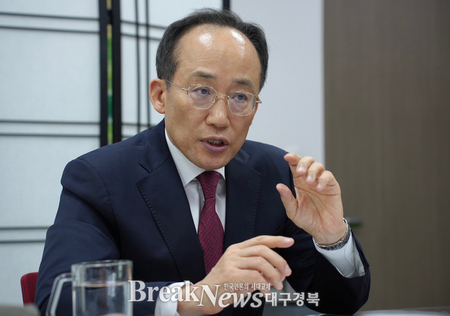
 ▲ 박홍배 의원은 “열에너지는 전력과 달리 지역적 특성이 강한 에너지이기 때문에 수요와 공급을 연결하는 정책 설계가 무엇보다 중요하다”며 “국가 차원의 정책 기반을 마련해 재생열과 폐열 활용을 확대하고 에너지 효율 향상과 온실가스 감축을 동시에 추진하겠다”고 강조했다. © 사진, 박 의원실 제공/김충열 정치전문기자 |
이에 기후위기 대응과 탄소중립 전환은 국가의 핵심 영역으로 부상하고 있지만 정책적인 차원에서 상대적으로 주목받지 못했던 ‘열에너지’를 체계적으로 관리하기 위한 기본법 제정이 추진된다.
박홍배 국회의원(더불어민주당·국회 기후에너지환경노동위원회)은 17일, 열에너지의 효율적 이용과 탈탄소화를 촉진하기 위한 「열에너지기본법안」을 대표발의했다고 밝혔다.
열에너지는 건물 난방과 냉방, 온수, 산업 공정 등 다양한 분야에서 활용되는 에너지로 우리나라 에너지 소비 구조에서 큰 비중을 차지한다. 국회미래연구원에 따르면 열에너지는 국내 최종 에너지 소비의 약 48%를 차지하며, 에너지 부문 온실가스 배출량의 약 29.2%가 열에너지 생산 과정에서 발생하는 것으로 분석된다.
산업 공정, 발전 시설, 소각시설, 데이터센터 등에서 열에너지가 발생하지만 활용되지 않고 버려지는 미활용 폐열의 잠재량도 상당한 것으로 평가된다. 특히 산업 공정, 발전시설, 소각시설, 데이터센터 등에서 발생하는 미활용 폐열은 열에너지 전환의 중요한 자원으로 거론된다. 유럽연합도 난방·냉방 부문 탈탄소화 과정에서 재생열과 폐열 활용, 지역 열네트워크 구축을 핵심 정책 수단으로 제시하고 있는 것으로 알려졌다.
그러나 지금까지 우리나라의 에너지 정책은 전력과 연료 중심으로 설계되어 열에너지에 대한 종합적인 정책 기반은 충분히 마련되지 못했다는 지적이 꾸준히 제기돼 왔다. 열에너지는 전력과 달리 장거리 수송이 어려워 지역 단위의 수요와 공급을 연결하는 정책 설계가 중요한데도 이를 체계적으로 관리할 국가 차원의 제도적 틀이 부족했다는 것이다.
국제적으로는 열에너지 관리 정책이 빠르게 강화되는 추세다. 유럽연합(EU)은 재생열에너지 확대와 산업 폐열 회수, 지역 열네트워크 구축 등을 주요 에너지 정책 수단으로 활용하고 있으며, 덴마크·독일 등 주요 국가에서는 지역 단위 열네트워크를 통해 에너지 효율 향상과 온실가스 감축을 동시에 추진하고 있다.
박 의원이 발의한 「열에너지기본법안」은 이러한 정책 공백을 해소하고 열에너지 정책을 국가 차원에서 체계적으로 추진하기 위한 기본 법적 기반을 마련하는 것을 핵심으로 한다.
제정안에는 ▲10년 단위 국가열에너지기본계획 수립 ▲지역별 열 수요와 공급을 파악하기 위한 열수요지도 작성 ▲지방자치단체 신청에 따른 열수요지구 지정 ▲재생열에너지 및 미활용 폐열 활용 촉진 ▲열네트워크 구축 지원 등의 내용이 담겼다.
또한 열에너지 정책이 여러 부처에 분산되어 있는 현실을 고려해 국무총리 소속 ‘열에너지정책위원회’를 설치하도록 하여 범정부 차원의 정책 조정 기능도 강화하도록 했다.
열수요지도와 열수요지구 제도를 통해 지역별 열 수요와 공급을 체계적으로 파악하고, 공장·발전소·소각시설 등에서 발생하는 미활용 폐열과 재생열에너지를 주택·상업시설 등 수요처와 연계하는 열네트워크 구축이 가능해질 것으로 기대된다.
박홍배 의원은 “열에너지는 이미 우리 에너지 소비 구조에서 큰 비중을 차지하고 있음에도 전력 중심 정책 구조 속에서 체계적인 관리 기반이 부족했다”며 “이번 열에너지기본법 제정을 통해 버려지는 열까지 에너지 자원으로 활용하고 탄소중립 정책의 사각지대를 해소하는 계기가 될 것”이라고 밝혔다.
이어 박 의원은 “열에너지는 전력과 달리 지역적 특성이 강한 에너지이기 때문에 수요와 공급을 연결하는 정책 설계가 무엇보다 중요하다”며 “국가 차원의 정책 기반을 마련해 재생열과 폐열 활용을 확대하고 에너지 효율 향상과 온실가스 감축을 동시에 추진하겠다”고 강조했다. hpf21@naver.com
*아래는 위 기사를'구글 번역'으로 번역한 영문 기사의[전문]입니다. '구글번역'은 이해도 높이기를 위해 노력하고 있습니다.영문 번역에 오류가 있을 수 있음을 전제로 합니다.*The following is [the full text] of the English article translated by 'Google Translate'. 'Google Translate' is working hard to improve understanding. It is assumed that there may be errors in the English translation.
Rep. Park Hong-bae Proposes ‘Framework Act on Thermal Energy’ to Turn Wasted Heat into Energy
Expanding the Use of Renewable and Unused Waste Heat… Eliminating Blind Spots in Carbon Neutrality Policies
Establishing a Foundation for Systematic Management of Thermal Energy in Heating and Industrial Processes
Break News, Political Reporter Kim Choong-lyoul = The climate crisis is escalating from a problem of a single nation into a global issue. While responding to the climate crisis and transitioning to carbon neutrality are emerging as core national domains, the enactment of a framework act is being pursued to systematically manage ‘thermal energy,’ which has received relatively little attention at the policy level.
Rep. Park Hong-bae (Democratic Party of Korea, National Assembly Climate, Energy, Environment and Labor Committee) announced on the 17th that he has introduced the “Framework Act on Thermal Energy” to promote the efficient use of thermal energy and decarbonization.
Thermal energy is utilized in various fields, including building heating and cooling, hot water, and industrial processes, and accounts for a significant portion of Korea’s energy consumption structure. According to the National Assembly Future Research Institute, thermal energy accounts for approximately 48% of domestic final energy consumption, and it is analyzed that about 29.2% of greenhouse gas emissions in the energy sector are generated during the thermal energy production process.
The potential for unused waste heat—which is generated in industrial processes, power generation facilities, incineration facilities, and data centers but is discarded without being utilized—is also assessed to be significant. In particular, unused waste heat generated from industrial processes, power generation facilities, incineration facilities, and data centers is cited as a crucial resource for the transition to thermal energy. The European Union is also known to be proposing the utilization of renewable and waste heat, as well as the establishment of regional heat networks, as key policy measures in the process of decarbonizing the heating and cooling sectors.
However, criticism has been consistently raised that Korea's energy policies have so far been designed around electricity and fuel, and a comprehensive policy foundation for thermal energy has not been sufficiently established. Unlike electricity, thermal energy is difficult to transport over long distances, making policy design that connects supply and demand at the regional level crucial; yet, there has been a lack of a national institutional framework to systematically manage this.
** Internationally, there is a rapidly strengthening trend in thermal energy management policies. The European Union (EU) utilizes the expansion of renewable thermal energy, the recovery of industrial waste heat, and the establishment of regional heat networks as key energy policy tools, while major countries such as Denmark and Germany are simultaneously pursuing energy efficiency improvements and greenhouse gas reductions through regional heat networks.
The "Framework Act on Thermal Energy" proposed by Representative Park focuses on resolving these policy gaps and establishing a fundamental legal basis for systematically promoting thermal energy policies at the national level.
The proposed legislation includes provisions for: ▲ establishing a 10-year National Thermal Energy Basic Plan; ▲ creating thermal demand maps to identify regional heat supply and demand; ▲ designating thermal demand districts upon application by local governments; ▲ promoting the utilization of renewable thermal energy and unused waste heat; and ▲ supporting the construction of heat networks.
Furthermore, considering the reality that thermal energy policies are currently fragmented across multiple ministries, the bill mandates the establishment of a "Thermal Energy Policy Committee" under the Prime Minister's office to strengthen government-wide policy coordination functions. It is expected that the Heat Demand Map and Heat Demand District systems will enable the systematic identification of regional heat supply and demand, and facilitate the establishment of heat networks that connect unused waste heat and renewable thermal energy generated from factories, power plants, and incineration facilities with demand centers such as residential and commercial facilities.
Representative Park Hong-bae stated, "Although thermal energy already accounts for a significant portion of our energy consumption structure, there has been a lack of a systematic management foundation within a policy framework centered on electricity." He added, "The enactment of the Framework Act on Thermal Energy will serve as an opportunity to utilize even wasted heat as an energy resource and resolve blind spots in carbon neutrality policies."
Representative Park further emphasized, "Unlike electricity, thermal energy is characterized by strong regional traits, so designing policies that connect supply and demand is of paramount importance." He continued, "We will establish a national policy framework to expand the utilization of renewable and waste heat, while simultaneously pursuing energy efficiency improvements and greenhouse gas reduction." hpf21@naver.com