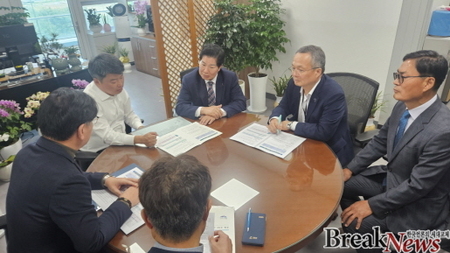
▲ 김종민 의원(세종시갑, 산자중기위) 국정감사 질의 모습=김종민 국회의원실 제공 © 정지완 기자 |
국회 산업통상자원중소벤처기업위원회 소속 김종민 의원(세종갑)이 '석유 및 석유대체연료 사업법' 개정안을 대표발의했다. 중동 정세 불안으로 국제유가 변동성이 커진 국면에서, 반복돼 온 국내 석유가격 급등 논란을 단기 처방이 아닌 유통구조 개선으로 다뤄야 한다는 문제의식이 법안의 출발점이 됐다.
이번 개정안은 정유사와 주유소 사이의 거래 방식에 직접 손을 대는 데 초점이 있다. 김 의원은 현행 시장에서 월말 사후정산 관행과 불확실한 공급가 구조가 가격 왜곡을 키우고, 소비자 불신을 누적시켜 왔다고 보고 있다. 이에 따라 개정안에는 공급가 공개와 실거래가 기준 거래·정산 규정을 새로 두는 내용이 담겼다. 가격 결정 과정의 불투명성을 줄여 유통 단계의 공정성을 높이겠다는 취지다.
법안은 현재 시행 중인 석유제품 최고가격지정제의 운용 기준도 보다 구체적으로 정리하도록 했다. 시행기간과 유종별·지역별 가격 기준, 공급가와 판매가 산정 방식 등을 고시로 정하도록 해, 비상 시기 가격 통제의 적용 틀을 명확히 하자는 것이다. 급등기마다 임시 조치가 반복되는 상황에서, 행정 재량에만 기대지 않고 제도 운용의 예측 가능성을 높이려는 시도로 읽힌다.
김 의원은 지난 9일 산자중기위 현안질의에서도 국제정세가 흔들릴 때마다 국내 기름값이 급하게 오르고 더디게 내려 소비자 불만이 되풀이된다고 지적한 바 있다. 특히 이런 현상이 단순한 시장 심리만이 아니라, 정유사 중심의 독과점 구조와 사후정산 거래 관행에서 비롯된 측면이 크다고 판단했다. 이번 개정안을 사실상 ‘석유공정거래법’에 가까운 접근으로 설명한 배경도 여기에 있다.
최근 정부 대응과도 맞물리는 대목이다. 정부는 13일부터 1997년 석유가격 자율화 이후 30년 만에 석유제품 최고가격제를 시행했고, 대통령 역시 정유사와 주유소의 담합, 매점매석, 사재기 등에 대한 강도 높은 단속을 주문했다. 다만 최고가격제나 유류세 지원은 급한 불을 끄는 수단일 뿐, 구조적 불균형을 바로잡는 해법과는 결이 다르다는 지적이 정치권과 시장 안팎에서 함께 제기돼 왔다.
이번 법안의 핵심은 가격 억제 자체보다 가격 형성 과정을 드러내는 데 있다. 석유시장은 공급 집중도와 유통 경로의 특수성이 큰 분야여서, 정보 비대칭이 심할수록 소비자 부담과 시장 왜곡이 함께 커질 가능성이 높다. 그런 점에서 이번 개정안은 유가 급등기 대응을 넘어, 석유 유통의 투명성과 거래 질서를 제도적으로 다시 묻는 성격을 갖는다.
결국 관건은 가격 통제의 강도보다 시장 신뢰를 회복할 수 있는 규칙을 만들 수 있느냐다. 국제유가가 출렁일 때마다 반복된 ‘로켓과 깃털’ 논란을 끊어내려면, 일시적 행정조치와 별도로 공급가 공개와 거래 구조 개선이 실제 입법으로 이어져야 한다. 이번 개정안은 그 논의를 제도권 안으로 끌어올린 첫 단계로 볼 수 있다.
*아래는 위 기사를 '구글 번역'으로 번역한 영문 기사의 [전문]입니다. '구글번역'은 이해도를 높이기를 위해 노력하고 있습니다. 영문 번역에 오류가 있을 수 있음을 전제로 합니다.<*The following is [the full text] of the English article translated by 'Google Translate'. 'Google Translate' is working hard to improve understanding. It is assumed that there may be errors in the English translation.>
Rep. Kim Jong-min Proposes Amendment to Petroleum Business Act… Aiming to Overhaul Distribution Structure During Oil Price Surges
Pushing for New Regulations on Supply Price Disclosure and Actual Transaction Settlement… Standards for Maximum Price System Also to Be Specified Within the Legal Framework
Rep. Kim Jong-min (Sejong-gap), a member of the National Assembly’s Committee on Trade, Industry, Energy, Small and Medium Enterprises, and Startups, has introduced a representative amendment to the "Petroleum and Petroleum Substitute Fuels Business Act." The bill originated from the critical awareness that, amidst heightened volatility in international oil prices due to instability in the Middle East, the recurring controversy over soaring domestic oil prices must be addressed through improvements to the distribution structure rather than short-term fixes.
This amendment focuses on directly intervening in the transaction methods between oil refineries and gas stations. Rep. Kim believes that the current market’s practice of post-settlement at the end of the month and the uncertain supply price structure have exacerbated price distortions and accumulated consumer distrust. Accordingly, the amendment includes provisions for the disclosure of supply prices and the establishment of new regulations for transactions and settlements based on actual transaction prices. The intent is to enhance fairness in the distribution stage by reducing the opacity of the price determination process. The bill mandates that the operational standards for the currently enforced maximum petroleum product price designation system be clarified in more detail. By requiring the implementation period, price standards by fuel type and region, and methods for calculating supply and sales prices to be determined by public notice, the aim is to clarify the framework for applying price controls during emergencies. This is interpreted as an attempt to enhance the predictability of the system's operation, rather than relying solely on administrative discretion, in a situation where temporary measures are repeatedly taken during periods of sharp price increases.
During a question-and-answer session on current issues at the Industry, Trade, and SMEs Committee on the 9th, Representative Kim pointed out that consumer complaints are recurring because domestic oil prices rise rapidly and fall slowly whenever the international situation is unstable. In particular, he judged that this phenomenon stems not merely from market sentiment, but largely from the monopolistic structure centered on oil refineries and the practice of post-settlement transactions. This is the background behind his explanation of this amendment as an approach that is virtually akin to the "Fair Trade Act on Petroleum."
This also aligns with the government's recent response. Starting on the 13th, the government implemented a maximum price system for petroleum products for the first time in 30 years since the liberalization of oil prices in 1997, and the President also ordered a rigorous crackdown on collusion, hoarding, and stockpiling by oil refineries and gas stations. However, criticism has been raised both within political circles and the market that the price cap and fuel tax subsidies are merely measures to put out the immediate fire, differing in nature from solutions to correct structural imbalances.
The core of this bill lies in revealing the price formation process rather than price suppression itself. The petroleum market is a sector characterized by high supply concentration and unique distribution channels; therefore, the greater the information asymmetry, the higher the likelihood that consumer burdens and market distortions will increase. In this regard, this amendment goes beyond responding to periods of surging oil prices and takes on the character of institutionally re-examining the transparency of petroleum distribution and the order of transactions.
Ultimately, the key is whether rules can be established to restore market confidence, rather than the intensity of price controls. To put an end to the recurring ‘rocket and feather’ controversy whenever international oil prices fluctuate, the disclosure of supply prices and improvements to the trading structure must lead to actual legislation, separate from temporary administrative measures. This amendment can be seen as the first step in bringing that discussion into the institutional framework.
원본 기사 보기:브레이크뉴스대전세종충청