▲필자/이양승 군산대 교수. ©브레이크뉴스 |
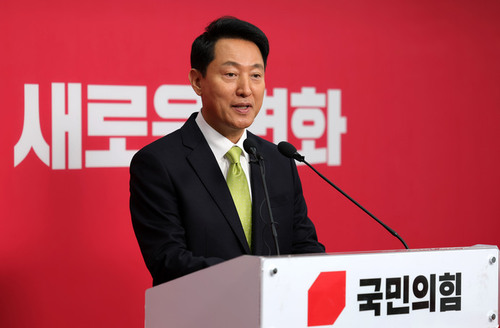
‘호남 비하’ ‘지방 비하’ ‘노인 비하’, ‘트리플(triple-3가지) 비하’다. 보수정당이라는 국민의힘에서 비하 발언이 연이어 터져 나오고 있다. 국민의힘이 가짜 보수라는 증거다. 정치가 타락하는 방식은 여러 가지가 있다. 무능, 무책임, 무원칙. 그러나 그 모든 것을 압축해 보여주는 가장 빠른 지표는 따로 있다. 바로 언어다. 즉 ‘누구를 향해, 어떤 말을 하느냐’다. 지금 국민의힘은 그 가장 기본적인 기준에서조차 붕괴하고 있다.
하루 사이에 호남·지방·노인, 이른바 ‘트리플 비하’가 연쇄적으로 터져 나왔다는 사실은 단순한 말실수가 아니라, 당의 정치적 DNA가 어디까지 망가졌는지를 보여준다.
먼저 ‘호남’이다. 충북지사 김영환이 공천 컷오프를 당하자 공관위원장 이정현을 향해 “전라도의 못된 버릇”이란 표현을 썼다. 이정현 위원장을 두둔하려는 게 아니다. 김영환의 발언은 정치적 비판이 아니라 지역에 대한 낙인이다. 특정 지역을 싸잡아 비하하는 순간, 그 정당은 더 이상 전국정당이 아니다. 과거를 반성하며 확장해야 할 보수가 오히려 스스로 지역주의의 늪으로 걸어 들어간 것이다. 이는 전략의 실패 이전에 정치적 자격의 문제다.
다음은 ‘지방’ 비하다. 유튜버 고성국이 이진숙을 향해 ‘대구 시장’이 아니라 ‘서울 시장’감이라는 식의 발언을 한 것인데 이는 단순한 ‘칭찬’이 아니다. 그 안에는 수도권 중심주의, 즉 지역 서열 의식이 노골적으로 깔려 있다. 보수가 그토록 강조해온 균형발전과 지방의 자존은 어디로 갔는가. 스스로의 지지 기반을 스스로 깎아내리는 기묘한 자기부정이다.
마지막으로 ‘노인’ 비하다. 장예찬의 “늙은이들이 제정신인가”라는 발언은 변명의 여지가 없다. 그것이 특정 인물을 겨냥했다 하더라도, 표현 자체는 세대를 겨냥한 혐오다. 더 심각한 것은 이후의 태도다. 유감은 표하면서도 사과는 없다. 문제를 인정하지 않는 태도야말로 문제의 본질이다.
여기까지는 ‘개별 사건’일 수 있다. 하지만 진짜 문제는 그 다음이다. 지도부가 아무것도 하지 않았다는 사실이다. 징계 논의조차 없었다. 사과를 요구하지도 않았다. 사실상 묵인이다. 정당이 스스로의 언어를 통제하지 못한다면, 그것은 정당이 아니라 방치된 집단에 가깝다.
더 기가 막힌 것은, 이처럼 명백한 비하 발언에는 침묵하면서도 정작 칼날은 엉뚱한 곳을 향했다는 점이다. 한동훈과 친한계를 향한 제명과 징계는 신속하고 단호했다. 기준은 무엇인가. 당의 확장성과 미래를 고민하는 세력에는 가혹하고, 당의 품격을 무너뜨리는 발언에는 관대한 이 기이한 선택은 결국 하나의 결론으로 수렴된다.
국민의힘은 지금 ‘문제’를 처벌하는 것이 아니라, '다원성’을 제거하고 있다. 이것은 정치가 아니라 자기부정이다.
정당이 유지되기 위해선 최소한의 규칙이 필요하다. 그중에서도 가장 기본은 공적 언어의 절제다. 지역을 비하하지 말 것, 특정 계층을 모욕하지 말 것, 공동체를 분열시키지 말 것. 이 세 가지는 이념 이전의 상식이다. 그런데 지금 국민의힘은 이 상식선마저 무너뜨리고 있다.
정치는 결국 신뢰의 게임이다. 유권자는 정책 이전에 태도를 본다. 상대를 어떻게 대하는지, 공동체를 어떻게 인식하는지를 본다. 그런 점에서 ‘트리플 비하’는 단순한 실언이 아니라 유권자에 대한 집단적 무시다. 그리고 지도부의 침묵은 그 무시를 공식화하는 행위다.
이대로라면 결과는 뻔하다. 선거는 전략으로 이기는 것이 아니라, 신뢰를 잃은 쪽이 스스로 무너지는 과정이다. 지금 국민의힘은 패배를 향해 가는 것이 아니라, 스스로 패배를 설계하고 있다. yslee1992@hotmail.com
*필자/이양승
군산대 교수. 국제경제, 게임이론 그리고 지역 발전전략에 대해 연구하는 학자이다. 현재 국립 군산대 무역학과 교수로 재직 중이다. 이전엔 캐나다 앨버타 대학교(University of Alberta) 경제학과에서 ‘게이임(gaming)’에 대해 연구와 강의를 했으며, 한국건설산업연구원에서 연구위원으로 근무했다.
전북 남원에서 출생해 전주한일고와 전북대 상과대학을 졸업했다. 이후 미국으로 건너가 노스 캐롤라이나 주립대학교 (North Carolina State University)에서 통계학과 경제학을 공부해 석사를 받았으며, 캔자스 대학교(The University of Kansas)에서 산업조직과 게임이론에 대한 연구로 경제학 박사를 받았다.
저서로는 '메트로 이코노미 (타임라인)'과 ‘와일드 게임이론 (박영사)’, ‘무역학개론(공저, 두남)’, ‘문화지체에 빠진 건설산업 (공저, 한국건설산업연구원)’ '자유무역론(박영사)' 등이 있고, 36편의 단독연구 학술논문이 있다.
*아래는 위 기사를 '구글 번역'으로 번역한 영문 기사의 [전문]입니다. '구글번역'은 이해도 높이기를 위해 노력하고 있습니다. 영문 번역에 오류가 있을 수 있음을 전제로 합니다.<*The following is [the full text] of the English article translated by 'Google Translate'. 'Google Translate' is working hard to improve understanding. It is assumed that there may be errors in the English translation.>
People Power Party’s ‘Disparagement of Honam,’ ‘Disparagement of the Provinces,’ ‘Disparagement of the Elderly’... Triple Disparagement
- Lee Yang-seung, Professor at Kunsan National University
It is ‘disparagement of Honam,’ ‘disparagement of the provinces,’ and ‘disparagement of the elderly’—a ‘triple disparagement.’ Disparaging remarks are erupting one after another from the People Power Party, a party that claims to be a conservative party. This is proof that the People Power Party is a fake conservative. There are many ways in which politics degenerates: incompetence, irresponsibility, and lack of principles. However, there is a separate, faster indicator that encapsulates all of these aspects. It is language. In other words, it is about ‘who you are speaking to and what you are saying.’ Currently, the People Power Party is collapsing even in this most basic standard.
The fact that the so-called ‘triple disparagement’—comparing Honam, the provinces, and the elderly—erupted in succession within a single day is not merely a slip of the tongue, but demonstrates the extent to which the party’s political DNA has been damaged.
First is ‘Honam.’ When North Chungcheong Governor Kim Young-hwan was cut off from the nomination process, he directed the phrase “the bad habits of Jeolla Province” at Nomination Committee Chairman Lee Jung-hyun. I am not trying to defend Chairman Lee Jung-hyun. Kim Young-hwan’s remarks are not political criticism, but rather a stigmatization of the region. The moment a party lumps a specific region together and disparages it, it is no longer a national party. Conservatives, who should be reflecting on the past and expanding, have instead walked into the swamp of regionalism. This is a matter of political qualification before it is a failure of strategy.
Next is the disparagement of the “provinces.” YouTuber Go Seong-guk made remarks implying that Lee Jin-sook is material for “Seoul Mayor” rather than “Daegu Mayor,” but this is not merely a “compliment.” Beneath it lies a blatant sense of regional hierarchy and capital-centrism. Where have the balanced development and regional pride that conservatives have emphasized so much gone? It is a bizarre act of self-negation that undermines their own support base.
Finally, there is the disparagement of the “elderly.” Jang Ye-chan’s remark, “Are these old people out of their minds?” is inexcusable. Even if it was aimed at a specific individual, the expression itself is hate directed at a generation. What is even more serious is the attitude that followed. They expressed regret but offered no apology. The very essence of the problem lies in this attitude of refusing to acknowledge the issue.
Up to this point, it might be considered an “individual incident.” However, the real problem lies in what came next. It is the fact that the leadership did nothing. There wasn't even any discussion of disciplinary action. They didn't even demand an apology. It is, in effect, tacit approval. If a political party cannot control its own language, it is closer to a neglected group than a political party.
What is even more appalling is that while they remained silent regarding such blatant derogatory remarks, the blade was aimed at the wrong target. The expulsion and disciplinary action against Han Dong-hoon and the pro-Korea faction were swift and decisive. What is the standard? This bizarre choice—being harsh on forces concerned with the party’s expansion and future, yet lenient toward remarks that undermine the party’s dignity—ultimately converges on a single conclusion.
The People Power Party is not punishing ‘problems’ right now, but rather eliminating ‘pluralism.’ This is not politics; it is self-negation.
For a political party to survive, minimum rules are necessary. Among these, the most fundamental is restraint in public language. Do not disparage regions, do not insult specific social classes, and do not divide the community. These three are common sense that transcends ideology. However, the People Power Party is currently destroying even this line of common sense.
Politics is ultimately a game of trust. Voters look at attitude before policy. They observe how opponents are treated and how the community is perceived. In that sense, the ‘triple disparagement’ is not merely a slip of the tongue, but a collective disregard for the voters. Furthermore, the leadership's silence is an act that formalizes that disregard.
If things continue this way, the outcome is obvious. Elections are not won by strategy, but are a process in which the side that has lost trust collapses on its own. The People Power Party is not merely heading toward defeat; it is designing its own defeat. yslee1992@hotmail.com
*Author/Yang-Seung Lee
Professor at Kunsan National University. He is a scholar who researches international economics, game theory, and regional development strategies. He is currently a professor in the Department of International Trade at Kunsan National University. Previously, he conducted research and lectured on "gaming" at the Department of Economics at the University of Alberta in Canada and worked as a research fellow at the Korea Institute of Construction Industry Research.
Born in Namwon, Jeonbuk, he graduated from Jeonju Hanil High School and the College of Commerce at Jeonbuk National University. He later moved to the United States, where he earned a master's degree in statistics and economics from North Carolina State University, and a Ph.D. in economics from the University of Kansas with research on industrial organization and game theory.
His publications include *Metro Economy (Timeline)*, *Wild Game Theory (Park Youngsa)*, *Introduction to Trade (co-authored, Dunam)*, *The Construction Industry in Cultural Lag (co-authored, Korea Institute of Construction Industry Research)*, and *Free Trade Theory (Park Youngsa)*, as well as 36 academic papers based on his own research.