도널드 트럼프 미국 대통령이 다시 동맹을 겨냥했다. 이란 전쟁과 관련해 북대서양조약기구(NATO)는 물론 한국, 일본, 호주까지 거론하며 “우리를 돕지 않⁷았다”고 공개적으로 불만을 쏟아냈다. 심지어 한국을 향해 “핵을 가진 김정은 옆에 미군을 두고 있는데도 도움을 받지 못했다”고까지 말했다.
주한미군 규모를 실제보다 부풀리고, 동맹국을 ‘혜택을 받는 대상’으로 규정하며 ‘도움의 대가’를 요구하는 인식까지 드러냈다. 동맹을 가치 공동체가 아니라 비용과 보상으로 계산하는 거래 대상으로 본 것이다.
 ▲ 도널드 트럼프 미국 대통령. ©AP/뉴시스 |
나는 뉴욕주립대 스토니브룩(Stony Brook) 정치학과 학부와 박사과정에서 세계정치를 공부하며 미국은 물론 유럽, 러시아, 중동, 라틴아메리카와 아프리카까지 정치 구조를 입체적으로 이해했고, 연세대학교 국제학부에서 한중일을 중심으로 동아시아를 체계적으로 배웠다. 이후 베이징대학교와 난징대학교에서 연구교수와 객좌교수로 활동하며 북한과 중국을 연구했고, 한남대학교에서는 예우교수로서 중국 정치·역사·경제를 강의했다.
이론은 현장에서 검증되었다. 법무법인 대륙아주에서 중국 총괄 미국 변호사로 활동했고, 주상하이 대한민국 총영사로 외교의 최전선에 섰다. 유엔 아시아태평양경제사회위원회(UN ESCAP)가 설립 주체인 아시아태평양지방정부네트워크(CityNet) 사무국 대표로 아세안 10개국을 직접 경험했고, 현재 세계스마트시티기구(WeGO) 사무총장으로서 5대양 6대주 글로벌 현장을 다루고 있다.
이 과정에서 나는 한 가지를 분명히 배웠다. 국제정치는 힘으로 시작될 수 있지만, 정당성 없이 유지될 수는 없다는 것이다. 그런데 지금 트럼프는 그 기본 원리를 정면으로 부정하고 있다. 그는 “동맹국들이 우리를 돕지 않았다”고 말한다. 그러나 이는 사실의 왜곡이자 인식의 붕괴다. 동맹국들이 등을 돌린 것이 아니다. 애초에 동맹국들이 참여할 수 없는 전쟁이었다.
전쟁에는 세 가지 조건이 필요하다. 명분, 절차, 그리고 공감대다. 1991년 걸프전은 유엔 승인 아래 다국적군이 수행했다. 2011년 리비아 공습은 북대서양조약기구(NATO)와 유엔 결의 틀 속에서 진행됐다. ISIS 격퇴전 역시 국제연합체 형태였다. 심지어 2003년 이라크전조차 동맹의 틀은 유지했다.
그런데 이번 이란 전쟁은 무엇인가. 유엔 승인도 없고, 동맹국들과의 사전 조율도 없다. 그저 일방적 결정과 군사행동뿐이다. 이 상황에서 한국, 일본, 호주, 유럽의 동맹국들이 움직이지 않은 것은 너무나 당연하다. 동맹은 명령을 받는 조직이 아니라 정당성을 공유하는 공동체이기 때문이다.
트럼프는 사우디아라비아, 카타르, UAE, 바레인, 쿠웨이트가 도왔다고 강조한다. 그러나 이것은 동맹의 충성심이 아니라 지리적 조건이다. 이들 국가는 미군 기지가 밀집해 있고, 동시에 이란의 보복 공격을 직접 받는 전장 안에 있다. 이것은 선택이 아니라 회피할 수 없는 현실이다.
반면 한국과 일본, 유럽의 동맹국들은 전장의 당사자가 아니다. 그들이 움직이려면 명분이 필요하다. 그러나 이번 전쟁에는 그 명분이 없다.
그럼에도 트럼프는 묻는다. “우리가 지켜주는데 왜 우리를 돕지 않느냐.” 그러나 질문이 틀렸다. 국제사회는 지금 “이 전쟁은 누구의 전쟁이며, 어떤 명분과 절차를 거쳤는가.”라고 묻는다.
결론은 명확하다. 동맹은 하청업체가 아니다. 명분 없는 전쟁에 동맹은 움직이지 않는다. Jeongkeekim@naver.com
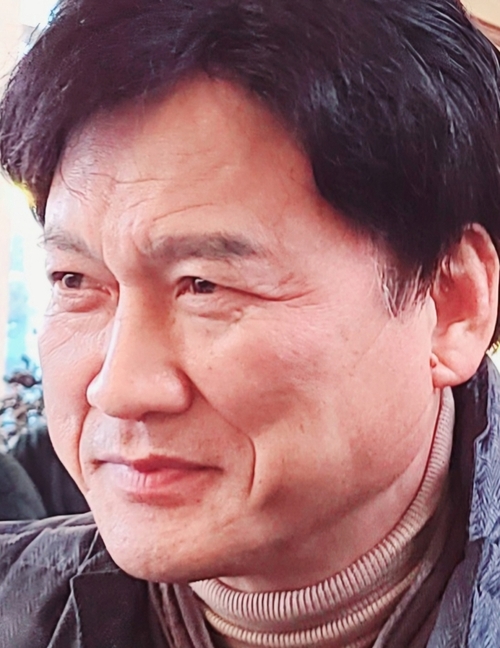
*필자/김정기
 ▲ 필자/김정기 '한국형 협상의 법칙(청년정신사)'의 저자. ©브레이크뉴스 |
● 학력- 뉴욕주립대학교(Stony Brook) 정치학과 수석 졸업- 마케트대학교(Marquette) 로스쿨 법학박사- 하버드대학교(Harvard) 케네디스쿨 최고위 과정- 베이징대학교(Peking) 북한학 연구학자
● 경력
세계스마트시티기구(WeGO) 사무총장 (현) -유엔 국제전기통신연합 (UN ITU) 가상세계 및 AI 글로벌 이니셔티브 집행위원(현) -제8대 주상하이 대한민국 총영사 -2010 상하이 세계 엑스표 대한민국관 정부대표 -법무법인 대륙아주 중국 총괄 미국변호사 -동국대학교 경영전문대학원 석좌교수 –숭실사이버대학교 총장 –칼럼니스트.
● 저서
1. 대학생을 위한 거로영어연구[전 10권](거로출판사) 2. 나는 1%의 가능성에 도전한다(조선일보사) 3. 한국형 협상의 법칙(청년정신사) 4. 대한민국과 세계 이야기 (도서출판 책미듬) 5. Korea and the World (Advance Reader Copy). Jeongkeekim@naver.com
[영문 칼럼]● Trump’s False Accusation — Allies Are Not Subcontractors
By Jeong-kee Kim, Political Columnist and Secretary General of the World Smart Sustainable Cities
Donald Trump has once again turned his criticism toward America’s allies. In relation to the Iran conflict, he openly complained that not only NATO but also countries such as South Korea, Japan, and Australia “did not help the United States.” He even remarked that South Korea failed to assist despite hosting U.S. forces near nuclear-armed Kim Jong-un.
He exaggerated the scale of U.S. Forces Korea and framed allied nations as beneficiaries, implying that they owe compensation for American protection. This reveals a fundamentally flawed perception—viewing alliances not as communities of shared values, but as transactional arrangements driven by cost and reward.
I studied world politics at the State University of New York at Stony Brook, where I developed a comprehensive understanding of political systems across the United States, Europe, Russia, the Middle East, Latin America, and Africa. I later deepened my regional expertise in East Asia at Yonsei University, focusing on Korea, China, and Japan. My academic work continued in China, where I served as a research professor and distinguished professor at Peking University and Nanjing University, concentrating on North Korea and China. At Hannam University, I lectured on Chinese Politics, Modern Chinese history, and economics.
Theory was tested in practice. I worked as the senior attorney-at-law in charge of China affairs at DR-Aju LLC, served as Consul General of the Republic of Korea in Shanghai, and stood at the forefront of diplomacy. I also led Asia-Pacific Local Government Network for the Economic and Social Development(CityNet) as CEO, established under UN ESCAP, engaging directly with ASEAN countries. Currently, as Secretary General of World Smart Sustainable Cities Organization(WeGO), I operate across all continents in the global arena.
Through these experiences, I have learned one fundamental truth: international politics may begin with power, but it cannot be sustained without legitimacy. What Donald Trump is doing now directly contradicts this principle. He claims that allies “did not help.” This is not only a distortion of facts—it is a collapse of understanding. Allies did not turn away; rather, this was never a war they could join.
War requires three conditions: legitimacy, procedure, and consensus. The 1991 Gulf War was conducted under UN authorization with a multinational coalition. The 2011 Libya intervention operated within the framework of NATO and UN resolutions. The campaign against ISIS was likewise a coordinated international effort. Even the 2003 Iraq War maintained a coalition structure.
But what about this Iran conflict? There was no UN authorization, no prior consultation with allies—only unilateral decision-making and military action. Under such conditions, it is entirely natural that allies such as South Korea, Japan, Europe, and Australia did not participate. Alliances are not command structures; they are communities built on shared legitimacy.
Donald Trump points to support from Saudi Arabia, Qatar, the UAE, Bahrain, and Kuwait. But this is not a demonstration of alliance loyalty—it is a function of geography. These states host dense U.S. military infrastructure and lie within the immediate theater of conflict, directly exposed to Iranian retaliation. Their involvement is not a matter of choice, but of unavoidable reality.
In contrast, allies such as South Korea, Japan, and European nations are not direct parties to the battlefield. For them to act, there must be legitimacy. In this case, that legitimacy is absent.
Yet Donald Trump asks, “We protect them—why don’t they help us?” The question itself is flawed. The international community is asking a different question: Whose war is this, and under what legitimacy and procedure was it conducted?
The conclusion is clear: allies are not subcontractors. Without legitimacy, alliances do not move.
*Author / Jeong-kee Kim
● Education
-B.A. in Political Science (Summa Cum Laude), State University of New York at Stony Brook -Doctor of Jurisprudence, Marquette University Law School -Senior Executive Program, Harvard Kennedy School -Research Scholar in North Korean Studies, Peking University
● Professional Experience
-Secretary-General, World Smart Sustainable Cities Organization (Current) -Executive Committee Member, Virtual World & AI Global Initiative, International Telecommunication Union (Current) -8th Consul General of the Republic of Korea in Shanghai -Commissioner General, Korea Pavilion, Expo 2010 Shanghai China -Senior Attorney-at-Law, DR& Aju LLC -Distinguished Chair Professor, Graduate School of Business, Dongguk University -President, Soongsil Cyber University -Columnist
● Publications
-Georo English Studies Series for College Students (Georo Publishing) -I Challenge the Possibility of One Percent (Chosun Ilbo) -The Art of K-Negotiation (Cheongnyeonjeongsin Publishing) -Korea and the World (Chaekmideum Publishing)
*Email: Jeongkeekim@naver.com