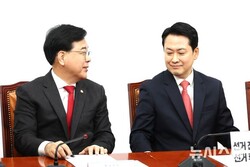
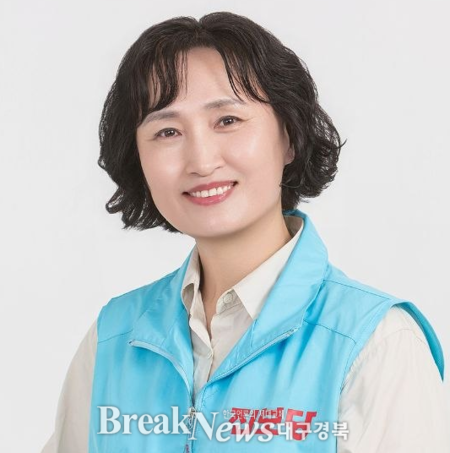
▲ 김성원 의원(사진제공=김성원사무실) © 브레이크뉴스 하인규 기자 |
(브레이크뉴스 경기동북부)하인규 기자=국민의힘 김성원 국회의원(동두천·양주·연천을)이 6·3 지방선거를 앞두고 동두천·양주·연천 지역의 선거구와 광역·기초의원 정수가 지역 실정과 주민 의사를 반영하는 방향으로 최종 확정됐다고 밝혔다.
국회는 지난 18일 본회의를 열고 이번 지방선거에 적용될 선거구 체계를 최종 의결했다.
당초 정부안에는 인구 미달을 이유로 동두천 제1·2선거구를 통합해 경기도의원 정수를 기존 2명에서 1명으로 축소하고, 연천군을 양주시 은현·남면과 묶어 하나의 선거구로 재편하는 내용이 포함돼 있었다.
이에 김 의원은 국회 정치개혁특별위원회를 중심으로 관계 부처 및 여당과의 협의를 이어가며 지역 주민들의 우려와 현장 목소리를 적극 전달했다.
그 결과 동두천 제1·2선거구는 현행대로 유지돼 도의원 2명 체제가 그대로 보장됐으며, 연천군 역시 양주시와의 통합 없이 독립된 단일 선거구로 확정돼 지역 대표성을 지켜냈다.
또한 양주시는 기존 제1·2선거구에 더해 제3선거구가 신설되면서 경기도의원 정수가 기존 2명에서 3명으로 늘어나는 성과를 거뒀다.
김 의원은 그동안 “인구 30만 도시 양주에 도의원 2명만 배정된 것은 명백한 불균형이자 양주시민의 정치적 권리를 제한하는 처사”라며 정수 확대 필요성을 지속적으로 제기해왔다.
실제로 양주시 인구는 2025년 말 기준 30만6천 명에 달하지만 도의원 정수는 2명에 머물러 있었고, 특히 제2선거구 인구는 약 19만3천 명으로 경기도 선거구 획정 기준 상한선인 14만4천 명을 크게 초과해 대표성 불균형 문제가 꾸준히 지적돼 왔다.
김 의원은 “동두천·양주·연천은 국가 안보를 지켜온 전략적 요충지이자 빠르게 성장하는 경기 북부의 핵심축”이라며 “단순한 인구 수치에 따른 기계적 획정이 아닌 지역의 역사와 특수성, 주민의 정치적 권리를 지켜내기 위해 끝까지 싸운 결과”라고 말했다.
이어 “이번 성과를 계기로 지역 균형 발전과 주민 대표성 강화를 위한 제도 개선을 지속적으로 추진해 나가겠다”고 강조했다.
하인규 기자 popupnews24@naver.com
아래는 위의 글을 구글번역이 번역한 영문의 전문이다. '구글번역'은 이해도를 높이기를 위해 노력하고 있습니다. 영문 번역에 오류가 있을 수 있음을 전제로 합니다.Below is the full English translation of the above text by Google Translate. Google Translate strives to improve comprehension. It is based on the premise that there may be errors in the English translation.
Rep. Kim Seong-won Defends Dongducheon-Yeoncheon Constituency and Leads to Increase Yangju Provincial Assembly Seat by One
- Reporter Ha In-gyu
(Break News Gyeonggi Northeast) People Power Party National Assembly Member Kim Seong-won (Dongducheon-Yangju-Yeoncheon B) announced that ahead of the June 3 local elections, the constituency and the number of metropolitan and local council members in the Dongducheon, Yangju, and Yeoncheon region have been finalized in a direction that reflects local conditions and the will of the residents.
The National Assembly held a plenary session on the 18th and finally approved the constituency system to be applied to this local election.
The original government proposal included merging Dongducheon's 1st and 2nd electoral districts to reduce the number of Gyeonggi Provincial Assembly members from two to one, citing insufficient population, and reorganizing Yeoncheon-gun into a single electoral district by combining it with Eunhyeon and Nam-myeon in Yangju-si.
In response, Assemblyman Kim continued consultations with relevant ministries and the ruling party, centered around the National Assembly's Special Committee on Political Reform, while actively conveying the concerns of local residents and the voices from the field.
As a result, Dongducheon's 1st and 2nd electoral districts were maintained as they are, guaranteeing the current system of two provincial assembly members. Yeoncheon-gun was also confirmed as an independent single electoral district without being merged with Yangju-si, thus preserving regional representation.
Furthermore, Yangju-si achieved the result of increasing its number of Gyeonggi Provincial Assembly members from two to three with the creation of a new 3rd electoral district in addition to the existing 1st and 2nd districts. Representative Kim has consistently raised the need to increase the number of provincial council members, stating that "allocating only two provincial council members to Yangju, a city with a population of 300,000, is a clear imbalance and an act that restricts the political rights of Yangju citizens."
In fact, while Yangju's population is projected to reach 306,000 by the end of 2025, the number of provincial council members has remained at just two. In particular, the population of the 2nd electoral district is approximately 193,000, significantly exceeding the upper limit of 144,000 set for Gyeonggi Province's electoral district demarcation standards, leading to persistent criticism regarding the imbalance in representation.
Representative Kim stated, "Dongducheon, Yangju, and Yeoncheon are strategic strongholds that have safeguarded national security and serve as the core axis of the rapidly growing northern Gyeonggi region." He added, "This is the result of fighting to the end to protect the region's history, unique characteristics, and the political rights of its residents, rather than a mechanical demarcation based solely on population figures."
He further emphasized, "Building on this achievement, I will continue to pursue institutional improvements to promote balanced regional development and strengthen resident representation."
원본 기사 보기:브레이크뉴스 경기동북부