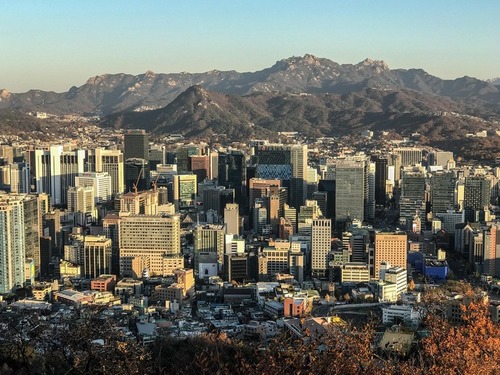
▲ 아산시청 전경 (C)DB |
충남 아산시가 ‘무기발광 디스플레이 기술 개발 및 생태계 구축사업’ 예비타당성조사를 통과했다고 23일 밝혔다.
이번 사업 확정으로 아산시는 역대 아산시 비SOC사업 중 최대 규모인 4,840억 원을 투입해 차세대 디스플레이 기술개발 및 초격차 기술 확보에 나선다는 계획이다.
‘무기발광 디스플레이 기술개발 및 생태계 구축사업’은 삼성디스플레이가 인접한 탕정테크노일반산업단지 내 연면적 4,000㎡, 2개 동으로 스마트모듈러센터를 조성하고, 2032년까지 차세대 디스플레이 R&D분야(화소·패널·모듈 제조기술)를 개발하는 사업이다.
2025년부터 2032년까지 총 8년간 화소·패널·모듈 부분 무기발광 디스플레이 기술개발(R&D) 3,339억 원, 스마트모듈러센터 구축 및 운영 1,501억 원 등 총 4,840억 원이 투입된다.
현재 한국 디스플레이 기업들은 LCD보다 진보된 기술로 평가받는 OLED 시장에서 우위를 차지하고 있다. 그러나 세계 액정표시장치(LCD) 시장 1위로 도약한 중국이 OLED 시장까지 거세게 추격하고 있으며, 중국 정부의 공격적인 투자 아래 차세대 디스플레이인 무기발광 디스플레이(iLED) 분야에서도 한국을 압박하고 있다.
이에 우리 정부는 초격차 기술력 선제 확보를 통해 첨단기술 속도 경쟁에서 우위를 점유하기 위해 연구개발(R&D) 투자를 확대하기로 하고, ‘무기발광 디스플레이 기술 개발 및 생태계 구축사업’ 추진을 결정했다. 대한민국의 이번 사업 추진 목표는 글로벌 시장 점유율 70% 이상 달성이다.
아산시와 충남도는 2023년 ‘디스플레이 분야 국가첨단전략산업 특화단지’ 지정에 이어 ‘무기발광 디스플레이 기술개발 및 생태계 구축 사업’ 예타 통과까지 이뤄내면서 차세대 디스플레이 분야의 글로벌 중심지로 우뚝 설 준비를 마쳤다.
시는 이번 사업이 본격 추진되면 ‘무기발광 디스플레이 스마트모듈러센터 구축’ 및 R&D 기술개발을 통해 무기발광 디스플레이 원천기술 및 패널 생산 기술력 확보 ,맞춤형 디스플레이 생산에 적합한 제품 상용화 기반 확보 ,지역 디스플레이 산업 활성화를 통한 기업 육성과 일자리 창출 ,혁신적 기술 창업 및 신규 기업·기관 집적화 등의 효과가 발생할 것으로 전망했다.
한편 무기발광 디스플레이(iIED)는 OLED의 특성을 뛰어넘는 무기질 소재 기반의 자발광 디스플레이로, 실외에서도 실내처럼 화질이 밝고 선명하며 기존 디스플레이 대비 수명도 우월하다. 향후 OLED 시장을 대체하고, 2045년 800억 달러 규모로 시장이 성장할 것으로 예측된다.
*아래는 위 기사를 '구글 번역'으로 번역한 영문 기사의 [전문]입니다. '구글번역'은 이해도를 높이기를 위해 노력하고 있습니다. 영문 번역에 오류가 있을 수 있음을 전제로 합니다.<*The following is [the full text] of the English article translated by 'Google Translate'. 'Google Translate' is working hard to improve understanding. It is assumed that there may be errors in the English translation.>
Asan City, inorganic light-emitting display technology development ecosystem construction project underway
Asan City, South Chungcheong Province, announced on the 23rd that it passed the preliminary feasibility study for the ‘Inorganic light-emitting display technology development and ecosystem construction project’.
With the confirmation of this project, Asan City plans to invest KRW 484 billion, the largest amount among non-SOC projects in Asan City's history, to develop next-generation display technology and secure super-gap technology.
The 'Inorganic light emitting display technology development and ecosystem construction project' is to create a smart modular center with a total floor area of 4,000㎡ and two buildings in the Tangjeong Techno General Industrial Complex adjacent to Samsung Display, and to develop next-generation display R&D (pixel, panel, module) by 2032. This is a business that develops manufacturing technology.
A total of KRW 484 billion will be invested over a total of 8 years from 2025 to 2032, including KRW 333.9 billion for inorganic light-emitting display technology development (R&D) for pixels, panels, and modules, and KRW 150.1 billion for construction and operation of smart modular centers.
Currently, Korean display companies dominate the OLED market, which is considered a more advanced technology than LCD. However, China, which has leapt to the top of the world's liquid crystal display (LCD) market, is also pursuing the OLED market, and is also putting pressure on Korea in the field of inorganic light emitting display (iLED), the next generation display, under the Chinese government's aggressive investment.
Accordingly, our government decided to expand investment in research and development (R&D) to gain an upper hand in the race for cutting-edge technology by preemptively securing super-gap technology, and decided to promote the ‘inorganic light-emitting display technology development and ecosystem construction project’. Korea's goal for this project is to achieve more than 70% of the global market share.
Asan City and South Chungcheong Province are ready to stand tall as a global center in the next-generation display field by designating a ‘National High-Tech Strategic Industrial Specialty Complex in the Display Sector’ in 2023 and passing a preliminary test for the ‘Inorganic Light Emitting Display Technology Development and Ecosystem Building Project’.
If this project is promoted in earnest, the city will secure the source technology and panel production technology for inorganic light-emitting displays through 'building a smart modular center for inorganic light-emitting displays' and R&D technology development, secure a foundation for commercialization of products suitable for customized display production, and revitalize the local display industry. It is expected that effects such as fostering businesses, creating jobs, starting innovative technologies, and integrating new companies and institutions will occur.
Meanwhile, inorganic luminescent display (iIED) is a self-luminous display based on inorganic materials that surpasses the characteristics of OLED. The picture quality is as bright and clear outdoors as it is indoors, and its lifespan is superior to that of existing displays. It is predicted that it will replace the OLED market in the future and grow to $80 billion in 2045.
원본 기사 보기:브레이크뉴스대전충청