조국 조국혁신당 대표의 평택을 출마는 단순한 정치적 행보가 아니다. 그것은 선택의 문제이며, 그 선택 자체가 이미 정치적 판단의 대상이다. 평택을은 민주당 내 경쟁 구도가 상대적으로 약한 지역이다. 강한 경쟁을 돌파하기보다 비교적 유리한 환경을 택한 이번 결정은 우연이 아니라 치밀한 계산의 결과다. 여기에 더해 민주당에 무공천을 요구하는 것은 경쟁을 거치지 않은 채 국회 진입을 도모하는 방식으로 읽힐 수밖에 없다.
정치는 어려운 선택을 감당하는 행위다. 특히 국가 지도자를 지향하는 정치인이라면 더더욱 그렇다. 가장 불리한 지점에서 싸우고, 가장 거센 저항을 견디며, 그 과정 속에서 자신의 정당성을 입증해야 한다. 그러나 이번 선택은 그 반대에 가깝다. 도전이 아니라 회피에 가깝고, 승부가 아니라 꼼수에 가깝다.
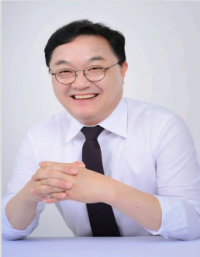
 ▲ 조국혁신당 조국 대표. ©뉴시스 |
이 지점에서 질문은 단순하다. 과연 이러한 선택이 지도자를 꿈꾸는 정치인의 태도인가. 이 문제 제기는 단순한 전략 비판에 머물지 않는다. 그것은 한국 정치사회가 안고 있는 구조적 문제를 다시 묻는 출발점이다.
2019년 조국 사태와 이후 사면 복권을 돌아보면, 이는 결코 한 개인의 문제가 아니었다. 그 사건은 한국 사회가 감추고 있던 불편한 진실—부모와 기성세대, 그리고 정치 지도층의 모순과 부재—를 적나라하게 드러낸 계기였다. 조국 사태가 사회 전체를 뒤흔든 이유도 바로 여기에 있다.
한국 근현대사는 질곡의 역사였다. 경술국치와 해방, 한국전쟁을 거치며 기존 지배계층은 붕괴되었고, 국민의 절대 다수는 바닥에서 다시 출발해야 했다. 이 과정에서 형성된 것은 결과의 차이를 정당한 경쟁의 산물로 받아들이기보다 이를 인정하지 않거나 보정하려는 경향—이른바 ‘기계적 평등 사상’이었다. 이 인식은 한국 자본주의를 지탱하는 한 축이 되었지만, 동시에 공정의 기준을 흔드는 심리적 토양으로 작용했다. 조국을 둘러싼 논란 역시 이 토양 위에서 폭발한 사건이었다.
문제는 여기에 있다. 자본주의의 역사가 짧아 부유층이 두텁지 못한 상황에서, 많은 이들은 여전히 생존 중심의 사고에 머물러 있다. 권력을 잡거나 부를 이루어도 불안은 사라지지 않는다. 그 결과 사회는 타인에 대한 배려보다 자기와 가족의 생존을 우선하는 구조로 굳어졌고, 공정의 원칙은 쉽게 훼손된다. 조국 사태에서 드러난 선택 역시 이 구조를 벗어나지 않았다.
이러한 구조 속에서 한국 부모의 자식 사랑은 극단적으로 자기 중심적인 형태로 작동한다. ‘내 자식만 잘되면 된다’는 사고는 수단과 방법을 정당화하고, 공동체 윤리를 무너뜨린다. 공정은 선언으로는 강조되지만, 실제 삶에서는 언제든 예외가 허용되는 기준으로 전락한다. 조국을 둘러싼 논쟁이 단순한 법적 문제를 넘어 도덕적 문제로 확산된 이유도 바로 여기에 있다.
청년들이 분노하는 이유는 단순한 입시 문제가 아니다. 정직이 무너지고, 남에게는 엄격하면서 자신에게는 관대한 이중적 기준이 일상화된 현실—그 자체에 대한 분노다. 조국 사태는 그 분노를 하나의 사건으로 응축시킨 계기였다.
조국 사태에서 드러난 모습이 바로 그것이었다. 당시 윤석열 검찰과 조중동으로 대표되는 언론은 정의를 내세우며 과잉 대응을 했고, 정치적 목적과 상업적 이해가 뒤섞인 방식으로 사태를 확대했다. 동시에 진보 진영은 조국을 검찰개혁의 상징으로 내세우며 불공정의 문제를 외면했다. 양쪽 모두 청년의 시선과 현실을 직시하지 못했다.
그러나 이 모든 현상의 중심에는 하나의 공통된 문제가 있다. 지도층의 부재, 그리고 책임의 실종이다.
이 현상은 우연이 아니다. 빌프레도 파레토가 지적했듯이, 엘리트는 도덕적 언어로 자신을 정당화하지만 실제 행동은 그 기준을 따르지 않는 경향을 보인다. 막스 베버의 관점에서 보면, 신념을 말하면서 그 결과에 책임지지 않는 태도는 정치가 아니라 도덕적 자기 연출에 불과하다. 조국을 둘러싼 논란은 바로 이러한 엘리트 구조의 전형적 사례였다.
여기에 피에르 부르디외의 이론을 적용하면 이 모순은 더욱 분명해진다. 그는 상층 계층이 교육과 네트워크, 문화자본을 통해 자신의 지위를 다음 세대로 재생산한다고 보았다. 공적 영역에서는 평등과 개혁을 말하면서도, 사적 영역에서는 가장 효율적인 방식으로 자녀의 지위를 확보하는 이중 구조—이것이 바로 한국 사회에서 반복되어 온 문제의 본질이다. 그리고 조국은 이 구조의 예외가 아니라, 그 중심에서 드러난 사례였다.
공적 영역에서는 평등을 외치면서, 사적 삶에서는 누구보다 치열하게 특권을 활용하는 행태—이른바 ‘강남 좌파’적 생활 방식은 이 구조를 가장 선명하게 드러낸다. 그리고 조국은 이 모순의 외부에 있는 인물이 아니라, 그 중심에 서 있었던 사례다. 조국은 개혁을 말했지만, 삶에서는 특권을 선택한 인물이다. 그의 문제는 위선에 있지 않다. 그 위선을 문제로 인식하지 않는 데 있다.
이 지점에서 조국이라는 인물은 단순한 정치인이 아니라 하나의 궤적이다. 그는 젊은 시절 급진적 이념 운동에 연루되어 수감된 경험을 갖고 있으며, 이후 학자와 공직자를 거쳐 권력의 중심으로 진입했다. 그러나 중요한 것은 변화의 이력 자체가 아니라, 그 변화가 어떤 성찰을 동반했는가다.
정치에서 과거는 문제가 되지 않는다. 문제는 과거를 어떻게 인식하고, 그 결과에 대해 어떤 책임을 지는가다. 급진적 신념은 가질 수 있다. 그러나 그것이 권력과 결합했을 때, 그 결과에 대해 책임지지 않는다면 그것은 정치가 아니라 자기 정당화다. 조국을 둘러싼 논쟁은 바로 이 지점에서 멈춰 서 있었다.
조국을 둘러싼 정치적 환경 또한 이 구조를 강화해 왔다. 김어준, 정청래 등 강한 지지층과 여론 형성 능력을 가진 인물들이 만들어낸 네트워크는 그를 하나의 정치적 상징으로 증폭시켜 왔다. 그러나 이 구조는 지도자를 만들어내기보다, 필요할 때 동원되는 상징을 유지하는 데 가깝다.
또한 윤석열과의 충돌 속에서 형성된 ‘피해자-저항자’ 서사는 조국을 개혁의 아이콘으로 부각시키는 데 기여했다. 그러나 정치적 서사는 공감을 만들 수는 있어도 책임을 대신하지는 않는다. 서사가 강화될수록 책임의 문제는 오히려 뒤로 밀려난다.
결국 이 모든 논의는 하나의 결론으로 수렴된다. 조국의 문제는 개인의 위선 여부를 넘어선다. 그것은 한국 사회가 여전히 극복하지 못한 구조적 모순—말하는 가치와 살아가는 방식이 분리된 이중 질서—를 집약적으로 보여주는 사례다.
이 지점에서 조국 대표의 평택을 출마는 하나의 본질적 질문을 던진다. 과연 책임을 지지 않은 지도층이 다시 국회의원으로 출마할 수 있는가. 한국에도 분명한 전통은 존재했다. 이황은 자신의 도덕적 기준이 훼손된다고 판단되는 순간 물러났고, 조광조는 도덕을 정치에 적용하려다 그 대가를 감당했다. 조선이 요구했던 ‘참선비’는 도덕을 말하는 사람이 아니라, 그 도덕을 어겼을 때 스스로 물러나는 사람이었다. 즉, 도덕은 권력을 얻는 수단이 아니라, 권력을 내려놓는 기준이었다.
지금 한국 사회가 다시 세워야 할 기준도 바로 여기에 있다. 지도층은 잘못이 드러나는 순간 책임을 지고 물러나야 한다. 입시와 채용, 연구 성과와 같이 청년의 삶을 좌우하는 영역에서는 어떤 특권도 허용되어서는 안 된다. 내 자식을 가족의 울타리 안에만 두는 인식에서 벗어나, 공동체의 구성원으로 바라보는 기준이 필요하다.
조국의 평택을 출마는 하나의 정치 이벤트가 아니다. 그것은 한국 정치사회가 어디까지 무너졌는지, 그리고 어디서부터 다시 시작해야 하는지를 드러내는 시험대다. 이것은 책임 없는 지도층이 아무런 성찰 없이 다시 권력을 요구할 수 있는 사회—오늘의 대한민국이다. 이것이 바로 그 민낯이며, 부끄러운 자화상이다.
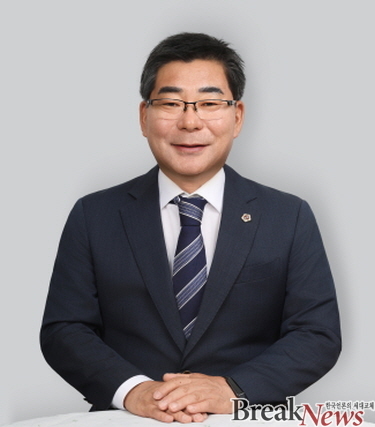
 ▲필자/ 김정기 칼럼니스트. ©브레이크뉴스 |
*필자/김정기
● 학력- 뉴욕주립대학교(Stony Brook) 정치학과 수석 졸업- 마케트대학교(Marquette) 로스쿨 법학박사- 하버드대학교(Harvard) 케네디스쿨 최고위 과정- 베이징대학교(Peking) 북한학 연구학자
● 경력
세계스마트시티기구(WeGO) 사무총장 (현) -유엔 국제전기통신연합 (UN ITU) 가상세계 및 AI 글로벌 이니셔티브 집행위원(현) -제8대 주상하이 대한민국 총영사 -2010 상하이 세계 엑스표 대한민국관 정부대표 -법무법인 대륙아주 중국 총괄 미국변호사 -동국대학교 경영전문대학원 석좌교수 –숭실사이버대학교 총장 –칼럼니스트.
● 저서
1. 대학생을 위한 거로영어연구[전 10권](거로출판사) 2. 나는 1%의 가능성에 도전한다(조선일보사) 3. 한국형 협상의 법칙(청년정신사) 4. 대한민국과 세계 이야기 (도서출판 책미듬) 5. Korea and the World (Advance Reader Copy). Jeongkeekim@naver.com
[영문 칼럼]● Cho Kuk’s Pyeongtaek Eul Bid — Can an Unaccountable Elite Be Chosen Again?
By Jeong-kee Kim, Political Columnist and Secretary General of the World Smart Sustainable Cities Organization(WEGO)
Cho Kuk’s decision to run in Pyeongtaek Eul is not a simple political move. It is a matter of choice—and that choice itself is already subject to political judgment.
Pyeongtaek Eul is a district where intra-party competition within the Democratic Party is relatively weak. Rather than breaking through a strong contest, this decision reflects a calculated move toward a more favorable environment.
Moreover, calling for the party not to field a candidate can hardly be interpreted as anything other than an attempt to enter the National Assembly without undergoing meaningful competition.
Politics is about bearing difficult choices. For those who aspire to national leadership, this is even more so. They must fight from the most disadvantageous ground, endure the strongest resistance, and prove their legitimacy through that process. Yet this decision moves in the opposite direction—it resembles avoidance rather than challenge, and maneuvering rather than contest.
At this point, the question becomes simple: Is this the posture of a politician who aspires to leadership? This is not merely a critique of political strategy. It is the starting point for questioning a deeper structural problem within Korean society.
Looking back at the 2019 Cho Kuk scandal and the subsequent pardon and reinstatement, this was never just about one individual. It exposed an uncomfortable truth long buried within Korean society—the contradictions and absence of responsibility among parents, the older generation, and the political elite. That is precisely why the Cho Kuk affair shook the entire nation.
Modern Korean history has been marked by upheaval.
From colonization to liberation, and through the Korean War, the old ruling class collapsed, and the vast majority of the population had to start from the bottom. In this process, a particular mindset took root—not fully accepting differences in outcomes as the result of fair competition, but instead seeking to deny or correct them. This so-called “mechanical egalitarianism” became one pillar of Korean capitalism, while simultaneously eroding the foundation of fairness. The controversy surrounding Cho Kuk erupted upon this very ground.
Here lies the core problem. In a society where the history of capitalism is relatively short and the wealthy class remains thin, many still operate within a survival-centered mindset.
Even after acquiring power or wealth, insecurity persists. As a result, society becomes structured around prioritizing personal and family survival over consideration for others, and the principle of fairness becomes easily compromised.
The choices revealed in the Cho Kuk case did not escape this structure.
Within such a framework, parental devotion in Korea often takes on an intensely self-centered form. The mindset of “as long as my child succeeds” justifies means and methods, undermining communal ethics.
Fairness is emphasized in rhetoric but reduced to a flexible standard in practice. This is why the Cho Kuk controversy expanded beyond legal issues into a moral crisis.
The anger of young people is not simply about entrance exams. It is directed at a broader reality—the collapse of integrity, and the normalization of double standards that are strict toward others but lenient toward oneself.
The Cho Kuk affair became the moment when this anger was condensed into a single event.
The response to the scandal reflected the same structural problem. At the time, the prosecution under Yoon Suk Yeol and major conservative media amplified the issue in the name of justice, often in ways that appeared excessive and politically driven. At the same time, the progressive camp framed Cho as a symbol of prosecutorial reform while overlooking the issue of fairness. Both sides failed to fully confront the perspective and lived reality of the younger generation.
At the center of all this lies a common issue: the absence of responsible leadership.
This is not accidental.
As Vilfredo Pareto observed, elites tend to justify themselves through moral language while failing to act according to those standards.
From the perspective of Max Weber, proclaiming convictions without taking responsibility for their consequences is not politics—it is moral self-performance.
The Cho Kuk controversy exemplifies this pattern.
Applying the theory of Pierre Bourdieu makes this contradiction even clearer.
He argued that upper classes reproduce their status through education, networks, and cultural capital. Publicly advocating equality while privately securing advantage for one’s children—this dual structure lies at the heart of the issue repeatedly seen in Korean society. Cho Kuk was not an exception; he was a revealing case at its center.
Declaring equality in public while aggressively utilizing privilege in private—this so-called “Gangnam left” lifestyle exposes the contradiction most vividly.
Cho Kuk did not stand outside this contradiction; he stood within it. He spoke of reform, yet chose privilege in life. His problem is not merely hypocrisy, but the failure to recognize it as such.
At this point, Cho Kuk is not merely a politician but a trajectory. He was once involved in radical activism and imprisonment, later becoming a scholar, a public official, and eventually entering the center of power. What matters is not the fact of change itself, but whether that change was accompanied by genuine reflection.
In politics, the past is not the issue. The issue is how one understands that past, and what responsibility one takes for its consequences. One may hold radical beliefs—but when those beliefs combine with power, failure to take responsibility is not politics, but self-justification. The debate around Cho Kuk ultimately stalled at this point.
The political environment surrounding him has further reinforced this structure.
Figures such as Kim Eo-jun and Chung Cheong-rae, with strong influence over public opinion, have amplified him into a political symbol. But such a structure tends to maintain symbolic figures for mobilization rather than produce genuine leadership.
Additionally, the “victim–resistance” narrative formed through his clash with Yoon Suk Yeol elevated Cho Kuk as an icon of reform. Yet political narratives can generate sympathy—they cannot substitute for responsibility. The stronger the narrative becomes, the further responsibility recedes.
Ultimately, all of this converges into one conclusion.
The issue of Cho Kuk goes beyond individual hypocrisy.
It represents a deeper structural contradiction in Korean society—a dual order in which professed values and lived behavior are fundamentally disconnected.
At this point, Cho Kuk’s bid in Pyeongtaek Eul raises a fundamental question: Can an elite that has not taken responsibility once again seek election to the National Assembly?
Korea once had a clear tradition. Yi Hwang stepped down when he believed his moral standards were compromised, and Jo Gwang-jo paid the price for applying morality to politics. The “true scholar” of the Joseon era was not one who merely spoke of morality, but one who stepped down upon violating it. Morality was not a tool to gain power, but a standard for relinquishing it.
This is the standard that Korea must restore today. Leaders must step down the moment wrongdoing is revealed. In areas that shape the lives of young people—education, employment, and research—no privilege can be tolerated. We must move beyond viewing our children as belonging only to the family and instead recognize them as members of the broader community.
Cho Kuk’s candidacy in Pyeongtaek Eul is not just a political event. It is a test that reveals how far Korean political society has eroded—and where renewal must begin. It is a society where an unaccountable elite can once again demand power without reflection. That is today’s Korea. This is its bare face—and its shameful self-portrait. *Jeongkeekim@naver.com
*Author / Jeong-kee Kim
● Education
-B.A. in Political Science (Summa Cum Laude), State University of New York at Stony Brook -Doctor of Jurisprudence, Marquette University Law School -Senior Executive Program, Harvard Kennedy School -Research Scholar in North Korean Studies, Peking University
● Professional Experience
-Secretary-General, World Smart Sustainable Cities Organization (Current) -Executive Committee Member, Virtual World & AI Global Initiative, International Telecommunication Union (Current) -8th Consul General of the Republic of Korea in Shanghai -Commissioner General, Korea Pavilion, Expo 2010 Shanghai China -Senior Attorney-at-Law, DR& Aju LLC -Distinguished Chair Professor, Graduate School of Business, Dongguk University -President, Soongsil Cyber University -Columnist
● Publications
-Georo English Studies Series for College Students (Georo Publishing) -I Challenge the Possibility of One Percent (Chosun Ilbo) -The Art of K-Negotiation (Cheongnyeonjeongsin Publishing) -Korea and the World (Chaekmideum Publishing) *Email: Jeongkeekim@naver.com