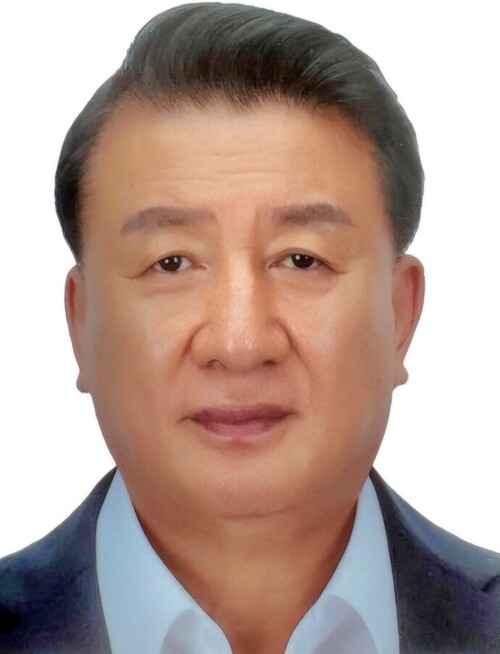
▲ 필자/권기환 박사. ©브레이크뉴스 |
지난 세월을 돌이켜 보면, 과연 우리는 한국에서 철학을 어떻게 배웠는지, 무엇을 배웠는지를 불현듯 생각하게 한다. 어쩌면 이 문제를 해결하는 것이 우리가 한국에서 철학이 무엇인지에 관한 합당한 답변을 다소나마 제시할 수 있을 것이다.
우리 각자가 지난 세월을 되짚어 보면, 혈기왕성(血氣旺盛)한 젊은 피로 오직 철학에 대한 진지한 욕구만을 충족하기 위해 철학 강의를 막상 듣다 보면 기대했던 욕구를 만족하기보다 곧장 실망하고 돌아섰던 경험이 있을 것이다. 각자의 기대치가 높다 보니 어쩌면 당연한 결과일지도 모르겠지만, 지금 생각 보면 각자가 주체적으로 철학에 대해, 철학적 문제에 대해 아무런 문제의식 없이 그저 수동적으로 교수자의 강의가 절대적이라는 지나치게 권위주의에 의존하고 있기 때문이기도 할 것이다. 문제는 이러한 방식이 이후에도 고정된 틀에서만 강요되다 보니, 새로운 해석에 관한 수용이나 비판적 관점이 들어설 자리가 없어진다는 점이다.
특정한 철학자에 대한 과거의 한 해석이 그대로 한국에서의 철학을 지배하는 경향은 독단적 경향을 강화하기 마련이다. 이러한 경향은 한국에서 철학 교육이 철학자 중심으로 이루어지는 것에도 근본적 원인이 있다고 하겠다. 여기에 생기는 문제는 특정한 철학자의 사상이 완전히 독창적인 자신만의 고유한 철학 사상이라는 생각이 주입되기 마련이다. 그런데 한 걸음 더 들어가서 특정한 철학자의 사상 전체를 세심하고 심오하게 연구하다 보면, 철학자의 시기별 철학 전개에서 자신의 고유한 관점도 있지만 이와 동시에 다른 철학자의 관점에 대한 그 자신의 비판도 어느 지점에 분명히 들어가 있다. 거기에는 자연스럽게 그 자신의 비판이 오히려 잘못된 것도 발견되기 마련이다. 어쩌면 그 때문에 철학은 논쟁과 토론이 필수적으로 요구된다고 하겠다.
그러나 한국에서 철학 교육은 이것보다 철학자의 사상을 이해하는 수준을 통해 고려될 뿐이다. 문제는 그 수준이라는 것이 예를 들어 원문이냐, 아니면 1차 혹은 2차 문헌이냐, 한국어로 번역된 것이냐, 아니면 원문이냐의 것만 문제가 될 뿐이지 정작 철학적 문제를 갖고 논의가 제대로 되지 않는다는 점이다. 누군가 이러한 방식으로 철학을 한다고 하면, 철학적 문제가 없는 철학이 무슨 철학이냐는 세간의 따가운 시선이 있기 마련이다. 더욱이 철학 연구자들 자신조차도 이러한 세간의 비판에 맞대응을 할 수 있는 능력이 별로 있지도 않고, 이에 합당한 비판적 논리와 근거도 달리 제시하지도 못한다. 그러다 보니 그들은 스스로 고립되고 그저 몇몇 철학 연구자들이 모여서 추상적 담론만이 공허하게 늘어놓는 정도에 그치고 만다. 이러한 답답한 상황은 오늘의 문제만의 문제가 단연코 아니다. 한국에서 철학은 각자가 오랫동안 그렇게 배웠고, 이후에도 그렇게 가르쳤으며, 타당한 비판도 없고 진지한 토론도 거의 없었다.
어쩌면 이러한 상황은 많은 한국인들이 철학을 좀 더 연구하고자 유학을 떠나도록 만들었다. 필자도 마찬가지로 좀 더 자유롭게 철학을 연구하고자 독일로 유학을 떠났다. 필자의 소박한 경험에 의하면 독일의 학풍이 그 나름대로 존재한다는 점이다. 물론 필자의 경험이 천편일률적으로 독일의 학풍을 재단할 수 없지만, 그럼에도 불구하고 현재의 시점에서 보면 독일의 학풍에서 느꼈던 필자의 경험이 철학 연구에서 지금도 그 여운이 매우 긍정적으로 작용하고 있다는 점은 자명하다.
독일의 학풍은 두 가지 측면에서 크게 나누어지는데, 하나는 특수한 전공 분야의 자유롭고 창의적인 학문적 업적을 축적할 교수 중심의 연구기능이라고 하겠다. 다른 하나는 이러한 정예 연구 집단의 지도 아래에 젊은 학생들을 학문에 정진하도록 하는 교육성과라고 하겠다. 물론 이 두 가지는 독립적으로 기능하기보다 서로 상호 보완하는 내밀한 관계에서 진정한 통일을 추구하면서도 시너지 효과를 극대화하는 것이다.
이를 위해 재정 지원과 인력 양성은 필수적이고 지속적이라는 점이 독일의 독자적인 학풍을 만들어내는 것이다. 더 나아가 각종 세미나, 심포지움, 강연 등이 수시로 학기 내내 열리면서 시끌벅적하면서, 각국의 전문학자들의 열띤 토론 등을 보면 독일의 학풍이 어떤 것인지를 실감할 수 있다. 필자가 속했던 대학도 그 규모에 비해 그와 같은 모습을 필자는 여러 번을 목격했고, 철학 관련 심포지움에도 자주 참석해서 많은 전문학자들과 토론을 나누었던 적도 있었다. 이러한 필자의 경험은 한갓 연구실에 처박혀서 원전 텍스트든 1차 혹은 2차 문헌이든 단순히 읽고 이해하는 것보다 연구 활동에 있어서 훨씬 효과적이고, 이후에 연구에서도 도움이 많이 되었다.
철학 강의 혹은 세미나에서 보면 필자는 한국과 확실한 차이도 느꼈는데, 어떤 것이든 그 해당 강의 혹은 세미나의 주제가 명확하게 존재한다는 점이다. 예를 들어 특정한 철학자의 텍스트를 놓고 어떤 문제를 철학자 자신이 어떻게 제기하고 있는지, 혹은 어떻게 증명하는지가 중요하다. 사실 이것은 한국에서 어떤 텍스트를 번역하고 해석하다 보면 문장 해석에 많은 시간이 소진될 뿐이지 그 이상으로 나아가지 못하는 것과 분명히 다르다. 물론 철학 텍스트를 정확하게 이해하는 것은 필요하다. 그러나 텍스트 전체가 철학 연구를 위해 다 필요하지는 않다.
중요한 것은 텍스트 전체 중 어떤 부분이 철학적 문제에 합당한가이고 이에 따라 어떤 논증으로 철학자가 증명하려고 하는가다. 만일 철학자 자신의 논증이 시도되긴 했지만, 철학자 자신이 그 당시에 오류임을 몰랐을 수도 있고, 현재의 시점에서 보면 오류가 발견될 수도 있다. 따라서 현재의 입장에서는 논쟁이 당연히 필요하다.
그런데 이러한 독일의 학풍이 한국에 그대로 적용되기는 현실적으로 어렵다. 학문적 토대가 지난 세월을 걸치면서 독일 내부적으로도 상당한 축적이 이루어졌고, 국제적으로도 다양한 네트워크를 통해 전문학자들이 독일로 수시로 모여들고 있다. 철학의 경우도 마찬가지로 외부에서 보면 아무리 더 이상 독일 철학이 없다고들 하지만, 여전히 각국의 전문학자들이 매년 매 학기 독일로 들어오고 있다. 그렇다면 이러한 독일의 학풍을 통해 한국에서 철학 교육은 어떻게 제시되어야 하는가?
첫째, 철학 교육이 어떤 목적을 위한 것인지가 명확해야 한다. 겉으로만 형식적으로 미사여구(美辭麗句)가 동반된 가시적인 표어가 아니라 실질적으로 무엇을 할 수 있으며 그 결과가 어떤 것이어야 하는 것까지 제시되어야 한다는 말이다. 둘째, 철학 교육의 방법론에 관한 성찰과 이에 따른 대안이 모색되어야 한다. 이것은 철학이 누가 이러니저러니 말을 했다는 방식으로 과연 어떤 성과가 나왔는지에 대한 반성과 함께 철학자 중심의 교육이 아니라 철학적 문제 중심으로 나가야만 하는 것을 포함한다.
사실 한국에서 철학은 연구도 교육도 둘 다 학문적 성과라고 하기에는 결과적으로 불충분하다. 물론 이것은 양적인 차원이 아니라 질적인 차원이기는 하지만, 누구든 어느 정도는 인정하는 바다. 술에 술을 탄 듯 물에 뭍을 탄 듯 별로 각자의 고유한 관점이 없다는 것도 유독 한국에서 독특한 양상이다. 곰곰이 생각해 보면 각자가 한국에서 철학을 배웠다고 할 때, 정작 그에게 무엇을 배웠는지를 누군가 물어보면 별다른 기억이 없다는 것은 무엇을 뜻할까? 가르친 사람이 잘못 가르쳤거나, 아니면 제대로 배우지 못한 것 둘 중 하나일 것이다. 정확히 특정한 누구의 탓이라고 볼 수 없지만, 현재 한국에서 철학 교육의 부재에서 원인이 될 수 있을 것이다.
철학은 자유로운 학문적인 정신과 이에 합당한 비판 및 토론이 전제될 때 비로소 시작될 수 있다. 어쩌면 독일의 학풍은 이에 가장 적합한 모델이라고 하겠다. 그러나 한국은 아직도 학풍다운 학풍이 있기보다는 이것과 아무런 관계가 유유상종(類類相從)만이 지배하고 있을 뿐이다.
진정한 학풍은 유유상종을 통한 집단화가 아니라, 이를 벗어나서 각자의 자유로운 학문적 열정과 이에 합당한 학문적 존중 및 배려가 뒷받침되어야 한다. 어쩌면 현실적으로 이것이 우리에게 거창한 담론보다 더 절실하게 필요한 것일지도 모른다. jgfichte@naver.com
*필자/권기환
철학박사. 동국대에서 석사학위를, 독일 지겐대 제 1학부(역사-철학과)에서 철학박사학위(Dr. phil.)를 취득했다. 경희대, 경기대, 명지대, 상명대, 강남대, 홍익대 등에서 강의를 했다. 현재는 가천대에서 강의를 하고 있다. 주요 관심사는 독일 관념론, 독일 초기 낭만주의, 프랑스 현상학, 해석학, 동서 비교 철학 등이다. 한국 헤겔학회, 한국칸트학회, 한국해석학회, 한국 현상학회(전 정보이사), 서양 근대철학회 등에서 활동하고 있다.
*아래는 위 기사를 '구글 번역'으로 번역한 영문 기사의 [전문]입니다. '구글번역'은 이해도 높이기를 위해 노력하고 있습니다. 영문 번역에 오류가 있을 수 있음을 전제로 합니다.<*The following is [the full text] of the English article translated by 'Google Translate'. 'Google Translate' is working hard to improve understanding. It is assumed that there may be errors in the English translation.>
What can we learn from the German academic style?
- Kwon Ki-hwan, columnist
Looking back on the past years, we are suddenly reminded of how and what we learned about philosophy in Korea. Perhaps solving this problem will provide us with a somewhat appropriate answer to the question of what philosophy is in Korea.
If each of us looks back on the past years, we may have had the experience of attending philosophy lectures with the sole purpose of satisfying our earnest desire for philosophy as young, energetic people, only to be disappointed and turn away instead of satisfying our desired desire. This may have been a natural result of our high expectations, but looking back now, it may also be because each of us passively relied on the excessive authoritarianism of the professor’s lectures without any sense of problem regarding philosophy or philosophical issues. The problem is that this method has been enforced only within a fixed framework, leaving no room for new interpretations or critical perspectives.
The tendency for a past interpretation of a specific philosopher to dominate philosophy in Korea tends to reinforce dogmatic tendencies. This tendency is fundamentally caused by the fact that philosophy education in Korea is centered on philosophers. The problem that arises here is that the idea that a specific philosopher’s thoughts are completely unique and unique philosophical thoughts tends to be instilled. However, if you go a step further and study the entire philosophical thought of a specific philosopher in detail and in depth, you will find that while the philosopher’s philosophical development over time includes his or her own unique perspective, at the same time, his or her own criticism of other philosophers’ perspectives is also clearly included at some point. Naturally, you will also find that his or her own criticism is actually incorrect. Perhaps that is why philosophy necessarily requires debate and discussion.
However, philosophy education in Korea is considered based on the level of understanding of the philosopher’s thoughts rather than this. The problem is that the level is only a matter of whether it is the original text, primary or secondary literature, a Korean translation, or the original text, and there is no proper discussion on philosophical issues. When someone does philosophy in this way, the world will naturally look at them with a critical eye, asking what kind of philosophy is philosophy without philosophical problems. Furthermore, even philosophy researchers themselves do not have the ability to respond to such criticism from the world, and they cannot present appropriate critical logic and grounds. As a result, they become isolated and end up just a few philosophy researchers gathering together and making empty abstract discourses. This frustrating situation is definitely not a problem of today. In Korea, philosophy has been taught that way for a long time by each person, and has been taught that way ever since, with no valid criticism and almost no serious discussion. Perhaps this situation has led many Koreans to study philosophy abroad. I, too, went to Germany to study philosophy more freely. In my humble experience, Germany has its own academic style. Of course, my experience cannot judge the German academic style uniformly, but it is clear that my experience in the German academic style still has a very positive effect on philosophy research from the current perspective.
The German academic style is largely divided into two aspects. One is the professor-centered research function that accumulates free and creative academic achievements in a special field of study. The other is the educational performance that encourages young students to study under the guidance of such an elite research group. Of course, these two do not function independently, but rather pursue true unity in an intimate relationship that complements each other while maximizing synergy effects.
To this end, financial support and human resource development are essential and continuous, which creates Germany’s unique academic style. Furthermore, when you see various seminars, symposiums, and lectures held frequently throughout the semester and see heated discussions between experts from each country, you can really feel what the German academic style is like. The university I belonged to also witnessed the same situation many times compared to its size, and I also frequently attended philosophy-related symposiums and had discussions with many experts. This experience was much more effective for my research activities than simply reading and understanding the original text or primary or secondary literature in my lab, and it also helped me a lot in my later research.
When I look at philosophy lectures or seminars, I feel a clear difference from Korea in that the topic of each lecture or seminar is clear. For example, it is important to see how the philosopher raises a certain problem in a certain philosopher’s text or how he proves it. In fact, this is clearly different from Korea, where translating and interpreting a text only takes up a lot of time interpreting sentences and does not go beyond that. Of course, it is necessary to understand the philosophical text accurately. However, the entire text is not necessary for philosophical research.
What is important is which part of the entire text is relevant to the philosophical problem and what argument the philosopher tries to prove accordingly. Even if the philosopher's own argument was attempted, the philosopher himself may not have known that it was an error at the time, and the error may be discovered from the current perspective. Therefore, from the current perspective, a debate is naturally necessary.
However, it is realistically difficult to apply this German academic style to Korea as it is. Over the years, the academic foundation has accumulated considerably internally in Germany, and internationally, specialists are constantly gathering in Germany through various networks. The same is true for philosophy, even though it is said from the outside that there is no longer German philosophy, specialists from each country are still coming to Germany every semester. So how should philosophy education be presented in Korea through this German academic style?
First, the purpose of philosophy education must be clear. This means that it should not be a visible slogan accompanied by flowery words on the surface, but it should present what can be done in practice and what the results should be. Second, there should be reflection on the methodology of philosophy education and alternatives should be sought accordingly. This includes reflecting on what kind of results philosophy has achieved by saying this or that, and moving from a philosopher-centered education to a philosophical problem-centered one.
In fact, in Korea, neither research nor education in philosophy is considered an academic achievement. Of course, this is a qualitative rather than a quantitative dimension, but everyone acknowledges it to some extent. The fact that each person has no unique perspective, as if they were drunk on alcohol or on water, is also a unique aspect in Korea. If you think about it carefully, what does it mean that when someone asks someone what they learned in Korea, they have no particular memory? It is either that the person who taught them poorly or that they did not learn properly. It is not exactly the fault of a specific person, but it could be the cause of the current absence of philosophy education in Korea.
Philosophy can only begin when a free academic spirit and appropriate criticism and discussion are presupposed. Perhaps the German academic style is the most suitable model for this. However, Korea still has no academic style, and only the affinity for one another is dominant.
A true academic style is not a grouping through affinity, but rather should be supported by each individual's free academic passion and appropriate academic respect and consideration. Perhaps, realistically, this is what we need more desperately than grand discourse. jgfichte@naver.com
*Author/Kwon Ki-hwan
Doctor of Philosophy. He received his master's degree from Dongguk University and his doctorate in philosophy (Dr. Phil.) from the first department (history-philosophy) of the University of Siegen in Germany. He has lectured at Kyunghee University, Kyonggi University, Myongji University, Sangmyung University, Kangnam University, and Hongik University. He is currently a lecturer at Gachon University. His main interests include German idealism, early German Romanticism, French phenomenology, hermeneutics, and East-West comparative philosophy. He is active in the Korean Hegel Society, the Korean Kant Society, the Korean Society for Hermeneutics, the Korean Phenomenological Society (former director of information), and the Western Modern Philosophy Society.