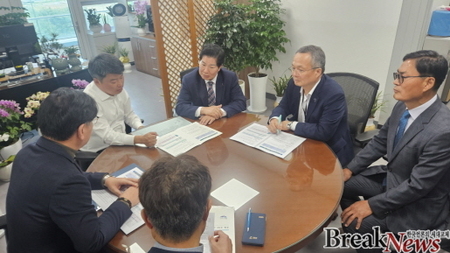
파주시민네트워크가 지난 23일 LH 파주사업본부와 다율동 백제 토기 가마 발굴지에 설치될 16개의 안내판 제작을 위한 협의를 진행했다고 밝혔다.
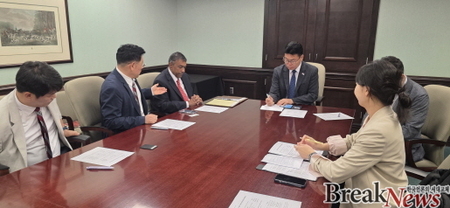
이날 협의에는 LH 파주사업본부 이상은 차장과 파주시민네트워크 김성대 대표, 임현주 운영위원이 참석했으며, 파주시민네트워크는 15종의 도서와 발굴 보고서를 연구해 역사 교육의 장으로 활용될 수 있는 안내판을 제안했다.
 ▲ 사진제공=파주시민네트워크 |
2015년부터 2016년까지 발굴조사가 이루어진 다율동 백제 초기 토기 가마 유적에서는 길이 58m 소형과 1017m 대형 가마 총 9기와 함께 토기 제작 작업장, 태토보관소, 폐기장 등 토기 제작 관련 유구가 다양하게 확인됐다.
국가유산청은 2016년 전문가 검토회의를 거쳐 이 유적을 복토, 보존하고 역사 교육의 장으로 활용하기로 결정한 바 있다.
파주시민네트워크는 2021년부터 발굴지 재현 시설의 오류 수정을 요구해 왔으며, 2023년부터는 파주시, LH파주사업본부와 협의체를 구성해 공원 조성에 힘써왔다.
이번에 협의된 16개의 해설 안내판은 발굴지와 공원 일대에 설치될 예정이다.
연구 활동을 통해 이 지역이 마한 소국 연맹체의 구심체로서 백제의 영향권 아래에서 체계적인 토기 제작이 이루어졌으며, 당시 생산된 대옹(큰 항아리)을 통해 한강이 이곳까지 유입되어 강을 통한 유통이 이루어졌음을 밝혔다.
또한 인근에는 조선시대까지 운영된 석곶포구와 반석포구가 있었다고 전해진다.
파주시민넷 김성대 대표는 "백제 토기가마터 발굴지를 잘 보존하고 역사교육의 장으로 활용할 수 있도록 적극 협력하는 LH 파주사업본부에 감사하다"며 "매장된 유물을 통해 지역주민이 다양한 역사·문화 콘텐츠를 향유할 수 있길 바란다"고 말했다.
LH 파주사업본부 이상은 차장은 "예산 조정을 통해 미흡한 보존 시설을 보완하고 안내판 및 관련시설을 준비하겠다"며 "디자인 작업과 예산 조정 등을 거치면 약 1개월 후에는 디자인 초안을 준비할 수 있겠다"고 밝혔다.
파주시에 따르면 1966년부터 출토된 각종 유물은 10만여 점에 달하며, 이 중 국가에 등록된 유물은 7천여 점, 당장 전시 가능한 유물은 구석기 시대부터 근대까지 1,700여 점으로 추정된다. 파주시민네트워크는 파주 역사박물관 건립을 위한 활동도 추진해왔다.
*아래는 위 기사를 '구글 번역'으로 번역한 영문 기사의 [전문]입니다. '구글번역'은 이해도 높이기를 위해 노력하고 있습니다. 영문 번역에 오류가 있을 수 있음을 전제로 합니다.<*The following is [the full text] of the English article translated by 'Google Translate'. 'Google Translate' is working hard to improve understanding. It is assumed that there may be errors in the English translation.>
Paju Citizen Network, LH Paju Business Headquarters, Dayul-dong Baekje Pottery Kiln Site Information Board Consultation
Paju Citizen Network announced that it had held a consultation with LH Paju Business Headquarters on the 23rd to produce 16 information boards to be installed at the Dayul-dong Baekje Pottery Kiln excavation site.
The consultation was attended by LH Paju Business Headquarters Vice President Lee Sang-eun, Paju Citizen Network Representative Kim Seong-dae, and Operation Committee Member Lim Hyeon-ju. Paju Citizen Network studied 15 books and excavation reports to propose information boards that can be used as a place for historical education.
The Dayul-dong Baekje Early Pottery Kiln Site, which was excavated from 2015 to 2016, contained a total of 9 small kilns measuring 58 m in length and large kilns measuring 1,017 m in length, as well as various relics related to pottery production, such as a pottery production workshop, a pottery storage facility, and a disposal site.
The National Heritage Administration decided to restore, preserve, and utilize this site as a place for historical education after an expert review meeting in 2016.
The Paju Citizens' Network has been demanding corrections to the excavation site reconstruction facilities since 2021, and has been working to create a park by forming a consultative body with Paju City and LH Paju Business Headquarters since 2023.
The 16 interpretive guide boards agreed upon this time will be installed around the excavation site and the park.
Research activities have revealed that this area was the center of the Mahan small state confederation and systematic pottery production took place under the Baekje sphere of influence, and that the Han River flowed into this area through the large jars produced at that time, allowing for distribution through the river.
It is also said that Seokgot Port and Banseok Port were in operation nearby until the Joseon Dynasty.
Paju Citizens' Network CEO Kim Seong-dae said, "We are grateful to LH Paju Business Headquarters for actively cooperating to preserve the Baekje pottery kiln excavation site and utilize it as a place for historical education," and added, "We hope that local residents can enjoy various historical and cultural contents through the buried relics."
LH Paju Business Headquarters Vice President Lee Sang-eun said, "We will supplement the insufficient preservation facilities through budget adjustments and prepare information boards and related facilities," and added, "After design work and budget adjustments, we will be able to prepare a design draft in about a month."
According to Paju City, there are approximately 100,000 relics excavated since 1966, of which approximately 7,000 are registered with the state, and approximately 1,700 relics from the Paleolithic Age to modern times are estimated to be available for immediate display. Paju Citizens' Network has also been promoting activities to build a Paju History Museum.
원본 기사 보기:고양 브레이크뉴스