이종찬 광복회장은 “어머니가 돌아가신지 30년이나 지난 이후 어머니 스스로 쓰신 글을 자서전(自敍傳)으로 세상에 내놓은 것이 아니라 어머니 생전에 하신 말씀을 모아 두었거나 기억하고 있다가 자서전(自敍傳)이 아닌 어머니 대신 아들이 쓴 자서전(子敍傳)을 세상에 내놓게 되었다”고 밝혔다.
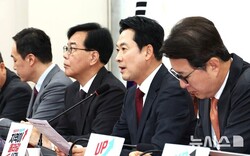
 ▲ 이종찬 회장은 6월 25일 여의도 한 식당에서 기자간담회를 통해 이같이 밝히며, “어머니가 사셨던 시절은 우리나라가 일제의 침탈로 왕정이 무너지고 혁명적 독립운동으로 새로 공화정으로 넘어가던 시대였다. 왕정의 끝자락에서 일어난 군주를 중심으로 한 권력의 내부 모순과 외세의 침탈로 일어난 외부 모순 사이를 한 여성의 눈으로 관찰한 역사의 기록”이라고 말했다. (사진제공, 광복회 임소희 홍보부장) |
이 회장은 6월 25일 여의도 한 식당에서 기자간담회를 통해 이같이 밝히며, “어머니가 사셨던 시절은 우리나라가 일제의 침탈로 왕정이 무너지고 혁명적 독립운동으로 새로 공화정으로 넘어가던 시대였다. 왕정의 끝자락에서 일어난 군주를 중심으로 한 권력의 내부 모순과 외세의 침탈로 일어난 외부 모순 사이를 한 여성의 눈으로 관찰한 역사의 기록”이라고 말했다.
기자는 “이런 형태는 특이합니다. 이런 사례가 있었는지요?”물었다. 이 회장은 “자기 자신이 직접 쓴 자서전은 있지만 아들이 기억을 더듬어 子敍傳을 쓴 것은 처음인걸로 알고 있다”고 말했다.
이 회장은 “어머니는 조선왕조와 혈족관계로 이루어진 전통적인 왕정에 충성하는 충신(忠臣) 가문에서 성장했다. 그러나 그가 결혼하여 겪은 시가는 시대를 변혁하려는 풍운아적 혁명가의 가문이다. 몰락하는 문약한 왕통가문의 한 여성이 일제 군국주의 외세의 침탈에 저항하여 싸우는 가운데 숭무(崇武)를 주창하는 환경과 어떻게 조화를 이루었는가? 이런 의문의 일단을 푸는 단서를 찾아야 한다”고 말했다.
그는 “어머니 세대에겐 선택의 자유가 없었다. 비록 보수적이긴 하지만 유복한 가정에서 성장하여 꿈이라곤 원만한 남편과 자녀를 위해 안온한 가정을 갖고자 꿈꿨지만 변혁하는 시기에 조선의 여성들은 모두 그런 꿈조차 사치로 생각하였다.”고 담담히 말했다.
‘아들이 기록한 어머니의 회고록’이라는 설명이 붙은 책 “나, 조계진”은 역사의 정사에서 다루지 못한 야사의 내밀한 부분, 역사의 빈 공간을 채워주는 소중한 기록으로 평가된다.
이종찬 회장은 “세상에 이런 글의 형식이 있는지는 알지 못하나 나는 그것이 정직하고 정확한 것이라고 생각한다.”며, “이 책은 그런 책임감 속에서 과장이나 미화 없이 어머니의 말씀과 생각과 행적을 정확하게 기술하려고 저자가 최대한 노력한 결과물이다.”라고 밝혔다.
이 회장은 “저자의 어머니가 사셨던 시절은 우리나라가 일제의 침탈로 왕정이 무너지고 혁명적 독립운동을 통해 공화정으로 넘어가던 시대였다. 왕정의 끝자락에서 군주를 중심으로 한 권력의 내부 모순과 외세의 침탈로 일어난 외부 모순 사이의 길항(拮抗) 관계를 한 여성의 눈으로 관찰한 역사의 기록이다.”고 의미를 부여했다.
그런 점에서 이 책에는 적어도 세 가닥의 이야기가 함께 엮여 있다. 첫째, 어머니의 개인사이고, 둘째, 어머니의 친가(親家)와 외가(外家)와 시가(媤家)가 따로 혹은 같이 써 내려간 명문가 집안의 근대사의 기록, 셋째, 그 과정에 압도적인 힘으로 개입해 들어온 일제의 흔적이다. 이 회장은 그 역사적 시대상황을 개괄하여 전체상을 최대한 입체적으로 기술하려고 노력했다.
이 책은, 몰락해 가는 문약한 왕조 가문의 한 여성이 일제 군국주의 외세의 침탈에 저항하여 숭무(崇武)의 기운을 회복하고 직접 총을 들고 싸우고자 나선 전사(戰士)들의 흐름과 어떻게 조화를 이루어 갔는지 살펴보고자 노력했다. 한 세기 또는 반 세기 전의 상황과 결코 똑같다고는 할 수 없으나 오늘날 나라 안팎의 심상치 않은 정세에 적극적이고 능동적으로 대응해야 한다는 저자 나름의 충정이 이 책에는 담겨 있다.
역사의 변혁기에 국운이 저물어가는 상황에서 조선의 여성들에겐 그런 꿈조차 사치였다. 그 시대의 여성들은 결코 원하지 않은 상황 속에서 무너진 가치 또는 강요된 가치를 수용하든가 저항하든가 할 수밖에 없었다.
저자는 지면이 허락하는 범위 안에서 어머니께서 독립운동 과정에서 겪은 여러 모순을 보다 적나라하게 고백하고 싶었지만 워낙 어머니께서 당신의 삶을 세상에 공개하기 싫어하셔서 그분의 뜻을 존중해 중단한 부분이 꽤 있다고 소회를 밝혔다.
이종찬 회장은 “이제 와서 그 운명을 바꿀 수는 없지만 그 운명의 삶을 기록으로 남겨서라도 위무(慰撫)하는 노력이 이뤄지기를 바라는 마음 간절하다.”며, “이 책도 그런 노력의 일환이었고, 어쩌면 이런 노력은 독립운동만큼이나 가치 있는 일일 수도 있겠다”는 소회를 밝혔다. hpf21@naver.com
* 아래는 위 기사를 '구글 번역'으로 번역한 영문 기사의 [전문]입니다. '구글번역'은 이해도 높이기를 위해 노력하고 있습니다. 영문 번역에 오류가 있을 수 있음을 전제로 합니다.
*The following is [the full text] of the English article translated by 'Google Translate'. 'Google Translate' is working hard to improve understanding. It is assumed that there may be errors in the English translation
Lee Jong-chan, the president of the Gwangbokhoe, said, “The son’s memoir ‘I, Jo Gye-jin’, which contains the words of his mother while she was alive, has been published.
A precious record that fills the empty space of the official history with the sincerity of unofficial history
Lee Jong-chan, the president of the Gwangbokhoe, said, “It has been 30 years since my mother passed away, so I did not publish my mother’s own writings as an autobiography, but rather collected or remembered the words she said while she was alive, and published an autobiography written by a son instead of her.”
The chairman made this announcement at a press conference held at a restaurant in Yeouido on June 25, saying, “The time my mother lived was when our country was going through a period of collapse due to the Japanese invasion and transitioning to a new republic through revolutionary independence movements. It is a record of history observed through the eyes of a woman between the internal contradictions of power centered around the monarchy that arose at the end of the monarchy and the external contradictions that arose due to the invasion of foreign powers.”
The reporter asked, “This format is unique. Have there been cases like this?” The chairman said,
“I have an autobiography that I wrote myself, but I believe this is the first time that my son has written a biography based on his memories.”
The chairman said, “My mother grew up in a family of loyal subjects who were loyal to the Joseon Dynasty and the traditional monarchy based on blood ties. However, the family she married into was a family of revolutionary men who wanted to change the times. How did a woman from a declining royal family harmonize with an environment that advocated for the worship of the military while fighting against the invasion of the Japanese militaristic foreign power? We need to find a clue to solve this question.”
He said calmly, “My mother’s generation did not have the freedom to choose. Although they were conservative, they grew up in wealthy families and dreamed of having a good husband and a comfortable home for their children, but during the changing times, all women in Joseon considered even such dreams to be a luxury.”
The book “I, Jo Gye-jin,” which is described as “a mother’s memoir written by a son,” is evaluated as a valuable record that fills in the intimate parts of unofficial history and the blank spaces in history that were not covered in the official history.
Chairman Lee Jong-chan said, “I don’t know if there is such a form of writing in the world, but I think it is honest and accurate.” He added, “This book is the result of the author’s best efforts to accurately describe the mother’s words, thoughts, and actions without exaggeration or embellishment, with that sense of responsibility.”
Chairman Lee said, “The time when the author’s mother lived was when our country was in the midst of the collapse of the monarchy due to the Japanese invasion and transitioning to a republic through a revolutionary independence movement. It is a historical record that observes the antagonistic relationship between the internal contradictions of power centered on the monarch at the end of the monarchy and the external contradictions that arose due to the invasion of foreign powers, through the eyes of a woman.”
In that sense, this book has at least three stories woven together. First, it is the mother's personal history, second, it is a record of the modern history of a prestigious family written separately or together by the mother's paternal, maternal, and in-law families, and third, it is the trace of the Japanese colonial rule that intervened with overwhelming force in the process. Chairman Lee tried to describe the overall picture as three-dimensionally as possible by outlining the historical situation of the time period.
This book tries to examine how a woman from a declining, weak dynasty resisted the invasion of the Japanese militaristic foreign power, restored the spirit of reverence for the military, and harmonized with the flow of warriors who took up arms and fought directly. Although it is by no means the same as the situation a century or a half ago, this book contains the author's own sincerity that we must actively and proactively respond to the serious political situation at home and abroad today.
In a time of historical transformation, when the national fortunes were declining, even such a dream was a luxury for the women of Joseon. Women of that era had no choice but to either accept or resist the collapsed or imposed values in situations they never wanted.
The author revealed that she wanted to confess the various contradictions her mother experienced during the independence movement as clearly as possible within the scope of the space allowed, but she was so reluctant to reveal her life to the world that she had to stop writing in order to respect her wishes.
Chairman Lee Jong-chan said, “We cannot change that fate now, but I sincerely hope that efforts will be made to comfort her by recording her fateful life.” He added, “This book was part of that effort, and perhaps such efforts could be just as valuable as the independence movement itself.” hpf21@naver.com