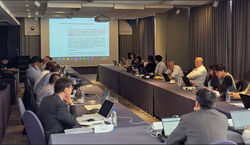
▲미국 위스컨신 주립대 문흥윤 박사(왼쪽. 위스컨신 주립대 포닥 연구원-서울대 생명공학과 졸업)와 유재혁 교수(오른쪽). ©브레이크뉴스 |
미국 위스컨신 주립대 문흥윤 박사(위스컨신 주립대 포닥 연구원. 서울대 생명공학과 졸업)와 유재혁 교수진(참여학자=우석대 한갑훈 교수, 경북대 박 희수 교수, 한국생명공학연구원 이미경 박사)이 곰팡이의 생식과 대사 조절을 총괄하는 핵심 유전자인 ‘NsdD’의 작동 방식을 유전체 수준에서 정밀 분석해, 이 단백질이 어떻게 다양한 기능을 동시에 수행하는지를 밝혀냈다. 이 연구는 미국 미생물학회가 발행하는 국제학술지 mBio에 7월 3일자로 게재됐다.
이는, 한국인 출신 과학자들의 연구 성과(成果)이다.
곰팡이는 일상 속에서 친숙하면서도 이중적인 존재. 발효식품과 의약품 생산에 활용되는 유익한 곰팡이도 있지만, 식량을 오염시키는 곰팡이독소(예: 아플라톡신)를 만드는 해로운 곰팡이도 있다. 이처럼 곰팡이의 생식 방식과 2차 대사(특정 환경에서만 생성되는 대사산물)는 인간의 식품·의약·환경과 직결되기 때문에, 이들을 조절하는 유전자들의 작동 원리를 이해하는 것은 학술적·산업적 가치가 매우 크다.
그 중심에 바로 ‘NsdD’라는 전사조절인자가 있다. 전사조절인자는 유전자들이 언제, 어디서, 얼마나 작동할지를 결정하는 ‘스위치’ 역할을 하는 단백질이다. NsdD는 곰팡이에서 매우 보존된(즉, 다양한 종에서 유사한 형태로 존재하는) 유전자로, 하나의 단백질이 생식, 포자 형성, 독소 생산 등 여러 생명현상을 동시에 조절하는 ‘멀티플레이어’다.
그러나 지금까지 NsdD가 어떻게 그렇게 다양한 기능을 수행하는지, 또 종마다 기능이 어떻게 달라졌는지는 알려져 있지 않았다. 이에 연구진은 곰팡이 중에서도 유전적으로 멀리 떨어진 두 종인 Aspergillus nidulans (누룩곰팡이)과 Aspergillus flavus (황변반점곰팡이)를 비교 분석 대상으로 선택했다. 먼저 RNA 분석을 통해 NsdD가 조절하는 유전자들의 목록을 추출했고, 이후 DNA에 직접 결합하는 위치를 확인하는 ChIP-seq 기법을 통해 NsdD의 ‘직접 타겟’ 유전자들을 찾아냈고, 그 결과, NsdD는 두 곰팡이 모두에서 중요한 조절자 역할을 하면서도, 조절하는 유전자 목록이나 상호작용 방식은 크게 다르다는 것을 밝혀냈다.
흥미로운 점은, A. nidulans의 NsdD 유전자를 A. flavus의 NsdD 돌연변이 균주에 삽입하자 일부 기능이 복구되었지만, 완전히 정상 상태로 회복되지는 않았다는 것이다. 이는 겉보기엔 유사한 단백질이라도, 각 종의 유전체 환경과 상호작용 네트워크가 달라 ‘같은 유전자라도 다르게 작동’할 수 있다는 생물학적 복잡성을 보여주는 사례다.
이번 연구는 곰팡이 유전자 조절 네트워크의 진화적 변화를 최초로 유전체 수준에서 비교한 것으로, 향후 곰팡이 독소 억제, 유용 대사물질 생산 최적화, 생물학적 제어기술 개발 등 다양한 분야에 적용될 수 있는 기초자료를 제공한다.
 ▲미국 위스컨신 주립대 문흥윤 박사(위스컨신 주립대 포닥 연구원. 서울대 생명공학과 졸업)와 유재혁 교수진(참여학자=우석대 한갑훈 교수, 경북대 박 희수 교수, 한국생명공학연구원 이미경 박사)이 곰팡이의 생식과 대사 조절을 총괄하는 핵심 유전자인 ‘NsdD’의 작동 방식을 유전체 수준에서 정밀 분석해, 이 단백질이 어떻게 다양한 기능을 동시에 수행하는지를 밝혀냈다. 이 연구는 미국 미생물학회가 발행하는 국제학술지 mBio에 7월 3일자(사진)로 게재됐다. ©브레이크뉴스 |
연구진은 “하나의 보존된 유전자가 종마다 어떻게 다른 기능을 수행하게 되었는지를 보여주는 좋은 사례”라며, “진화가 유전자 조절 네트워크를 어떻게 재구성(rewiring)하는지 이해하는 데 중요한 단서를 제공할 것”이라고 말했다.
이와 관련, 위스컨신대 유재혁 교수는 "문흥윤 박사가 낸 논문은 아주 높은 수준의 연구 결과"라고 지적하고 "MBio 저널(Journal)은 미국의 미생물학계에서 가장 높이 쳐 주는 최상의 저널(Journal)"이라고 설명했다.
한편, 문흥윤 박사는 문일석 브레이크뉴스 발행인의 둘째 아들이다.
▲국제학술지 mBio에 7월 3일자 링크=https://journals.asm.org/doi/10.1128/mbio.01181-25
*아래는 위 기사를 '구글 번역'으로 번역한 영문 기사의 [전문]입니다. '구글번역'은 이해도 높이기를 위해 노력하고 있습니다. 영문 번역에 오류가 있을 수 있음을 전제로 합니다.<*The following is [the full text] of the English article translated by 'Google Translate'. 'Google Translate' is working hard to improve understanding. It is assumed that there may be errors in the English translation.>
International academic journal mBio published a paper "The conductor of fungal genes, NsdD, has revealed its evolutionary secrets"
Dr. Moon Heung-yoon (Wisconsin State University postdoc researcher) and Professor Yoo Jae-hyuk from the University of Wisconsin
-Reporter Park Jeong-dae
Dr. Moon Heung-yoon (Postdoc, University of Wisconsin; Graduated from Seoul National University, Department of Biotechnology) and Professor Yoo Jae-hyeok’s team (participating scholars = Professor Han Gap-hoon from Woosuk University, Professor Park Hee-soo from Kyungpook National University, and Dr. Lee Mi-kyung from Korea Research Institute of Bioscience and Biotechnology) precisely analyzed the functioning of ‘NsdD,’ a key gene that controls the reproduction and metabolism of fungi, at the genome level and revealed how this protein performs various functions simultaneously. This study was published on July 3 in mBio, an international academic journal published by the American Society for Microbiology.
Fungi are familiar yet dualistic entities in our daily lives. There are beneficial fungi that are used in the production of fermented foods and medicines, but there are also harmful fungi that produce mycotoxins (e.g. aflatoxin) that contaminate food. Since the reproduction method and secondary metabolism (metabolites that are produced only in certain environments) of fungi are directly related to human food, medicine, and the environment, understanding the operating principles of the genes that control them has great academic and industrial value.
At the center of this is a transcriptional regulator called ‘NsdD’. A transcriptional regulator is a protein that acts as a ‘switch’ to determine when, where, and how much genes will operate. NsdD is a highly conserved gene in fungi (i.e., it exists in a similar form in various species), and it is a ‘multiplayer’ in which a single protein simultaneously controls multiple life phenomena such as reproduction, spore formation, and toxin production.
However, until now, it was not known how NsdD performs such diverse functions and how its functions differ from species to species. Accordingly, the research team selected two genetically distant species among fungi, Aspergillus nidulans (powder mold) and Aspergillus flavus (yellow spot mold), as comparative analysis subjects. First, they extracted a list of genes regulated by NsdD through RNA analysis, and then they found ‘direct target’ genes of NsdD through ChIP-seq technique that directly identifies the location of DNA binding. As a result, they found that NsdD plays an important regulatory role in both fungi, but the list of genes it regulates and the way it interacts are significantly different. Interestingly, when the NsdD gene of A. nidulans was inserted into the NsdD mutant strain of A. flavus, some functions were restored, but it did not completely recover to normal. This is an example of biological complexity in which ‘the same gene can operate differently’ even for seemingly similar proteins because the genetic environment and interaction network of each species are different. This study is the first to compare the evolutionary changes in the fungal gene regulatory network at the genome level, and provides basic data that can be applied in various fields such as suppression of fungal toxins, optimization of useful metabolite production, and development of biological control technology in the future.
The research team said, “This is a good example of how a single conserved gene can perform different functions in different species,” and “It will provide important clues to understanding how evolution rewires the gene regulatory network.”
In relation to this, Professor Jaehyuk Yoo of the University of Wisconsin pointed out that "the paper published by Dr. Heungyoon Moon is a very high-level research result" and explained that "MBio Journal is the best journal that is highly regarded in the American microbiology community."
In the meantime, Dr. Moon Heung-yoon is the second son of Moon Il-suk, publisher of Break News.
▲Link to the July 3 issue of the international academic journal mBio = https://journals.asm.org/doi/10.1128/mbio.01181-25
- Dr. Moon Heung-yoon (left. Postdoc researcher at the University of Wisconsin) and Professor Yoo Jae-hyuk (right) at the University of Wisconsin.