트럼프 대통령이 관세 폭탄을 예고하며 한국을 정조준하자, 이재명 정부는 전시작전통제권(전작권) 환수를 대응 카드로 꺼내 들었다. 한국을 경제적으로 압박한다면, 안보 협력의 틀을 다시 짤 수도 있다는 정치적 시위다. 그러나 그 한 수가 과연 유효한가? 자주국방을 가장한 전략적 무지이자, 국가 안보를 정쟁의 볼모로 삼는 위험한 도박은 아닌가?
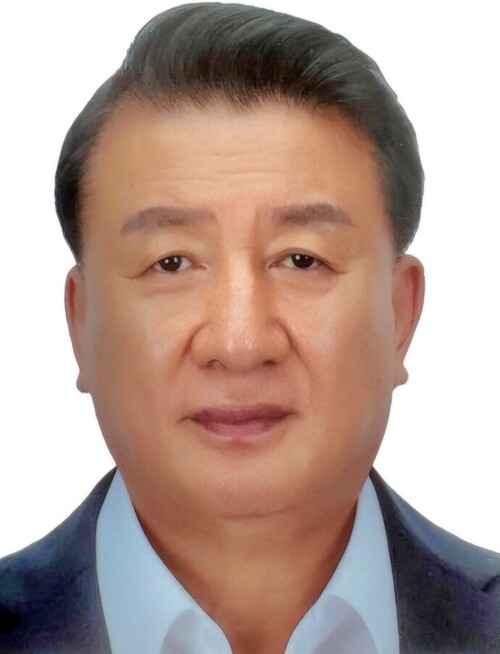
 ▲ 필자/김정기 <한국형 협상의 법칙> 저자. ©브레이크뉴스 |
대통령실은 전작권 환수는 과거부터 논의된 장기 과제이며 정부 공약사항일 뿐이라며 진화에 나섰다. 하지만, 국민이 우려하는 대목은 그 배경이다. 외교 안보의 근간인 한미동맹을 경제 보복에 대한 맞불로 삼는 발상 자체가 전략 감각의 부재이자, 안보의 정파적 무기화에 다름 아니다.
사실 전작권 환수 주장은 어제오늘의 일이 아니다. '작전권은 주권의 꽃'이라는 문재인 정부의 선언부터, '이제는 자존심의 문제'라는 진보 진영의 지속된 레토릭까지. 하지만 그 ‘꽃’은 현실 안보의 흙 위에서 피는 것이지, 상징의 구호로 피우는 것이 아니다.
전작권 환수론을 최초로 들고 나온 이는 노무현 전 대통령이었다. 그러나 역설적이게도, 협상 과정에서 더 적극적이었던 쪽은 미국이었다. 2006년 당시 도널드 럼스펠드 국방장관은 2009년까지 전작권을 한국에 넘기자고 제안했다. 하지만 우리 정부는 준비가 안 됐다며 두 차례나 스스로 연기했다. 이명박 정부는 2015년으로, 박근혜 정부는 조건 충족 시점으로 넘기며 전환 시점을 계속 늦춰왔다.
왜일까? 이유는 명확하다. 전작권은 단순한 정치 상징이 아니라, 전력 중심의 실전 지휘권이기 때문이다. 말로만 주권이라 외쳐서는 전장(戰場)에서 미군을 지휘할 수 없고, 억제력도 생기지 않는다. 북한은 이미 비공인 핵보유국이다. 핵은 핵으로만 억제할 수 있다. 대한민국은 핵이 없고, 미국 역시 한국의 핵무장을 허용하지 않을 것이다. 이 냉혹한 현실 앞에서 작전권을 돌려받자는 주장은 군사적 기반 없는 감성의 정치쇼에 불과하다.
그렇다면 전작권이란 구체적으로 무엇인가? 이는 전시 상황에서 연합 작전을 실질적으로 지휘할 권한이다. 지금도 한미 양국이 공동 결정하고, 발동 여부는 양국 합참의장이 심의하며, 최종 결정은 양국 대통령이 내린다. 미국이 연합사령부 사령관을 맡는 이유는 단순한 '상석' 때문이 아니다. 그것은 미군이 피 흘릴 각오를 하겠다는 전략 책임의 상징이다. 나토(NATO)의 거의 모든 유럽 국가들도 전작권을 미국에 위임하고 있다. 이를 두고 어느 나라도 자주권 침해를 논하지 않는다. 실용이냐 허상이냐의 차이다.
국제정치학의 석학 이승만은 이를 꿰뚫고 있었다. 그는 1950년, 전작권을 미국에 넘기며 한미상호방위조약을 성사시켰다. 깡패 외교라고 비판한 이들도 있었지만, 이 결정이 한국의 생존과 번영을 열었다는 점은 부인할 수 없다. 일본은 미일안보조약을, 독일은 NATO 체제를 받아들이며 안보를 외주화 했다. 이들 모두 자존심이 없어서가 아니라, 국가 전략에서 감정보다 이성이 앞서야 함을 알고 있었기 때문이다.
문제는 지금 이재명 정부가 전작권을 트럼프 대응 카드로 꺼내 들었다는 점이다. 이것이 대미 협상용 지렛대라면, 그 계산이 얼마나 위험한 착각인지 곧 드러날 것이다. 미국은 언제든 전작권을 넘겨줄 준비가 되어 있다. 이유는 간단하다. 전작권을 한국이 가져간다면, 미국은 전쟁 책임에서 자유로워질 수 있기 때문이다. 그것이 바로 미국의 국익이다. 문제는 이를 자주국방의 성과로 포장하고 국민을 기만하는 한국 정치의 기묘한 자화상이다.
지금은 14세기가 아니다. 작전통제권이 자존심의 문제라며 깃발을 흔드는 사람들은 실전 경험도 없고, 동맹의 전략적 구조도 모른다. 자존심으로 전쟁을 억제할 수는 없다. 군사 자주는 실제적 전력과 정보력, 작전능력, 억제력 위에서 가능하다.
결론적으로, 전작권 환수는 그 자체가 선도 악도 아니다. 다만 지금의 조건에서 그것이 전략적으로 유효한가? 대한민국이 미국의 확장 억제 전략 안에 있을 때만 가능한 핵 억지를 포기하고, 미군과의 공동 지휘 체제를 약화시키면서까지 무엇을 얻을 수 있는가? 정치적 명분과 감정의 만족은 얻을지 모르지만, 그 대가는 국민의 생명과 안보다.
진정한 자주는 명분이 아니라 실력에서 온다. 지금 우리가 해야 할 일은 정치적 쇼를 벌이는 것이 아니라, 실용주의 전략 속에서 우리의 국방 능력을 키우는 것이다. 대한민국은 지금도 세계 최강의 동맹 시스템 안에 있다. 그 틀을 스스로 흔들어선 안 된다. 지금은 자존이 아니라 생존의 전략을 이야기할 때다. jeongkeekim@naver.com
*필자/김정기
● 학력
- 뉴욕주립대학교(Stony Brook) 정치학과 수석 졸업
- 마케트대학교(Marquette) 로스쿨 법학박사
- 하버드대학교(Harvard) 케네디스쿨 최고위 과정
- 베이징대학교(Peking) 북한학 연구학자
● 경력
- 세계스마트시티기구(WeGO) 사무총장 (현)
- 유엔 국제전기통신연합 (UN ITU) 가상세계 및 AI 글로벌 이니셔티브 집행위원(현)
- 아시아태평양지방정부네트워크(CityNet) 대표
- 제8대 주상하이 대한민국 총영사(13등급 대사)
- 2010 상하이엑스포 대한민국관 정부대표
- 제17대 대선 한나라당 이명박 대통령 후보 국제위원장
- 제20대 대선 국민의힘 윤석열 대통령 후보 정치개혁 공약 총괄
- 제21대 대선 국민의힘 김문수 대통령 후보 외교고문
- 자유한국당 오세훈 당대표 후보 SH전략회의 총괄 및 조직본부 총괄본부장
- 자유한국당 서울시장 예비후보
- 법무법인 대륙아주 중국 총괄 미국변호사
- 난징대학교 국제경제연구소 객좌교수
- 동국대학교 경영전문대학원 석좌교수
- 숭실사이버대학교 총장
● 저서
1. 대학생을 위한 거로영어연구[전 10권](거로출판사)
2. 나는 1%의 가능성에 도전한다(조선일보사)
3.<한국형 협상의 법칙> 저자.
4.<대한민국과 세계 이야기>의 저자.
*아래는 위 기사를 '구글 번역'으로 번역한 영문 기사의 [전문]입니다. '구글번역'은 이해도 높이기를 위해 노력하고 있습니다. 영문 번역에 오류가 있을 수 있음을 전제로 합니다.<*The following is [the full text] of the English article translated by 'Google Translate'. 'Google Translate' is working hard to improve understanding. It is assumed that there may be errors in the English translation.>
Is the theory of returning wartime operational control (OPCON) an independent national defense or strategic ignorance?
What do we (Korea) gain by shaking the ROK-US alliance?
- Columnist Kim Jeong-gi
When President Trump targeted Korea by announcing a tariff bomb, the Lee Jae-myung government took out the return of wartime operational control (OPCON) as a response card. It is a political protest that if Korea is economically pressured, the framework for security cooperation can be reorganized. But is that one move really effective? Isn’t it strategic ignorance disguised as independent national defense and a dangerous gamble that uses national security as a political strife?
The Office of the President has stepped forward to clarify that the return of wartime operational control (OPCON) is a long-term task that has been discussed in the past and is merely a government pledge. However, what the public is concerned about is the background. The very idea of using the ROK-US alliance, the foundation of diplomatic security, as a countermeasure to economic retaliation is a lack of strategic sense and nothing more than a partisan weaponization of security.
In fact, the argument for the return of wartime operational control (OPCON) is not something that started yesterday or today. From the Moon Jae-in government’s declaration that “OPCON is the flower of sovereignty,” to the progressive camp’s continued rhetoric that “now it’s a matter of pride.” However, that “flower” blooms on the soil of real security, not as a symbolic slogan.
The first person to raise the issue of returning wartime OPCON was former President Roh Moo-hyun. However, paradoxically, it was the United States that was more active during the negotiations. In 2006, then Secretary of Defense Donald Rumsfeld proposed transferring OPCON to Korea by 2009. However, our government delayed it twice, saying that it was not ready. The Lee Myung-bak government delayed it to 2015, and the Park Geun-hye government delayed it until the conditions were met, continuously delaying the transition period.
Why is that? The reason is clear. OPCON is not a mere political symbol, but a real-world command authority centered on military power. If we only talk about sovereignty, we cannot command the US military on the battlefield, and it does not create a deterrent. North Korea is already an unofficial nuclear state. Nuclear weapons can only be suppressed with nuclear weapons. South Korea does not have nuclear weapons, and the United States will not allow South Korea to arm itself with nuclear weapons. In the face of this harsh reality, the argument for returning operational control is nothing more than a political show based on emotion and no military foundation.
So what exactly is wartime operational control? It is the authority to actually command joint operations in a wartime situation. Even now, South Korea and the United States jointly decide, and the decision on whether to activate is deliberated by the chairman of the Joint Chiefs of Staff of both countries, and the final decision is made by the presidents of both countries. The reason the United States serves as the commander of the Combined Forces Command is not simply because it is the “highest position.” It is a symbol of the strategic responsibility that the US military is prepared to shed blood. Almost all European countries in NATO have delegated wartime operational control to the United States. No country discusses this as an infringement on sovereignty. It is the difference between practicality and illusion.
Syngman Rhee, a scholar of international politics, saw through this. In 1950, he handed over wartime operational control to the United States and concluded the ROK-US Mutual Defense Treaty. Some criticized it as gangster diplomacy, but it cannot be denied that this decision opened the way for Korea’s survival and prosperity. Japan accepted the US-Japan Security Treaty, and Germany accepted the NATO system, outsourcing security. It was not because they had no pride, but because they knew that reason should take precedence over emotion in national strategy.
The problem is that the Lee Jae-myung government is currently using wartime operational control as a card to respond to Trump. If this is leverage for negotiations with the United States, it will soon be revealed how dangerous that calculation is. The United States is ready to hand over wartime operational control at any time. The reason is simple. If Korea takes wartime operational control, the United States can be freed from responsibility for war. That is precisely the national interest of the United States. The problem is the strange self-portrait of Korean politics that packages this as an achievement of independent national defense and deceives the people.
This is not the 14th century. Those who wave the flag, saying that operational control is a matter of pride, have no actual combat experience and do not know the strategic structure of the alliance. You cannot suppress war with pride. Military independence is possible based on actual military power, information power, operational capabilities, and deterrence.
In conclusion, the return of wartime operational control is neither good nor evil in itself. However, is it strategically effective under the current conditions? What can we gain by giving up nuclear deterrence, which is only possible when South Korea is within the US extended deterrence strategy, and weakening the joint command system with the US military? We may gain political justification and emotional satisfaction, but the price is the lives and safety of the people.
True independence comes from ability, not justification. What we need to do now is not to put on a political show, but to develop our national defense capabilities within a pragmatic strategy. South Korea is still within the world’s strongest alliance system. We should not shake that framework ourselves. Now is the time to talk about survival strategies, not self-respect. jeongkeekim@naver.com
*Author/Kim Jeong-gi
● Education
- Graduated from Stony Brook University, Department of Political Science with honors
- Doctor of Law, Marquette University School of Law
- Harvard Kennedy School, Senior Program
- Peking University, North Korean Studies Research Scholar
● Career
- Secretary General of the World Smart Cities Organization (WeGO) (current)
- Executive Committee Member of the Virtual World and AI Global Initiative of the United Nations International Telecommunication Union (UN ITU) (current)
- Representative of the Asia-Pacific Local Government Network (CityNet)
- 8th Consul General of the Republic of Korea in Shanghai (13th Ambassador)
- Government Representative of the Republic of Korea Pavilion at the 2010 Shanghai Expo
- Chairman of the International Affairs Committee of the 17th Presidential Election, Grand National Party, Lee Myung-bak
- General Manager of the 20th Presidential Election, People Power Party, Yoon Seok-yeol
- Foreign Affairs Advisor of the 21st Presidential Election, People Power Party, Kim Moon-soo
- Liberty Korea Party Oh Se-hoon, candidate for party leader, SH Strategy Conference, General Manager and Organization Headquarters General Manager
- Liberty Korea Party Seoul Mayor Candidate
- Law Firm Continental Aju, General Manager of China, American Lawyer
- Visiting Professor, Nanjing University International Economic Research Institute
- Dongguk University Graduate School of Business, Distinguished Professor
- President, Soongsil Cyber University
● Books
1. Georo English Studies for College Students [10 Volumes] (Georo Publishing)
2. I Challenge the 1% Possibility (Chosun Ilbo)
3. Author of <The Laws of Korean Negotiation>.
4. Author of <The Story of the Republic of Korea and the World>.