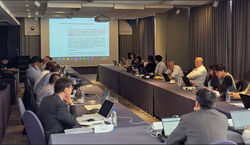
▲ 가축분뇨 하루 70톤을 에너지로 바꾸는 친환경 혁신 사업이 순천에서 본격 추진된다. 순천시와 순천광양축협은 24일 별량면 경축순환자원화센터에서 가축분뇨 고체연료 생산시설 착공식을 열고 본격적인 공사에 착수했다. |
가축분뇨 하루 70톤을 에너지로 바꾸는 친환경 혁신 사업이 순천에서 본격 추진된다.
순천시와 순천광양축협은 24일 별량면 경축순환자원화센터에서 가축분뇨 고체연료 생산시설 착공식을 열고 본격적인 공사에 착수했다.
올해 11월 준공을 목표로 사업을 추진하고 있으며 시운전 등을 거쳐 오는 12월부터 정식 납품을 시작할 계획이다.
해당 시설은 기존 경축순환자원화센터 내에 조성되며, 총 사업비는 41억원이 투입된다.
순천시에 따르면 착공된 시설은 하루 70톤의 축분을 처리해 24톤의 고체연료(펠렛)를 생산하며, 이 펠렛은 한국남부발전소에 납품되어 석탄을 대체하는 친환경 연료로 활용될 예정이다.
특히 30일 기준으로 환산하면 축분 2,100톤을 처리해 약 250만kWh(2,511,627kWh)의 에너지를 생산하게 되며, 이는 300kWh를 사용하는 가구 기준 약 8,372세대가 사용할 수 있는 전력량에 해당한다.
환경적 효과도 탁월하다. 기존 퇴비화 방식은 축분을 120일간 발효하면서 약 9.24톤의 이산화탄소(CO₂)를 배출하지만 고체연료 생산시설에서는 단 5일간의 건조 과정을 거쳐 약 385kg의 이산화탄소(CO₂)만 발생해 온실가스 배출량이 95.8% 이상 감축된다.
이는 기존 축분 처리 방식의 한계를 넘어, 축산환경과 기후위기 대응을 동시에 실현할 수 있는 획기적인 전환점으로 평가된다.
순천광양축협 이성기 조합장은 “이번 시설이 축산농가의 오랜 고민을 해결하고, 지속가능한 농축산업으로 나아가는 전환점이 될 것”이라고 강조했다.
순천시 관계자는 “이번 사업이 단순한 시설 구축을 넘어, 가축분뇨 문제 해결과 에너지 자립, 온실가스 감축, 축산 경쟁력 강화까지 아우르는 복합적 효과를 가진 선도적 모델이 될 것으로 기대된다”고 말했다.
한편, 착공식에는 김종구 농림축산식품부 식량정책실장을 비롯해 전라남도와 국회, 축산업계 관계자들이 참석해 자원순환형 축산 모델 구축의 시작을 함께했다.
[아래는 구글로 번역한 영문기사 전문입니다. 영문번역에 오류가 있을 수 있음을 전제로 합니다. Below is the full English article translated by Google. It is assumed that there may be errors in the English translation.]
An eco-friendly innovation project that converts 70 tons of livestock waste into energy per day is being launched in earnest in Suncheon.
On the 24th, Suncheon City and Suncheon Gwangyang Livestock Cooperatives held a groundbreaking ceremony for a livestock waste solid fuel production facility at the Gyeongchuk Circulation Resource Center in Byeoryang-myeon and began full-scale construction.
The project is being promoted with the goal of completion in November of this year, and after test runs, official delivery is planned to begin in December.
The facility will be built within the existing Gyeongchuk Circulation Resource Center, and a total project cost of 4.1 billion won will be invested.
According to Suncheon City, the facility that has begun construction will process 70 tons of livestock waste per day and produce 24 tons of solid fuel (pellets), which will be delivered to the Korea Southern Power Plant and used as an eco-friendly fuel to replace coal.
In particular, if converted to a 30-day standard, 2,100 tons of manure will be processed to produce approximately 2.5 million kWh (2,511,627 kWh) of energy, which is equivalent to the amount of electricity that can be used by approximately 8,372 households using 300 kWh.
The environmental effect is also excellent. While the existing composting method emits approximately 9.24 tons of carbon dioxide (CO₂) while fermenting manure for 120 days, the solid fuel production facility generates only approximately 385 kg of carbon dioxide (CO₂) through a drying process for just 5 days, reducing greenhouse gas emissions by more than 95.8%.
This is evaluated as a groundbreaking turning point that can simultaneously realize the livestock environment and climate crisis response by overcoming the limitations of the existing manure processing method.
Lee Seong-gi, Chairman of Suncheon Gwangyang Livestock Cooperative, emphasized, “This facility will solve the long-standing concerns of livestock farmers and become a turning point for moving toward a sustainable agricultural and livestock industry.”
A Suncheon City official said, “This project is expected to be a leading model with a complex effect that goes beyond simple facility construction and encompasses solving livestock manure problems, energy independence, greenhouse gas reduction, and strengthening livestock competitiveness.” Meanwhile, the groundbreaking ceremony was attended by Kim Jong-gu, Director of the Food Policy Bureau of the Ministry of Agriculture, Food and Rural Affairs, as well as officials from Jeollanam-do, the National Assembly, and the livestock industry, to mark the beginning of the construction of a resource-recycling livestock model.
원본 기사 보기:브레이크뉴스전남동부