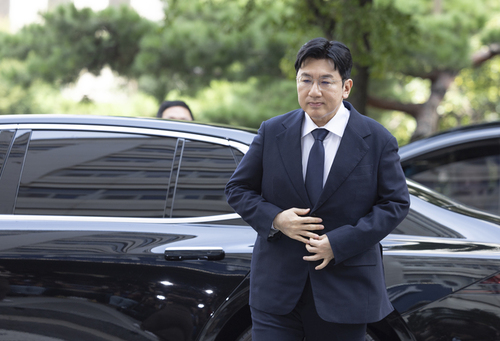
▲김전은 위원장의 여동생인 김여정 노동당 부부장. ©브레이크뉴스 |
이재명 정권에 들어와 남북이 작은 목소리 정도의 소통을 시작했다. 현 정부 들어 북한 고위층이 대남발언을 한 것. 김정은 북한 노동당 부부장은 7월28일 “한국에 대한 우리의 대적 인식에는 변화가 있을 수 없다”고 응대했다.
김정은 부부장은 “이재명의 집권 50여일만 조명해보더라도 앞에서는 조선반도 긴장완화요 조한(朝鮮-韓國)관계 개선이요 하는 귀맛 좋은 장설을 늘어놓았지만 한미동맹에 대한 맹신과 우리와의 대결기도는 선임자와 조금도 다를 바 없다”면서 “이재명 정부가 우리의 관심을 끌고 국제적 각광을 받아보기 위해 아무리 동족 흉내를 피우며 온갖 정의로운 일을 다 하는 것처럼 수선을 떨어도 한국에 대한 우리 국가의 대적 인식에서는 변화가 있을 수 없으며 조한(朝鮮-韓國)관계의 성격을 근본적으로 바꾸어놓은 역사의 시계 초침은 되돌릴 수 없다”고 피력했다.
시민단체인 경실련은 이날 “김여정 담화문에 대한 경실련 입장” 제목의 성명을 발표했다. 이 성명에서 “남북관계, 한 번에 바꿀 수 있다는 인식을 버리자”고 주장했다. 이 성명에서 “7월28일, 김여정 북한 노동당 부부장이 전승절을 맞아 담화를 발표했다. 이 담화는 이재명 정부 출범 이후 북한이 처음으로 밝힌 대남 메시지이자, 정동영 통일부 장관 임명 직후 발표된 것이기도 하다. 시기적으로도 상징성이 크며, 단순한 반응을 넘어 남북관계 재설정의 신호로 해석될 수 있다는 점에서 주목된다”고 전제하고 “김여정 부부장은 이재명 정부가 취한 대북 확성기 선제 중단, 대북전단 금지, 개별관광 재추진 등의 조치를 “진작에 하지 말았어야 할 일들을 그만둔 데 불과하다”고 평가했고, 정동영 장관의 화해 제안은 '헛된 망상'으로 일축했다. 이어 한미동맹에 대한 맹신과 대결 기조를 들어, 이재명 정부가 이전 정권들과 다를 바 없다고 강하게 비판했다. 동족 개념의 부정, 통일부 폐지 주장, 한미연합훈련 지속 시 긴장 해소 불가 등도 함께 담겼다“고 분석했다.
또한 ”이러한 메시지를 곧이곧대로 받아들여서는 곤란하다. 이번 담화는 남북관계를 둘러싼 긴장과 기대가 교차하는 시점에서 나온 북한의 첫 공식 입장인 만큼, 지나친 확대 해석도, 성급한 축소 판단도 경계해야 한다. 정세 흐름과 북한의 대남 인식 변화를 종합적으로 판단해야 하며, 이와 관련해 정부가 '일희일비하지 않겠다' '대화를 위한 행동을 일관되게 추진하겠다'고 밝힌 입장은 적절한 대응으로 평가할 수 있다”면서 “이제 정부는 구조적이고 지속가능한 남북 대화 복원 체계 마련에 집중해야 한다. 실제로 남북관계는 윤석열 정부 시기 급격히 단절되며 역사상 유례없는 경색 국면을 맞았고, 교류와 협력의 기본 틀조차 흔들릴 만큼 법적·정치적 기반이 급변해왔다. 이러한 국면에서 필요한 것은 극적인 접근이 아니라, 제도적·정책적 기반을 다시 쌓아가는 것, 즉 신뢰 회복을 위한 단계적이고 일관된 노력”이라고 진단했다.
경실련 측은 이 성명에서 “특히 한미연합훈련과 같은 핵심 사안은 전면 중단이 어렵더라도, 훈련의 수위, 방식, 메시지 관리 등을 통해 불필요한 군사적 오해를 줄이려는 외교적 노력이 병행되어야 한다. 북한 역시 생각을 바꿔야 한다. 윤석열 정부의 무인기 대응이든, 김여정 부부장의 담화든, 남북관계를 단숨에 바꾸려는 접근은 모두 실패를 반복해왔다. 이제는 상대 정부의 임기에 맞춰 5년짜리 대화라도 시작해야 한다. 서로 손해 볼 일은 없다. 위태로운 평화라도 전쟁 위기보다는 낫다”면서 “남북관계를 한 번에 바꾸겠다는 발상에서 벗어나, 끈질기고 일관된 대화의 태도가 지금 우리에게 필요하다. 경실련은 정부가 이러한 자세를 견지하며, 남북 간 신뢰 회복과 제도적 기반 복원을 흔들림 없이 추진해 나가길 기대한다”고 덧붙였다.
북한 사정에 밝은 한 북한전문가는 “북한은 러시아-우크라이나 전쟁에 병사를 참전시키고 있어, 매일 전쟁터에서 사망한 병사들의 시신이 입국하는 입장이라 초상집 분위기 일 것“이라면서 ”이런 북한 내의 분위기 때문에 남북 대화에 관심을 기울일 입장이 아닐 것“이라고 지적했다. 최근 영국의 공영방송인 BBC방송은 전쟁터에 내보내진 북한군의 사망자 수를 총 1천여명이라고 보도했다.
*아래는 위 기사를 '구글 번역'으로 번역한 영문 기사의 [전문]입니다. '구글번역'은 이해도 높이기를 위해 노력하고 있습니다. 영문 번역에 오류가 있을 수 있음을 전제로 합니다.<*The following is [the full text] of the English article translated by 'Google Translate'. 'Google Translate' is working hard to improve understanding. It is assumed that there may be errors in the English translation.>
North Korea's subtle remarks toward South Korea... "North Korea's atmosphere at the portrait house will not be able to care about inter-Korean dialogue"
- Reporter Park Jeong-dae
Since Lee Jae-myung's administration came into power, the South and the North have begun communicating in small voices. This is the first time a high-ranking North Korean official has made remarks toward South Korea since the current administration took office. Vice Director Kim Jong-un responded on July 28, saying, "There can be no change in our perception of South Korea as an enemy." Vice-Minister Kim Jong-un said, “Even if we only look at the 50 days of Lee Jae-myung’s presidency, he has always talked about easing tensions on the Korean Peninsula and improving North Korea-South Korea relations, but his blind faith in the South Korea-US alliance and his attempts at confrontation with us are no different from his predecessors.” He added, “No matter how much the Lee Jae-myung government pretends to be a compatriot and acts like it is doing all kinds of righteous things to attract our attention and gain international attention, there can be no change in our country’s perception of South Korea as an enemy, and the second hand of the clock of history that fundamentally changed the nature of North Korea-South Korea relations cannot be turned back.” On that day, the civic group Citizens’ Coalition for Economic Justice released a statement titled “CCEJ’s Position on Kim Yo-jong’s Statement.” In the statement, it argued, “Let’s abandon the perception that inter-Korean relations can be changed in one go.” In this statement, “On July 28, Vice Department Director Kim Yo-jong of the Workers’ Party of Korea released a statement to mark Victory Day. This statement is the first message to the South from North Korea since the inauguration of the Lee Jae-myung government, and was also released immediately after the appointment of Minister of Unification Chung Dong-young. It is notable for its symbolic timing and for its potential to be interpreted as a signal for a reset of inter-Korean relations beyond a simple response,” and “Vice Department Director Kim Yo-jong evaluated the measures taken by the Lee Jae-myung government, such as the preemptive suspension of loudspeakers toward the North, the ban on sending leaflets toward the North, and the resumption of individual tourism, as ‘nothing more than stopping things that should not have been done a long time ago,’” and dismissed Minister Chung Dong-young’s proposal for reconciliation as a ‘vain delusion.’ She then strongly criticized the Lee Jae-myung government for its blind faith in the ROK-US alliance and its confrontational tone, saying that it is no different from previous administrations. It also included the denial of the concept of compatriots, the demand for the abolition of the Ministry of Unification, and the inability to ease tensions if ROK-US joint military exercises continue.” In addition, “It is difficult to take this message at face value. Since this statement is North Korea’s first official position at a time when tensions and expectations surrounding inter-Korean relations are intertwined, we must be wary of over-interpreting or hasty minimizing judgments. We must comprehensively assess the flow of the situation and the changes in North Korea’s perception of the South, and the government’s statement that it will ‘not be overly swayed by one moment’ and ‘will consistently pursue actions for dialogue’ can be evaluated as an appropriate response,” he said. “The government must now focus on establishing a system to restore structural and sustainable inter-Korean dialogue. In fact, inter-Korean relations were abruptly cut off during the Yoon Seok-yeol administration and faced an unprecedented tense situation in history, and the legal and political foundations have changed so rapidly that even the basic framework of exchange and cooperation has been shaken. What is needed in this situation is not a dramatic approach, but rather rebuilding the institutional and policy foundations, that is, step-by-step and consistent efforts to restore trust.” In this statement, the Korea Center for International Finance said, “Especially in the case of key issues such as the ROK-US joint military exercises, even if it is difficult to completely stop them, diplomatic efforts should be made to reduce unnecessary military misunderstandings through the level, method, and message management of the exercises. North Korea should also change its thinking. Whether it is the Yoon Seok-yeol government’s response to drones or Vice Department Director Kim Yo-jong’s statement, all approaches to changing inter-Korean relations overnight have failed repeatedly. Now, we should start a five-year dialogue that matches the term of the other government. There is nothing to lose for either side. Even a precarious peace is better than a war crisis.” He added, “We need to move away from the idea of changing inter-Korean relations all at once and adopt a persistent and consistent attitude toward dialogue. The Korea Center for International Finance hopes that the government will maintain this attitude and continue to steadily push for the restoration of trust and institutional foundations between the South and the North.” A North Korea expert who is well-versed in the situation in North Korea said, “North Korea is sending soldiers to fight in the Russia-Ukraine war, so the bodies of soldiers who died on the battlefield are arriving in the country every day, so it must be in a state of mourning,” and pointed out that, “Because of this atmosphere within North Korea, they will not be in a position to pay attention to inter-Korean dialogue.”
Recently, the BBC, a British public broadcaster, reported that the total number of deaths among North Korean soldiers sent to the battlefield was approximately 1,000.