전미경의 <꽃씨 신화>(도서출판 BMK)는 단순한 화집이 아니다. 그것은 씨앗과 잎, 껍질과 꽃잎으로 빚어낸 하나의 수행록이자, 예술이 생명과 맞닿는 순간을 기록한 경전이다.
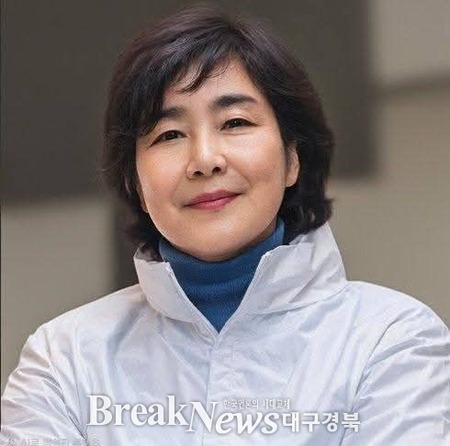
 ▲ 전미경 작가 꽃씨 신화 |
전 작가는 붓을 버리고 대신 손끝으로 씨앗을 붙인다. 물감 대신 햇살에 말린 잎과 꽃을 쓴다. 그 결과 화면 위에 남은 것은 그림이 아니라, 살아 있는 자연의 언어, 즉 꽃씨가 스스로 써 내려간 신화다.
이 책의 근간은 작가가 11년간 전국의 108개 사찰을 순례하며 얻은 체험이다. 봉선사에서 시작해 수덕사에 이르기까지, 그는 각 절마다의 풍경과 숨결을 압화로 옮기고, 거기에 간결한 해설을 덧붙였다.
한 점의 그림마다 수행자의 호흡이 스며 있고, 문장마다 자연과의 대화가 깃들어 있다. 작가가 “농부가 땅 위에 씨앗을 심듯 화폭에 씨앗을 심는다”고 고백하듯, 그의 작업은 농사이자 기도이며 명상이다.
그는 나무껍질과 씨앗을 모으며 생명의 질서를 느끼고, 잎맥 하나하나를 붙이며 우주의 숨결을 읽는다. 예술은 세속적 미의 완성보다 자연의 본성을 되살리는 행위임을 그는 몸으로 실천한다.
책의 중심에는 대표작 〈꽃씨 신화〉 연작이 자리한다. 이 작품은 강원도 철원의 도피안사에서 마주한 통일신라의 철조비로자나불좌상에서 비롯되었다.
작가는 부처의 미소에서 경건한 전율을 느끼며, 어린 시절 자운영 꽃씨를 처음 보았을 때의 설렘을 떠올린다. 자운영 씨앗은 태아를 닮았다.
생명의 근원이자 소우주인 그 형태가 작가에게는 곧 부처의 상징이 되었다. 그는 자운영 씨앗을 모아 불상의 윤곽을 만들고, 자작나무 껍질과 금박, 은박으로 빛과 자비를 입혔다.
그렇게 도피안사의 부처는 씨앗으로 다시 태어났고, 고대의 신앙은 현대의 생명미학으로 부활했다. 이 순간 ‘꽃씨 신화’는 한 예술가의 상상력을 넘어, 인간이 자연을 통해 신성을 회복하는 통로가 된다.
전미경이 사찰을 찾는 이유는 불교적 신심 때문만이 아니다. 사찰은 산과 들, 구름과 바람이 서로의 존재를 인정하며 조화하는 공간이다.
전 작가가 말하듯, “산사가 주변의 산이나 계곡과 어우러질 때 비로소 아름답게 느껴진다.” 자연과 인간, 건축과 시간의 조화를 느낄 때 그는 작품의 소재를 발견한다.
〈표충사〉 〈불국사〉 〈부석사〉 〈감은사지〉 등의 작품에는 계절의 빛과 소리가 함께 담겨 있다. 붉게 물든 단풍잎, 논에 비친 탑의 그림자, 눈 덮인 대웅전 앞마당 같은 풍경들이 압화의 질감 속에서 다시 피어난다.
그것들은 단순한 풍경이 아니라 ‘마음의 상태’로서 존재한다. 작가는 자연 속에 있을 때 가장 나다워질 수 있다고 말한다.
이 고백은 곧 예술의 근원에 대한 깨달음이다. 예술은 자아의 확장이 아니라, 자아를 비워 자연과 하나 되는 길이라는 것.
<꽃씨 신화>는 전미경의 여덟 번째 개인전(2025년 10월, 갤러리 인사아트)에 출품된 108점의 작품을 모두 수록했다.
책장을 넘기는 행위는 곧 전시장을 걷는 일이다. 각 작품마다 작가의 짧은 해설이 붙어 있어, 독자는 마치 작가와 나란히 서서 작품 설명을 듣는 듯한 경험을 한다.
이 구성은 회화집과 에세이의 경계를 허문다. 단순히 시각적 감상에 머물지 않고, 작품이 태어난 순간의 감정과 사유를 함께 읽게 한다.
또한 화가가 자신의 작품 세계를 직접 언어화한 드문 사례이기도 하다. 보통 화가의 내면은 평론가의 언어를 통해 해석되지만, 전미경은 자신의 언어로 자신을 번역한다.
그것은 설명이 아니라 기도에 가깝다. 문장은 간결하고 담백하며, 독자는 그 맑은 문체를 따라 작가의 내면을 걸어간다.
전미경의 압화는 단순한 수공예가 아니다. 그것은 회화와 조형, 공예의 경계를 허무는 생명예술이다. 나뭇잎 한 장, 꽃씨 한 알이 화면 속에서 우주적 질서를 이룬다.
자작나무 껍질의 거친 결이 산맥을 이루고, 코스모스 씨앗이 논의 모종이 되며, 감잎의 붉은 선이 석양을 그린다. 모든 재료는 그대로의 생명을 유지한 채 하나의 우주로 편입된다.
그의 작품은 ‘그린 그림’이 아니라 ‘피어난 그림’이다. 그것은 생명의 흐름을 재현하는 예술이 아니라, 생명 자체가 스스로 그린 회화다.
따라서 그의 작품은 관객에게 감상보다는 공경의 태도를 요구한다. 그것은 미술관의 그림이라기보다, 절 마당의 탑처럼 조용히 기도를 불러일으키는 형상이다.
<꽃씨 신화>라는 제목은 작가의 예술관을 함축한다. 신화란 인간이 자연과 신을 잇기 위해 만들어낸 이야기이고, 씨앗은 그 신화의 기호다.
전 작가는 그 씨앗으로 자신만의 신화를 쓴다. 108개 산사의 여정은 곧 108개의 번뇌를 비우는 길이며, 그 위에서 예술은 깨달음으로 나아간다.
그의 압화가 감동을 주는 이유는 그것이 단순히 예쁜 자연화가 아니기 때문이다. 거기에는 손끝으로 느낀 생명의 무게와, 사찰의 종소리와, 계절의 숨결이 녹아 있다.
그것은 인간이 잊고 있던 원초적 감각, 즉 자연과 함께 살아가는 법을 되살리는 행위다. <꽃씨 신화>를 덮고 나면 독자는 어느새 마음이 고요해진다.
그것은 책이 전하는 메시지가 단순해서가 아니라, 그 안에 살아 있음의 윤리가 스며 있기 때문이다. 작가는 예술가이기 이전에 생명을 돌보는 농부이며, 자연과 대화하는 수행자다.
그는 꽃씨 하나에도 우주의 질서를 보고, 그 질서를 존중하는 법을 안다. 오늘날 산업화된 예술 시장 속에서 전미경의 작품은 오히려 느림과 침묵의 미학으로 빛난다.
자연의 재료로 자연을 말하는 이 순환적 미학은, 인간이 파괴한 세계를 치유하는 작은 불경과 같다. 씨앗 하나에 담긴 생명, 그것이 바로 작가가 우리에게 전하고자 한 ‘꽃씨 신화’의 본뜻이다.
전미경의 <꽃씨 신화>는 예술과 생명, 자연과 인간의 관계를 새롭게 묻는 책이다. 그것은 미술의 기록이 아니라 존재의 근원을 향한 수행의 여정이다.
우리는 이 책을 통해 꽃씨 하나가 어떻게 우주가 되는지, 한 점의 그림이 어떻게 기도가 되는지를 목격한다. 결국 이 책은 우리 자신에게 던지는 질문이다. “당신은 지금 어떤 씨앗을 심고 있는가.”
글:김수종 작가
daipapa@hanmail.net
 ▲ 김수종 작가 ©김수종 작가 |
김수종 작가는 1968년 경북 출신으로 대학에서 종가학문인 철학을 공부한 덕에 같은 줄기인 문학과 역사에도 관심이 많다. 주로 역사, 문화와 관련된 유물 유적과 지역을 둘러보면서 연구도 하고 글도 쓰고 있다. 서울 성북구에서 사진 찍는 아내와 대학생인 아들과 함께 살고 있다.
그동안 <열정과 집념으로 승부한다> <영주를 걷다> <역사 그리고 문화, 그 삶의 흔적을 거닐다> <지방이 살아야 대한민국이 산다> 등을 집필하여 책으로 출간했다. 현재 민간 문화재청+환경부 역할을 하고 있는 (사)한국내셔널트러스트(NT)와 사회적협동조합 한강, 샛강시민위원회에서 봉사 활동 중이다.
*아래는 위 기사를 '구글 번역'으로 번역한 영문 기사의 [전문]입니다. '구글번역'은 이해도 높이기를 위해 노력하고 있습니다. 영문 번역에 오류가 있을 수 있음을 전제로 합니다.
[Book Review] Jeon Mi-kyung's "Flower Seed Myth" Art Collection Released
A Sutra Recording the Moment Art Intersects Life
Jeon Mi-kyung's "Flower Seed Myth" (BMK Publishing) is more than just a simple art collection. It is a record of her practice, crafted from seeds, leaves, husks, and petals, and a sutra recording the moment art intersects life.
Jeon abandons her brush and instead uses her fingertips to attach seeds. Instead of paint, she uses sun-dried leaves and flowers. As a result, what remains on the canvas is not a painting, but the living language of nature—a myth written by the flower seeds themselves.
The foundation of this book is the author's experience gained during an 11-year pilgrimage to 108 temples across Korea. From Bongseonsa Temple to Sudeoksa Temple, she captured the landscape and breath of each temple through pressed flowers, adding concise commentary.
Each painting is imbued with the breath of a practitioner, and every sentence is imbued with a dialogue with nature. As the artist confesses, "I sow seeds on canvas, just as a farmer sows seeds in the ground," his work is a form of farming, prayer, and meditation.
He senses the order of life by gathering bark and seeds, and interprets the breath of the universe by gluing each leaf vein. He embodies the idea that art is not about perfecting worldly beauty, but rather about reviving the essence of nature.
At the center of the book is his representative work, the "Flower Seed Myth" series. This work originated from the Unified Silla iron seated Vairocana Buddha statue he encountered at Dopiansa Temple in Cheorwon, Gangwon Province.
The artist feels a reverent thrill in the Buddha's smile, recalling the excitement he felt when he first saw the seeds of the milk vetch flower as a child. Milk vetch seeds resemble a fetus.
This form, the source of life and a microcosm, became a symbol of Buddha for the artist. He gathered milk vetch seeds to create the outline of the Buddha statue, then applied light and compassion with birch bark, gold, and silver leaf.
In this way, the Buddha of Dopiansa Temple was reborn as a seed, and ancient beliefs were revived as a modern aesthetic of life. In this moment, the "flower seed myth" transcends the imagination of an artist and becomes a conduit for humanity to restore divinity through nature.
Jeon Mi-kyung's visit to temples is not solely driven by Buddhist devotion. Temples are spaces where mountains and fields, clouds and winds acknowledge and harmonize with each other.
As Jeon herself says, "A mountain temple feels truly beautiful only when it harmonizes with the surrounding mountains and valleys." She discovers the subject matter for her work when she senses the harmony between nature and humanity, architecture and time.
Works such as "Pyochungsa Temple," "Bulguksa Temple," "Buseoksa Temple," and "Gameunsa Temple Site" capture the light and sounds of the seasons. Scenes like crimson maple leaves, the shadow of a pagoda reflected in a rice paddy, and the snow-covered front yard of Daeungjeon Temple bloom again within the texture of pressed flowers.
These are not mere landscapes, but exist as a "state of mind." The artist asserts that she can be most truly herself when surrounded by nature.
This confession is a realization about the very essence of art. Art is not an extension of the self, but a path to emptying the self and becoming one with nature.
contains all 108 works exhibited in Jeon Mi-kyung's eighth solo exhibition (October 2025, Gallery Insa Art).
Turning the pages is like walking through an exhibition hall. Each work is accompanied by a short commentary by the artist, making the reader feel as if they are standing alongside the artist, listening to her explanation.
This structure blurs the line between a painting collection and an essay. It goes beyond mere visual appreciation, allowing readers to experience the emotions and thoughts at the moment the work was born.
It is also a rare example of an artist directly translating her artistic world into words. While the artist's inner world is usually interpreted through the language of critics, Jeon Mi-kyung translates herself into her own language.
It is not an explanation, but rather a prayer. The sentences are concise and simple, and the reader, guided by her clear style, journeys into the artist's inner world.
Jeon Mi-kyung's pressed flowers are not mere handicrafts. They are life-giving art, blurring the boundaries between painting, sculpture, and craft. Each leaf, each seed, creates a cosmic order within the canvas.
The rough texture of birch bark forms a mountain range, cosmos seeds become rice seedlings, and the red lines of a persimmon leaf paint a sunset. All materials, while retaining their life, are incorporated into a single universe.
Her work is not a "painting" but a "blooming painting." It is not art that reproduces the flow of life, but a painting that life itself paints.
Therefore, her work demands reverence from the viewer rather than appreciation. It is less a painting in an art gallery and more a form that quietly evokes prayer, like a pagoda in a temple courtyard.
The title "Flower Seed Myth" encapsulates the artist's artistic perspective. Myths are stories created by humans to connect nature and the divine, and seeds are symbols of these myths.
Jeon writes her own myths with these seeds. The journey of the 108 mountain temples is a path to emptying the 108 afflictions, and on this path, art advances toward enlightenment.
The reason her pressed flowers are so moving is because they are not simply pretty nature paintings. They embody the weight of life felt at the fingertips, the sound of temple bells, and the breath of the seasons.
It is an act of reviving a primal sense forgotten by humans: the way to live in harmony with nature. After closing , the reader's mind becomes calm.
This is not because the book's message is simple, but because it is imbued with the ethics of living. Before being an artist, the author is a farmer who cares for life, a practitioner who converses with nature.
She sees the order of the universe in even a single flower seed, and she knows how to respect that order. In today's industrialized art market, Jeon Mi-kyung's work shines with the aesthetics of slowness and silence.
This cyclical aesthetic, which speaks of nature through natural materials, is like a small Buddhist scripture that heals a world devastated by humans. The life contained in a single seed—that's the true meaning of the "Flower Seed Myth" the author seeks to convey to us.
Jeon Mi-kyung's "Flower Seed Myth" questions the relationship between art and life, nature and humanity. It's not a mere record of art, but a journey of practice toward the source of existence.
Through this book, we witness how a single seed can become a universe, how a single painting can become a prayer. Ultimately, this book poses a question to ourselves: "What kind of seed are you planting now?"
Written by: Kim Soo-jong
daipapa@hanmail.net
Born in North Gyeongsang Province in 1968, Kim Soo-jong studied philosophy, a discipline of his family, in college. Thanks to this, he also has a keen interest in literature and history, both of which are related to his family. He primarily researches and writes while visiting historical and cultural relics and sites. He lives in Seongbuk-gu, Seoul, with his wife, a photographer, and their college-aged son.
He has written and published books such as "Competing with Passion and Determination," "Walking through Yeongju," "History and Culture, Strolling Through Traces of Life," and "Only When Local Communities Survive, Can Korea Survive?" He currently volunteers with the National Trust of Korea (NT), which functions as a private organization under the Cultural Heritage Administration and the Ministry of Environment, and with the Han River and Saetgang Citizens' Committee, a social cooperative.
*Below is the full text of the English translation of the above article, translated using Google Translate. Google Translate strives to improve comprehension. Please note that errors may exist in the English translation.