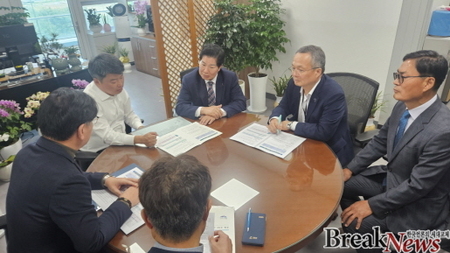
브레이크뉴스 김충열 정치전문기자 = 국회미래연구원(원장 김기식)은 11월 10일(월)에 “인구감소지역의 새로운 기회 요인 탐색: 중장년층 유입과 발전 방안” 연구보고서를 발간했다. 보고서는 인구감소지역이 처한 현실과 관련하여, 통계자료와 공간분석을 기반으로 중장년층의 이동 패턴과 지역별 특성을 면밀히 분석․진단하고 이에 대한 미래지향적 정책 방향을 제시했다.
 ▲ 보고서는 중장년층은 자산과 사회경험을 보유해 인구감소지역 활성화의 촉진제 역할을 할 수 있으며, 이들의 이주는 직접적 경제효과 뿐 아니라 축적된 전문성과 네트워크를 통한 지역사회에 기여가 가능하다고 강조했다. 경제, 의료, 사회적 관계, 정주여건의 격차가 실질적 귀향‧귀촌의 장벽으로 작용하므로, 안정적 생계유지를 위한 일자리 정책, 공공의 농지 매입‧임대, 의료환경 개선, 사회적 관계망 형성 지원 등 다각적 전략이 필요하다는 것도 덧붙였다. *김충열 정치전문기자 |
보고서는 2021년 행정안전부가 지정한 인구감소지역 89개 시군구에서, 청년층(19-34세)은 89개 지역 중 부산 동구를 제외한 88개 지역에서 순유출이 나타났으나, 중장년층(50-64세)은 대부분 지역에서 순유입이 발생했다고 밝혔다.
20-30대 청년층이 진학과 취업을 위해 도 지역에서 광역시로 이동하는 것과 달리, 50대 이상 중장년층은 생활의 질 향상과 경제적 효율성을 추구하며 광역시에서 도 지역으로 이동하는 역방향의 흐름을 보인다는 것이다.
이러한 현상이 뚜렷한 지역들을 살펴보면, 경북 영천시는 최근 3년간 청년층(20-30대)이 2,030명 순유출된 반면, 중장년층(50-64세)은 1,380명이 순유입되었다. 경북 상주시의 경우 청년층 1,645명이 순유출되었으나 중장년층은 1,035명이 순유입되었으며, 강원 홍천군도 청년층 922명의 순유출과 대조적으로 중장년층 1,140명의 순유입을 기록했다.
중장년층의 전입 사유는 ‘주택’이 50% 이상으로 가장 큰 비중을 차지했으며, ‘직업’이 그 뒤를 이었는데, 특히 50-54세(22.1%), 55-59세(21.0%) 연령대에서 직업을 전입 사유로 응답한 비율이 상대적으로 높았다. 인구감소지역으로 이동하는 중장년층에 대한 분석 결과, 중장년층 유입이 일정한 패턴을 보이고 있다고 밝혔다.
핵심적 사항은 “중장년층은 근거리 이동 중심의 생활권 내 이동이 활발했다. 인구감소지역으로 유입되는 중장년층의 40-80%가 동일 광역시도 내에서 이동하는 것으로 나타났다.”며, “중장년층은 주택 요인이 이동 사유로 크게 작용하며, 이는 생애주기 변화(은퇴 준비, 자녀독립 등)에 따른 주거 조정으로 판단되었다.”고 밝혔다.
지역별 분석에서는 경북 울릉군(4.97%), 전남 신안군(4.70%), 강화군(4.17%) 등이 높은 중장년층 순유입률을 보였는데, 이들 지역은 우수한 자연환경, 은퇴 세대가 선호하는 정주환경을 가지고 있는 것으로 판단했다.”며, “지역특성에 따른 차별적 유입 요인도 확인되었다.”고 강조했다.
예컨대 산업기반 지역은 직업 요인(30% 내외), 자연경관 우수 지역은 자연환경 요인(7-11%)의 비중이 높았으며, 수도권 인접 지역은 수도권으로부터의 유입이 두드러졌다. 아울러 중장년층은 원거리 이동 지역보다는 익숙한 생활권 내에서 이동하는 경향을 보였으며, 대도시까지 1-2시간 이내 접근 가능한 지역의 순유입이 높게 나타나 이는 전원생활의 장점을 누리면서도 도시의 의료‧문화 서비스를 이용할 수 있는 입지를 선호한다는 것을 보고서는 시사했다.
이어 “인구감소지역은 획일적 특성을 나타내는 것이 아니라 다양한 특성을 보이는 이질적 공간이므로 지역 특성에 맞는 차별화된 인구 정책이 필요하다”고 강조했다. 즉 인구감소지역을 수도권 인접형, 광역시 생활권형, 관광자원 활용형 등으로 유형화하여 맞춤형 전략이 필요하며, 이를 위해 광역교통망 확충을 통한 대도시 연계 강화, 의료 접근성 제고, 중장년층 맞춤형 주거단지 조성 등을 추진해야 한다는 것이다.
끝으로 보고서는 중장년층은 자산과 사회경험을 보유해 인구감소지역 활성화의 촉진제 역할을 할 수 있으며, 이들의 이주는 직접적 경제효과 뿐 아니라 축적된 전문성과 네트워크를 통한 지역사회에 기여가 가능하다고 강조했다. 경제, 의료, 사회적 관계, 정주여건의 격차가 실질적 귀향‧귀촌의 장벽으로 작용하므로, 안정적 생계유지를 위한 일자리 정책, 공공의 농지 매입‧임대, 의료환경 개선, 사회적 관계망 형성 지원 등 다각적 전략이 필요하다는 것도 덧붙였다. hpf21@naver.com
* 아래는 위 기사를 '구글 번역'으로 번역한 영문 기사의 [전문]입니다. '구글번역'은 이해도 높이기를 위해 노력하고 있습니다. 영문 번역에 오류가 있을 수 있음을 전제로 합니다. *The following is [the full text] of the English article translated by 'Google Translate'. 'Google Translate' is working hard to improve understanding. It is assumed that there may be errors in the English translation.
National Assembly Research Institute for Future Studies: "Young People Are Leaving, Middle-Aged and Elderly Are Returning... A Reversal in Population Declining Areas"
A Net Influx of People in Their 50s and 60s Driven by Housing and Living Environment Factors... Tailored Regional Policies Urgently Needed
Break News Political Reporter Kim Choong-lyoul = The National Assembly Research Institute for Future Studies (Director Kim Ki-sik) published a research report on Monday, November 10th, titled "Exploring New Opportunities in Population Declining Areas: Influx of Middle-Aged and Elderly People and Development Plans." The report closely analyzed and diagnosed the migration patterns of middle-aged and elderly people and regional characteristics, drawing on statistical data and spatial analysis, regarding the current situation in population-declining areas. It then proposed future-oriented policy directions.
The report revealed that among the 89 cities, counties, and districts designated by the Ministry of the Interior and Safety as areas of population decline in 2021, young people (aged 19-34) experienced a net outflow in 88 of the 89 areas, excluding Dong-gu, Busan. However, middle-aged and older people (aged 50-64) experienced a net inflow in most areas.
Unlike young people in their 20s and 30s who migrate from provincial areas to metropolitan cities for further education and employment, middle-aged and older people in their 50s and older are moving in the opposite direction, from metropolitan cities to provincial areas in pursuit of improved quality of life and economic efficiency.
Among the areas where this phenomenon is particularly evident, Yeongcheon City in North Gyeongsang Province has seen a net outflow of 2,030 young people (aged 20-30) over the past three years, while the middle-aged and older people (aged 50-64) have seen a net inflow of 1,380. In Sangju, Gyeongbuk Province, there was a net outflow of 1,645 young people, but a net inflow of 1,035 middle-aged and older people. Hongcheon County, Gangwon Province, also saw a net outflow of 922 young people, but a net inflow of 1,140 middle-aged and older people.
The most common reason for middle-aged and older people moving was "housing," accounting for over 50% of the total, followed by "job." The proportion of people aged 50-54 (22.1%) and 55-59 (21.0%) who cited job as their reason for moving was particularly high. Analysis of middle-aged and older people moving to areas with declining populations revealed a consistent pattern of inflows.
The key finding was that "middle-aged and older adults were actively moving within their living areas, focusing on short-distance travel. It was found that 40-80% of middle-aged and older adults moving into declining population areas were moving within the same metropolitan city or province." The report also stated, "Housing factors were a significant factor in the movement of middle-aged and older adults, and this was attributed to residential adjustments driven by life cycle changes (e.g., preparing for retirement, children moving out of their homes, etc.)." A regional analysis revealed that Ulleung County in North Gyeongsang Province (4.97%), Sinan County in South Jeolla Province (4.70%), and Ganghwa County in North Jeolla Province (4.17%) showed high net inflow rates of middle-aged and older adults. These areas were determined to possess excellent natural environments and desirable residential environments for retirees. The report emphasized that "differentiated inflow factors based on regional characteristics were also identified."
For example, industrial-based areas had a high proportion of job factors (around 30%), while areas with excellent natural scenery had a high proportion of natural environment factors (7-11%). Areas adjacent to the Seoul metropolitan area showed a significant inflow from the metropolitan area. Furthermore, middle-aged and older adults tended to move within familiar living areas rather than moving to distant locations. The report also noted that net inflow was high in areas within 1-2 hours of major cities, suggesting a preference for locations that offer the benefits of rural living while also providing access to urban medical and cultural services.
The report continued, "Regions experiencing population decline are not uniform but rather heterogeneous spaces with diverse characteristics. Therefore, differentiated population policies tailored to regional characteristics are necessary." In other words, The report suggests that areas experiencing population decline should be categorized into those adjacent to the metropolitan area, those living in metropolitan cities, and those utilizing tourism resources, and that tailored strategies are needed. This includes strengthening connections to major cities through the expansion of metropolitan transportation networks, improving access to healthcare, and developing housing complexes tailored to the middle-aged and older population.
Finally, the report emphasized that middle-aged and older individuals, with their wealth of assets and social experience, can serve as catalysts for the revitalization of depopulated areas. Their migration not only generates direct economic benefits but also contributes to local communities through their accumulated expertise and networks. It also emphasized that gaps in economic, medical, social, and residential conditions act as barriers to returning to their hometowns and rural areas. Therefore, a multifaceted strategy is needed, including job creation policies to ensure stable livelihoods, public farmland purchases and leases, improved healthcare environments, and support for social networking. hpf21@naver.com