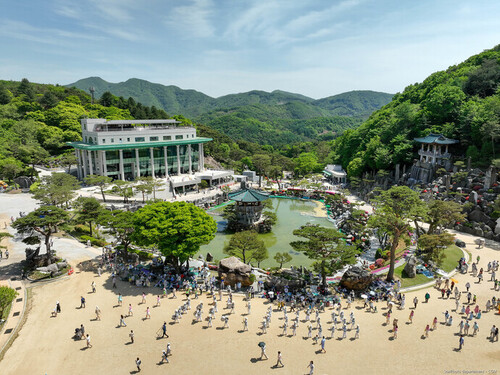
▲ 대구 북구 떡볶이 페스티벌 © 대구 북구 |
【브레이크뉴스 대구】진예솔 기자=‘대구 떡볶이 페스티벌’이 3년 만에 K-푸드 대표 축제로 자리 잡으며 지역 경제에 활력을 불어넣고 있다.
올해 10월 24일부터 26일까지 대구 iM뱅크파크에서 열린 이번 축제에는 33만 명이 몰렸다. 이는 지난해 13만 명에 비해 거의 세 배 가까이 늘어난 수치다. 경제적 파급 효과도 275억 원에 달하는 것으로 집계됐다.
올해 떡볶이 페스티벌은 전국구 축제로의 도약을 보여줬다. 방문객의 52%가 타 지역에서 왔고, 경북 지역 35%, 수도권 10%, 제주 등 기타 지역 7%에 달했다. 특히 사흘 내내 축제를 찾은 열정적인 관람객도 전체의 10%나 됐다.
연령별로는 30대가 39%로 가장 많았고, 여성 관람객 비율도 70% 수준을 유지했다. 가족 단위 방문이 크게 늘면서 체류형 소비가 두드러졌고, 1인당 평균 지출액은 8만 3,400원으로 나타났다.
식음료, 숙박, 관광 등에서 발생한 직접 경제효과만 275억 원에 이른 것으로 전문가들은 분석했다. 온라인 노출, 도시 이미지 상승 등 간접 효과까지 더하면 500억 원이 넘을 것으로 전망된다.
떡볶이 축제가 단순한 먹거리 축제를 넘어 대구 지역발전의 새로운 동력으로 떠오르고 있다는 평가다.
대구 북구청은 이번 페스티벌의 성공 요인으로 △남녀노소 공감하는 ‘소울푸드’ 떡볶이의 대중성 △K-컬처 확산에 힘입은 글로벌 인지도 상승 △아낌없는 투자 △3무(無)·3유(有) 운영 원칙 △상향식 의사결정 등을 꼽았다.
기존 지역 특산물 중심의 축제에서 벗어나 남녀노소 모두 즐길 수 있는 K-푸드 중심의 축제로 거듭났다는 것이 현장의 평이다.
실제로 대구의 성공을 본떠 구미 라면 축제, 김천 김밥 축제, 원주 만두 축제 등 비슷한 K-푸드 행사가 전국 곳곳에서 생겨나고 있다. 최근 OTT, SNS를 통한 K-콘텐츠 인기로 떡볶이도 김치, 불고기, 비빔밥을 잇는 ‘2세대 K-푸드’로 자리매김하고 있다. 이에 따라 축제의 주도권도 행정 중심에서 문화·콘텐츠 중심으로 옮겨가고 있다는 분석이다.
운영 방식에서도 대구 떡볶이 페스티벌은 새로운 모델을 제시하고 있다. 북구청은 지난해부터 의전 행사와 공무원 동원이 없는 ‘3무 원칙’과 함께 다회용기 사용, 지역 상가 연계 등 ‘3유 원칙’을 도입했다. 입점비를 받지 않아 ‘바가지 요금’ 논란을 사전에 차단하고, ‘컴인 주문 시스템’으로 대기 혼잡을 줄이는 등 관람객 편의에 중점을 뒀다.
또, 관람객이 지역 상가에서 결제한 금액을 떡볶이 쿠폰으로 교환하고, 축제 수익금 일부를 ‘사랑의 열매’에 기부하는 등 지역 상생 모델도 확대 적용했다.
기초자치단체로는 이례적으로 북구청은 매년 예산과 규모를 확대해왔다. 배광식 북구청장은 조직 내 다양한 아이디어를 과감히 반영해 불필요한 관행을 없애고 투자에 적극 나선 것으로 평가된다. 최근에는 K-푸드 3대장 축제를 대구·경북 광역철도와 연계해 동시 개최하는 방안도 논의되고 있다.
<구글 번역으로 번역한 영문 기사의 전문 입니다. 번역에 오류가 있을 수 있음을 밝힙니다.>
The Daegu Tteokbokki Festival has established itself as a representative K-food festival in just three years, revitalizing the local economy.
This year's festival, held at Daegu iM Bank Park from October 24th to 26th, attracted 330,000 visitors, nearly tripling the 130,000 visitors last year. The economic impact was estimated at 27.5 billion won.
This year's Tteokbokki Festival demonstrated its growth into a nationwide event. 52% of visitors came from outside the region, 35% from North Gyeongsang Province, 10% from the Seoul metropolitan area, and 7% from other regions such as Jeju. Notably, enthusiastic visitors, who attended the festival for all three days, accounted for 10% of the total.
By age, those in their 30s comprised the largest group at 39%, and the proportion of female visitors remained steady at around 70%. With a significant increase in family visits, stay-at-home consumption became prominent, with an average per capita spending of 83,400 won.
Experts estimate that the direct economic impact from food and beverage, accommodation, and tourism alone reached 27.5 billion won. Indirect effects, such as online exposure and an enhanced city image, are projected to exceed 50 billion won.
The Tteokbokki Festival is seen as emerging as a new driving force for regional development in Daegu, transcending the mere food festival.
The Daegu Buk-gu Office cited the following as key factors in the festival's success: 1) the popularity of tteokbokki, a "soul food" enjoyed by people of all ages; 2) the rise in global awareness fueled by the spread of K-culture; 3) generous investment; 4) the "3-nothing, 3-have" operating principle; and 5) bottom-up decision-making.
The festival has evolved from a traditional festival focused on local specialties to a festival centered on K-food, accessible to all ages.
Indeed, following Daegu's success, similar K-food events, such as the Gumi Ramen Festival, the Gimcheon Gimbap Festival, and the Wonju Dumpling Festival, are springing up across the country. With the recent popularity of K-content through OTT and social media, tteokbokki is establishing itself as a "second-generation K-food," following kimchi, bulgogi, and bibimbap. Consequently, the festival's leadership is shifting from administrative to cultural and content-focused initiatives.
The Daegu Tteokbokki Festival also presents a new model in its operation. Since last year, the Buk-gu District Office has implemented the "Three Nos" principle, which eliminates ceremonial events and the mobilization of public officials, along with the "Three Yous" principle, which includes the use of reusable containers and partnerships with local businesses. The festival prioritizes visitor convenience by eliminating entry fees, preemptively eliminating controversy over "overcharges," and reducing waiting times with a "Come-in Ordering System."
Furthermore, the local community coexistence model was expanded, with visitors exchanging their purchases at local businesses for tteokbokki coupons and donating a portion of the festival proceeds to the "Fruit of Love" charity.
Unusually for a local government, Buk-gu Office has consistently expanded its budget and scale each year. Mayor Bae Gwang-sik is recognized for his proactive approach to investment, boldly incorporating diverse ideas within the organization, eliminating unnecessary practices, and actively promoting investment. Recently, discussions are underway to simultaneously host the K-Food Three Major Markets Festival and the Daegu-Gyeongbuk Metropolitan Railway.
원본 기사 보기:브레이크뉴스 대구경북