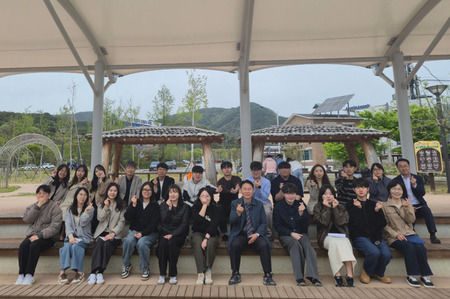
▲ LG유플러스, 6G 대비 ‘분산형 RIS’ 실내 검증 성공…차세대 커버리지 기술 확보 © 브레이크뉴스 |
브레이크뉴스 정민우 기자= LG유플러스가 6G 시대를 대비한 차세대 무선 통신 핵심 기술인 ‘분산형 RIS(Reconfigurable Intelligent Surface)’의 실내 환경 검증에 성공했다. 이번 연구는 포항공과대학교(POSTECH) 홍원빈 교수 연구팀과의 공동 연구로 진행됐다.
LG유플러스는 25일 무전력 분산형 RIS와 인공지능(AI)을 활용해 차세대 실내 커버리지 확장 기술을 실증했다고 밝혔다. RIS는 별도의 전원 없이 전파를 반사·투과·제어할 수 있는 기술로, 도심 빌딩이나 지하 공간 등 전파 음영 지역에서도 안정적인 통신을 가능하게 하는 차세대 솔루션이다. 특히 6G 후보 주파수 대역의 전송 효율을 크게 높일 수 있는 핵심 기술로 평가받고 있다.
이번 연구는 6G 후보 대역인 어퍼 미드밴드(Upper Mid-band) 환경에서 분산형 RIS를 활용해 커버리지 개선 효과를 검증한 것이 특징이다. 해당 주파수 대역은 넓은 대역폭과 커버리지를 동시에 확보할 수 있지만, 건물 벽이나 유리, 도심 구조물로 인한 침투 손실과 실내 음영 지역 발생이 한계로 지적돼 왔다. 연구진은 액자·벽지·간판 등 생활 공간에 자연스럽게 설치할 수 있는 분산형 RIS를 적용해 실내 커버리지를 크게 향상시킬 수 있음을 확인했다.
특히 기존 RIS는 정밀한 정렬이 필요해 설치 장소 제약과 긴 시공 시간이 문제였지만, 이번에 검증된 분산형 RIS는 이러한 한계를 개선했다. LG유플러스와 연구팀은 강화학습 기반 AI 알고리즘을 적용해 기지국 위치, 실내외 구조, 주파수 특성을 고려한 RIS 최적 배치가 가능하도록 했으며, 이를 통해 ‘지능형 전파 제어 인프라’로 작동하도록 구현했다.
연구 결과, 분산형 RIS는 전파 전달 경로에 장애물이 많은 비가시 환경(NLoS)에서도 전파 손실을 크게 줄이고 커버리지를 확장하는 효과를 보였다. 해당 기술은 6G뿐 아니라 현재 상용화된 5G와 와이파이(Wi-Fi) 환경에도 적용 가능해 전반적인 통신 품질 개선에 기여할 것으로 전망된다.
또한 고주파 대역일수록 전파 감쇠가 큰 특성을 고려할 때, 저비용·무전력 RIS 패널을 다수 설치하는 방식은 통신 인프라 구축 및 운영 비용 절감 효과도 기대된다. 향후 분산형 RIS가 상용화되면 공장·물류센터 등 산업 현장, 터널·지하철 역사 같은 공공 인프라, 대형 엔터테인먼트 시설 등 다양한 공간에서 저지연·균일 커버리지를 제공할 수 있을 것으로 보인다.
이상헌 LG유플러스 네트워크선행개발담당은 “이번 분산형 RIS 기술 검증을 통해 기존 RIS의 기술적 한계를 넘어 보다 넓은 커버리지를 제공할 수 있음을 확인했다”며 “앞으로도 차세대 통신 기술을 선도하며 6G 시대를 대비한 최적의 통신 환경을 구현해 나가겠다”고 말했다.
홍원빈 포항공대 교수는 “분산형 RIS는 세계 최초로 무전력 전파 스킨을 지능적으로 배치·활용해 무선 전파 환경을 제어하는 기술”이라며 “기존 RIS가 요구하던 정렬 설치 한계를 극복해 건물 내외 어디든 자유롭게 설치할 수 있다는 점에서 큰 혁신”이라고 설명했다. 이어 “지속적인 연구개발을 통해 글로벌 경쟁력을 갖춘 기술로 발전시켜 나가겠다”고 덧붙였다.
*아래는 위 기사를 '구글 번역'으로 번역한 영문 기사의 [전문]입니다. '구글번역'은 이해도 높이기를 위해 노력하고 있습니다. 영문 번역에 오류가 있을 수 있음을 전제로 합니다.<*The following is [the full text] of the English article translated by 'Google Translate'. 'Google Translate' is working hard to improve understanding. It is assumed that there may be errors in the English translation.>
LG U+ Successfully Validates 'Distributed RIS' Indoor for 6G, Securing Next-Generation Coverage Technology
LG U+ has successfully verified "Distributed RIS (Reconfigurable Intelligent Surface)," a key next-generation wireless communication technology for the 6G era, in an indoor environment. This research was conducted in collaboration with Professor Hong Won-bin's research team at Pohang University of Science and Technology (POSTECH).
LG U+ announced on the 25th that it has demonstrated a next-generation indoor coverage expansion technology utilizing power-free distributed RIS and artificial intelligence (AI). RIS is a next-generation solution that can reflect, transmit, and control radio waves without requiring a separate power source. It enables stable communication even in radio-shadow areas such as urban buildings and underground spaces. It is recognized as a key technology that can significantly improve transmission efficiency in 6G candidate frequency bands.
This research is notable for verifying the coverage improvement effect of distributed RIS in the upper mid-band, a 6G candidate band. While this frequency band offers both wide bandwidth and coverage, it has been limited by penetration loss caused by building walls, glass, and urban structures, as well as the creation of indoor shadow areas. The research team demonstrated that indoor coverage can be significantly improved by applying distributed RIS, which can be naturally installed in living spaces such as picture frames, wallpaper, and signboards.
Existing RIS required precise alignment, which limited installation locations and lengthy construction times. However, the newly validated distributed RIS overcomes these limitations. LG Uplus and the research team applied a reinforcement learning-based AI algorithm to optimally deploy RIS, considering base station locations, indoor and outdoor structures, and frequency characteristics. This enabled the system to function as an "intelligent radio control infrastructure."
The research results showed that distributed RIS significantly reduced radio loss and expanded coverage even in non-line-of-sight (NLoS) environments with numerous obstacles in the radio propagation path. This technology is applicable not only to 6G but also to currently commercialized 5G and Wi-Fi environments, and is expected to contribute to overall improved communication quality.
Furthermore, considering the significant radio attenuation in higher frequency bands, installing multiple low-cost, power-free RIS panels is expected to reduce the costs of building and operating communications infrastructure. Once distributed RIS is commercialized, it is expected to provide low-latency, uniform coverage in a variety of spaces, including industrial sites like factories and logistics centers, public infrastructure like tunnels and subway stations, and large-scale entertainment facilities.
Lee Sang-heon, Head of Network Advanced Development at LG Uplus, stated, "Through this distributed RIS technology verification, we have confirmed that it can overcome the technical limitations of existing RIS and provide broader coverage. We will continue to lead next-generation communication technologies and create an optimal communication environment for the 6G era."
Professor Hong Won-bin of Pohang University of Science and Technology explained, "Distributed RIS is the world's first technology to intelligently deploy and utilize power-free radio skins to control the wireless radio environment. This represents a significant innovation in that it overcomes the alignment limitations of existing RIS and allows for free installation anywhere, inside or outside a building." He added, “Through continuous research and development, we will develop this technology into one with global competitiveness.”