브레이크뉴스 김충열 정치전문기자 = 대한민국의 원전 운영 중단이라는 초유의 사태를 막기 위해 사용후핵연료 저장 시설 포화 문제를 정면으로 다룬 정책 보고서가 발간되어 주목받고 있다.
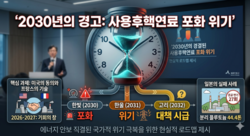
 ▲ 정성장 부소장은 "이 보고서가 정부와 우리 사회가 사용후핵연료 저장 위기를 극복하는 실질적인 해법을 찾는 데 미력하게나마 도움이 되기를 바란다"고 밝혔다. © AI이미지 생성/ 김충열 정치전문기자 |
정성장 세종연구소 부소장은 지난 4월 21일, 「한국의 사용후핵연료 저장 위기와 2030년의 경고 — 미국의 제약, 일본의 선례, 한불 협력의 현실적 로드맵 —」이라는 제목의 <세종포커스> 보고서를 통해 에너지 안보 위기 극복을 위한 구체적인 전략을 제시했다.
대한민국의 원전 발전 비중은 2024~2025년 기준으로 전체 발전량의 약 30% 내외를 유지하고 있다. 이는 석탄 화력 발전과 함께 국내 전력 공급의 양대 축을 담당하고 있다.
제11차 전력수급기본계획안 등 정부의 중장기 에너지 계획에 따르면, 탄소 중립 달성과 에너지 안보를 위해 원전 비중은 점진적으로 확대될 전망이다. 러시아-우크라이나 그리고 미-이란 전쟁 등에서 촉발하고 있는 중동발 에너지 충격은 원전의 안정적인 에너지 공급이 더욱 중요해졌다.
이에 정부는 원자력 발전 비중을 2030년 목표 31.8%까지 끌어올릴 계획이며, 장기적으로는 2038년 목표 35.6%까지 확대를 목표로 하고 있다. 이는 신규 원전(신한울 3·4호기 등) 건설과 기존 원전의 계속 운전(수명 연장)을 전제로 한 수치이다.
2030년부터 시작되는 '원전 가동 중단'의 공포
정 부소장은 보고서에서 2030년 한빛원전을 시작으로 한울(2031년), 고리(2032년) 원전의 사용후핵연료 저장시설이 차례로 포화 상태에 이른다는 점을 지적했다. 저장 공간이 확보되지 않으면 원전 가동 자체가 중단될 수 있으며, 이는 국가적 전력난과 에너지 안보 붕괴로 이어질 수 있다는 경고다.
"미국만 바라볼 수 없다"… 현실적 한계와 일본의 교훈
보고서는 한국이 직면한 외교적·기술적 난제를 세 가지 측면에서 분석했다.
첫째, 미국의 역할 한계: 미국은 현재 상업적 재처리 시설을 직접 운영하지 않고 있다. 정 부소장은 "미국은 산업 파트너라기보다 사전동의권자로서의 지위를 갖는다"며 미국에 직접적인 해결을 기대하기 어려운 현실을 짚었다.
둘째, 일본의 실패 반면교사: 일본 롯카쇼 재처리 공장이 27차례나 준공을 연기하고 44.4톤의 분리 플루토늄 문제를 겪은 사례를 언급하며, 한국은 이러한 전철을 밟지 않아야 한다고 강조했다.
셋째, 한-프랑스 협력의 기회: 지난 4월 3일 한불 정상회담과 한국수력원자력(KHNP)-오라노(Orano) 간의 MOU 체결이 열어준 가능성에 주목했다. 프랑스에 위탁재처리를 맡기는 것이 현재로선 가장 현실적인 대안이라는 분석이다.
2026~2027년이 마지막 '기회의 창’ 닫혀...경고
정 부소장은 해법 마련을 위한 시간이 얼마 남지 않았음을 강조했다. 보고서에 따르면 2026년에서 2027년 사이에 재처리 관련 초석을 놓지 못할 경우, 원전 가동 중단을 막을 '기회의 창'이 빠르게 닫힐 것이라고 경고했다.
정성장 부소장은 "이 보고서가 정부와 우리 사회가 사용후핵연료 저장 위기를 극복하는 실질적인 해법을 찾는 데 미력하게나마 도움이 되기를 바란다"고 밝혔다. hpf21@naver.com
[참고] 해당 보고서 전문은 세종연구소 공식 홈페이지를 통해 확인할 수 있다.
(원문 링크: https://sejong.org/web/boad/1/egoread.php?bd=1&seq=12896)
*아래는 위 기사를'구글 번역'으로 번역한 영문 기사의[전문]입니다. '구글번역'은 이해도 높이기를 위해 노력하고 있습니다.영문 번역에 오류가 있을 수 있음을 전제로 합니다.*The following is [the full text] of the English article translated by 'Google Translate'. 'Google Translate' is working hard to improve understanding. It is assumed that there may be errors in the English translation.
Jeong Seong-jang, Deputy Director of the Sejong Institute: "Nuclear Power Plants to Shut Down in 2030… Presenting Solutions for the Spent Nuclear Fuel Crisis"
Published *Sejong Focus*: "We Must Face the '2030 Warning' Directly Linked to Energy Security"
Analysis of Japan's Failure Case and Proposal of a Roadmap for Korea-France (Orano) Contract Reprocessing Cooperation
Emphasis on the 'Golden Time' of 2026–2027… "Realistic Alternatives Combining U.S. Consent and French Technology Needed"
Break News, Political Reporter Kim Choong-lyoul = A policy report addressing the issue of spent nuclear fuel storage saturation head-on to prevent the unprecedented situation of South Korea halting nuclear power plant operations has been published and is drawing attention.
On April 21, Jeong Seong-jang, Deputy Director of the Sejong Institute, presented concrete strategies to overcome the energy security crisis through a *Sejong Focus* report titled "Korea's Spent Nuclear Fuel Storage Crisis and the 2030 Warning — U.S. Constraints, Japan's Precedent, and a Realistic Roadmap for Korea-France Cooperation —." As of 2024–2025, the share of nuclear power generation in South Korea is maintaining around 30% of total power generation. Along with coal-fired power generation, it serves as one of the two major pillars of the domestic electricity supply.
According to the government's mid-to-long-term energy plans, such as the draft of the 11th Basic Plan for Electricity Supply and Demand, the share of nuclear power is expected to gradually expand to achieve carbon neutrality and ensure energy security. The energy shocks originating from the Middle East, triggered by conflicts such as the Russia-Ukraine war and the U.S.-Iran war, have made the stable energy supply from nuclear power even more critical.
Consequently, the government plans to raise the share of nuclear power generation to a target of 31.8% by 2030, and aims to expand it to 35.6% by 2038 in the long term. These figures are based on the construction of new nuclear power plants (such as Shin Hanul Units 3 and 4) and the continued operation (life extension) of existing plants.
The Fear of a 'Nuclear Power Plant Shutdown' Starting in 2030
In the report, Deputy Director Jeong pointed out that the spent nuclear fuel storage facilities at the Hanbit (2030), Hanul (2031), and Gori (2032) nuclear power plants will sequentially reach saturation. He warned that if storage space is not secured, the operation of the nuclear power plants themselves could be halted, which could lead to a national power shortage and the collapse of energy security.
"We Cannot Look Only to the U.S."... Realistic Limitations and Lessons from Japan
The report analyzed the diplomatic and technical challenges facing Korea from three perspectives.
First, the limitations of the U.S. role: The United States currently does not directly operate commercial reprocessing facilities. Deputy Director Jeong highlighted the reality that it is difficult to expect a direct solution from the U.S., stating, "The U.S. holds the status of an advance consent holder rather than an industrial partner."
Second, a lesson from Japan's failure: Citing the case of Japan's Rokkasho reprocessing plant, which delayed its completion 27 times and faced issues with 44.4 tons of separated plutonium, the report emphasized that Korea must not follow in its footsteps.
Third, opportunities for Korea-France cooperation: It highlighted the possibilities opened by the Korea-France summit on April 3 and the signing of an MOU between Korea Hydro & Nuclear Power (KHNP) and Orano. The analysis suggests that entrusting reprocessing to France is currently the most realistic alternative.
2026–2027: The Last 'Window of Opportunity' Closes... A Warning
Deputy Director Jeong emphasized that there is little time left to find a solution. According to the report, it warned that if the groundwork for reprocessing is not laid between 2026 and 2027, the 'window of opportunity' to prevent the shutdown of nuclear power plants will close rapidly. Deputy Director Jeong Seong-jang stated, "I hope this report will be of at least some small help to the government and our society in finding practical solutions to overcome the spent nuclear fuel storage crisis." hpf21@naver.com
[Note] The full text of the report is available on the official website of the Sejong Institute.
(Link to original text: https://sejong.org/web/boad/1/egoread.php?bd=1&seq=12896)