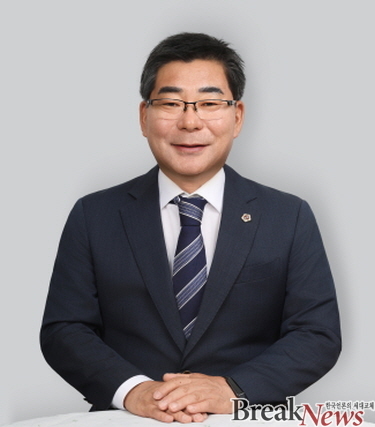
▲필자/ 정길선 박사 ©브레이크뉴스 |
표트르 대제가 남긴 개혁의 유산 및 인재이자 권신인 알렉산드르 다닐로비치 멘시코프(Александр Данилович Меньшиков, 1673~1729)에 대한 러시아 사가들의 평은 호불호가 극명하게 갈린다.
멘시코프는 비천한 출신으로 문맹에 가까운 인물이었다. 가난함으로 인해 어려서 빵 가게로 보내졌고 결국 배가 고파 군대에 들어갔다. 군대에서 이복누이 소피아와 권력쟁탈전에서 밀려나 전쟁놀이로 소일하던 표트르를 만나게 된다. 멘시코프는 그를 향한 저돌적인 충성심만이 그의 유일한 자산이었다. 1689년 표트르는 이복누이 소피아에 대항해 쿠데타를 일으켜 차르 제위에 복귀했다. 이때 멘시코프는 표트르 대제에 의해 중용이 되는데 그는 표트르 대제가 발상한 개혁의 선봉이 된다.
상트페테르부르크를 건설하는데 책임자로 복무했고 스웨덴과의 대북방전쟁에서 표트르 대제가 스웨덴 칼 12세와 맞대결하기 위해 폴타바로 남하했을 때 표트르 대제의 배후를 사수하여 발트 리보니아 지역에서 육로로 상트페테르부르크를 기습하려는 스웨덴의 10만 대군을 막아냈다. 멘시코프가 후방을 든든히 해준 활약으로 인해 표트르 대제는 폴타바 전투에서 승리하고 대북방전쟁의 승전국이 될 수 있었다. 또한 멘시코프는 아조프 해 인근 오스만투르크도 제압하여 군사적인 탁월한 능력을 보여줬다.
표트르 대제도 멘시코프가 든든하게 자신을 보좌하지 않았다면 러시아의 영광은 없었다며 술회했을 정도다. 멘시코프는 러시아 제국과 신성로마제국의 공작이자 대원수가 되었다. 건장한 키에 늘씬한 몸매, 날카로운 콧날에 인상적인 눈매를 지닌 그는 전쟁에서 탁월한 능력을 갖고 있었고 말솜씨가 유창하며 사교에도 능란했기에 외교적으로도 탁월한 능력을 보여줬다. 유년 시절 외가 일족이 살해되는 것을 본 표트르 대제는 귀족을 믿지 않았지만 멘시코프는 죽을 때까지 총애했다.
후일 표트르 대제를 승계하는 예카테리나 황후도 멘시코프를 스승으로 여기며 존중했다. 리보니아의 전쟁 고아였던 자신을 차르에게 바쳐 황후가 될 수 있게 해준것도 멘시코프였다. 표트르 사후 황후는 차르에 추대됐다. 멘시코프는 여황제의 후견인이자 러시아의 실질적 군주나 마찬가지였다. 황후가 죽자 장녀를 11살의 표트르 2세와 약혼시키고 섭정의 지위에 올랐다. 그러나 지나친 표트르 2세에 대한 간섭과 가르침은 표르트 대제의 개혁에 이미 신물이 나 있던 표트르 2세 차르에게 반항심만 초래했고 차르는 친위대를 조직해 무방비 상태의 멘시코프를 전격 체포했다.
그리고 권력남용과 부정부패 혐의로 시베리아로 추방하게 된다. 멘시코프는 시베리아에서 벌목공으로 살다가 폐렴으로 1729년에 사망한다. 우선 멘시코프가 실각한 이유는 탐욕이 심했다. 실로 멘시코프는 러시아의 근대화에 지대한 공을 세운 인물이지만 약점 또한 재물에 대해 지나치게 탐욕을 부린다는 것이 문제었다. 그는 페테르부르크 총독으로 섬 하나를 차지했고 황궁 근처에 저택도 소유했다. 각지에 봉토가 있었고 세금징수의 권리를 가졌다. 그런데도 그는 만족을 몰랐다. 표트르 대제도 멘시코프의 능력과 별개로 횡령 문제로 인해 그를 체포한적도 있었다.
표트르 대제는 멘시코프에게 “비천하고 욕심만 많은 놈, 나가서 빵 장수나 계속하거라.” 라며 쌍욕을 했다 한다. 그 때 멘시코프는 옷을 갈아입고 빵바구니를 메고 차르에게 가더니만 “빵 사시오. 빵 사시오. 갓 나온 새 빵이오.” 라고 하자 차르는 기가 막혀 웃고 그를 용서해주었다는 일화가 있다. 러시아 학계에서는 그가 전쟁 수행능력 및 투르크와의 외교적 조약을 두번이나 러시아 국력의 위대함을 드러내고 막대한 배상금을 뜯어냈으며 영토도 할양받는 등, 천재적인 외교적 수단을 보여준 것에 대해 높이 평가하고 있다.
러시아 로마노프 제국이 서양열강에 합류된 것 또한 멘시코프의 출중한 능력과 표트르 대제의 과감한 추진력의 합작품이라는 것은 어느 누구도 부인하지 않는다. 다만 그의 부정적으로 재산을 축적하고 권력을 독점하며 러시아의 빈민인 농노들을 탄압한 행위 등에 대해서는 많은 비판을 하고 있는 실정이다.
*필자/ 정길선.
노바토포스 회원, 역사학자, 고고인류학자, 칼럼니스트, 러시아 과학아카데미 유라시아 고고인류학연구소 연구교수.
*아래는 위 기사를 '구글 번역'으로 번역한 영문 기사의 [전문]입니다. '구글번역'은 이해도 높이기를 위해 노력하고 있습니다. 영문 번역에 오류가 있을 수 있음을 전제로 합니다.<*The following is [the full text] of the English article translated by 'Google Translate'. 'Google Translate' is working hard to improve understanding. It is assumed that there may be errors in the English translation.>
Peter the Great's Legacy of Reform and Talent: Alexander Menshikov
- Columnist Jeong Gil-seon
Russian historians have sharply divided opinions on Alexander Danilovich Menshikov (1673-1729), a powerful figure and a legacy of reform left by Peter the Great.
Menshikov was born into humble origins and was nearly illiterate. Due to poverty, he was sent to work as a baker at a young age, and eventually, driven by hunger, he enlisted in the army. There, he encountered Peter, who had been pushed out of a power struggle with his half-sister Sophia and was now spending his time playing war games. Menshikov's unwavering loyalty to him was his only asset. In 1689, Peter staged a coup against Sophia and regained the Tsar's throne. At this time, Menshikov was promoted to high office by Peter the Great, and he became a leader in the reforms conceived by Peter the Great.
He served as a key figure in the construction of St. Petersburg. During the Great Northern War with Sweden, when Peter the Great marched south to Poltava to confront Charles XII of Sweden, Menshikov defended Peter's rear, repelling a 100,000-strong Swedish army attempting a surprise overland attack on St. Petersburg from the Baltic Livonia region. Thanks to Menshikov's solidifying rearguard, Peter the Great won the Battle of Poltava and emerged victorious in the Great Northern War. Menshikov also demonstrated his exceptional military prowess by subduing the Ottoman Turks near the Sea of Azov.
Even Peter the Great himself once remarked that without Menshikov's unwavering support, Russia would have been without its glory. Menshikov became Duke and Grand Marshal of both the Russian Empire and the Holy Roman Empire. With his sturdy stature, slender build, sharp nose, and striking eyes, he possessed exceptional military prowess, a eloquent tongue, and a keen social skill, demonstrating exceptional diplomatic prowess. Peter the Great, having witnessed the murder of his maternal family during his childhood, distrusted the nobility, but he favored Menshikov until his death.
Empress Catherine, who later succeeded Peter the Great, also regarded Menshikov as a mentor and respected him. It was Menshikov who presented herself to the Tsar as a Livonian war orphan, enabling her to become empress. After Peter's death, the empress was proclaimed Tsar. Menshikov served as the empress's guardian and effectively the monarch of Russia. Upon the empress's death, he arranged for his eldest daughter to be betrothed to the 11-year-old Peter II and assumed the position of regent. However, Menshikov's excessive interference and instruction in Peter II only fueled rebellion in the Tsar, who was already fed up with Peter's reforms. The Tsar organized his own guard and arrested the defenseless Menshikov.
He was then exiled to Siberia on charges of abuse of power and corruption. Menshikov worked as a lumberjack there and died of pneumonia in 1729. Menshikov's fall was primarily due to his greed. While Menshikov contributed significantly to the modernization of Russia, his weakness was his excessive greed for wealth. As Governor-General of St. Petersburg, he held an island and a mansion near the Imperial Palace. He held fiefs in various locations and had the right to collect taxes. Despite this, he remained insatiable. Peter the Great himself arrested Menshikov for embezzlement, despite his abilities.
Peter the Great is said to have hurled insults at Menshikov, saying, "You mean and greedy fellow. Go out and continue your business as a bread seller." Menshikov then changed his clothes, carried a basket of bread, and approached the Tsar, saying, "Buy bread! Buy bread! Fresh, fresh bread!" The Tsar, stunned, laughed and forgave him. Russian scholars highly value Menshikov's wartime prowess and his diplomatic genius, including two treaties with the Turks that demonstrated the greatness of Russia's national power, exacted enormous indemnities, and secured territorial cessions.
No one denies that the Romanov Empire's annexation of the Western powers was a product of Menshikov's exceptional talent and Peter the Great's bold initiative. However, there is considerable criticism of his negative actions, such as amassing wealth, monopolizing power, and oppressing the serfs, the poor of Russia.
lukybaby7@gmail.com
*Author: Gil-seon Jeong.
Novatopos member, historian, paleoanthropologist, columnist, and research professor at the Institute of Eurasian Archaeology and Anthropology, Russian Academy of Sciences.