▲약어(略語) 설명=명청대전(이재명 대통령과 청청래 더불어민주당 대표 간의 전쟁 약칭).
검찰 보완수사권 논쟁을 형사소송법 조항의 문제로 보는 시각이 많다. 그러나 지금 벌어지는 일은 법 기술의 문제가 아니다. 권력 설계의 문제다. 더 정확히 말하면 대통령과 당대표 사이에서 벌어지는 권력의 시간 충돌이다.
겉으로는 단순하다. 보완수사권을 완전히 없앨 것인가, 예외를 둘 것인가의 선택이다. 그러나 그 선택은 곧 정권 후반기를 어떻게 관리할 것인가, 그리고 2028년 이후 권력의 중심이 어디에 놓일 것인가에 대한 판단이다. 이것이 오늘의 ‘명청대전’이다. 명과 청의 전쟁이 아니라, 이재명과 정청래의 권력 대전(對戰)이다.
이재명 대통령이 보완수사권에 예외를 남기려는 이유는 통치자의 위치에서 이해할 수 있다. 통치자는 이상보다 위험을 먼저 계산한다. 대형 사건이 부실 수사로 무너질 경우, 공소 유지에 실패할 경우, 정치적 책임은 결국 청와대로 돌아온다. 그러나 더 중요한 계산은 레임덕이다.
 ▲ 정청래 더불어민주당 대표(왼쪽)-이재명 대통령(오른쪽). ©뉴시스 |
한국 정치에서 대통령의 권위는 외부 공격으로 약화되지 않았다. 내부 균열과 검찰의 독자적 움직임이 결합할 때 급격히 흔들렸다. 정권 초반 검찰은 인사와 예산, 조직 개편이라는 현실에 묶인다. 그러나 임기 중반을 지나 차기 권력이 가시화되면 검찰은 생존을 계산한다. 충성의 방향은 미래로 이동한다. 이때 수사는 정치적 의미를 띤다.
역대 대통령 상당수가 임기 후반 수사 압박에 직면했다. 이는 개인의 문제가 아니라 구조의 문제였다. 한국은 수사권과 기소권이 결합된 체제를 유지하고 있고, 고위 검사의 정치 직행 통로도 완전히 닫히지 않았다. 권력은 언제든 정치 자산으로 전환될 수 있다. 내부 권력 균열이 생기면 수사는 권력 재편의 도구로 오해받기 쉽다.
이재명 대통령에게 보완수사권은 검찰을 보호하기 위한 장치라기보다, 검찰을 완전히 적으로 돌리지 않기 위한 완충 장치에 가깝다. 완전 폐지는 개혁의 상징이 될 수 있다. 그러나 후반 통치 국면에서 스스로 통제 수단을 제거하는 선택이 될 위험도 있다. 그는 정권의 시간을 관리해야 한다. 레임덕을 늦추는 것이 통치자의 계산이다.
반면 정청래 대표의 시간은 다르다. 그는 정권의 후반기가 아니라 당의 장기 권력 구조를 본다. 보완수사권의 이름으로 예외를 두는 순간 그것은 사실상 수사지휘권의 변형으로 작동할 수 있고, 수사와 기소의 분리는 형식에 그칠 수 있다는 판단이다. 완전 폐지는 감정이 아니라 구조적 차단이라는 논리다.
여기서 우리는 비교의 눈을 가져야 한다. 미국에는 보완수사권이라는 개념이 없다. 연방검사는 연방수사국(FBI)을 직접 지휘하지 않는다. 경찰과 검찰은 수사 초기부터 협력 구조를 형성하지만, 명령과 복종의 관계는 아니다. 증거가 부족하면 기소하지 않는다. 대신 대배심 제도를 통해 시민이 기소 과정에 참여한다. 기소 독점은 시민 통제를 받는다. 수사와 기소는 분리되지만, 정치적 전환 통로는 좁다.
독일과 일본은 다르다. 두 나라는 검찰이 수사지휘권과 보완수사권을 보유한다. 권한은 한국보다 약하지 않다. 그러나 정치로 직행하는 통로는 제한적이다. 독일은 검사와 판사의 인사 체계가 통합되어 있고, 정치와의 거리도 상대적으로 유지된다. 일본 역시 퇴직 검사의 정치 직행이 흔치 않다. 권한은 강하지만 정치화의 통로는 좁다.
한국은 그 중간 어디쯤에 서 있다. 권한은 유지하면서 정치로의 전환 통로는 열려 있다. 이 구조에서는 보완수사권을 남기든 없애든 정치화 논란이 반복될 가능성이 높다. 권한의 문제라기보다 구조의 문제이기 때문이다.
여기에 당권의 시간이 겹친다. 당원 1인 1표 구조 속에서 당대표가 재신임에 성공하고 2028년 총선 공천권을 장악한다면 권력의 중심은 청와대에서 당으로 이동할 수 있다. 총선 공천권은 오늘날의 군권이다. 공천을 쥔 쪽이 정치의 미래를 설계한다. 2012년 친이·친박 공천 갈등 이후 권력이 내부에서 균열되며 레임덕이 가속된 전례는 이를 보여준다.
대통령은 레임덕을 늦추려 하고, 당 대표는 포스트 권력을 설계한다. 두 사람의 시간은 다르게 흐른다. 보완수사권은 그 교차점에 놓여 있다. 그러나 보완수사권의 존폐만으로는 답이 되지 않는다. 수사와 기소의 명확한 분리, 기소 독점에 대한 시민적 통제 강화, 고위 검사의 정치 직행 제한이라는 세 축이 동시에 설계되지 않는 한 검찰 권력의 정치화는 반복될 것이다.
오늘의 명청대전에서 중요한 것은 누가 이기느냐가 아니다. 그 균열이 얼마나 깊어지느냐다. 권력은 외부에서 무너지지 않는다. 내부에서 갈라질 때 무너진다. 보완수사권은 지금 검찰개혁의 마지막 관문이자 정권 후반 권력 구조를 시험하는 장치가 되고 있다.
이재명 대통령의 시간은 정권의 생존을 향해 흐르고, 정청래 대표의 시간은 차기 권력 설계를 향해 흐른다. 그 두 시간이 충돌하는 지점에서, 한국 정치의 다음 장이 결정될 것이다.
*Jeongkeekim@naver.com
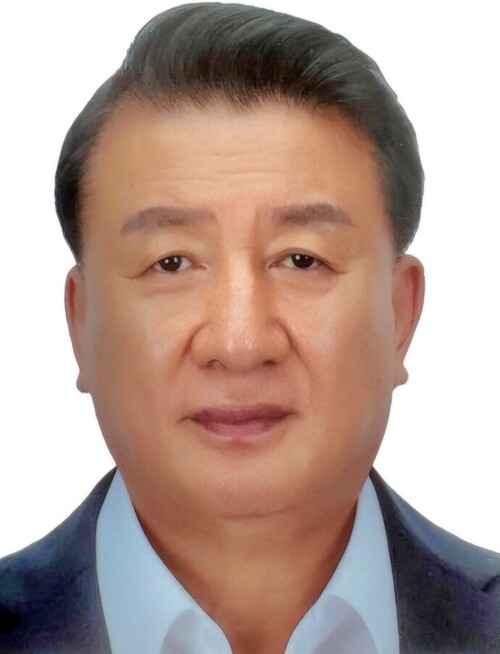
*필자/김정기
 ▲필자/ 김정기 "한민국과 세계 이야기 (도서출판 책미듬)의 저자." ©브레이크뉴스 |
● 학력
- 뉴욕주립대학교(Stony Brook) 정치학과 수석 졸업
- 마케트대학교(Marquette) 로스쿨 법학박사
- 하버드대학교(Harvard) 케네디스쿨 최고위 과정
- 베이징대학교(Peking) 북한학 연구학자
● 경력
- 세계스마트시티기구(WeGO) 사무총장 (현)
- 유엔 국제전기통신연합 (UN ITU) 가상세계 및 AI 글로벌 이니셔티브 집행위원(현)
- 법무법인 대륙아주 중국 총괄 미국변호사
- 동국대학교 경영전문대학원 석좌교수
- 숭실사이버대학교 총장
- 칼럼니스트
● 저서
1. 대학생을 위한 거로영어연구[전 10권](거로출판사)
2. 나는 1%의 가능성에 도전한다(조선일보사)
3. 한국형 협상의 법칙(청년정신사)
4. 대한민국과 세계 이야기 (도서출판 책미듬)
5. Korea and the World (Advance Reader Copy)
*아래는 위 기사를 '구글 번역'으로 번역한 영문 기사의 [전문]입니다. '구글번역'은 이해도 높이기를 위해 노력하고 있습니다. 영문 번역에 오류가 있을 수 있음을 전제로 합니다.<*The following is [the full text] of the English article translated by 'Google Translate'. 'Google Translate' is working hard to improve understanding. It is assumed that there may be errors in the English translation.>
Lee Jae-myung and Chung Cheong-rae, the Divergent Flow of Power... "The Prosecution's Supplementary Investigative Powers and the Ming-Qing War"
- Columnist Kim Jeong-gi
▲Abbreviation = The Ming-Qing War (abbreviation for the war between President Lee Jae-myung and Chung Cheong-rae, leader of the Democratic Party of Korea). Many view the dispute over the prosecution's supplementary investigative powers as a matter of the provisions of the Criminal Procedure Act. However, what is unfolding now is not a matter of legal technicalities. It is a matter of power design. More precisely, it is a power struggle between the president and the party leader.
On the surface, it seems simple: the choice is whether to completely eliminate supplementary investigative powers or to create an exception. However, that choice directly determines how to manage the latter half of the administration and where the center of power will lie after 2028. This is today's "Ming-Qing War." It is not a war between the Ming and the Qing, but a power struggle between Lee Jae-myung and Chung Cheong-rae.
President Lee Jae-myung's desire to leave an exception to the supplementary investigative powers is understandable from his position as a ruler. A ruler calculates risks before ideals. If a major case collapses due to a botched investigation or if the prosecution fails to maintain its indictment, political responsibility ultimately falls on the Blue House. However, the more important calculation is the lame duck.
In Korean politics, the president's authority has not been weakened by external attacks. It has been dramatically shaken by the combination of internal divisions and the independent actions of the prosecution. In the early stages of a term, the prosecution is bound by the realities of personnel, budget, and organizational restructuring. However, as the midpoint of a term passes and the next power becomes apparent, the prosecution calculates its survival. Loyalty shifts to the future. At this point, investigations take on political significance.
Many past presidents have faced pressure from investigations late in their terms. This was not an individual problem, but a structural one. Korea maintains a system that combines investigative and prosecutorial powers, and the direct path for high-ranking prosecutors to politics has not been completely closed. Power can be transformed into political assets at any time. When internal power divisions arise, investigations can easily be misunderstood as a tool for power restructuring.
For President Lee Jae-myung, supplementary investigative powers are less a mechanism to protect the prosecution and more a buffer to prevent it from becoming a complete enemy. Complete abolition could be a symbol of reform. However, it also risks becoming an option to remove self-control in the later stages of his administration. He must manage his administration's time. Delaying the lame duck phase is the ruler's calculation.
In contrast, Representative Chung Chung-rae's time is different. He sees the party's long-term power structure, not the later stages of his administration. He believes that the moment an exception is made in the name of supplementary investigative powers, it could effectively function as a distortion of investigative command, and the separation of investigation and prosecution could become mere formality. Complete abolition is not a matter of emotion, but of structural blocking.
Here, we must consider the concept of supplementary investigative powers. In the United States, there is no such thing as supplementary investigative powers. Federal prosecutors do not directly command the Federal Bureau of Investigation (FBI). While police and prosecutors establish a cooperative structure from the outset of an investigation, it is not a command-and-obedience relationship. Indictments are not made if there is insufficient evidence. Instead, citizens participate in the indictment process through the grand jury system. The monopoly on prosecution is subject to citizen oversight. Investigation and prosecution are separate, but the channels for political transition are narrow.
Germany and Japan differ. In both countries, prosecutors retain investigative command and supplementary investigation authority. While their authority is no less than in Korea, the direct path to politics is limited. In Germany, the personnel systems for prosecutors and judges are integrated, and political distance is relatively maintained. In Japan, it's also rare for retired prosecutors to directly enter politics. While their authority is strong, the channels for politicization are narrow.
Korea occupies a middle ground: authority is maintained, but the channels for political transition are open. In this structure, whether or not supplementary investigation authority is retained, the debate over politicization is likely to recur. This is because it's a structural issue, not a question of authority.
The timing of party leadership overlaps here. If the party leader, under the one-member-one-vote system, succeeds in securing re-election and secures nomination rights for the 2028 general election, the center of power could shift from the Blue House to the party. The power to nominate candidates for general elections is akin to military power today. Whoever holds the nominations shapes the future of politics. The precedent of the 2012 pro-Lee and pro-Park nomination conflict, which led to internal divisions within the power structure and accelerated lame-duck presidency, demonstrates this.
The president seeks to delay the lame-duck presidency, while the party leader designs the post-election era. The two men's time flows differently. The supplementary investigative power lies at this juncture. However, simply abolishing the supplementary investigative power is not the answer. Unless three pillars—a clear separation of investigation and prosecution, strengthened citizen control over the monopoly on prosecution, and restrictions on high-ranking prosecutors' direct involvement in politics—are simultaneously established, the politicization of prosecutorial power will continue.
What matters in today's Ming-Qing War is not who wins, but how deep the divisions deepen. Power does not collapse from the outside. It collapses when it is divided from within. The supplementary investigative power is now the final hurdle for prosecutorial reform and a device to test the power structure in the latter stages of a new administration.
President Lee Jae-myung's time flows toward the survival of his administration, while Representative Chung Cheong-rae's time flows toward designing the next administration. The point where these two timelines collide will determine the next chapter of Korean politics.
*Jeongkeekim@naver.com
*Author/Kim Jeong-gi
● Education
- Graduated summa cum laude from the State University of New York (Stony Brook) with a degree in Political Science
- Doctor of Law, Marquette Law School
- Graduated from the Harvard Kennedy School of Government program
- North Korean Studies Scholar, Peking University
● Career
- Secretary General of the World Smart Cities Organization (WeGO) (current)
- Executive Committee Member of the Virtual World and AI Global Initiative, International Telecommunication Union (UN ITU) (current)
- Chief US Attorney for China, Continental Law Firm
- Distinguished Professor, Dongguk University Business School
- President of Soongsil Cyber University
- Columnist
● Publications
1. Georo English Studies for College Students [10 Volumes] (Georo Publishing)
2. I Challenge the 1% Chance (Chosun Ilbo)
3. The Korean Law of Negotiation (Youngnyeon Jeongshin Publishing)
4. Stories from Korea and the World (Book Publishing, Book Midim)
5. Korea and the World (Advance Reader Copy)