박철성 기자 <리서치센터 국장·칼럼니스트>
■ 국민의힘, 판단은 지웠고 책임은 공천에 버렸다
국민의힘은 결정하지 않았다.
실수가 아니었다.
선택이었다.
‘절윤’은 논쟁이 아니었다.
판결 이후, 정당이 무엇을 기준으로 정치 판단을 할 것인가라는 질문이었다.
그러나 국민의힘은 그 질문을 받지 않았다.
정확히는, 받지 않기로 했다.
■ 장동혁, 결정을 제거한 사람
이 국면의 얼굴은 장동혁이었다.
그는 말하지 않았다.
끊겠다고도, 지키겠다고도 말하지 않았다.
대신 더 효율적인 선택을 했다.
결정해야 할 시간 자체를 제거했다.
“아직 1심이다.”
“무죄추정 원칙이다.”
“절윤은 갈라치기다.”
이 문장들은 해명이 아니다.
판단을 연기하기 위한 정치 기술이다.
정당 대표가 결정을 지우면,
정당 전체는 판단하지 않아도 되는 상태로 진입한다.
장동혁은 그 상태를 완성했다.
■ 국민의힘의 기술, 공천이라는 사후 처리
국민의힘은 말하지 않는 대신 다음 단계로 이동했다.
공천이었다.
공천은 가장 안전한 회피 장치다.
기준을 설명하지 않아도 되고,
판단을 증명하지 않아도 된다.
떨어지면 개인의 문제다.
붙으면 전략의 성과다.
정치적 판단은 이 과정에서 사라진다.
대신 이런 단어들이 남는다.
“확장성.”
“리스크.”
“경쟁력.”
절윤은 이렇게 번역됐다.
정치의 언어에서 실무의 언어로, 책임 없는 결과물로.
정당은 판단하지 않는다.
결과만 제출한다.
■ 침묵한 이름들, 모두 알고 있었다
이 국면에서 모두 알고 있었다.
그러나 아무도 기준과 조치를 못 박지 않았다.
◼한동훈
말은 있었다.
비판도 있었다.
그러나 그 말은 기준이 되지 않았고, 조치로 이어지지도 않았다.
결론은 판단이 아니라, 공천의 시간으로 흘러갔다.
◼배현진
발언의 주체가 아니라, 처리의 대상이 됐다.
징계는 남았고, 당은 그 징계를 정치적 판단 대신 사용하는 방식을 택했다.
◼오세훈
‘윤어게인’은 못 박아 비판했지만,
윤석열과 당의 관계를 어디까지 끊을지, 조치의 문장은 남기지 않았다.
◼나경원
한때 가장 전투적인 언어를 사용하던 인물이다.
이번에도 문장은 있었다.
윤어게인을 내칠 필요는 없다고, 더 넓은 연대를 말했지만
그 문장 역시 당의 판단으로 채택되지는 않았다.
이 국면은 개인의 용기 문제가 아니다.
국민의힘이
말은 허용했지만, 판단은 봉인한 구조의 문제다.
국민의힘이
허용하고, 관리하고, 공유한 침묵이다.
■ 구조의 이름, 국민의힘
문제는 사람이 아니다.
구조다.
국민의힘은 반복해왔다.
사법 판단 이후, 정치 판단을 하지 않는 방식.
판단은 유예되고,
책임은 절차로 흘러가며,
패배는 개인에게 남는다.
정당은 살아남고, 후보만 진다.

|
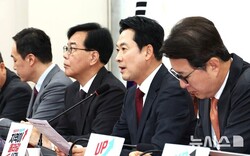
▲판단의 자리는 비어 있었다. 누구도 앉지 않았다.
■ 판단의 자리
국민의힘은 절윤을 거부하지 않았다.
그보다 더 치명적인 선택을 했다.
결정하지 않는 정당으로 남는 것.
판단을 지운 자리에 공천을 놓았고,
침묵을 전략이라 불렀다.
이 시리즈는 기록한다.
국민의힘은 또 한 번, 정치적 판단을 하지 않았다.
아래는 위 기사를 구글 번역을 통해 영문으로 옮긴 전문입니다. 이해를 돕기 위한 참고용 번역으로, 일부 표현에는 원문의 뉘앙스와 차이가 있을 수 있습니다.
The following is a reference translation generated for reader convenience. Some nuances may differ from the original Korean text.
■ The Party That Refuses to Decide ②
■ The People Power Party Erased Judgment—and Dumped Responsibility on Nominations
By Park Cheol-seong, Veteran Journalist
<Director of the Research Center · Columnist>
People Power Party did not decide.
It was not a mistake.
It was a choice.
“Severing ties” was not a controversy.
After the verdict, it posed a single question:
by what standards does a political party make political judgments?
The People Power Party did not take that question.
More precisely, it chose not to.
■ Jang Dong‑hyuk, the man who removed the decision
The face of this moment was Jang Dong-hyuk.
He did not speak.
He did not say he would cut ties.
He did not say he would keep them.
Instead, he made a more efficient choice.
He removed the very moment when a decision had to be made.
“It’s only the first trial.”
“The presumption of innocence applies.”
“Severing ties is divisive.”
These sentences are not explanations.
They are political techniques designed to defer judgment.
When a party leader erases a decision,
the entire party enters a state where it no longer has to judge.
Jang Dong-hyuk completed that state.
■ The People Power Party’s technique: nominations as post-processing
Rather than speaking, the People Power Party moved to the next step.
Nominations.
Nominations are the safest device for evasion.
No need to explain standards.
No need to prove judgment.
If someone falls, it’s a personal problem.
If someone survives, it’s a strategic success.
Political judgment disappears in this process.
What remains are these words:
“Expansion.”
“Risk.”
“Competitiveness.”
“Severing ties” was translated this way—
from the language of politics to the language of operations,
into outcomes without responsibility.
The party does not judge.
It submits results.
■ Silent names—everyone knew
In this phase, everyone knew.
Yet no one nailed down standards or measures.
◼ Han Dong‑hoon
There were words.
There was criticism.
But those words never became standards, nor did they lead to action.
The conclusion flowed not toward judgment, but toward the timing of nominations.
◼ Bae Hyun‑jin
She was not the subject of speech, but the object of handling.
Discipline remained, and the party chose to use it in place of political judgment.
◼ Oh Se‑hoon
He drew a firm line against “Yoon Again,”
but left unanswered how far the party would sever ties with Yoon Suk-yeol—
the sentence of action was never written.
◼ Na Kyung‑won
Once known for the most combative language.
This time, too, there were sentences.
She said “Yoon Again” need not be cast out, and argued for broader unity—
yet those sentences were not adopted as the party’s judgment.
This moment is not about individual courage.
It is a structural problem of a party that allows speech,
but seals judgment.
It is a silence the People Power Party permitted, managed, and shared.
■ The name of the structure: the People Power Party
The problem is not individuals.
It is structure.
The People Power Party has repeated the same pattern:
after judicial rulings, it avoids political judgment.
Judgment is deferred.
Responsibility flows into procedure.
Defeat is left to individuals.
The party survives.
Only the candidates lose.
|
|
▲The seat of judgment was empty. No one sat down.
■ The Seat of Judgment
The People Power Party did not reject “severing ties.”
It made a more lethal choice.
To remain a party that does not decide.
It placed nominations where judgment should have been,
and called silence a strategy.
This series records it.
Once again, the People Power Party chose not to make a political judgment.
원본 기사 보기:호주브레이크뉴스