“극과 극은 통한다.” 즉, 극좌와 극우는 통한다. 그게 바로 묵시적 협력관계다. 국힘 당권파가 입으로는 '투쟁'을 말하지만 결과적으로 민주당을 유리하게 한다. 민주당 내 극좌주의자들도 마찬가지다. 말과 다르게 서로가 서로를 돕는 것이다.
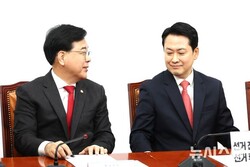
 ▲ 한동훈 국민의힘 전 대표. ©뉴시스 |
정치는 좌우의 직선 위에 서 있는 것처럼 보이지만, 실제로는 양 끝이 다시 가까워지는 말발굽에 가깝다. 현 한국 정치 지형은 더욱 그렇다. 한동훈 국민의힘 전 대표를 둘러싼 말발굽 모양이다. 한동훈을 포위하고 결박해 기득권 카르텔을 향해 공세를 취하지 못하도록 같이 막는 모양새다.
좌와 극우는 서로를 향해 돌진하는 듯하지만, 행동 방식에서는 놀라울 만큼 닮아 있다. 첫째, 양쪽 모두 ‘절대성’을 신봉한다. 자신은 진리, 상대는 악이다. 설득이 아니라 제거가 목표가 된다. 다원성과 관용은 나약함으로 취급되고, 복잡한 현실은 흑백 논리로 단순화된다. 민주주의의 전제인 상대성은 사라진다.
둘째, 음모론과 도덕적 절대주의에 의존한다. 극좌는 구조적 모순을, 극우는 반국가 세력을 모든 문제의 근원으로 지목한다. 언어는 달라도 방식은 같다. 분노를 조직하고, 단순한 서사로 지지층을 결집시킨다. 정책 논쟁은 선과 악의 전쟁으로 변질된다.
셋째, 지도자 숭배다. 느린 토론과 절차 대신 강력한 리더의 결단을 요구한다. 타협은 배신, 협상은 굴복이 된다. 역사적으로 좌우의 극단이 서로 다른 깃발 아래서도 전체주의로 수렴한 이유는 이념이 아니라 권력을 다루는 방식이 같았기 때문이다.
넷째, 폭력의 정당화다. 명분은 달라도 제도 밖의 힘을 용인하는 순간 민주주의는 흔들린다. 갈등을 제도 안에서 해결하지 못하면 정치의 수준은 급격히 하락한다.
아이러니는 여기서 드러난다. 극좌와 극우는 서로를 증오한다고 말하지만, 실제로는 서로를 필요로 한다. 한쪽이 강해질수록 다른 쪽도 세를 얻는다. 상대의 과격함은 자신을 정당화하는 연료가 된다. 온건한 다수는 밀려나고, 정치의 중심은 양극단으로 이동한다. 이것이 극단의 묵시적 협력이다.
그 결과는 제도 신뢰의 붕괴다. 정치는 협조 게임이 아니라 제로섬 전쟁이 되고, 합리적 정책보다 선동이 경쟁력이 된다. 민주주의는 본래 타협의 기술이다. 불편하지만 그 불편함이 제도를 지탱한다. 지금 필요한 것은 좌냐 우냐의 선택이 아니라, 극단의 방식을 거부하는 용기다. 극단에서 멀어질수록 민주주의는 단단해지고, 사회는 성숙해진다.
한동훈 국민의힘 전 대표는 말발굽을 뚫고 민심 속으로 나아가야 한다. yslee1992@hotmail.com
*필자/이양승
 ▲ 필자/이양승 군산대 교수. ©브레이크뉴스 |
군산대 교수. 국제경제, 게임이론 그리고 지역 발전전략에 대해 연구하는 학자이다. 현재 국립 군산대 무역학과 교수로 재직 중이다. 이전엔 캐나다 앨버타 대학교(University of Alberta) 경제학과에서 ‘게이임(gaming)’에 대해 연구와 강의를 했으며, 한국건설산업연구원에서 연구위원으로 근무했다.
전북 남원에서 출생해 전주한일고와 전북대 상과대학을 졸업했다. 이후 미국으로 건너가 노스 캐롤라이나 주립대학교 (North Carolina State University)에서 통계학과 경제학을 공부해 석사를 받았으며, 캔자스 대학교(The University of Kansas)에서 산업조직과 게임이론에 대한 연구로 경제학 박사를 받았다.
저서로는 '메트로 이코노미 (타임라인)'과 ‘와일드 게임이론 (박영사)’, ‘무역학개론(공저, 두남)’, ‘문화지체에 빠진 건설산업 (공저, 한국건설산업연구원)’ '자유무역론(박영사)' 등이 있고, 36편의 단독연구 학술논문이 있다.
*아래는 위 기사를 '구글 번역'으로 번역한 영문 기사의 [전문]입니다. '구글번역'은 이해도 높이기를 위해 노력하고 있습니다. 영문 번역에 오류가 있을 수 있음을 전제로 합니다.<*The following is [the full text] of the English article translated by 'Google Translate'. 'Google Translate' is working hard to improve understanding. It is assumed that there may be errors in the English translation.>
The "Horseshoe Theory" Surrounding Former People Power Party Leader Han Dong-hoon
- Professor Lee Yang-seung of Kunsan National University
"Opposites meet." In other words, the far left and the far right are connected. This is a tacit cooperative relationship. The People Power Party's ruling faction may talk about "fighting," but ultimately, it benefits the Democratic Party. The same goes for the far left within the Democratic Party. Contrary to their words, they support each other.
Politics appears to be a straight line between the left and the right, but in reality, it's more like a horseshoe, with the two ends gradually approaching each other. The current political landscape in Korea is even more so. The horseshoe-like structure surrounding former People Power Party leader Han Dong-hoon seems to be a joint effort to surround and bind him, preventing him from launching an offensive against the vested interest cartel.
The left and the far right appear to be charging at each other, but their behavior is strikingly similar. First, both sides believe in "absoluteness." They believe in truth, while the other side is evil. The goal is not persuasion, but elimination. Diversity and tolerance are treated as weakness, and complex realities are simplified into black-and-white logic. The relativity that underpins democracy disappears.
Second, they rely on conspiracy theories and moral absolutism. The far left blames structural contradictions, while the far right blames anti-state forces as the source of all problems. The language may differ, but the methods are the same: they orchestrate anger and mobilize supporters through simple narratives. Policy debates degenerate into battles between good and evil.
Third, they worship leaders. They demand the decisive action of strong leaders, rather than slow discussion and procedures. Compromise becomes betrayal, and negotiation becomes submission. Historically, the extremes of the left and right, even under different banners, have converged on totalitarianism not because of ideology, but because they share the same approach to power.
Fourth, they justify violence. Even if the justifications differ, democracy is shaken the moment extra-institutional forces are tolerated. If conflicts cannot be resolved within the system, the standard of politics declines sharply.
The irony lies here. The far left and the far right claim to hate each other, but in reality, they need each other. As one side grows stronger, the other gains ground. The opponent's radicalism fuels self-justification. The moderate majority is pushed aside, and the center of politics shifts to the extremes. This is the tacit cooperation of extremes.
The result is the collapse of trust in institutions. Politics becomes a zero-sum war, not a game of cooperation, and agitation becomes more competitive than rational policy. Democracy is inherently a technique of compromise. It may be uncomfortable, but that discomfort sustains the system. What's needed now is not a choice between left and right, but the courage to reject extreme methods. The farther we move from extremes, the stronger democracy becomes, and the more mature society becomes.
Han Dong-hoon, former leader of the People Power Party, must break through the horse's hoof and reach the hearts of the people. yslee1992@hotmail.com
*Author/Lee Yang-seung
Professor at Kunsan National University. He is a scholar who studies international economics, game theory, and regional development strategies. He is currently a professor in the Department of International Trade at Kunsan National University. Previously, he researched and lectured on gaming at the Department of Economics at the University of Alberta, Canada, and served as a research fellow at the Korea Construction and Economy Research Institute.
Born in Namwon, North Jeolla Province, he graduated from Jeonju Hanil High School and Chonbuk National University's College of Commerce. He later moved to the United States, where he earned a master's degree in statistics and economics from North Carolina State University and a doctorate in economics from the University of Kansas for his research on industrial organization and game theory.
His publications include "Metro Economy" (Timeline), "Wild Game Theory" (Parkyoungsa), "Introduction to Trade" (co-authored, Doonam), "The Construction Industry in Cultural Lag" (co-authored, Construction and Economy Research Institute of Korea), and "Free Trade" (Parkyoungsa). He has also published 36 independent academic papers.