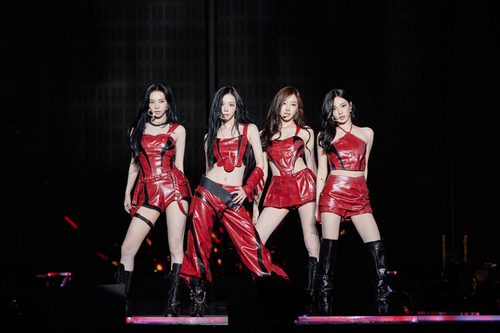
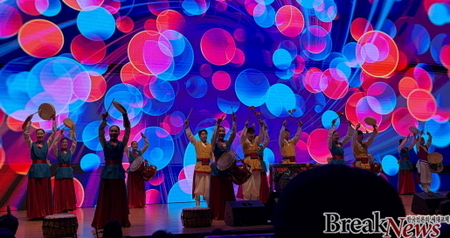
▲ 조용민 무용가의 “터 – 집은 기억 한다” 공연 장면 자료 제공: 황종환 사진작가 © |
영국에서 활동하는 조용민 무용가의 “터 – 집은 기억 한다” 공연이 20일 저녁 서울시 종로구 경희궁1길에 있는 각당복지재단(라제건 이사장) 문화 공간 각당홀에서 열렸다. 경희궁 터에 자리한 각당복지재단은 세계 감리교 여성연합회 회장을 오랫동안 역임하며 더 아름다운 세상을 지향한 헌신의 삶을 살았던 재단 설립자 고 김옥라 박사가 생전에 거주한 경희궁 터 자택에 세워진 공간이다.
서울 도심 한복판 유서 깊은 터에서 열린 무용가의 공연은 특별하였다. 야외에서 시작된 공연은 공간 이동형 퍼포먼스를 통해 기억과 장소와 몸짓의 관계를 입체적으로 드러냈다. 정형화된 무대를 벗어나 관객의 인식을 일상에서 예술로 승화시킨 조 무용가는 주변의 소음까지 끌어안으며 공간을 더듬었다. 이후 무용가와 관객이 함께 계단을 따라 이동하는 장면은 저마다 무대에선 공연이었다.
야외에서 실내 공간으로 옮겨진 것은 외부 기억에서 내면의 기억으로 이동한 과정으로 이후 펼쳐진 공연은 기억의 실타래를 풀어내는 몸짓으로 이어졌다. 무용가의 무용은 더 이상 공간을 탐색하지 않는 대신 몸 안에 품은 시간을 드러내기 시작하면서 느린 동작은 절제되어 있었으며 감정은 직접적으로 표출되지 않았다. 그러나 이와 같은 절제의 몸짓은 관객의 감정을 증폭시켰다. 특히 공연 중간에 삽입된 과거의 무용 영상은 많은 것을 일깨웠다.
무용가 자신이 과거를 바라보는 관객으로 등장하여 현재의 몸으로 대면하는 상황은 관객 또한, 지금의 몸과 기억 속의 몸을 동시에 인식하는 상상 속의 무용가로 변신하는 묘한 경험이 와닿는 연출이었다. 이후 이어진 엔딩 퍼포먼스는 앞선 모든 과정을 보듬어 야외에서 시작된 감각과 이동을 통한 공간의 전환, 그리고 과거와 현재의 경계선에서 모든 것들이 기억의 시간으로 흐르는 몸짓이었다. 마치 오랜 흑백영화의 낡은 필름처럼 툭툭 끊겨 번쩍이는 무용가의 몸짓에서 전설적인 안무가들의 미학이 새롭게 숨 쉬고 있었다.
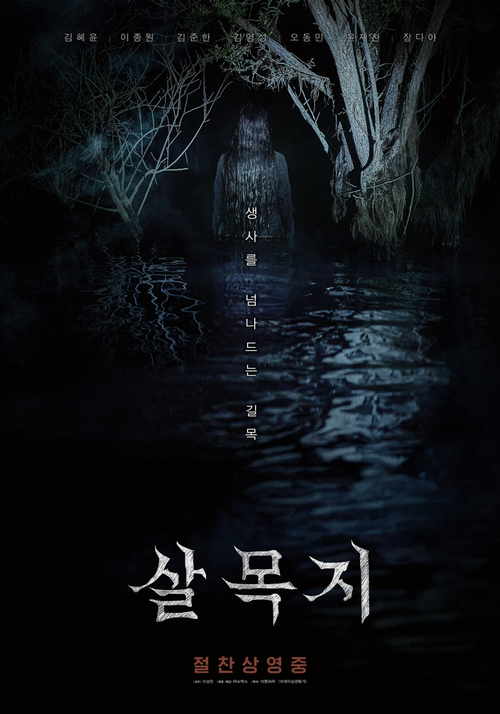
 ▲ 조용민 무용가의 “터 – 집은 기억 한다” 공연 포스터 © |
춤의 경계를 허문 시인으로 평가받는 독일 출신 안무가 피나 바우쉬(1940~2009)의 몸짓이 생각났다. 그녀는 무용을 단순한 신체의 기교에서 인간 본연의 감정으로 승화시킨 예술가였다. “나는 인간이 어떻게 움직이는가보다, 무엇이 인간을 움직이게 하는가에 더 관심이 있다.”라는 안무가의 말이 조용민 무용가의 공연에서 깊은 울림으로 동행한 것이다.
특히 피나 바우쉬의 ‘댄스 극장’으로 번역되는 탄츠테아터(Tanztheater) 미학에 담긴 극적 요소와 현대 무용을 결합한 서사의 동작들이 공간에 겹쳐있었다. 반복적이며 강박적인 움직임과 어색한 정지, 그리고 느린 동작을 통해 과거의 트라우마나 기억의 흔적을 표현한 전설의 미학이 조용민 무용가의 몸짓에 출렁거렸다.
이어 현대 무용의 구조적 서사를 새롭게 정립한 미국의 안무가 윌리엄 포사이스(1949~)의 미학이 선연하게 걸어왔다. 그는 무용의 근원인 발레를 새롭게 해체한 무용가였다. 이는 중심과 균형 그리고 정형화된 선이 생명인 고전 발레를 비대칭과 붕괴를 통한 연속적인 불안정으로 발레의 원형을 유지한 채 내면의 의식을 흔들었다. 이는 몸이 공간에 있는 것이 아닌 몸이 공간을 생성한다는 개념과 의식의 전환을 말한다. 이러한 바탕에서 즉흥을 단순한 감각에서 구조적 언어로 만든 선구적인 안무가였다.
필자는 그의 초기작품에서 신체를 프레임 단위로 해체하면서 기계적 움직임을 통해 인간의 감정이 아닌 움직임 자체로 기억을 다루었던 몸짓을 떠올리며 조용민 무용가의 공연을 깊숙하게 바라보았다.
 ▲ 조용민 무용가의 “터 – 집은 기억 한다” 공연 장면 © |
나아가 무용가의 몸짓에 달라붙은 그림자를 따라가며 이웃 나라 일본의 패전 이후 1950년대 말 탄생한 어둠의 춤으로 알려진 전위적인 현대 무용극 부토(舞踏)의 그림자를 만났다. 체념이 일상이었던 사회적 혼란 속에서 허옇게 분칠한 모습과 삭발로 현실의 통증을 떨쳐내고 기괴한 뒤틀림과 느린 움직임으로 삶과 죽음이 공존하는 인간 존재의 실체적 내면과 잠재의식을 원초적인 신체 언어로 영적인 만남을 추구한 몸짓이었다.
이는 공연이 펼쳐진 공간이 한국 호스피스 운동의 민간 거버넌스 주체로 ‘영적 돌봄(Spiritual Care)’을 핵심 가치로 삼는 각당복지재단이라는 점에서 무용가에게 묻고 싶은 이야기가 있었다. 공연 후 무용가와의 대화 시간에서 갑작스러운 방한으로 급하게 선정된 공간과 공연이었지만, 현장 답사를 통해 공간의 맥락을 헤아린 치밀한 의식이 분명히 드러났다.
라제건 이사장, 오혜련 회장, 서울발레시어터 임영희 전 이사장, 김기덕 언론인, 안무가 제임스 전, 이태섭 무대미술가 등이 주목한 공연의 울림은 깊숙하였다. 또한, 국민대학교 스포츠 산업대학원 윤숙향 주임교수가 공연 의상을 협찬한 섬세한 배려에 아낌없는 박수가 쏟아졌다. (사)한국춤문화자료원 이사장과 댄스포스트코리아 발행인 최해리 박사와 판소리 다섯마당의 서사를 나전칠기 작업으로 빚어내는 이태양 미술가, 황종환 사진작가, 더블유씨컴퍼니 나슬기 대표, 바틀리스트 정슬기 대표 등도 소중한 공연을 지켜보았다. artwww@naver.com
#조용민무용가 #터집은기억한다 #각당복지재단 #각당홀 #라제건 #오혜련 #김기덕 #임영희 #이태섭 #제임스전 #윤숙향 #최해리 #이태양 #황종환 #나슬기 #정슬기 #이일영칼럼
필자: 이일영
KOREA ART CENTER. 칼럼니스트. 시인.
*아래는 위 기사를 '구글 번역'으로 번역한 영문 기사의 [전문]입니다. '구글번역'은 이해도 높이기를 위해 노력하고 있습니다. 영문 번역에 오류가 있을 수 있음을 전제로 합니다.<*The following is [the full text] of the English article translated by 'Google Translate'. 'Google Translate' is working hard to improve understanding. It is assumed that there may be errors in the English translation.>
 ▲ 필자: 이일영 ©이일영 칼럼니스트 |
Dancer Cho Yong-min’s “Site – The House Remembers”
- Columnist Lee Il-young
The performance “Site – The House Remembers” by UK-based dancer Cho Yong-min took place on the evening of the 20th at Kakdang Hall, a cultural space of the Kakdang Welfare Foundation (Chairman Ra Je-geon), located on Gyeonghuigung 1-gil, Jongno-gu, Seoul. Situated on the site of Gyeonghuigung Palace, the Kakdang Welfare Foundation is a space built on the former residence of the late Dr. Kim Ok-ra, the foundation’s founder. Dr. Kim lived a life of dedication striving for a more beautiful world while serving as the long-time president of the World Methodist Women’s Association.
The dancer’s performance, held on a historic site in the heart of downtown Seoul, was special. Beginning outdoors, the performance vividly revealed the relationship between memory, place, and movement through a spatially shifting performance. Breaking away from conventional stages and elevating the audience's perception from everyday life into art, Dancer Jo explored the space while embracing even the surrounding noise. The subsequent scene, in which the dancer and audience moved together along the stairs, was a performance on a stage for each individual.
The transition from an outdoor space to an indoor one represented a shift from external memories to internal ones; the performance that followed unfolded into movements that unraveled the threads of memory. As the dancer ceased to explore the space and began to reveal the time held within the body, the slow movements were restrained, and emotions were not expressed directly. However, these restrained movements amplified the emotions of the audience. In particular, the video footage of past dances inserted in the middle of the performance awakened many insights.
The situation in which the dancer appeared as an audience member gazing at the past and confronted it with a present body was a directorial choice that resonated deeply, offering the audience a peculiar experience of transforming into an imaginary dancer simultaneously perceiving their current body and the body within their memories. The subsequent ending performance embraced all the preceding processes, a movement that began outdoors, transitioning into space through sensory experiences and movement, and allowing everything to flow into the time of memory at the boundary between past and present. In the dancer’s movements, which flickered and snapped like the worn film of an old black-and-white movie, the aesthetics of legendary choreographers were breathing anew.
▲ Poster for Dancer Jo Yong-min’s performance “The Site – The House Remembers” ©
I was reminded of the movements of Pina Bausch (1940–2009), a German choreographer regarded as a poet who broke the boundaries of dance. She was an artist who elevated dance from mere physical technique to the inherent emotions of humanity. The choreographer’s words, “I am more interested in what makes humans move than how humans move,” accompanied Dancer Jo Yong-min’s performance with deep resonance.
In particular, narrative movements combining contemporary dance with the dramatic elements of the Tanztheater aesthetic—translated as Pina Bausch’s "dance theater"—were superimposed in the space. The legendary aesthetic, which expressed traces of past trauma or memory through repetitive and obsessive movements, awkward pauses, and slow motions, surged through the gestures of dancer Jo Yong-min.
Following this, the aesthetic of American choreographer William Forsythe (born 1949), who redefined the structural narrative of contemporary dance, walked vividly forward. He was a dancer who newly deconstructed ballet, the very source of dance. In doing so, he shook the inner consciousness of classical ballet—where center, balance, and formalized lines are vital—through continuous instability resulting from asymmetry and collapse, while maintaining the original form of ballet. This signifies a shift in consciousness and the concept that the body creates space rather than merely existing in it. Based on this foundation, he was a pioneering choreographer who transformed improvisation from a mere sensation into a structural language.
Recalling the gestures of his early works, which deconstructed the body frame by frame and dealt with memory through movement itself rather than human emotion, I gazed deeply into the performance of dancer Cho Yong-min.
▲ A scene from dancer Cho Yong-min’s performance of “The Site – The House Remembers” ©
Furthermore, following the shadow clinging to the dancer’s movements, I encountered the shadow of Butoh, an avant-garde modern dance drama known as the "dance of darkness," which was born in the late 1950s following the defeat of neighboring Japan. Amidst the social chaos where resignation was the norm, it was a movement that shook off the pain of reality through white-faced makeup and shaved heads, seeking a spiritual encounter with the substantive inner self and subconscious of human existence—where life and death coexist—through bizarre contortions and slow movements, using primal bodily language.
Given that the performance took place at the Kakdang Welfare Foundation—a private governance entity of the Korean hospice movement that holds "Spiritual Care" as its core value—I had something I wanted to ask the dancer. During the Q&A session after the performance, it was evident that, despite the venue and performance being hastily selected due to a sudden visit, the dancer possessed a meticulous mindset that had grasped the context of the space through on-site inspection.
The resonance of the performance, which drew the attention of Chairman Ra Jae-geon, President Oh Hye-ryeon, former Seoul Ballet Theater Chairman Lim Young-hee, journalist Kim Ki-duk, choreographer James Jeon, and stage designer Lee Tae-seop, was profound. Furthermore, generous applause poured in for the thoughtful consideration shown by Professor Yoon Sook-hyang, Head of the Graduate School of Sports Industry at Kookmin University, in sponsoring the performance costumes. Dr. Choi Hae-ri, Chairperson of the Korea Dance Culture Archives and Publisher of Dance Post Korea; artist Lee Tae-yang, who weaves the narratives of the Five Pansori Stories into mother-of-pearl lacquerware; photographer Hwang Jong-hwan; Na Seul-gi, CEO of WC Company; and Jung Seul-gi, CEO of Bottleist, also watched this precious performance. artwww@naver.com
#DancerChoYongMin #TheSiteRemembers #GakdangWelfareFoundation #GakdangHall #RaJaeGeon #OhHyeRyeon #KimKiDuck #LimYoungHee #LeeTaeSeop #JamesJeon #YoonSookHyang #ChoiHaeRi #LeeTaeYang #HwangJongHwan #NaSeulgi #JungSeulgi #LeeIlYoungColumn
Author: Lee Il-young
KOREA ART CENTER. Columnist. Poet.