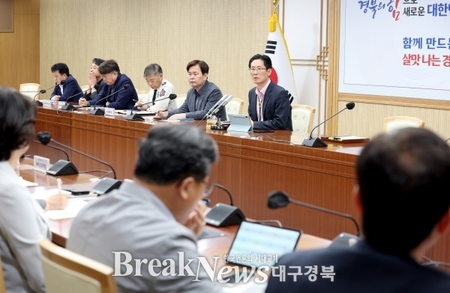
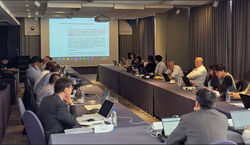
▲ 2026년 제25회 상수도 연구발표회 진행 모습=대전시 제공 © 정지완 기자 |
정수장에서 만든 물이 가정의 수도꼭지에 닿을 때까지 얼마나 안정적으로 유지되는지를 가늠하는 연구 결과가 나왔다. 대전시 상수도사업본부 수질연구소는 최근 열린 제25회 상수도연구발표회에서 관망해석을 활용한 표준·고도처리수 잔류염소 감소예측 성과를 발표했다고 24일 밝혔다.
이번 연구는 고도정수처리의 효과를 단순한 원수 개선 수준이 아니라 실제 급수 전 과정의 수질 안정성이라는 기준으로 검증했다는 점에서 의미를 갖는다. 정수장에서 출발한 수돗물이 배수 관로를 거쳐 각 가정으로 공급되는 과정에서 소독 효과가 얼마나 유지되는지를 과학적으로 살펴본 셈이다.
연구 결과, 오존과 활성탄을 활용한 고도정수처리 공정은 일반 표준 처리보다 유기물 제거 효율이 높아 총트리할로메탄 등 소독부산물 형성 가능성을 낮추는 데 유리한 것으로 분석됐다. 수질 안전성을 정수장 내부 공정에만 머물지 않고 공급망 전체로 확장해 확인했다는 점도 이번 발표의 무게를 더했다.
특히 여름철 효과가 두드러졌다. 수온 상승으로 미생물 증식 우려가 커지는 시기에 관망 해석 시뮬레이션을 적용한 결과, 고도처리수는 표준처리수보다 잔류염소 소모 속도가 완만하게 나타났다. 그 결과 관로 말단에서 발생할 수 있는 잔류염소 부족 현상이 약 16%가량 개선되는 것으로 확인됐다.
대전시는 이런 연구 성과를 바탕으로 상수도 고도화 사업을 이어가고 있다. 월평정수장에서는 총 938억2천만 원을 투입한 2단계 고도화 사업이 진행 중이며, 하루 30만 톤 규모의 오존 처리와 활성탄 여과 역량 확충이 핵심이다. 기후변화에 따라 반복되는 맛·냄새 유발 물질에 대응하고 안정적인 고품질 수돗물 생산 기반을 넓히려는 조치다.
이종익 대전시 상수도사업본부장은 이번 연구가 고도정수처리 확대가 시민 건강과 직결되는 선택임을 보여준 사례라고 설명했다. 이어 기술 연구와 시설 투자를 함께 추진해 시민이 안심하고 사용할 수 있는 수돗물 공급 수준을 높여가겠다고 밝혔다.
*아래는 위 기사를 '구글 번역'으로 번역한 영문 기사의 [전문]입니다. '구글번역'은 이해도를 높이기를 위해 노력하고 있습니다. 영문 번역에 오류가 있을 수 있음을 전제로 합니다.<*The following is [the full text] of the English article translated by 'Google Translate'. 'Google Translate' is working hard to improve understanding. It is assumed that there may be errors in the English translation.>
Daejeon Waterworks Quality Research Institute Attracts Attention for Residual Chlorine Prediction Results
Improving Water Quality Stability at End-of-Pipeline Stations During Summer… Wolpyeong Water Treatment Plant Modernization Project Also Gains Momentum
Research results have been released to gauge how stably water produced at a water treatment plant remains until it reaches household taps. The Water Quality Research Institute of the Daejeon Metropolitan City Waterworks Headquarters announced on the 24th that it presented its results on predicting the reduction of residual chlorine in standard and advanced treated water using pipe network analysis at the recently held 25th Waterworks Research Presentation.
This research is significant in that it verified the effectiveness of advanced water treatment not merely at the level of improving raw water, but based on the standard of water quality stability throughout the entire actual water supply process. In essence, it scientifically examined how long the disinfection effect is maintained as tap water originates from the treatment plant, passes through distribution pipes, and is supplied to each household.
The research results analyzed that the advanced water treatment process utilizing ozone and activated carbon has higher organic matter removal efficiency than general standard treatment, making it advantageous in lowering the possibility of forming disinfection byproducts such as total trihalomethanes. The fact that water quality safety was verified not only within the internal processes of the water treatment plant but also extended to the entire supply chain added weight to this announcement.
The effects were particularly pronounced during the summer months. When network analysis simulations were applied during a period when concerns about microbial proliferation increase due to rising water temperatures, the advanced treated water showed a slower rate of residual chlorine consumption compared to standard treated water. Consequently, it was confirmed that the residual chlorine shortage that can occur at the end of pipelines was improved by approximately 16%.
Based on these research achievements, Daejeon City is continuing its water supply modernization project. At the Wolpyeong Water Treatment Plant, the second phase of the modernization project is currently underway, with a total investment of 93.82 billion won. The core of the project involves expanding ozone treatment capacity to 300,000 tons per day and activator filtration capacity. This measure aims to address recurring taste and odor-causing substances resulting from climate change and to broaden the foundation for producing stable, high-quality tap water.
Lee Jong-ik, Head of the Daejeon City Waterworks Headquarters, explained that this research serves as an example demonstrating that expanding advanced water treatment is a choice directly linked to citizens' health. He added that he would further enhance the level of tap water supply so that citizens can use it with peace of mind by simultaneously pursuing technology research and facility investment.
원본 기사 보기:브레이크뉴스대전세종충청