▲ 필자/정길선 박사 ©브레이크뉴스 |
핵을 형성하는 과정에서 우라늄은 저농축과 고농축으로 나뉜다. 현재 우라늄의 대부분은 원자력 발전용으로 저농축이다. 핵분열을 하는 우라늄은 U235로 저속 중성자에 의한 핵분열을 일으킬 수 있는 핵물질이며 핵분열을 쉽게 제어할 수 있는 동위체다. 자연계에 있는 U235의 양은 우라늄 전체의 0.7%에 불과하다. 그러나 U235가 연쇄 반응을 하면 고농축을 할 수 있다.
미국괴 이스라엘은 이란이 고농축을 하고 있으며 이것을 핵무기를 만든다고 의심하고 있었고 지난 12일 전쟁 때 포르도에 벙커버스터를 투하해 완전히 핵 프로그램을 제거했다고 발표했다. 문제는 원자력발전소 어디든 저농축과 고농축 모두를 할 수 있다는 것이다. 우리 한국도 과거 연구용 원자로의 연료로 핵분열 성능이 뛰어나고 핵연료 부피를 줄일 수 있는 고농축 우라늄을 주로 사용했다. 한국은 1982년부터 2000년까지 수차례 우라늄 변환, 농축, 플루토늄 분리 실험을 수행했으며, 2004년에는 레이저 분리 장치를 이용해 총 0.2g의 고농축 우라늄을 분리하는 데 성공했다.
이 우라늄은 77~80%의 농축도를 보인 것으로 알려졌으며, 당시 핵무기 개발과는 관련 없는 학술적 호기심에 의한 일회성 실험으로 밝혀졌지만 우리도 언제든 고농축 우라늄을 생성시킬 수 있다는 성과를 올렸다. 이후 한국은 미국, 프랑스, 벨기에와 협력하여 연구용 원자로의 핵연료를 저농축 우라늄(LEU)으로 전환하는 사업을 진행했다. 2012년에는 한국의 '고농축 우라늄 최소화' 공약이 성공적으로 끝났다고 했지만 여전히 고농축 우라늄은 사용된다. 그런데 이란은 핵무기가 없다. 다만 핵무기를 만들 수 있는 고농축 우라늄들을 갖고 있을 뿐이다.
우리 한국처럼 이란도 갖고 있을 뿐이다. 그런데 이것을 미국과 이스라엘이 민감하게 반응하는 것은 사방이 적국인 이란이 공격용 핵무기를 만들지 않을까 하는 우려 때문이다. 실제로 이란은 호메이니 혁명 이후를 남을 침략한 적도 없고, 오히려 사방에 위협만 받았다. 이란이 테러단체 지원했다는 얘기가 있지만 이스라엘 또한 ISIS와 시리아 내전 당시 시리아 반군 테러단체들에게 자금, 무기, 의료지원을 하지 않았던가? 우리 한국도 고농축 우라늄을 아직 쓰고 있고 일본도 원자력 발전소를 돌리면서 아직도 고농축 우라늄을 쓰고 있다. 이것에 대해 중국과 일본, 북한, 러시아, 미국이 우려하지 않고 있다.
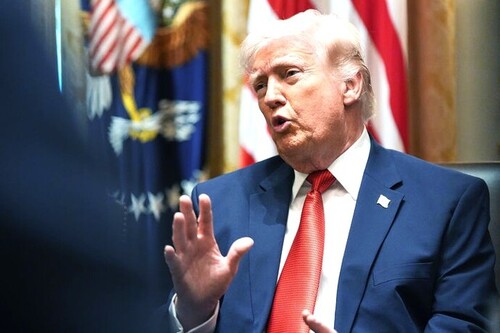
이미 중국, 러시아, 북한, 미국은 핵을 가졌기 때문인데 미국을 제외한 북한, 중국의 위협을 받는다고 고농축 우라늄을 이용한 핵무기를 생산하지 않고 있기 때문이다. 이란도 이 수준에 머문다면 아무 문제가 없다. 설사 핵을 가진다 해도 이스라엘이 위협을 느낄 뿐, 별 문제는 없을 것이다. 이스라엘 본인들도 핵을 갖고 있기 때문이다. 그럼 한국을 보자. 트럼프가 한국에 주한미군 방위비 올린다고 난리쳤을 때, 그리고 한국에 관세 때렸을 때, 북한을 핵 보유국으로 인정했을 때, 핵 개발하자는 인간들이 넘쳐났었다. 핵 개발 후 생기는 뒷감당을 어찌할지 전혀 생각을 안하는 듯한 인간들이 많았었다.
지난 이란-이스라엘 12일 전쟁과 현재 이란-미국 & 이스라엘 전쟁을 보고 우리도 핵 무기 가져야 한다고 주장하는 인간들이 모두 입을 닫았다. 이제 한국의 현실이 어떤지 똑똑히 보았을 것이다. 아무나 핵을 갖고 싶다 해서 가질 정도로 세상과 현실은 그렇게 만만하지 않다. lukybaby7@gmail.com
*필자/ 정길선.
노바토포스 회원, 역사학자, 고고인류학자, 칼럼니스트, 러시아 과학아카데미 유라시아 고고인류학연구소 연구교수.
*아래는 위 기사를 '구글 번역'으로 번역한 영문 기사의 [전문]입니다. '구글번역'은 이해도 높이기를 위해 노력하고 있습니다. 영문 번역에 오류가 있을 수 있음을 전제로 합니다.<*The following is [the full text] of the English article translated by 'Google Translate'. 'Google Translate' is working hard to improve understanding. It is assumed that there may be errors in the English translation.>
The Story of Iran's Highly Enriched Uranium
- The Story of Iran's Highly Enriched Uranium
In the process of forming a nuclear weapon, uranium is divided into low-enriched and high-enriched forms. Currently, most uranium is low-enriched for nuclear power generation. The fissile uranium is U235, a nuclear material capable of undergoing fission by slow neutrons, and an isotope that allows for easy control of fission. The amount of U235 in nature accounts for only 0.7% of total uranium. However, if U235 undergoes a chain reaction, it can be highly enriched.
The United States and Israel suspected that Iran was engaging in high-enrichment and using it to build nuclear weapons. During the 12th War, they dropped bunker busters on Fordow and announced that they had completely eliminated the nuclear program. The problem is that any nuclear power plant can perform both low-enrichment and high-enrichment. South Korea also primarily used highly enriched uranium as fuel for its research reactors in the past, as it possesses superior fission capabilities and allows for a reduction in fuel volume. From 1982 to 2000, South Korea conducted several experiments involving uranium conversion, enrichment, and plutonium separation; in 2004, it succeeded in separating a total of 0.2g of highly enriched uranium using a laser separation device.
This uranium was reported to have an enrichment level of 77–80%. Although it was later revealed to be a one-time experiment driven by academic curiosity unrelated to nuclear weapons development at the time, it demonstrated that South Korea is capable of producing highly enriched uranium at any time. Subsequently, South Korea collaborated with the United States, France, and Belgium on a project to convert the fuel of its research reactors to low-enriched uranium (LEU). While it was reported in 2012 that South Korea’s commitment to "minimizing highly enriched uranium" had been successfully concluded, highly enriched uranium is still used. However, Iran does not possess nuclear weapons. They merely possess highly enriched uranium capable of producing nuclear weapons.
Like South Korea, Iran simply possesses it. However, the reason the U.S. and Israel are reacting so sensitively to this is their concern that Iran, surrounded by enemies on all sides, might produce offensive nuclear weapons. In reality, since the Khomeini Revolution, Iran has never invaded others; on the contrary, it has only faced threats from all sides. While there are claims that Iran supported terrorist groups, didn't Israel also provide funding, weapons, and medical support to Syrian rebel terrorist groups during the ISIS and Syrian civil wars? South Korea still uses highly enriched uranium, and Japan continues to use it to operate its nuclear power plants. China, Japan, North Korea, Russia, and the United States are not concerned about this.
This is because China, Russia, North Korea, and the United States already possess nuclear weapons; they are not producing nuclear weapons using highly enriched uranium simply because they feel threatened by North Korea and China, with the exception of the U.S. If Iran remains at this level, there will be no problem. Even if it were to possess nuclear weapons, it would only be Israel that feels threatened, and there would be no significant issues. This is because Israel itself possesses nuclear weapons. Now, let's look at Korea. When Trump made a fuss about raising the cost of maintaining U.S. troops in Korea, when he imposed tariffs on Korea, and when he recognized North Korea as a nuclear power, there was an overflow of people advocating for nuclear development. There were many who seemed to have absolutely no idea how to handle the consequences that would follow nuclear development.
After witnessing the past 12-day Iran-Israel war and the current Iran-U.S. & Israel war, all those who argued that we must possess nuclear weapons have fallen silent. They must have now clearly seen the reality facing Korea. The world and reality are not so easy that just anyone can acquire nuclear weapons simply because they want to. lukybaby7@gmail.com
*Author/ Jung Gil-sun.
Member of Novatopos, Historian, Paleoanthropologist, Columnist, Research Professor at the Institute of Eurasian Archaeology and Anthropology, Russian Academy of Sciences.