브레이크뉴스 김충열 정치전문기자 = 최혁진 국회의원 (무소속 , 법제사법위원회)은 7 일 「 법원조직법 일부개정법률안 」과「 헌법재판소법 일부개정법률안 」을 묶은 이른바 ‘ 사법 카르텔 독점 방지법 ’ 을 대표발의했다. 이번 법안은 대법관과 헌법재판관을 특정 대학 , 특정 학과 출신이 독점해온 폐쇄적 구조를 바로잡고 , 사법체계의 다양성과 민주적 정당성을 높이기 위해 마련됐다.
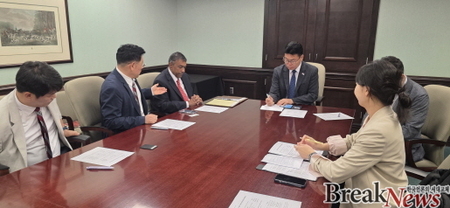
 ▲ 최혁진 의원은 “ 그동안 사법체계의 고위 법관인 대법관과 헌법재판관이 특정 대학 , 특정 학과 중심으로 구성되는 구조가 이어지면서 국민의 상식과 법감정과 괴리된 결과가 반복되어 왔다”며, “ 이번 법안은 과도하게 집중된 구조를 바로잡고 다양한 배경과 전문성을 가진 인재들이 참여하는 사법체계로 나아가기 위한 출발점” 이라고 강조했다. © 김충열 정치전문기자 |
최 의원은 그동안 국회 법제사법위원회 국정감사와 현안질의를 통해 대법관과 헌법재판관의 특정 대학 · 특정 학과 집중 문제를 지속적으로 제기해 왔다 .
대법관 · 헌법재판관 등 고위법관의 특정 대학 출신 과반수 임용 제한 ‘ 학벌 독점 ’ 타파
신규 임용 법관 단계에서는 서울대 출신 비중이 약 40% 수준에 머물지만, 상층부로 갈수록 그 비중이 급격히 높아져 대법관에 이르러서는 거의 서울대 출신으로 구성되어 있는 상황이다. 나아가 현재 대법관은 13 명 중 12 명이 , 헌법재판관은 전원이 서울대 출신으로 구성되어 있는 현실은, 사법체계의 핵심 구조가 특정 집단에 과도하게 집중되어 있음을 보여주는 대표적 사례다.
사법 카르텔 독점 방지법에 포함된「 법원조직법 일부개정법률안 」 의 핵심은 분명하다. 대법관 구성을 보다 다양하게 만들어 사법체계의 인적 구성이 균형 있게 이루어지도록 하겠다는 것이다.
개정안은 법원조직법 제 4 조에 제 3 항을 신설해 , 대법원장을 포함한 14 명의 대법관 가운데 특정 대학교 ( 학사 학위 취득 학교 기준 ) 출신 인원이 전체의 2 분의 1 을 초과할 수 없도록 법적 상한을 명시했다. 이를 통해 특정 학벌에 집중된 구조를 제도적으로 완화하고 , 다양한 배경이 실제 구성에 반영되도록 했다.
아울러 제 41 조의 2 에 규정을 신설해 , 대법관후보추천위원회가 후보를 추천하는 단계부터 성별 , 연령 , 출신학교 , 출신지역, 전문분야 등 사회의 다양성이 충분히 반영되도록 의무화했다. 또한 대법원장이 후보를 제청하는 과정에서도 동일한 기준을 적용하도록 해 , 추천 – 제청 – 임명 전 과정에서 다양성이 구조적으로 작동하도록 설계했다.
「 헌법재판소법 일부개정법률안 」역시 방향은 같다 . 헌법재판소의 폐쇄적인 인적 구조를 바꾸고 , 다양한 사회적 경험과 전문성이 반영되는 구조로 전환하는 데 초점을 맞췄다. 개정안은 제 5 조에 제 4 항을 신설해 , 9 명의 재판관 가운데 특정 대학교 출신 인원이 전체의 2 분의 1 을 초과할 수 없도록 법적 상한을 명시했다. 이를 통해 특정 학벌 중심 구조를 완화하고, 다양한 배경이 헌법재판소 구성에 반영되도록 했다.
또한 재판관 자격 요건을 확대해 , 변호사 자격이 없는 법률학 교수나 헌법적 가치 수호 및 기본권 보호 분야에서 15 년 이상 활동한 공공 · 사회 영역의 전문가도 재판관으로 임명될 수 있도록 했다 . 더 나아가 이러한 비법조인 출신 재판관이 최소 3 명 이상 포함되도록 의무화해 , 기존 법조 중심 구조를 넘어서는 실질적 변화를 가능하게 했다.
아울러 제 6 조에 규정을 신설해 대통령 , 국회 , 대법원장이 재판관을 임명 · 선출 · 지명하는 과정에서도 성별 , 연령 , 출신학교 , 출신지역 , 전문분야 등 사회의 다양성이 충분히 반영되도록 함으로써 , 구성 전반의 균형을 제도적으로 확보하도록 했다.
최혁진 의원은 “ 그동안 사법체계의 고위 법관인 대법관과 헌법재판관이 특정 대학 , 특정 학과 중심으로 구성되는 구조가 이어지면서 국민의 상식과 법감정과 괴리된 결과가 반복되어 왔다”며, “ 이번 법안은 과도하게 집중된 구조를 바로잡고 다양한 배경과 전문성을 가진 인재들이 참여하는 사법체계로 나아가기 위한 출발점” 이라고 강조했다.
이어 “사법체계는 특정 집단의 폐쇄적 구조가 아니라 국민의 삶을 균형 있게 반영하는 구조로 바뀌어야 한다”며, “국민 위에 군림하는 권력이 아니라 국민을 위해 작동하는 사법체계로 신뢰를 회복할 수 있도록 끝까지 책임 있게 추진하겠다”고 밝혔다.
이번 법안에는 대표발의한 최혁진 의원을 포함해 김재원 , 박용갑 , 박홍배 , 복기왕 , 송재봉 , 안태준 , 이재관 , 전진숙 , 정진욱 , 정혜경 , 조계원 총 12 명의 의원이 공동발의에 참여했다 . hpf21@naver.com
* 아래는 위 기사를 '구글 번역'으로 번역한 영문 기사의 [전문]입니다. '구글번역'은 이해도 높이기를 위해 노력하고 있습니다. 영문 번역에 오류가 있을 수 있음을 전제로 합니다.
*The following is [the full text] of the English article translated by 'Google Translate'. 'Google Translate' is working hard to improve understanding. It is assumed that there may be errors in the English translation.
Rep. Choi Hyuk-jin Proposes "Package 2 Bills: 'Judicial Cartel Monopoly Prevention Act'"
Monopolization of High-Ranking Judges by Specific Universities and Departments Now Blocked by Law
Legislation to "Reflect Diversity" Based on Gender, Age, and School of Origin in the Appointment of Constitutional Court Justices and Supreme Court Justices
Break News, Political Reporter Kim Choong-lyoul = On the 7th, National Assembly Member Choi Hyuk-jin (Independent, Legislation and Judiciary Committee) introduced the so-called "Judicial Cartel Monopoly Prevention Act," which combines the "Partial Amendment to the Court Organization Act" and the "Partial Amendment to the Constitutional Court Act." This bill was prepared to rectify the closed structure in which graduates of specific universities and departments have monopolized Supreme Court and Constitutional Court Justices, and to enhance the diversity and democratic legitimacy of the judicial system. Representative Choi has consistently raised the issue of the concentration of Supreme Court Justices and Constitutional Court Justices from specific universities and academic departments through parliamentary audits and inquiries on pending issues by the National Assembly's Legislation and Judiciary Committee.
**Breaking the ‘Academic Monopoly’ by Restricting the Appointment of a Majority of High-Ranking Judges, Including Supreme Court Justices and Constitutional Court Justices, from Specific Universities**
While the proportion of Seoul National University graduates remains at around 40% at the stage of newly appointed judges, this figure rises sharply as one moves up the hierarchy, resulting in a situation where the Supreme Court Justices are almost entirely composed of Seoul National University graduates. Furthermore, the reality that 12 out of 13 Supreme Court Justices and all Constitutional Court Justices are Seoul National University graduates serves as a prime example demonstrating that the core structure of the judicial system is excessively concentrated in a specific group.
The core of the "Partial Amendment to the Court Organization Act," included in the Act on the Prevention of Judicial Cartel Monopoly, is clear. It aims to diversify the composition of Supreme Court Justices to ensure a balanced personnel composition within the judicial system. The amendment adds a new Paragraph 3 to Article 4 of the Court Organization Act, specifying a legal limit so that the number of Supreme Court Justices from a specific university (based on the institution where a bachelor's degree was obtained) cannot exceed half of the total, including the Chief Justice. Through this, the bill institutionally mitigates a structure concentrated on specific academic backgrounds and ensures that diverse backgrounds are reflected in the actual composition.
In addition, a new provision was added to Article 41-2, mandating that the Supreme Court Justice Nomination Committee fully reflect social diversity—including gender, age, alma mater, region of origin, and field of expertise—from the stage of recommending candidates. Furthermore, by requiring the same standards to be applied during the process of the Chief Justice nominating candidates, the bill is designed to ensure that diversity operates structurally throughout the entire process of recommendation, nomination, and appointment.
The "Partial Amendment to the Constitutional Court Act" follows the same direction. It focuses on changing the Constitutional Court's closed personnel structure and transitioning it into a structure that reflects diverse social experiences and expertise. The amendment adds a new Paragraph 4 to Article 5, specifying a legal limit so that the number of justices from a specific university cannot exceed half of the total nine justices. This aims to mitigate the structure centered on specific academic backgrounds and ensure that diverse backgrounds are reflected in the composition of the Constitutional Court.
Furthermore, the qualification requirements for justices have been expanded to allow for the appointment of law professors without a law degree or experts in the public and social sectors who have been active for at least 15 years in the fields of upholding constitutional values and protecting fundamental rights. Moreover, by mandating the inclusion of at least three justices from non-legal backgrounds, the amendment enables substantive change that goes beyond the existing structure centered on legal professionals.
In addition, a new provision has been added to Article 6 to ensure institutional balance in the overall composition by guaranteeing that social diversity—including gender, age, alma mater, region of origin, and field of expertise—is sufficiently reflected in the processes of appointing, electing, and nominating justices by the President, the National Assembly, and the Chief Justice of the Supreme Court. Representative Choi Hyuk-jin emphasized, “For a long time, the structure in which high-ranking judicial officials—Supreme Court Justices and Constitutional Court Justices—are composed primarily of graduates from specific universities and academic departments has persisted, leading to repeated outcomes that are at odds with the public’s common sense and legal sentiments.” He added, “This bill serves as a starting point to rectify this excessively concentrated structure and move toward a judicial system in which talented individuals with diverse backgrounds and expertise participate.”
He continued, “The judicial system must transform from a closed structure dominated by specific groups into one that reflects the lives of the people in a balanced manner,” stating, “I will responsibly push this forward to the end to restore trust in the system, transforming it into one that operates for the people rather than a power that reigns over them.”
A total of 12 lawmakers participated in co-sponsoring this bill, including Representative Choi Hyuk-jin, who initiated the proposal, as well as Representatives Kim Jae-won, Park Yong-gap, Park Hong-bae, Bok Ki-wang, Song Jae-bong, Ahn Tae-jun, Lee Jae-kwan, Jeon Jin-sook, Jung Jin-wook, Jung Hye-kyung, and Cho Gye-won. hpf21@naver.com