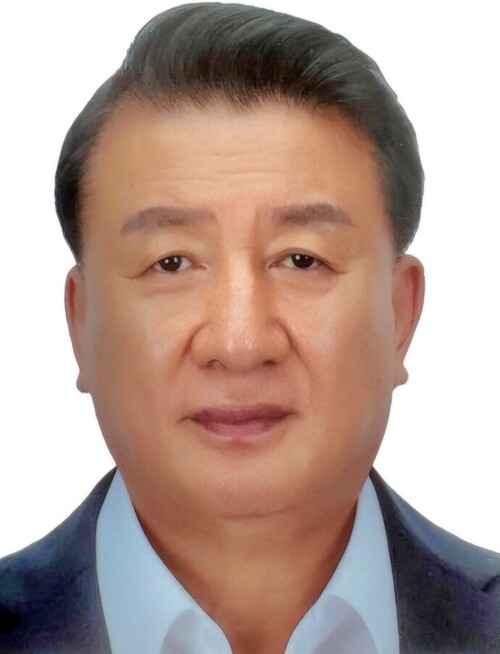
▲ 정길선 박사 ©브레이크뉴스 |
고려는 요나라와 992년부터 1018년에 이르기까지 전쟁을 치뤘다. 이 26년간 전쟁에서 고려는 수십만의 강병으로 역시 수십만을 동원한 거란 요나라와 싸워 이기고 북방의 패권을 차지했다. 이는 고려 광종(光宗) 때 광군(光軍)이라 하여 30만 대군을 양성했고 그 외에 상비군에 호족들의 군대까지 합치면 거의 50만 대군을 보유하고 있었다. 역사에 기록된 한국사에서 수십만의 군대를 보유하고 있었던 사례는 고구려와 고려 밖에 더 있었는가? 중원 북부를 차지한 거란의 요나라도 대국이었다. 송나라를 굴복시키며 그들에게서 조공 등의 실리를 챙기고 북방을 평정한 강자였다. 고려와 거란 요나라의 전쟁은 북방의 패권을 다투기 위한 전쟁으로 보는 것이 가장 합리적일 것이다. 그런데 귀주에서 강감찬 장군이 요나라에 치명타를 가하면서 고려의 승리를 확정지었다. (귀주대첩) 이 때 고려군은 거란군을 추격하여 당시 랴오허 강으로 추정되는 압록수를 건넜어야 했다. 압록수를 건너 요나라의 수도인 상경임황부를 함락시키고 요나라를 평정하여 옛 고구려의 영광과 북방 전체를 재패하여 송나라를 압박했어야 했다. 발해를 계승했다고 주장하는 거란 요나라를 제압하여 발해 주민들과 거란족까지 완전히 흡수해야 전쟁은 완전히 끝나는 것이었다.
그런데 당시 고려 현종과 조정 중신들은 요나라 땅으로 진격하는 것을 반대했다. 당시 고려 조정에는 유학자들이 가득했다. 이들이 생각하는 요나라는 오랑캐지만 송나라는 대국이었기 때문에 대국인 송나라를 자극하면 안된다는 것이다. 사실 거란은 우리와 뿌리가 같은 민족이지만 그들은 초원에서, 우리는 평야에서 생활했고 서로 고구려를 계승했다 생각하고 있었다. 그에 대한 힘겨루기가 고려-요나라 전쟁이다. 진짜 힘겨루기에서 완승을 하려면 그 본거지까지 정복해서 그들을 흡수해야 완전한 승리라고 할 것이다. 후일 그 대의는 여진족의 금나라가 이룩했지만 사실 우리가 이룩할 수도 있었던 일이다. 이들 유학자들의 대의(大義)는 평화였다. 그런데 이 대의라는 것도 대단한 모순점이 있다. 그것은 이른바 오랑캐를 무찌르고 중화를 상국(上國)으로 받든다는 것이다. 그러니까 중화와 싸우는 것은 평화를 깨는 것이고 오랑캐와 싸우는 것은 평화를 지키는 것이라는 희한한 모순 논리를 갖고 있는 것이다. 유학자들, 즉 유가들은 머리에서 발끝까지 오로지 중화(中華) 뿐이었다. 이른바 이들이 지칭하는 오랑캐와 싸우는 것이 자국과 자국 백성을 위한 것이 아니라 오로지 중화(中華)를 위해서였다.
이들에게서 동족이라는 것은 중요한게 아니었다. 최고의 덕목은 군주에 대한 충(忠)이지만 그보다 더한 덕목이 상국(上國)인 중화(中華)에 대한 맹목적인 충(忠)과 효(孝)와 의(義)를 지키는 것이었다. 상국인 중화국가에게서 책봉 교지를 받아오고 중국이 인정해야 왕으로도 인정되는 이 비상식적인 행위는 국가에 대한 애국이 아니라 평화를 가장하여 자신들의 권력적 욕구를 채우는 행위인 것이다. 이와 같은 사례는 400년 후 다시 재현된다. 고려 말기 명나라가 철령 이북의 영토를 반환하라고 요구했을 때 군사를 압록수 이남으로 물려야 한다고 주장하는 멍청한 유학자들이 있었다. 그에 반대하여 굴하지 말고 명나라를 쳐야 한다는 최영 같은 애국심이 강한 장군들이 있어서 이를 받아들인 고려 우왕이 10만 대군을 주어 최영과 이성계에게 명나라 정벌을 명한다. 명나라는 중화 한족이 세운 국가라 정벌하면 안되고 원나라는 오랑캐라 정벌해야 한다는 희한한 논리를 가진 자들이 정도전, 정몽주 등의 한족에 대한 복종을 가장한 평화주의자? 들이었다. 이들의 근본 또한 신진사대부, 유학자들이었다. 당시 명나라는 이제 일어나고 있는 국가로 각지의 혼란을 아직 수습하지 못했던 시기였기 때문에 요동 정벌 등은 충분히 가능했고 상황에 따라 북경까지 점령도 가능했다.
게다가 아직도 원나라와 전쟁이 끝나지 않은 상태로 오히려 원나라와 손잡고 친다면 명나라를 다시 황하 이남으로 내몰 수 있었다. 그러나 이러한 국토 회복의 좋은 기회를 7불가론을 내세워 날려버리려 했다. 그 중에서 가장 큰 명분은 "작은 나라가 큰 나라를 치는 것은 이치에 맞지 않는다." 라는 것이다. 원명교체기라는 시대적 혼란을 틈타 우리의 강토를 회복하고 원나라와 명나라 사이에서 실리를 추구하겠다는 것인데 작은 나라가 큰 나라를 치는 것이 이치에 안 맞는다니 이게 말이 되는 소리인가? 결국 위화도에서 회군하여 반란을 일으킨 이성계와 유학자, 유가들은 평화를 가장하여, 한족에게 굴종을 선택했다. 그리고 임진왜란 때 조선은 명나라의 도움을 받았다. 그런데 명나라는 과연 우리를 돕기만 했을까? 이들은 우리가 원하지 않는 강화라는 명목으로 당시 일본과 대화했다. 그리고 북삼도(평안도, 함경도, 황해도)는 명나라가 차지하고, 하삼도(충청도, 경상도, 전라도)는 일본이 차지하자는 심유경(沈惟敬)과 고니시 유키나카(小西行長)의 어처구니 없는 비밀회담으로 우리 강토를 두 동강 내어 서로 차지하고자 했다.
명나라는 당시 왜군과 싸움을 계속 회피하거나 소극적인 전투를 벌였다. 그리고 큰 소리만 치고, 우리에게 많은 공물과 공납을 요구했다. 오죽하면 그 행패가 왜군보다 더 심했다고 기록되어 있지 않는가. 결국 의병과 승병, 관군, 이순신 장군의 수군 등이 왜군을 몰아내서 이 땅을 지키는데 성공했다. 여기서 명나라 원군의 기여도는 많아야 20% 정도에 불과했다. 그럼에도 조선의 유학자들은 재조지은(再造之恩)의 마음으로 명나라에 결초보은(結草報恩)을 해야 한다고 했다. 이 두 고사의 뜻은 "거의 망하게 된 것을 상국(上國)인 명나라가 구해주었으니 죽어서도 잊지 않고 상국(上國)의 깊은 은혜에 보답한다"는 뜻이다. 여기의 앞줄에 대명천지(大明天地)라는 말도 붙었다. 문자 그대로의 뜻대로라면 "크게(大) 밝은(明) 하늘(天)과 땅(地)"이지만 여기에 국가 이름이 들어가면 뜻이 다르게 변질된다. "대명(明 : 명나라)의 천지(세상)" 라는 뜻이 되는 것이다. 이것을 합치면 대명천지(大明天地)에 재조지은(再造之恩)의 마음을 갖고 늘 결초보은(結草報恩) 하는 마음으로 살아야 한다는 뜻이다. 이는 망해가는 명나라에 늘 위와 같은 마음으로 오랑캐인 청나라를 배척하고 명나라를 섬겨야 한다는 조선 유학자들의 뿌리 깊은 "사대주의" 정신이 자리 잡은 것이다.
그 DNA를 이어 받아 그런지 요즘 대한민국을 보면 사대주의 굴종을 부끄럽게 여기지 않고 오히려 자랑스럽게 여기는 자들을 많이 보게 된다. 이와 같은 사대주의의 DNA는 명나라에서 일본 제국으로, 일본 제국에서 미국으로 갈아타며 끈질기게 생명을 유지하고 있다. 본인들이 마치 미국인인듯이 행동하고 미국의 편을 들어야 우리가 살 수 있다고 말한다. 마치 중국을 오랑캐 대하듯 하며 조선 시대에 명나라의 편을 들고 숭배하듯이 미국을 상국(上國)으로 여기고 굴종하는 행위를 혈맹이자 동맹이라는 보기 좋은 말로 포장한다. 세상에 어느 동맹이 주권도 없이 무력에 강한 나라에 굽실거리고 있는가? 역대 역사에서 그런 동맹이 존재하기나 할까? 그런데 그런 행위를 아주 자랑스럽게 여기며 미국에 유학을 갔다 오거나 학위 및 중요한 직책을 하고 오면 그를 최고의 엘리트로 여긴다. 이는 조선 시대의 사대부 양반들이 공자를 숭배하며 제사를 지내고 명나라에 가서 북경 유리창 서점에 책이라도 한 권 사오면 가보로 여기고, 명나라에 사절이나 하정사(賀正使), 성절사(聖節使), 천추사(千秋使), 혹은 동지사(冬至使)로 다녀오기만 하면 집안의 영광으로 알던 그것과 매우 유사하다.
그저 망할 사대주의 DNA가 내려와 과거에는 중국, 현재에는 미국만 보면 꼬랑지를 내리고 겁먹은 강아지처럼 눈치만 살피는데 급급한 그런 꼬라지 짓을 반복하고 있는 행태를 보면 그 상태에서 한국인으로써 긍지와 자부심이 느껴지는지도 의문이다. 역사는 끊임없이 반복되지만 이제 다극화로 변화하는 시대에 우리 스스로의 정체성을 갖지 않고 숭중, 숭미를 하게 된다면 우리는 그대로 그들에게 묻히게 된다. K-POP? K-DRAMA?, K-MOVIE? K-CULTURE? 우리의 정체성이 사라진다면 그 딴 자부심들이 다 무슨 소용인가? 지금도 미국의 편을 들어 이란인을 죽이는 일에 환호하는 자들을 보고, 미국의 힘을 신(神)처럼 숭배하는 인간들을 보자면 참 한심한 현실이 아닐 수 없다.
*필자/ 정길선.
노바토포스 회원, 역사학자, 고고인류학자, 칼럼니스트, 러시아 과학아카데미 유라시아 고고인류학연구소 연구교수.
*아래는 위 기사를 '구글 번역'으로 번역한 영문 기사의 [전문]입니다. '구글번역'은 이해도 높이기를 위해 노력하고 있습니다. 영문 번역에 오류가 있을 수 있음을 전제로 합니다.<*The following is [the full text] of the English article translated by 'Google Translate'. 'Google Translate' is working hard to improve understanding. It is assumed that there may be errors in the English translation.>
The Great Cause of Peace and the Contradiction of Korean Confucian Scholars... The Slave DNA of Sadaejuism That Has Passed Down to This Day
Columnist Jeong Gil-seon
Goryeo waged war against the Liao Dynasty from 992 to 1018. During this 26-year war, Goryeo fought and defeated the Khitan Liao Dynasty—which had mobilized hundreds of thousands of troops—with its own powerful army of hundreds of thousands, thereby securing hegemony over the north. During the reign of King Gwangjong, Goryeo trained a massive army of 300,000 known as the Gwanggun; when combined with standing forces and armies of powerful local clans, the kingdom possessed a force of nearly 500,000. Are there any other recorded instances in Korean history besides Goguryeo and Goryeo where an army of hundreds of thousands was possessed? The Khitan Liao Dynasty, which occupied the northern part of the Central Plains, was also a great power. It was a powerful force that subjugated the Song Dynasty, secured practical benefits such as tribute from them, and pacified the north. It is most reasonable to view the war between Goryeo and the Khitan Liao Dynasty as a conflict over hegemony in the north. However, General Gang Gam-chan dealt a fatal blow to the Liao Dynasty at Gwijju, securing Goryeo's victory (the Battle of Gwijju). At that time, the Goryeo army should have pursued the Khitan forces and crossed the Yalu River, which is presumed to be the Liao River. They should have crossed the Yalu River, captured Sanggyeong Imhwangbu—the capital of the Liao Dynasty—pacified the Liao, restored the former glory of Goguryeo, conquered the entire northern region, and pressured the Song Dynasty. The war would only have ended completely if they subdued the Khitan Liao Dynasty, which claimed to be the successor to Balhae, and fully absorbed both the Balhae inhabitants and the Khitan people.
However, King Hyeonjong of Goryeo and the high-ranking officials of the court opposed advancing into Liao territory. The Goryeo court at the time was filled with Confucian scholars. Their view was that while the Liao Dynasty was considered barbarian, the Song Dynasty was a great power, and therefore, they should not provoke the Song Dynasty. In fact, although the Khitan shared the same roots as us, they lived on the grasslands while we lived on the plains, and both sides believed they were the successors of Goguryeo. The Goryeo-Liao War was a power struggle over this conflict. To achieve a complete victory in a true power struggle, one must conquer their stronghold and absorb them to be considered fully victorious. Although the Jurchen Jin Dynasty later achieved this great cause, it was something we could have actually accomplished as well. The great cause of these Confucian scholars was peace. However, this great cause also contains a significant contradiction. It is to defeat the so-called barbarians and uphold China as the superior state. Thus, they possess a peculiar contradictory logic: fighting against China is breaking peace, while fighting against the barbarians is preserving it. From head to toe, the Confucian scholars—that is, the Confucians—were solely devoted to China. Fighting against the so-called barbarians they referred to was not for the sake of their own country or people, but solely for the sake of China.
For them, being of the same ethnicity was not important. The highest virtue was loyalty to the monarch, but an even greater virtue was upholding blind loyalty, filial piety, and righteousness toward the superior state, China. This illogical practice—requiring a royal decree of investiture from the superior state of China and being recognized as a king only upon China's acknowledgment—was not patriotism for the nation, but an act of satisfying their lust for power under the guise of peace. Such a precedent was repeated 400 years later. During the late Goryeo period, when the Ming Dynasty demanded the return of territory north of Cheollyeong, there were foolish Confucian scholars who argued that the troops should be withdrawn south of the Yalu River. However, there were patriotic generals like Choe Yeong who opposed this, insisting that they should not yield but instead attack the Ming. Accepting their arguments, King U of Goryeo gave Choe Yeong and Yi Seong-gye a massive army of 100,000 and ordered them to conquer the Ming. Those who held the peculiar logic that the Ming Dynasty should not be conquered because it was a state founded by the Han Chinese, while the Yuan Dynasty must be conquered because it was a barbarian state, were pacifists disguised as obedience to the Han Chinese, such as Jeong Do-jeon and Jeong Mong-ju. Their roots were also in the Neo-Confucian scholars and Confucianists. At the time, the Ming Dynasty was a nascent state that had not yet been able to quell the chaos in various regions; therefore, expeditions such as the conquest of Liaodong were entirely feasible, and depending on the circumstances, even the occupation of Beijing was possible.
Furthermore, with the war with the Yuan Dynasty still ongoing, joining forces with the Yuan to attack could have driven the Ming Dynasty back south of the Yellow River. However, they attempted to squander this excellent opportunity for territorial recovery by putting forward the "Seven Impossibility Theory." The most significant justification among these was that "it is illogical for a small country to attack a large country." The intention was to reclaim our territory and pursue practical interests between the Yuan and Ming dynasties by taking advantage of the historical chaos of the transition period between them. But to claim that it is illogical for a small country to attack a large one—does that make any sense? Ultimately, Yi Seong-gye, who turned back from Wihwado and staged a rebellion, along with the Confucian scholars and Confucians, chose submission to the Han Chinese under the guise of peace. Furthermore, during the Imjin War, Joseon received assistance from the Ming dynasty. However, did the Ming dynasty truly only help us? They engaged in dialogue with Japan at the time under the pretext of a peace treaty that we did not desire. Moreover, through the absurd secret talks between Shen Weijing and Konishi Yukinaga, who proposed that the Ming occupy the Northern Three Provinces (Pyeongan-do, Hamgyeong-do, and Hwanghae-do) while Japan occupied the Southern Three Provinces (Chungcheong-do, Gyeongsang-do, and Jeolla-do), they sought to split our territory in two and have each side claim it.
At the time, the Ming dynasty continuously avoided fighting the Japanese forces or engaged in passive battles. They merely made loud pronouncements and demanded large amounts of tribute and tributaries from us. It is no wonder that records state their outrageous behavior was even worse than that of the Japanese army. Ultimately, the Righteous Army, Buddhist monks, government troops, and Admiral Yi Sun-sin's navy succeeded in driving out the Japanese forces and defending this land. The contribution of the Ming reinforcements to this was, at most, only about 20%. Nevertheless, Joseon Confucian scholars argued that they should repay the Ming Dynasty with gratitude, driven by the spirit of "the grace of rebuilding." The meaning of these two historical anecdotes is that "since the superior nation, the Ming Dynasty, saved us from near ruin, we will not forget it even in death and will repay the profound grace of the superior nation." The phrase "Daemyeongcheonji" (Great Bright Heaven and Earth) was also attached to the beginning of this. Literally, it means "Greatly Bright Heaven and Earth," but when the name of a nation is included, the meaning changes. It means "the heavens and earth of the Great Ming (Ming Dynasty)." Combining these elements, it signifies that one must live with a heart of gratitude for the restoration of the Great Ming Heaven and Earth, always maintaining a spirit of repaying kindness with unwavering devotion. This reflects the deeply rooted "Sadaejuui" (serving a great power) spirit of Joseon Confucian scholars, who believed that in the declining Ming Dynasty, one must always reject the barbarian Qing Dynasty and serve the Ming with such a mindset.
Perhaps inheriting that DNA, looking at South Korea today, one sees many who do not feel ashamed of this Sadaejuui but rather take pride in it. This DNA of Sadaejuui persists tenaciously, shifting from the Ming Dynasty to the Japanese Empire, and from the Japanese Empire to the United States. They act as if they are Americans themselves, claiming that we can only survive by siding with the United States. They treat China like barbarians, and just as the Joseon Dynasty sided with and worshipped the Ming Dynasty, they package the act of groveling and submitting to the United States as a superior nation with the pleasant words of a "blood alliance" and "alliance." What alliance in the world grovels before a military power without sovereignty? Has such an alliance ever existed in history? Yet, they take great pride in such behavior, and anyone who studies in the U.S., obtains a degree, or holds an important position there is regarded as a top elite. This is very similar to how the literati of the Joseon Dynasty worshipped Confucius and performed ancestral rites; they regarded a single book purchased from the Liulichang Bookstore in Beijing as a family heirloom, and considered it a family honor merely to have traveled to the Ming Dynasty as an envoy, or as a messenger for the New Year, the Emperor's birthday, the Autumn Equinox, or the Winter Solstice. When I see the behavior of those who, driven by the damned DNA of subservience to great powers, repeatedly cower at the mere sight of China in the past and the United States in the present, scrambling to gauge the atmosphere like frightened puppies, I question whether they can even feel pride or self-respect as Koreans in such a state. History repeats itself endlessly, but in this era of multipolarization, if we fail to maintain our own identity and instead worship China and the United States, we will simply be buried by them. K-POP? K-DRAMA? K-MOVIE? K-CULTURE? What good is all that pride if our identity vanishes? When I see those who still cheer for the killing of Iranians on the side of the U.S., and those who worship American power like a god, it is truly a pathetic reality.