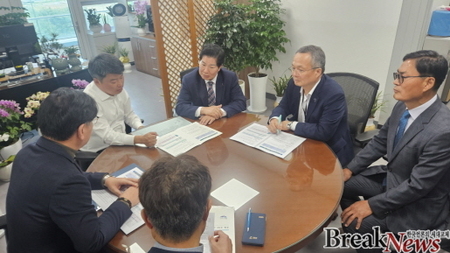
▲ 홍성군, 의료취약지 지역보건의료기관 혁신 시작 © 김정환 기자 |
충남 홍성군이 공중보건의사 급감으로 인한 농어촌 의료 공백 위기를 타개하기 위해 보건지소 시스템을 전면 개편하며 ‘지역보건의료 혁신’에 나섰다. 단순히 인력을 기다리는 대신, 지역 특성에 맞춘 맞춤형 운영 모델을 구축해 의료 취약지 해소의 선도적인 사례를 만들겠다는 복안이다.
이를 위해 홍성군은 오는 6월부터 관내 10개 보건지소를 기능과 여건에 따라 세 가지 유형으로 재편한다.
가장 눈에 띄는 변화는 은하면과 서부면에 도입되는 ‘통합형’ 모델이다.
이곳에서는 보건진료전담공무원이 상주하며 91종의 의약품 처방과 진료 서비스를 상시 제공한다. 의사 부재로 인한 진료 단절을 막고 주민들이 언제든 약을 처방받을 수 있도록 접근성을 극대화했다.
민간 병의원이 위치한 광천읍과 홍동면은 ‘건강증진형’으로 바뀐다.
진료 기능은 주 1~2회 순회진료로 최소화하는 대신, 지역민의 특성에 맞는 맞춤형 건강관리 프로그램 운영에 집중한다. 나머지 6개 면(홍북·금마·장곡·결성·갈산·구항)은 기존 방식대로 주 2~3회 순회진료를 유지하는 ‘유지형’으로 운영된다.
이번 개편은 갈수록 심화되는 공중보건의 부족 사태에 대한 선제적 대응이다. 전국적으로 의과 공보의 수는 최근 10년 사이 약 44% 급감했으며, 전국 보건지소의 약 60%가 의사 없이 운영되는 실정이다. 홍성군 역시 순회진료 횟수가 월 1~2회까지 줄어드는 등 어려움을 겪어왔다.
홍성군은 이러한 위기를 시스템 체질 개선의 기회로 삼았다. 이미 지난 2월 업무대행 의사를 채용해 5명의 의사 인력을 선제적으로 확보했으며, 3월에는 지역 의료기관과 원격협진 업무협약을 체결해 디지털 의료 인프라를 다졌다.
홍성군은 2026년 상반기까지 이러한 기반 조성을 마무리하고, 2027년부터는 한 단계 더 나아간 혁신 모델을 선보일 계획이다. 권역 거점형 모델 도입과 비대면 진료 시범 적용 등을 통해 장기적인 관점에서 농어촌 의료 사각지대를 완전히 해소한다는 방침이다.
*아래는 위 기사를 '구글 번역'으로 번역한 영문 기사의 [전문]입니다. '구글번역'은 이해도를 높이기를 위해 노력하고 있습니다. 영문 번역에 오류가 있을 수 있음을 전제로 합니다.<*The following is [the full text] of the English article translated by 'Google Translate'. 'Google Translate' is working hard to improve understanding. It is assumed that there may be errors in the English translation.>
Hongseong County to Introduce Three Major Models – ‘Integrated,’ ‘Health Promotion,’ and ‘Maintenance’ Starting June…
Eunha and Seobu Townships to Operate as ‘Integrated’ Centers, Where Dedicated Officials Can Provide Prescriptions at Any Time
Hongseong County in South Chungcheong Province has embarked on a ‘regional healthcare innovation’ initiative by completely overhauling its branch health center system to overcome the crisis of medical service gaps in rural areas caused by the sharp decline in public health doctors. The plan is to establish a leading example of resolving medical underserved areas by building customized operational models tailored to local characteristics, rather than simply waiting for personnel.
Starting this coming June, Hongseong County will reorganize its 10 branch health centers into three types based on their functions and conditions.
The most notable change is the ‘Integrated’ model being introduced in Eunha-myeon and Seobu-myeon.
Dedicated public health officials will be stationed at these centers to provide prescriptions for 91 types of medications and medical services at any time. This maximizes accessibility to prevent medical service interruptions caused by the absence of doctors and ensures residents can receive prescriptions at any time. Gwangcheon-eup and Hongdong-myeon, where private hospitals and clinics are located, will be reclassified as "Health Promotion Types."
Instead of minimizing medical services to mobile clinics once or twice a week, the focus will be on operating customized health management programs tailored to the characteristics of local residents. The remaining six townships (Hongbuk, Geumma, Jang 곡, Gyeolseong, Galsan, and Guhang) will operate as "Maintenance Types," maintaining mobile clinics two to three times a week as before.
This reorganization is a preemptive response to the worsening shortage of public health doctors. Nationwide, the number of medical public health doctors has plummeted by approximately 44% over the past decade, and about 60% of public health sub-centers across the country are currently operating without doctors. Hongseong County has also faced difficulties, such as reducing the frequency of mobile clinics to just once or twice a month.
Hongseong County has seized this crisis as an opportunity to fundamentally improve its system. Hongseong County proactively secured a medical workforce of five by hiring acting physicians last February, and solidified its digital medical infrastructure by signing a remote consultation agreement with local medical institutions in March.
The county plans to complete the establishment of this foundation by the first half of 2026 and introduce an innovative model that takes things a step further starting in 2027. The policy aims to completely eliminate medical blind spots in rural and fishing communities from a long-term perspective through the introduction of a regional hub model and the pilot application of non-face-to-face medical services.
원본 기사 보기:브레이크뉴스대전세종충청