브레이크뉴스 김충열 정치전문기자 = 이름을 부른다는 것은 그 사람의 삶 정체성을 인정한다는 선언이다. 영화 <내 이름은>은 그 선언이 얼마나 자주 무너지는지를 보여줌으로써, 역설적으로 우리가 회복해야 할 인간애를 증명한다.
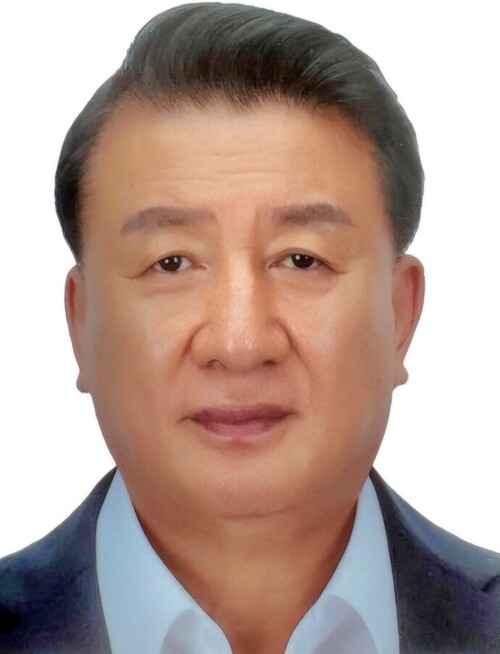
 ▲ 정지영 감독(사진)은 "아픈 영화지만 참 재미있는 영화이다"라고 소문내 달라고 했지만 너무도 가슴먹먹하게 하고 가슴아픈 영화이다. © 김충열 정치전문기자 |
정지영 감독의 영화 ‘내 이름은‘은 '영옥'이라는 이름을 싫어하는 18세 소년과 무용을 가르치며 그런 아들을 키우는 엄마 정순(염혜란)의 이야기다.
한 개인의 이름과 정체성을 통해 우리 사회가 사람을 어떻게 규정하고 바라보는지를 집요하게 묻는 작품이다. 이 영화는 단순한 개인 서사를 넘어, 이름이라는 가장 기본적인 존재의 표식이 사회적 편견과 권력 속에서 어떻게 흔들리고 왜곡되는지를 보여주고 있다.
정 감독 특유의 현실 고발적 연출은 이 작품에서도 두드러진다. 감정에 과도하게 기대기보다는 건조하고 절제된 시선으로 사건을 따라가면서, 왜 타이틀 백 이후 학생들이 담배를 피우며 폭력행사를 할 수밖에 없는지를 중반 이후 영화가 진행되어야 고개를 끄덕이게 한다.
하지만 제주 4.3항쟁에 스러져간 숱한 생명들의 넋을 위로하는 진혼곡 배경에 어우러지는 춤사위가 끝나는 지점에 학생 폭행 장면 대신 제주 4.3의 국가폭력에 의한 양민 학살 장면들(흑백필름)이 다이나믹하게 전개되었으면 하는 아쉬움은 남는다.
이름, 존재의 시작이자 구속의 도구
정지영 감독은 영화 <내 이름은>을 통해 어떻게 국가 폭력과 사회적 권력의 편견에 의해 파괴되어 가는지를 날카롭게 파고든다. 이 영화는 국가와 사회가 규정한 프레임 속에서 한 인간의 정체성이 얼마나 무력하게 왜곡 파멸되어 가는지를 보여주는 가슴 시린 아픈 기록이다.
건조한 시선이 만들어 낸 강렬한 고발
정지영 감독의 연출은 이번에도 사회에 던지는 메시지가 집요하고 묵직하다. 영화는 관객의 눈물을 짜내기 위해 신파를 동원하지 않는다. 대신, 카메라를 제주 4.3의 짙푸른 보리밭을 배경으로 평화와 국가 폭력 그리고 대를 이어 지속되고 있는 트라우마를 주인공의 일상 속에 때로는 평화롭게 때로는 폭풍우가 휘몰아치는 연출로 관객의 마음을 옥죄며 끊임없이 질문을 던진다. 왜? 무엇 때문에 누구를 위하여 국가 폭력에 의해 선량한 3만 여명의 제주 양민들이 죽어가야 한가? 그러나 여전히 좌우 이념 틀 안에 갇힌 우리는 그 질문을 외면하고 진영논리에 빠져있다.
가해 자들(죽은 자)은 말이 없고 산자는 대를 이어 제주 4.3의 응어리에서 해방되지 못하고 그 트라우마에서 헤어나지 못하고 있다. 학교에서의 집단폭력, 가족 내에 뿌리 깊게 박힌 뒤틀린 운명... 이러한 절제된 연출은 오히려 관객으로 하여금 주인공이 느끼는 '일상적인 폭력'을 생생하게 체험하게 한다.
'정순'의 자아를 찾아가는 몸부림...
영화 속에서 '정순'(염혜란 분)이라는 사람은 과거를 회상하며 그 트라우마에서 한편으론 기억하며 해방하기를 간절히 원한다. 그러나 그 진정한 해방은 쉽게 오지 않는다. 주인공이 자신의 정체성을 찾기 위해 고군분투하는 과정은, 곧 사회가 강요하는 '보이지 않는 감옥'으로부터 탈출하려는 필사적인 몸부림이다. 이를 통해 이름을 지키는 행위가 곧 인간의 존엄성을 수호하는 최후의 보루임을 역설한다. 누구나 피하고 싶고 말하고 싶지 않은 제주 4.3의 역사적 편린들 속에 갇힌 진정한 진실을 묻고 또 묻는다. 정지영 감독은...
“당신의 이름은 온전히 당신의 것인가?”
영화가 끝나고 엔딩 크레디트가 올라갈 때, 수많은 이름들이 떠오른다. 관객의 마음속에 긴 잔상을 남긴다. 우리는 각자의 이름으로 불리며 살아가고 있지만, 그 이름 안에 담긴 진정한 '나'의 함량은 얼마나 될까. 사회적 성취, 타인의 기대, 제도적 규정으로 채워진 이름 속에 진짜 정체성은 매몰되어 있는 것은 아닐까.
 ▲ 정 감독이 영화 ’내이름은‘을 톻해 이 사회에 던지는 묵직한 메시지는 제주4.3 평화공원에 무명의 이름으로 누워있는 백비에 ’제주4.3 민중항쟁‘이 새겨지는 날이 하루빨리 오길 기대해 본다. © 김충열 정치전문기자 |
우리 시대의 정체성을 묻는 차가운 거울
<내 이름은>은 '이름'이라는 지극히 보편적인 소재를 통해 현대 사회의 구조적 모순을 드러낸 수작이다. 정 감독은 지극히 개인적인 서사를 통해 우리 공동체의 일그러진 얼굴을 비춘다.
정지영 감독은 대한민국의 대표적인 거장으로, 주로 사회적 비판 의식과 실화 바탕의 굵직한 서사를 다루는 영화들을 연출해 왔다. 1980년대 데뷔 이후 현재까지도 꾸준히 활동하며 한국 현대사의 아픔과 부조리를 영화적 언어로 풀어내고 있다. 정 감독이 영화 ’내이름은‘을 톻해 이 사회에 던지는 묵직한 메시지는 제주4.3 평화공원에 무명의 이름으로 누워있는 백비에 ’제주4.3 민중항쟁‘이 새겨지는 날이 하루빨리 오길 기대해 본다. 정지영 감독은 "아픈 영화지만 참 재미있는 영화이다"라고 소문내 달라고 했지만 너무도 가슴먹먹하게 하고 가슴아픈 영화이다.
정지영 감독의 주요 연출작을 시기별/특성별로 정리하면 아래와 같다.
1. 최근 화제작 (2020년대)
<소년들> (2023): 1999년 '삼례 나라슈퍼 사건' 실화를 바탕으로, 억울하게 범인으로 몰린 소년들과 이를 재수사하는 형사의 이야기를 그렸다.
2. 실화 및 사회 고발 3부작 (2010년대)
이 시기 정지영 감독은 우리 사회의 부조리를 정면으로 응시하며 '노익장'을 과시했다.
<블랙머니> (2019): 론스타 외환은행 매각 사건을 모티브로 한 금융 범죄 실화극이다.
<남영동1985> (2012): 고(故) 김근태 의원의 수기 『남영동』을 바탕으로, 80년대 고문 중수부의 참혹한 현실을 고발했다.
<부러진 화살> (2011): 2007년 '석궁 테러 사건'을 소재로 사법부의 권위주의를 비판하며 흥행과 비평 모두 성공을 거두었다.
3. 한국 영화의 르네상스를 이끈 초기 명작 (1990년대)
정지영 감독이 '거장'의 반열에 오른 시기로, 전쟁과 이데올로기의 비극을 심도 있게 다뤘다.
<헐리우드 키드의 생애> (1994): 영화에 미쳐 살았던 두 친구의 이야기를 통해 한국 영화사의 이면을 다뤘다.
<하얀 전쟁> (1992): 베트남 전쟁 참전 군인들의 트라우마와 전쟁의 허무함을 그린 수작이다.
<남부군> (1990): 빨치산 문제를 객관적이고 인간적인 시선으로 다뤄 한국 영화계에 큰 파장을 일으켰던 대표작이다.
4. 80년대 데뷔 및 초기작
<안개는 여자처럼 속삭인다> (1982): 감독 데뷔작으로 미스터리 스릴러 형식을 띠고 있다.
<거리의 악사> (1987)
<산배암> (1988)
정지영 감독의 영화들은 단순히 과거를 기록하는 데 그치지 않고, "그때의 일이 지금 우리에게 어떤 의미인가?"를 끊임없이 묻는다. <내 이름은>에서처럼, 그는 개인의 삶이 거대한 사회 시스템이나 역사적 소용돌이 속에서 어떻게 변화하고 저항하는지를 집요하게 탐구해 온 감독이다. hpf21@naver.com
*아래는 위 기사를'구글 번역'으로 번역한 영문 기사의[전문]입니다. '구글번역'은 이해도 높이기를 위해 노력하고 있습니다.영문 번역에 오류가 있을 수 있음을 전제로 합니다.*The following is [the full text] of the English article translated by 'Google Translate'. 'Google Translate' is working hard to improve understanding. It is assumed that there may be errors in the English translation.
After watching Director Jung Ji-young's film *My Name Is*...
The blank monument lying at the Jeju 4.3 Peace Park... Hoping the 'Jeju 4.3 People's Uprising' will be inscribed therein
Break News Political Reporter Kim Choong-lyoul = Calling someone by name is a declaration acknowledging their life identity. By showing how often that declaration crumbles, the film *My Name Is* paradoxically demonstrates the humanity we need to recover.
Director Jung Ji-young's film *My Name Is* tells the story of an 18-year-old boy who dislikes the name 'Young-ok' and his mother, Jung-soon (Yum Hye-ran), who raises such a son while teaching dance.
It is a work that persistently questions how our society defines and views people through an individual's name and identity. Beyond a simple personal narrative, this film shows how the most basic mark of existence—a name—is shaken and distorted amidst social prejudice and power.
Director Jung's characteristic socially critical directing style is prominent in this work as well. Rather than relying excessively on emotion, the film follows the events with a dry and restrained gaze, making the audience nod in understanding only after the midpoint why the students were compelled to smoke and commit acts of violence following the title sequence.
However, it leaves a lingering sense of regret that at the point where the dance sequences accompanying the requiem comforting the souls of the countless lives lost during the Jeju 4.3 Uprising end, instead of the scene of student assault, scenes of the massacre of civilians by state violence during Jeju 4.3 (in black and white) did not unfold more dynamically.
**Names: The Beginning of Existence and a Tool of Constraint**
Through the film *My Name Is*, Director Chung Ji-young incisively delves into how individuals are destroyed by state violence and the prejudices of social power. This film is a heartbreaking and painful record showing how a human identity is helplessly distorted and destroyed within the frames defined by the state and society.
**Intense Accusation Created by a Dry Gaze**
Once again, Director Chung Ji-young's direction delivers a persistent and weighty message to society. The film does not resort to melodrama to wring tears from the audience. Instead, with the camera positioned against the backdrop of the deep blue barley fields of Jeju 4.3, it tightens the audience's grip and constantly poses questions through direction that intertwines the protagonist's daily life—sometimes peacefully, sometimes amidst raging storms—with peace, state violence, and trauma persisting through generations. Why? For what reason, and for whom, must over 30,000 innocent civilians of Jeju die at the hands of state violence? Yet, still trapped within the ideological framework of left and right, we turn a blind eye to these questions and remain mired in partisan logic.
The perpetrators (the dead) remain silent, while the living, generation after generation, have not been liberated from the deep-seated resentment of Jeju 4.3 and are unable to escape its trauma. Group violence in schools, twisted fate deeply rooted within the family... This restrained direction, paradoxically, allows the audience to vividly experience the "everyday violence" felt by the protagonist. A Struggle to Find 'Jeong-sun'...
In the film, the character 'Jeong-sun' (played by Yeom Hye-ran) reminisces about the past, desperately wishing to be liberated from that trauma by remembering it on the one hand. However, that true liberation does not come easily. The protagonist's struggle to find her identity is, in essence, a desperate struggle to escape the "invisible prison" imposed by society. Through this, the film emphasizes that the act of protecting one's name is the last bastion safeguarding human dignity. It repeatedly asks about the true truth trapped within the historical fragments of the Jeju 4.3 Incident—something everyone wants to avoid and speak of. Director Jeong Ji-young...
“Is your name entirely yours?”
As the movie ends and the end credits roll, countless names come to mind. They leave a lingering afterimage in the hearts of the audience. We live our lives being called by our respective names, but how much of the true 'self' is contained within those names? Is our true identity buried within names filled with social achievements, the expectations of others, and institutional regulations?
** A Cold Mirror Questioning the Identity of Our Times
*My Name Is* is a masterpiece that reveals the structural contradictions of modern society through the extremely universal subject of "names." Director Chung reflects the distorted face of our community through an intensely personal narrative.
Director Chung Ji-young is a representative master of South Korea who has primarily directed films dealing with social criticism and substantial narratives based on true stories. Since his debut in the 1980s, he has remained consistently active to this day, unraveling the pain and absurdity of modern Korean history through the language of cinema. The weighty message Director Chung delivers to this society through the film *My Name Is* makes us hope for the day when the "Jeju 4.3 People's Uprising" is inscribed on the blank monuments lying with nameless names at the Jeju 4.3 Peace Park as soon as possible.
Director Chung Ji-young's major directorial works are organized by period and characteristics as follows. 1. Recent Highlights (2020s)
*The Boys* (2023): Based on the true story of the 1999 "Samnye Nara Supermarket Incident," it depicts the story of boys wrongly accused of crimes and the detective conducting a reinvestigation.
2. True Story and Social Criticism Trilogy (2010s)
During this period, Director Jung Ji-young demonstrated his enduring vigor by directly confronting the absurdities of our society.
*Black Money* (2019): A financial crime drama based on a true story, inspired by the Lone Star Bank sale of Korea Exchange Bank.
*Namyeong-dong 1985* (2012): Based on the memoir *Namyeong-dong* by the late Assemblyman Kim Geun-tae, it exposed the horrific reality of the torture-ridden Central Investigation Unit in the 1980s. *Broken Arrow* (2011): Based on the 2007 "crossbow terror incident," it criticized the authoritarianism of the judiciary and achieved success in both box office and critical reception.
3. Early Masterpieces That Led the Renaissance of Korean Cinema (1990s)
This was the period when Director Chung Ji-young rose to the ranks of a "master," dealing deeply with the tragedies of war and ideology.
*The Life of a Hollywood Kid* (1994): It explored the hidden side of Korean film history through the story of two friends who lived obsessed with movies.
*White War* (1992): A masterpiece depicting the trauma of Vietnam War veterans and the futility of war.
*Southern Army* (1990): A representative work that caused a major stir in the Korean film industry by addressing the issue of partisans with an objective and humane perspective. 4. Debut and Early Works in the 1980s
*The Fog Whispers Like a Woman* (1982): His directorial debut, which takes the form of a mystery thriller.
*The Street Musician* (1987)
*The Mountain Snake* (1988)
Director Chung Ji-young's films do not stop at merely documenting the past; they constantly ask, "What does what happened back then mean to us now?" As seen in *My Name Is*, he is a director who has persistently explored how individual lives change and resist within massive social systems or historical vortices. hpf21@naver.com