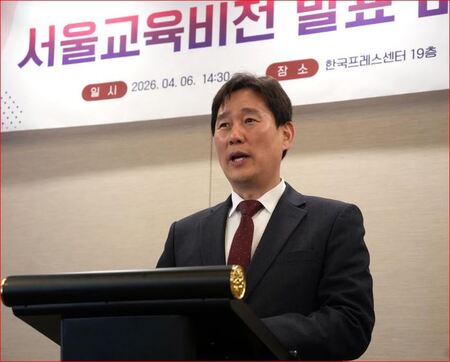
▲ 함승희 전 검사. ©브레이크뉴스 |
함승희 전 검사. 그는 전두환․노태우 비자금과 YS 선거자금 수사의 저승사자였다. 지난 1995년에 썼던『성역은 없다』가 베스트셀러가 됐다. 이 책 “성역은 없다-II(도서출판 오래 출간)”는 두 번째 책. 함승희 전 검사. 검찰을 떠난 후 미국 유학과 국회의원, 공기업 강원랜드 사장을 거쳐 정책 싱크탱크 ‘오래포럼’을 이끌고 있는 저자가 까발리는 권력과 정치판의 부끄러운 민낯, 그리고 살아 있는 권력을 제압하고 대한민국을 바로 세울 지혜가 이 책에 담겨 있다.
2019년 대통령 문재인의 ‘살아 있는 권력에 엄정하게’는 그보다 27년 전인 1992년 대통령 당선자 김영삼(YS)의 ‘성역 없이’를 떠올리게 한다. 저자는 “구시대 정경유착의 무리들을 성역 없이 수사하라.” 대검찰청 검찰연구관으로 근무하고 있었던 나에게는 귀가 번쩍 뜨이는 한마디였다. ‘성역 없는 수사’라! 수사검사에게 이보다 더한 로망은 없다. 말만으로도 가슴이 뛴다. (3장_ 마지막 혈투, 22쪽)“고 회상했다.
전임 노태우 정권의 ‘황태자 P’ 주변을 겨냥해 시작한 수사는 뜻하지 않게 청와대 주변의 수상한 돈 흐름으로 옮아갔다. 뜻하지 않게 새 정부의 경제수석(김종인)과 국회 재경위원장(이원조)이 걸려들었다. 금융실명제 실시 전이던 당시 계좌 추적 결과는 더욱 뜻하지 않게 ‘노태우 비자금 4천억 차명계좌’로 비화하여 전두환-노태우 구속과 12․12 및 5․18 재판의 불씨가 된다.
『성역은 없다 II』, 이 책은 당시 수사검사 함승희의 전작 『성역은 없다』(1995)의 후속편이. 당시 못다 쓴 이원조 수사 비화에서 시작해, 성역을 건드린 괘씸죄로 검찰을 떠나 변호사, 국회의원, 공기업 사장, 정책 싱크탱크 대표 등으로 활동해 온 이력이 이어진다. 이 책은 전작(전 2장)을 잇는 의미에서 3장부터 시작한다. ‘성역 없이’ 수사하려는 의욕에 넘쳤던 검사 말년에서 시작해 검찰 떠난 이후의 공적 삶을 단계별로 장을 나누고, 장마다 당시의 사건들에 2020년대 ‘지금’의 상황이 오버랩 된다.
그다지 좋지 않은 일로 언급되는 등장인물 상당수를 알파벳 이니셜로 처리했지만, 당시를 기억하는 독자라면 “아하, 그때!” 하며 기억을 되살리며 읽는 재미가 있을 것. 3장(‘마지막 혈투’)은 전작 『성역은 없다』의 보유(補遺)를 겸한다.
“성역 없이 수사하라”를 제일성으로 출범한 YS 정권의 ‘역사 바로잡기’ ‘5․18 재수사’ 등은 대국민 쇼에 불과했으며 사실상 민주주의의 모살(謀殺)이라고 평가했다. 대한민국이 ‘검찰 공화국’이기는커녕 정권마다 검찰을 시녀로 길들이지 못해 안달하는 행태를 ‘검찰 오적(五賊)’으로 정리했다. 4장(‘여의도 기회주의자들’)은 한 차례 국회의원부터 출발한 제도권 정치활동 이력이다. 정치적 신념을 달리하는 김대중(DJ) 대통령이지만 뜻하지 않게 그 당 소속으로 현실정치에 입문한 사연, 노무현 당선에 일조했으나 국회 법사위원으로서 노무현 탄핵의 소추위원이 돼야 했던 기연(奇緣), 다시 박근혜와의 정치적 인연 등이 이어진다.
짧게나마 가까이서 본 국회의원들과 관련․피감(被監)기관들의 행태도 실망스럽지만, 더욱 염려스러운 것은 보수를 자처하는 사람들조차도 자유와 보수에 대한 뚜렷한 철학과 비전이 없더라는 것이었다. 보수주의 민간 싱크탱크로 희망의 싹을 키우려고 ‘오래포럼’이라는 공부모임을 조직했는데, 팔자에 없는 공기업 사장 자리 제안을 받고 고심 끝에 부임한 곳이 내국인 카지노로 유명한 강원랜드다(5장 ‘복마전 같은 공공기관의 환골탈태’). 부패․부실 공기업을 임기 중 청렴․우량기업으로 탈바꿈시키고, 전국적으로 유명해진 ‘운탄고도’와 ‘정태영삼 투어’ 등을 개발하며 한국의 복합리조트와 마이스(MICE) 산업이 나갈 길을 모색해 본다.
임기 중 정권이 바뀌며 감사원의 표적감사, 언론의 적페몰이 대상이 돼 본 경험은 ‘살아 있는 권력’을 제압해야만 제대로 된 자유민주 정치가 가능하다는 지론을 더욱 굳히는 계기가 된다.
6장(‘정책 싱크탱크와 민주정치’)은 자유주의와 시장경제를 연구하고 정책 의제화하기 위한 싱크탱크 ‘오래포럼’의 활동 소개에 할애했다. 헌법적 가치인 자유민주주의를 구현하는 ‘작지만 강한 나라’는 500쪽에 이르는 이 책의 사실상 결론이다. 바람직한 국가 형태는 헌법적 가치, 즉 자유민주주의가 잘 구현되는 나라이다.
국가권력 중 어느 하나라도 독주하지 않고 권력 간 견제와 균형이 잘 이루어지고, 법치가 잘 시행되는 나라이다. 국가는 ‘국가만 할 수 있고, 국가만 해야 하는 것’에 역량을 집중해야 한다. 나머지는 개개의 인간, 시민단체, 기업의 자율에 맡겨야 한다. 한마디로 작지만 강한 국가, 이것이 답이다. (431쪽)
광장의 ‘촛불과 함성’으로 정의가 구현될 수 있다고 믿는 사람이 아직도 있다면 그 사람은 (레몽 아롱의 말을 빌리면) 마음이 나쁘거나 머리가 나쁜 것이다. 그런 시민의식을 업그레이드하는 일은 시민사회의 몫이지 국가나 공권력이 나설 일이 아니다. 부록격인 제7장(‘잔상’)에서는 바로 그 공권력의 비리를 처단하고 부패를 예방할 방책을, 수사검사 경험을 통해 제시했다. 자유민주주의로 가는 첫걸음은 공권력이 분수를 지키도록 하는 ‘제도 개혁’일 수밖에 없다. 요 몇 년 검찰 개혁을 전가의 보도처럼 휘둘러 온 세력의 실상은 개혁이 아니라 개혁의 탈을 쓴 ‘법비(法匪)’들에 불과하다고 맹공하면서, 구체적으로 조국-추미애 전 법무장관들의 죄과는 “하나하나의 행위가 외견상 정당행위 또는 사소한 위법행위로 보이더라도 일련의 과정을 종합하면 심각한 범죄행위로 구성될 수 있다”고 결론짓는다. 제도 개혁도 결국은 사람이 하는 것. 그래서 결론은 ‘사람’이다. “민주공화국인 대한민국의 헌법적 가치는 자유주의, 시장경제, 민주주의다. 자유주의가 훼손되면 전체주의가 된다. 시장주의가 훼손되면 사회주의가 된다. 민주주의가 훼손되면 국가주의가 된다. 대한민국은 지금 전자인가 후자인가 선택의 기로에 서 있다. ‘몇 명의 의로운 사람(a few good men)’이 그나마 우리의 희망이고 국가의 미래다.”
 ▲ 함승희 전 검사의 저서 표지. ©브레이크뉴스 |
아래는 책 속의 주요 내용이다.
○…과거 권위주의 체제에서는 공권력 기관들만 바로 서면 열린사회, 민주사회는 복원될 수 있다고 생각됐다. 그러나 21세기형 전체주의 사회에서는 충견 노릇 하는 공권력 기관만의 문제가 아니다. 무엇이 문제인지를 인식하지 못하는 국민의식이 더 근본적 문제가 되고 있다. 국민이 스스로 깨어나지 못하면 연성 전체주의 사회는 그 도를 더하여 한반도 북쪽과 같은 경성 전체주의 사회로 치닫게 되어도 막을 길이 없다. _프롤로그, 7쪽
○…어제도 오늘도 그리고 내일도 ‘검찰 개혁’, ‘사법 개혁’은 검찰과 법원을 장악하기 위한 여론몰이의 수단, 전가의 보도이다. 그러나 속을 들여다보면 개혁은 구두선일 뿐, 개악만 거듭돼 왔다. 그것도 그냥 개악이 아니라 아주 뭉개 버리는 수준이었다. 검찰·법원의 최악의 문제점은 그때나 지금이나 정치권력에 아부 아첨하여 출세했던 자들, 이른바 정치검사․정치판사들이다. 개혁은 이 자들을 솎아내고 정치권력과 거리를 두게 하면 그것으로 충분하다. 한마디로 독립성과 중립성의 확보이다. 그런데 현실은 정반대로 진행된다. _제3장 마지막 혈투, 23쪽
○…요즘처럼 포퓰리즘 입법이 양산되는 상태가 지속되게 되면, 대다수 국민이 전과자가 되고 개인의 자유권은 무제약적으로 침해되고 자유로운 상거래는 무너지게 되고 결국 인간의 삶 자체가 피폐해질 것이 뻔하다. 이 같은 현상은 왜 벌어지고 있는가? 국회의원이라는 자들의 법철학의 부재 때문에 빚어지는 비극이다. 많은 사람들은 법이란 “무언가 바람직한 상태를 먼저 상정하고, 그런 상태를 만들기 위하여 필요한 국가의 강제력을 동원하는 수단”이라고 생각한다. 이 같은 생각은 법에 대한 대표적 무지이다. 법은 ‘희망사항’을 설정하는 것이 아니다. 법은 사회질서를 유지하는 데 물러설 수 없는 최소한의 상태를 정하는 것일 뿐이다. 법은 어떤 경우에도 분노, 복수, 증오, 질투심의 산물이 되어서는 안 된다는 말이다. 소위 “그랬으면 좋겠다”라는 어떤 희망사항을 형사법적으로 강제하는 체제야말로 전형적인 국가주의, 전체주의 사회다. _제4장 여의도 기회주의자들, 222-223쪽
○…이른바 X86세대라고 통칭되는 NL 계열 주사파·전대협 출신의 한 무리 정치집단들은 노골적으로 개인과 기업의 자유를 억압 내지 부정하거나 사유재산권을 형해화시키는 정책과 법, 제도를 양산하고 있다. 이들과 대척점에 서서 헌법적 가치 내지 국가의 정체성을 수호해야 할 이른바 보수 세력이라는 정치집단 역시 유권자의 표심을 의식하여 이를 방조하거나 동조하고 있다. 좌파 사회주의자들은 말할 것도 없고 우파 보수를 자처하는 자들조차도 개인의 사유재산권 행사와 기업의 영리 추구 행위를 죄악시하고 부도덕한 것으로 몰아붙이면서 헌법적 가치를 훼손하고 국가의 정체성을 부정하고 있거나 이를 방조, 용인하고 있다. _제4장 여의도 기회주의자들, 246-247쪽
○…대통령은 그 정치적 이념과 관계없이 집권 초기부터 공기업 개혁에 정권의 성패를 걸어야 한다. 왜냐하면 300개가 넘는 전체 공기업이 국민경제에서 차지하는 비중은 재벌기업의 총화 못지않게 크기 때문이다. 특히 이 공기업들이 제공하는 공공서비스는 국민 의식주 생활의 기본이 되고 국가경제의 기초 인프라를 구성하기 때문에 더욱 그러하다. _제5장 복마전 같은 공공기관의 환골탈태, 357-358쪽
○…독립형 민간 싱크탱크에 대한 시대적 요구는 그 필요성뿐만 아니라 가능성이라는 측면에서 국내 정치의 상황은 매우 긍정적으로 변화하고 있다. 주요 국정 현안에 대한 다양한 정책 아이디어를 개발하여 제공하고, 전문가들을 공급하는 인재 풀(pool) 역할을 담당하며, 자유주의 시장경제의 이념을 널리 계몽하는 독립형 민간 싱크탱크의 출현이야말로 한국 민주정치의 기초를 다지고 한 단계 성숙시키기 위한 필요불가결한 시대적 요구가 되었다. _제6장 정책 싱크탱크와 민주정치, 368-369쪽
○…검찰 개혁이란 검사가 대통령, 장관, 집권당 따위의 눈치 보지 않고 법과 정의를 무기 삼아 거악들과 싸워 이길 수 있도록 제도적 뒷받침을 하는 것이 요체이다. 검찰총장을 비롯한 어떤 검사라도 검찰권을 정치권력에 야합시키는 자 있으면 그 자를 솎아 내고 벌할 수 있는 그런 제도를 만들어 내야 하는 것이다. 흔한 말로 검찰의 독립성과 중립성을 확보해야 한다는 말이다. 그렇게만 될 수 있다면 검찰권을 통한 국가형벌권 실현은 충분히 정의로워질 것인데, 왜 또 공수처가 필요하고 경찰의 독자적 수사권이 필요한가? 부패한 정치권력의 자기범죄 은폐를 위한 교활한 농간질이고 이간질일 뿐이다. _제7장 잔상, 472-473쪽
저자 함승희 소개 저자
함승희는 1951년 6·25 전쟁 중 피난길에 경남 진주에서 태어나, 누대(累代)의 삶의 터전인 강원 양양에서 성장했다. 양정고등학교, 서울법대, 서울대 대학원(법학과)에서 배우고 방황하고 교우하면서 성인이 되었다. 1980년 사법시험에 합격하여 검사가 된 후, 13년간 ‘부패범죄·공안범죄와의 전쟁’ 속에서 혼신의 힘을 다하여 국가정체성 확립에 기여했다. 2000년 김대중 대통령과의 뜻밖의 인연으로 국회의원이 되어 정치판에 입문하게 되고 그 후 10년 남짓 좌충우돌하면서 국가운영 체계를 경험했고, 정치인들의 위선적 생태계를 알게 되었다. 2014년 '강원랜드'라는 공기업 사장이 되어 기업 경영의 보람과 난관을 경험했고, 그 과정에서 직업공무원들의 못된 버르장머리도 체험했다. 그 사이사이 각종 국제회의, 국제학술대회에 수십 차례 참석했고 또 미국의 유수 대학인 스탠포드대와 조지타운대에 유학하면서 특히 선진국 지식인들이 사회적 책임을 다하면서 살아가는 모습에 깊은 감명을 받았다. 미국 유학 시절 눈여겨보았던 싱크탱크 헤리티지를 본받아 2008년 오래포럼이라는 싱크탱크를 설립하고 국가정책의제를 선정하여 연구·토론하고 분야별 전문가들과 학문적 교류를 하면서 삶의 지평을 넓혀 왔다. 검사로서의 삶에서 몸에 밴 옳고 그름에 대한 ‘정의’ 관념과 정치인으로 지녀야 할 좋고 나쁨에 대한 미래지향적 가치관이 하나로 정리되지 못하여 종종 머리가 무겁고 가슴이 답답함을 느낀다. 요즘에는 개인의 자유, 시장경제, 강한 국가를 화두로 삼아 뜻을 같이하는 학자들과 교류하고 관련 책을 선정하여 독서클럽을 운영하면서 보다 많은 국민이 자유민주주의를 정치적 신념으로 삼아 주기를 기대하면서 살고 있다.
*아래는 위 기사를 '구글 번역'으로 번역한 영문 기사의 [전문]입니다. '구글번역'은 이해도 높이기를 위해 노력하고 있습니다. 영문 번역에 오류가 있을 수 있음을 전제로 합니다.<*The following is [the full text] of the English article translated by 'Google Translate'. 'Google Translate' is working hard to improve understanding. It is assumed that there may be errors in the English translation.>
Former Prosecutor Han Seung-hee “There is no sanctuary-II” published... Leaving the prosecution for a crime that touched the sanctuary!
Former Prosecutor Ham Seung-hee, "He is the grim reaper in the investigation of Chun Doo-hwan and Roh Tae-woo's slush funds and YS election funds"
-Reporter Park Jeong-dae
Former prosecutor Ham Seung-hee. He was the underdog in the investigation of Chun Doo-hwan and Roh Tae-woo's slush funds and YS election funds. His last book, No Sanctuary, written in 1995, became a bestseller. The second book of this book, “There Is No Sanctuary-II (long published book publishing)”. Former prosecutor Ham Seung-hee. After leaving the prosecution, the author studied in the United States, studied in the United States, worked as a member of the National Assembly, became president of Kangwon Land, a public company, and is leading the policy think tank 'Orae Forum'. contained in this book.
President Moon Jae-in's 2019 President Moon Jae-in's "Strictly with Living Power" reminds us of "Without Sanctuary" of 1992 President-elect Kim Young-sam (YS) 27 years earlier. The author said, “Investigate the old-age political and economic collusion without sanctuary.” For me, who was working as a prosecutor research officer at the Supreme Prosecutors' Office, it was a word that opened my ears. ‘Investigation without sanctuary’! There is no greater desire for an investigative prosecutor than this. Just the words make my heart race. (Chapter 3_ The Last Blood Battle, p. 22)” he recalled.
The investigation, which started targeting the 'Prince P' of the former Roh Tae-woo administration, unexpectedly moved to a suspicious flow of money around the Blue House. Unexpectedly, the new government's chief economic officer (Kim Jong-in) and the National Assembly finance and finance committee chairman (Lee Won-jo) were caught. The account tracking results before the implementation of the real-name financial system were even more unexpectedly ignited as a ‘borrowed-name account of 400 billion won in Roh Tae-woo’s slush fund’, sparking the arrest of Chun Doo-hwan and Roh Tae-woo and the 12/12 and 5/18 trials.
『There Is No Sanctuary II』, this book is the sequel to the previous work 『No Sanctuary』(1995) by Ham Seung-hee, a prosecutor at the time. Starting with the secret story of Lee Won-jo's investigation, which was not used at the time, he left the prosecution for a crime that touched the sanctuary and continued his career as a lawyer, a member of the National Assembly, the president of a public corporation, and a representative of a policy think tank. This book starts with Chapter 3 in the sense that it is a continuation of the previous work (chapter 2). Starting from the late years of the prosecutor who was full of motivation to investigate ‘without sanctuary’, the public life after leaving the prosecutor’s office is divided into stages.
Many of the characters mentioned as bad things are initialed with the alphabet, but if you remember the time, you're like, "Aha, then!" It should be fun to read and recall memories. Chapter 3 (‘The Last Blood Battle’) also serves as the holding (補遺) of the previous work 『There Is No Sanctuary』.
The YS administration’s “correction of history” and “re-investigation on May 18,” which launched “Investigation without Sanctuary” as Jeil-sung, were nothing more than a public show, and were evaluated as de facto destruction of democracy. Far from being a ‘republic of the prosecution’, the government has summarized the behavior in which the prosecution failed to tame the prosecution as a maidservant, and the behavior of ‘five records of the prosecution’ was summarized. Chapter 4 (‘Yeouido Opportunists’) is a history of institutional political activities that started with a member of the National Assembly. President Kim Dae-jung (DJ) with different political beliefs, but unexpectedly entered real politics as a member of the party. political ties, etc.
Although the behavior of the lawmakers and related institutions, which I saw up close, even briefly, was disappointing, what was more worrisome was that even those who claimed to be conservatives did not have a clear philosophy and vision for freedom and conservatives. As a conservative private think tank, I organized a study group called 'Oerae Forum' to nurture the seeds of hope, but after receiving an offer for a position as the president of a public company that is not in the market, I was appointed to Kangwon Land, famous for its Korean casinos (Chapter 5, 'The Battle of Poison Horses'). The metamorphosis of public institutions'). Transforming corrupt and insolvent public corporations into clean and high-quality corporations during their tenure, and developing nationally famous 'Untangodo' and 'Jeong Tae-Young-Sam Tour', etc. .
The experience of being the target of targeted audits by the Board of Audit and Inspection and the scandal of the media during a change of government during his tenure serves as an opportunity to further solidify the theory that proper free and democratic politics can only be achieved by suppressing ‘living power’.
Chapter 6 (‘Policy Think Tank and Democracy’) is devoted to an introduction to the activities of the ‘Orae Forum’, a think tank designed to study liberalism and market economy and to put it on the policy agenda. “A small but strong country” that embodies the constitutional value of liberal democracy is the de facto conclusion of this 500-page book. A desirable form of state is one in which constitutional values, that is, liberal democracy, are well embodied.
It is a country where no single state power is monopolized, checks and balances between powers are well established, and the rule of law is well enforced. The state should focus its capabilities on ‘what only the state can do and only the state should do’. The rest should be left to the autonomy of individual people, civic groups and corporations. In short, a small but strong country, this is the answer. (p. 431)
If there is still someone who believes that justice can be realized with the 'candles and shouts' of the square, that person (to borrow Raymond Aaron's words) has a bad heart or a bad brain. It is the responsibility of civil society to upgrade such citizenship, not the state or public authorities. Chapter 7 ('Afterimage'), which is an appendix, suggests measures to punish corruption and prevent corruption through the experience of investigation and prosecution. The first step towards liberal democracy can only be 'institutional reform' that allows the public power to keep its fractions. The fact that the forces that have been wielding prosecutorial reform in the past few years as reported by the imputation are not reform, but merely 'legal secretaries' in the guise of reform, specifically, Cho Guk and Choo Mi-ae's crimes are " Even if each act appears to be a legitimate act or a minor misconduct on the surface, it can constitute a serious criminal act if the series of processes are put together.” Institutional reform is ultimately done by people. So the conclusion is ‘people’. “The constitutional values of the Republic of Korea as a democratic republic are liberalism, market economy, and democracy. When liberalism is undermined, it becomes totalitarianism. When marketism is undermined, it becomes socialism. When democracy is undermined, it becomes nationalism. Korea is now at the crossroads of choosing the former or the latter. ‘A few good men’ is our hope and the future of our country.”
Below are the main contents of the book.
○… In the past authoritarian regime, it was thought that an open society and a democratic society could be restored if only the institutions of public authority stood up immediately. However, in the 21st century-type totalitarian society, it is not just a problem with the loyal public authorities. The public's inability to recognize what the problem is is becoming a more fundamental problem. If the people do not wake up on their own, there is no way to stop the soft totalitarian society even if it leads to a hard totalitarian society like the northern part of the Korean Peninsula. _Prologue, page 7
○… Yesterday, today, and tomorrow too, 'prosecutor's reform' and 'judicial reform' are reports of imputation, a means of driving public opinion to dominate the prosecution and the courts. However, if you look inside, reforms are only verbal lines, and only changes have been made over and over again. It wasn't just a bad thing, it was very crushing. The worst problem with prosecutors and courts is the so-called political prosecutors and political judges, who, then and now, have succeeded in flattering and flattering political power. Reform is enough if they thin out these people and distance themselves from political power. In other words, it is about securing independence and neutrality. However, the reality is the opposite. _Chapter 3 The Last Blood Battle, p. 23
○… If populist legislation continues to be mass-produced as it is today, it is certain that the majority of the people will become criminals, the individual's right to freedom will be violated without restrictions, free trade will collapse, and eventually human life itself will be ruined. Why is this happening? It is a tragedy caused by the lack of a philosophy of law among members of the National Assembly. Many people think of the law as “a means of presupposing a desirable state first and mobilizing the necessary force of the state to create such a state”. This kind of thinking is a typical ignorance of the law. The law does not set 'hopeful things'. The law merely establishes the minimum state from which one cannot retreat to maintain social order. The law should never be the product of anger, revenge, hatred, or jealousy. A system that criminally enforces a certain wish, the so-called “I hope so,” is a typical statistic and totalitarian society. _Chapter 4 Opportunists in Yeouido, pp. 222-223
○… A group of political groups from the NL-affiliated sect and confederation, collectively referred to as the so-called X86 generation, are mass-producing policies, laws, and systems that explicitly oppress or deny individual and corporate freedoms, or infect private property rights. The so-called conservatives, who have to stand in opposition to them and defend the constitutional values or national identity, are also conscious of the voters' votes and are aiding or sympathizing with them. Even those who claim to be conservatives on the right, let alone left-wing socialists, undermine the constitutional value and deny the national identity, aiding or condoning the exercise of private property rights and corporate profits as sinful and immoral. are doing _Chapter 4 Opportunists in Yeouido, pp. 246-247
○… Regardless of his political ideology, the president must stake the success or failure of the government in reforming public enterprises from the beginning of his administration. This is because the share of more than 300 public enterprises in the national economy is as large as the total number of chaebol enterprises. This is especially true because the public services provided by these public corporations are the basis of the people's food, clothing, and shelter, and constitute the basic infrastructure of the national economy. _Chapter 5. The metamorphosis of public institutions such as pomajeon, pp. 357-358
○… The situation of domestic politics is changing very positively in terms of not only the necessity but also the possibility of the demands of the times for an independent private think tank. The emergence of an independent private think tank that develops and provides various policy ideas on major national issues, plays a role as a talent pool to supply experts, and widely enlightens the ideology of a liberal market economy is the foundation of Korean democracy. It has become an indispensable demand of the times to strengthen and mature to one level. _Chapter 6 Policy Think Tanks and Democracy, pp. 368-369
○… Prosecution reform is the key to providing institutional support so that prosecutors can fight and win against the big evils using law and justice as weapons without paying attention to the president, ministers, and ruling parties. Any prosecutor, including the Prosecutor General, needs to create a system where anyone who confuses prosecutorial power with political power can be screened out and punished. A common saying is that the independence and neutrality of the prosecution must be secured. If that can be done, the realization of the state punishment right through the prosecution power will be sufficiently justified. Why do we need a public prosecutor's office and the independent investigative power of the police? It is only a cunning joke and a hoax to cover up the self-crime of the corrupt political power. _Chapter 7 Afterimage, pp. 472-473
Author Seunghee Ham Introduction Author
Ham Seung-hee was born in Jinju, Gyeongsangnam-do, on the way to escape during the Korean War in 1951, and grew up in Yangyang, Gangwon, the home of a new generation. He grew up learning at Yangjeong High School, Seoul Law School, and Seoul National University Graduate School (Department of Law), wandering and fellowshipping. After passing the bar exam in 1980 and becoming a prosecutor, he contributed to the establishment of national identity by doing everything in his power to fight corruption and crimes in public security for 13 years. In 2000, through an unexpected relationship with President Kim Dae-jung, he became a member of the National Assembly and entered the political arena. In 2014, he became the president of a public company called 'Gangwon Land' and experienced the rewards and difficulties of corporate management. In the meantime, I have attended dozens of international conferences and academic conferences, and studied at Stanford University and Georgetown University, the leading universities in the United States. He established a think tank called Forum in 2008, following the example of the think tank heritage that he had noticed while studying in the United States, and has broadened the horizon of his life by selecting national policy agendas, conducting research and discussion, and conducting academic exchanges with experts in each field. The notion of ‘justice’ about right and wrong in my life as a prosecutor and the future-oriented values of good and bad as a politician are not aligned, so I often feel heavy in my head and stuffy in my heart. These days, he exchanges with scholars who share the same mind with individual freedom, market economy, and a strong nation as the main topics, selects related books and runs a book club, hoping that more people will consider liberal democracy as a political belief. I'm living.