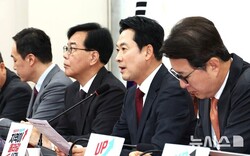
▲ 박구연 국무조정실 국무1차장이 4일 오전 서울 종로구 정부서울청사에서 후쿠시마 오염수 방류 관련 언론브리핑을 하고 있다. 2023.09.04. © 뉴시스 |
브레이크뉴스 정명훈 기자= 해양수산부는 4일 우리 해역에 대한 방사능 수치를 조사한 결과, 모두 안전한 수준이라고 밝혔다.
박성훈 해수부 차관은 이날 오전 정부서울청사에서 열린 '후쿠시마 원전 오염수 방류 관련 일일 브리핑'에서 "서남해역 3개 지점, 남중해역 5개 지점, 원근해 4개 지점의 시료분석 결과, 세슘과 삼중수소 모두 WHO 먹는 물 기준 대비 훨씬 낮은 수준으로 확인됐다"고 밝혔다.
이날 발표에 따르면 세슘134는 리터당 0.067베크렐(Bq/L) 미만~0.082Bq/L 미만, 세슘137은 0.064Bq/L 미만~0.088Bq/L 미만, 삼중수소는 6.4Bq/L 미만~6.7Bq/L 미만의 범위로 나타났다.
WHO의 먹는 물 기준치는 세슘134 10Bq/L, 세슘137 10Bq/L, 삼중수소 1만Bq/L이다.
한편 일본 도쿄전력이 1일 발표한 희석 오염수를 흘려보내는 해수배관에서 채취한 시료에서도 방사능 수치는 기준치 이하였다.
오염수 방출구 부근에서 약 200m 떨어진 곳에서 채취한 바닷물을 검사한 결과, 삼중수소는 10Bq/L이 검출됐다고 발표했다. 방류 전 시료분석에서는 1Bq/L 이하였다.
다만 도쿄전력은 일본 정부가 정한 안전기준인 6만Bq/L이나 도쿄전력이 정한 중단 기준인 700Bq/L 비해 크게 낮은 수치라며 전혀 문제가 없다는 입장이다.
*아래는 위 기사를 '구글 번역'으로 번역한 영문 기사의 [전문]입니다. '구글번역'은 이해도 높이기를 위해 노력하고 있습니다. 영문 번역에 오류가 있을 수 있음을 전제로 합니다.<*The following is [the full text] of the English article translated by 'Google Translate'. 'Google Translate' is working hard to improve understanding. It is assumed that there may be errors in the English translation.>
The Ministry of Oceans and Fisheries announced the results of sample analysis at 12 locations in our waters..radioactive safety
The Ministry of Oceans and Fisheries said on the 4th that all of them are safe after surveying radioactive levels in our waters.
Vice Minister of Oceans and Fisheries Park Sung-hoon said in a daily briefing on the discharge of contaminated water from the Fukushima nuclear power plant held at the Seoul Government Complex in the morning that day, "As a result of sample analysis at three locations in the southwest, five in the south-central, and four in the far sea, both cesium and tritium were found to be much lower than WHO drinking water standards."
According to the announcement, cesium 134 ranged from less than 0.067 becquerels (Bq/L) to less than 0.082Bq/L per liter, cesium 137 from less than 0.064Bq/L to less than 0.088Bq/L, and tritium from less than 6.4Bq/L to less than 6.7Bq/L.
The WHO's drinking water standard is Cesium134 10Bq/L, Cesium137 10Bq/L, and tritium 10,000Bq/L.
Meanwhile, the radioactivity level was also below the standard level in samples taken from seawater pipes that flow diluted contaminated water announced by Japan's Tokyo Electric Power Corporation on the 1st.
It was announced that 10 Bq/L of tritium was detected as a result of inspecting seawater collected about 200 meters away from the contaminated water outlet. In the sample analysis before discharge, it was less than 1Bq/L.
However, TEPCO says there is no problem at all, saying that the figure is significantly lower than 60,000 Bq/L, the safety standard set by the Japanese government, or 700 Bq/L, the suspension standard set by TEPCO.