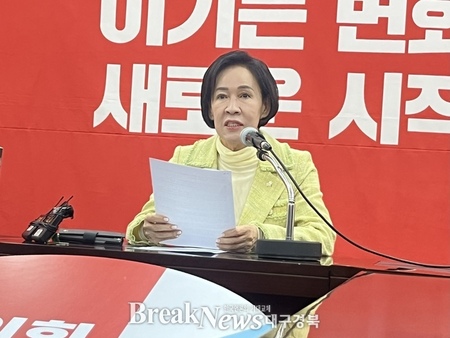
▲ 21일 오전 서울 여의도 국회에서 열린 국회 2030 부산세계박람회 유치지원 특별위원회 전체회의에서 박재호 위원장이 발언을 하고 있다. 2023.09.21. © 뉴시스 |
브레이크뉴스 정명훈 기자= 정부가 폐로를 준비 중인 고리 1호기 원자력발전소에서 나오는 냉각수를 해양에 희석 방류하겠다는 입장을 밝혔다.
지난 10일 국회 정무위의 국무조정실 국정감사에서 박재호 더불어민주당 의원이 방기선 국무조정실장에게 고리 원전 1호기의 ‘사용후핵연료 냉각수’와 ‘원자로 내부의 1차 냉각수’ 처리 방안에 대한 질의하자 박 실장은 "희석해서 방류하겠다"고 답했다.
방 실장은 "고리1호기의 사용후핵연료 저장조에 들어있는 냉각수를 직접 해양 방류하는 것은 아니고, 관련 법령과 기준에 따라서 방사능 분석을 마친 뒤 배출 관리 기준에 적합하게 바닷물과 희석해서 배출된다"고 설명했다.
폐로 준비 중인 고리 1호기는 사용후핵연료 저장수조 내에 120만 리터의 냉각수가 들어가 있다. 원자로 1차 냉각수 양은 밝혀진 바는 없다.
한수원이 제출한 사용후핵연료 저장 수조의 방사능 농도는 최고 0.29 Bq/g으로 후쿠시마 오염수 보다 훨씬 낮은 수치다.
다만 지난 2021년 월성원전 연료봉 냉각수 토양 유출 사건 당시 민간 조사단과 한수원이 공식발표한 삼중수소 농도가 최대 75만6000㏃/L, 세슘-137은 최대 0.14㏃/g이 검출된 바 있어 추가 조사는 필요할 것으로 보인다.
이에 박재호 의원은 ‘민관합동 조사’를 제안했다.
박재호 의원은 “후쿠시마 오염수 해양 투기로 국민적 걱정이 크다”며, “한국수력원자력이 이런 국민적 걱정이 큰 시기에 핵연료 냉각수를 해양으로 방출해서는 안되며, 국민적 합의를 통해 처리계획이 마련돼야 한다”고 강조했다.
한편 우리나라 최초 원전인 고리 1호기는 대한민국 최초의 상업용 원자로로, 1971년 착공해 1978년 4월부터 상업운전을 시작했다. 고리 1호기는 대한민국이 세계 21번째 원전보유국으로 이름을 알리는 계기가 된 원전이었으며 2017년 6월 영구 정지된 뒤 폐로를 기다리고 있는 상태다.
특히 사용후핵연료 반출이 폐로의 첫 단계이기 때문에 냉각수 처리 문제는 우리의 당면한 과제이기도 하다.
다만 한수원은 고리1호기 해체계획서에서 해체를 위해선 총 11년이 걸린다고 밝히면서 후쿠시마 사고처럼 핵연료를 직접 스쳐 지나간 물을 방류하는 것과는 전혀 다른 개념이라고 강조했다.
이와 관련 한수원은 사용후핵연료 저장시설의 냉각수 전체가 아닌 일부를 방류하는 것이며 그 외에는 고리 1호기 해체 과정에서 배관 등에 남아 있는 물을 빼내는 것이라고 해명했다.
한수원 관계자는 "아직 정확히 결정된 것은 없다"고 전제하면서 "고리 2호기 수명 연장으로 냉각수가 더 필요하게 된 만큼 전체 냉각수 중 고리 2호기에 일부를 보낸 뒤 남은 물만 방출할 것"이라고 전했다.
그러면서 고리 1호기 배관 등에 남은 냉각수 등을 모두 정화시설을 거쳐 기준치 이하임을 확인하고, 바닷물에 희석해 방류하기 때문에 안전에 전혀 문제가 없을 것이라고 덧붙였다.
*아래는 위 기사를 '구글 번역'으로 번역한 영문 기사의 [전문]입니다. '구글번역'은 이해도 높이기를 위해 노력하고 있습니다. 영문 번역에 오류가 있을 수 있음을 전제로 합니다.<*The following is [the full text] of the English article translated by 'Google Translate'. 'Google Translate' is working hard to improve understanding. It is assumed that there may be errors in the English translation.>
At a time of growing concern over marine dumping of Fukushima contaminated water, the government announced its position to discharge cooling water from the Gori No. 1 nuclear power plant, which is preparing for decommissioning.
When Park Jae-ho, a member of the Democratic Party of Korea, asked Bang Ki-sun, the head of the Office for Government Policy Coordination, about how to deal with the "spent nuclear fuel cooling water" and "primary cooling water inside the reactor" of the Gori nuclear power plant, Park replied, "I will dilute and release it."
Director Bang explained, "The cooling water contained in the spent nuclear fuel storage tank of Gori Unit 1 is not directly discharged to the ocean, but is diluted with seawater in accordance with relevant laws and standards."
Gori Unit 1, which is preparing for decommissioning, contains 1.2 million liters of cooling water in the spent nuclear fuel storage tank. The amount of primary coolant in the reactor has not been determined.
The radioactive concentration of the spent nuclear fuel storage tank submitted by KHNP is up to 0.29 Bq/g, which is much lower than Fukushima contaminated water.
However, further investigation is needed as the concentration of tritium officially announced by the private investigation team and KHNP during the Wolseong Nuclear Power Plant's fuel rod cooling water soil spill in 2021 was detected up to 756,000 ㏃/L and cesium-137 up to 0.14 ㏃/g.
In response, Rep. Park Jae-ho proposed a "public-private joint investigation."
Representative Park Jae-ho said, "There is a lot of public concern due to the marine dumping of Fukushima contaminated water," and emphasized, "Korea Hydro & Nuclear Power should not release nuclear fuel cooling water into the ocean at a time of such public concern, and a treatment plan should be prepared through national consensus."
Meanwhile, Korea's first nuclear power plant, Gori No. 1, is Korea's first commercial nuclear reactor, which began construction in 1971 and began commercial operation in April 1978. Gori No. 1 was a nuclear power plant that served as the 21st nuclear power plant owner in the world and is waiting to be decommissioned after being permanently suspended in June 2017.
In particular, since the export of spent nuclear fuel is the first step to the decommissioning, the issue of cooling water treatment is also a challenge for us.
However, KHNP said in its dismantling plan for Gori Unit 1 that it takes a total of 11 years to dismantle, stressing that it is a completely different concept from discharging water that has passed directly past nuclear fuel like the Fukushima accident.
The KHNP explained that it discharges some of the cooling water from the spent nuclear fuel storage facility, not all of it, and that it also takes out the remaining water from pipes during the dismantling of Gori No. 1.
An official from KHNP said, "Nothing has been decided yet," adding, "As more cooling water is needed due to the extended life of Gori No. 2, we will send some of the total cooling water to Gori No. 2 and release only the remaining water."
He added that there will be no safety problems at all because all the remaining cooling water in the pipes of Gori No. 1 is below the standard level through the purification facility, and it is diluted and discharged in seawater.