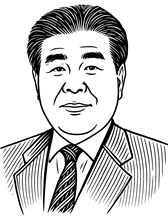
▲ 정길선, 러시아 과학아카데미 유라시아 고고인류학연구소 연구교수. ©브레이크뉴스 |
1945년 일본이 패망하자 라오스는 급격히 혼란해졌다. 라오스의 독립파는 라오이싸라(Lao Issara)라는 공산정당을 만들어 라오스 임시정부를 수립하게 된다. 라오이싸라(Lao Issara)는 베트남 공산정권인 베트남 민주공화국과 긴밀하게 유대관계를 맺었다. 프랑스와 라오스 독립파의 전쟁은 갈수록 심해졌고 결국 1949년 7월 19일 프랑스는 라오스를 독립시켰지만 국방과 외교, 재정에 대한 권리를 프랑스가 여전히 가졌다는 것에서 결국 형식적인 독립에 불과했다.
하지만 친 프랑스 파로 대표된 우익과 좌익 사상을 가진 공산 조직과의 대립이 시작되었다. 우익의 지도자는 라오스 왕국의 총리가 된 수바나 푸마(Souvanna Phouma, 1901~1984)였고 좌익의 지도자는 쑤파누봉(Souphanouvong, 1909~1995)이었다. 쑤파누봉은 루앙 프라방(Luang Prabang) 왕국의 마지막 국왕이었던 분콩(Bounkhong) 왕자의 세 아들 중 하나였고 왕가의 여인으로부터 태어난 이복형제들과 달리 평민과의 사이에서 태어난 사생아였지만 엄연히 그는 왕자였다. 그렇기 때문에 그의 이름 앞에 Prince가 붙는 이유이기도 하다.
쑤파누봉은 프랑스와 베트남에서 교육받았으며, 호치민과 자주 만나 교류하여 인도차이나 공산주의 운동에 참가하여 “붉은 왕친”이라는 별명을 얻게 된다. 1950년 쑤파누봉을 중심으로 라오스의 공산세력이 단합하여 파테트라오가 탄생했다. 쑤파누봉과 파테트라오는 프랑스를 상대로 게릴라전을 벌였으며 1953년 10월 22일, 프랑스-라오스 조약에 의해 프랑스로부터 완전한 독립을 달성하게 된다. 그리고 독립 이후 내전이 발생했는데 이것이 라오스 내전으로 불려지는 전쟁이다. 라오스 내전은 파테트라오와 라오스 정부군 간에 일어난 전쟁으로 베트남 전쟁과 마찬가지로 좌우 이데올로기의 대립이 극렬한 시대적 배경이 존재했다. 이는 라오스 왕국 정부의 파테트라오에 대한 탄압이 원인이 되었다. 파테트라오는 1950년 8월에 결성된 단체로, “조국 라오스”라는 뜻을 가진 공산집단이었다. 파테트라오의 지도자인 쑤파누봉은 라오스 공산 임시 정부를 만들어 스스로 총리를 자임했다.
내전이 발생하자 라오스 북동부를 파테트라오가 장악하면서 왕실과 우파 민족주의자, 좌파 민족주의자 간의 전투가 크게 벌어진다. 쑤파누봉은 유엔과 미국의 평화 협상을 받아들이는 듯했지만 1973년 민족 정치 자문 위원회(NPCC)를 구성하기에 이른다. 1975년 남베트남이 북베트남군에게 항복하자 미국의 지원을 받고 있던 라오스 국왕이 퇴위하고 수바나 푸마 총리도 사임하여 라오스는 사실상 공산주의 국가가 되었다. 1975년 12월 1일 긴급하게 소집 된 인민대표 민족회의는 라오스 왕국을 폐지하고 라오스 인민 민주 공화국 건국을 선포했으며 쑤파누봉이 초대 주석으로 취임하면서 30년 내전의 마침표를 찍음과 동시에 라오 인민 민주주의 공화국의 통치가 시작했다. 이웃 국가인 베트남에서도 베트남 전쟁이 발생해 라오스도 전쟁의 영향을 받았다. 북베트남군은 전쟁 물자를 라오스를 통과하는 이른바 “호치민 루트”를 통해 전선에 수송하였다. 미군은 라오스의 일부 소수민족을 용병으로 고용하여 호치민 루트를 차단하기 위해 비밀리에 라오스 전 국토를 폭격하게 된다.
이에 1964년부터 1973년까지 58만 회의 폭격이 이뤄졌고, 200만t 이상의 폭탄이 투하되어 전 국토가 황폐해졌다. 미국은 베트남 전쟁의 종전 때까지 폭격과 라오스 내전에 개입했던 사실 등을 부인해서 이 전쟁은 “비밀전쟁”이라는 이름이 붙어졌다. 현재까지도 폭격으로 인한 불발탄에 끊임없이 민간인 피해가 발생하고 있다. 1986년 이후에는 푸미 봉비치트(Phoumi Vongvichit)가 국가주석 대리가 되면서 쑤파누봉은 권력의 지위에서 물러났다. 1991년 이후에는 봉비치트의 주석 대리인 카이손 폼비한(Kaysone Phomvihane)이 국가 주석이 되며 쑤파누봉은 형식적인 국가 주석의 지위에서도 물러나게 되면서 라오스의 국부(國父)로 남게 되었다. lukybaby7@gmail.com
*필자/ 정길선.
노바토포스 회원, 역사학자, 고고인류학자, 칼럼니스트, 러시아 과학아카데미 유라시아 고고인류학연구소 연구교수.
*아래는 위 기사를 '구글 번역'으로 번역한 영문 기사의 [전문]입니다. '구글번역'은 이해도 높이기를 위해 노력하고 있습니다. 영문 번역에 오류가 있을 수 있음을 전제로 합니다.<*The following is [the full text] of the English article translated by 'Google Translate'. 'Google Translate' is working hard to improve understanding. It is assumed that there may be errors in the English translation.>
Fathers of Laos, Souphanubong and Pathetrao
-Jeong Gil-seon, columnist
When Japan was defeated in 1945, Laos fell into rapid chaos. Laos' independence faction created a communist party called Lao Issara and established a provisional government for Laos. Lao Issara had close ties with the Democratic Republic of Vietnam, the communist regime in Vietnam. The war between France and the Laos independence faction became more and more severe, and eventually France made Laos independent on July 19, 1949, but it was only formal independence because France still had the rights to national defense, diplomacy, and finances.
However, a conflict began between the right wing, represented by the pro-French faction, and communist organizations with left wing ideology. The leader of the right was Souvanna Phouma (1901-1984), who became the Prime Minister of the Kingdom of Laos, and the leader of the left was Souphanouvong (1909-1995). Supanubong was one of the three sons of Prince Bounkhong, the last king of the Luang Prabang Kingdom. Unlike his half-brothers born from royal women, he was an illegitimate son born to a commoner, but he was definitely a prince. That is also why Prince is added in front of his name.
Supanouvong was educated in France and Vietnam, and frequently met and interacted with Ho Chi Minh, participating in the Indochinese communist movement and earning the nickname “Red King Chin.” In 1950, the communist forces in Laos united around Souphanubong, and Pathe Trao was born. Supanouvong and Pathetrao waged a guerrilla war against France, and on October 22, 1953, they achieved complete independence from France through the Franco-Laos Treaty. And after independence, a civil war broke out, which is called the Laos Civil War. The Laos Civil War was a war between the Pathet Trao and the Laos government forces, and like the Vietnam War, there was a time period where there was a fierce conflict between left and right ideologies. This was caused by the oppression of Pathetrao by the government of the Kingdom of Laos. Pathetrao was an organization formed in August 1950 and was a communist group with the meaning of “Fatherland Laos.” Souphanubong, the leader of Pathetrao, created a Laotian communist provisional government and appointed himself prime minister.
When a civil war broke out, Pathetrao took control of northeastern Laos, and a major battle broke out between the royal family, right-wing nationalists, and left-wing nationalists. Supanubong seemed to accept the UN and US peace negotiations, but in 1973 he formed the National Political Consultative Committee (NPCC). When South Vietnam surrendered to the North Vietnamese army in 1975, the King of Laos, who was supported by the United States, abdicated and Prime Minister Souvana Puma resigned, making Laos a de facto communist country. On December 1, 1975, the urgently convened National Assembly of People's Representatives abolished the Kingdom of Laos and declared the establishment of the Lao People's Democratic Republic. Suphanouvong was inaugurated as the first president, putting an end to the 30-year civil war and establishing the Lao People's Democratic Republic. The reign began. The Vietnam War broke out in Vietnam, a neighboring country, and Laos was also affected by the war. The North Vietnamese Army transported war materials to the front line through the so-called “Ho Chi Minh Route” through Laos. The U.S. military hired some ethnic minorities in Laos as mercenaries and secretly bombed the entire country of Laos to block the Ho Chi Minh route.
Accordingly, from 1964 to 1973, 580,000 bombings were carried out, and more than 2 million tons of bombs were dropped, devastating the entire country. The United States denied bombing and involvement in the Laotian civil war until the end of the Vietnam War, giving this war the name “Secret War.” To this day, civilian casualties continue to occur due to unexploded ordnance caused by bombings. After 1986, Phoumi Vongvichit became acting president and Suphanubong stepped down from his position of power. After 1991, Phom Vichit's deputy, Kaysone Phomvihane, became the country's president, and Su Phanu Phong stepped down from the formal position of president, leaving him as the father of Laos. lukybaby7@gmail.com
*Writer/ Jeong Gil-seon.
Novatopos member, historian, archaeological anthropologist, columnist, research professor at the Institute of Eurasian Archeology and Anthropology of the Russian Academy of Sciences.