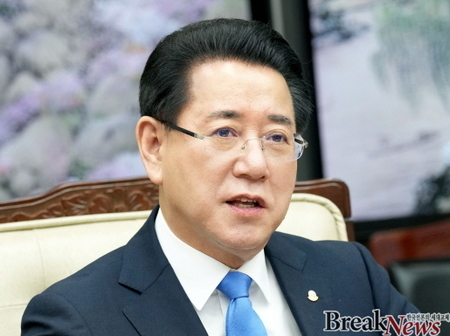
▲ 추경예산 편성을 설명하고 있는 최민호 세종시장 (C) 세종기자회 |
세종시가 일반회계 370억 원과 특별회계 185억 원 등 총 555억 원 규모의 제2회 추가경정예산안을 편성하고 지난 16일 시의회에 제출했다고 19일 밝혔다.
최민호 세종시장은 19일 오전 제2회 추경예산 편성 관련 기자간담회를 개최하고 “이번 추경안은 어려운 재정 여건 속에서도 대중교통 중심의 도시 기반을 마련하고, 청년 및 취약계층을 지원하며, 지역경제·문화 활성화에 필요한 사업들을 반영했다”고 설명했다.
세종시가 제출한 555억 원 규모의 추경예산안이 세종시의회에서 원안대로 통과되면 올해 총예산은 기정예산 2조 44억 원을 포함하여 총 2조 599억 원으로 증가하게 된다.
이는 전년도 최종예산인 2조 2,640억 원과 비교하면 9% (2,041억 원) 감소한 규모라는게 최 시장의 설명이다.
제2회 추경예산안의 주요 세입원은 지방소비세 납입관리자 이자수입 증액분 등 세외수입 158억 원, 지방교부세 64억 원, 국고보조금 49억 원, 통합재정안정화기금 예수금 20억 원 등 총 555억 원이다.
세종시가 편성한 추경예산안을 보면 대중교통 이용 활성화를 위해 월 정액권(이응패스) 사업에 14억 5천만 원, K패스 환급지원 사업에 5억 원을 반영하고, 전기저상버스 구매 28억 원, 버스 운행 손실에 대한 재정 보조 29억 원을 반영하여 교통인프라를 확대·지원하는 등 대중교통 관련 예산이 포함됐다.
세종시는 또 지역경제 활성화를 위해 지역화폐(여민전) 캐시백 지원에 11억 원, 민관협력 배달앱 홍보에 4천 4백만 원을 지원하고, 지역의 문화예술 콘텐츠를 활용한 지역경제 활성화 방안인 로컬콘텐츠타운 조성·운영에도 5억 원을 반영하는 등 지역경제 활성화를 위한 예산도 편성했다.
세종시는 이어 경제위기에 취약한 청년, 아동, 노인, 장애인 및 여성 등을 위한 필요 예산을 편성했다고 밝혔다.
세부적으로는 청년 고용 창출을 위해 지자체-대학 협력기반 지역혁신(RIS) 사업에 18억 원, 청년성장 프로젝트에 5억 원을 반영하고, 청년 주거를 강화 지원하기 위해 청년월세 한시 특별지원 사업에 5억 원을 편성했다.
아동 복지 증진을 위해 소아전문응급의료센터 지원 사업에 6억 원, 소아 야간·휴일 진료기관 지원에 2억 원, 어린이집 급식위생 관리 지원에 2억 원을 각각 반영하고, 노인 복지 증진을 위해 경로당 냉난방비 및 양곡비 지원 사업 1억 3천만 원을 편성하는 한편, 장애인 편의증진을 위해 장애인 활동지원에 8억 원, 발달재활서비스 사업에 4억 원을 각각 반영하고, 난임부부 시술비 지원사업에도 4억 원을 편성했다고 설명했다.
이 외에도 세종시는 2026 세종국제정원도시박람회 조직위원회 운영 등에 출연금 14억 5천만 원을 편성하고, 겨울철 비수기에 관광활성화 사업 추진을 위해 문화관광재단 출연금 6억 원을 계상했다고 설명했다.
그 외, 통·리장 수당 인상분(30만→40만)을 고려, 통·리장 활동보상금 7억 원을 추가하고, 의정활동비 1억 2천만원을 반영하였으며, 청사 공공요금 부족분 8억 원, 금남면 복합커뮤니티센터 건립에 10억 원도 이번 추경안에 담았다고 밝혔다.
한편 이번 추경예산안은 시의회 상임위별 예비심사와 예결특위, 본심사를 거쳐 9월 9일 본회의에서 최종 확정될 예정이다.
*아래는 위 기사를 '구글 번역'으로 번역한 영문 기사의 [전문]입니다. '구글번역'은 이해도를 높이기를 위해 노력하고 있습니다. 영문 번역에 오류가 있을 수 있음을 전제로 합니다.<*The following is [the full text] of the English article translated by 'Google Translate'. 'Google Translate' is working hard to improve understanding. It is assumed that there may be errors in the English translation.>
Sejong City, 55.5 billion won in 2nd supplementary budget submitted to city council
Sejong City announced on the 19th that it had prepared a 2nd supplementary budget of 55.5 billion won, including 37 billion won in general accounts and 18.5 billion won in special accounts, and submitted it to the city council on the 16th.
Sejong Mayor Choi Min-ho held a press conference on the 2nd supplementary budget on the morning of the 19th and explained, “This supplementary budget reflects projects necessary to establish a public transportation-centered urban infrastructure, support youth and vulnerable groups, and revitalize the local economy and culture even in difficult financial conditions.”
If the 55.5 billion won supplementary budget submitted by Sejong City is passed by the Sejong City Council as is, this year’s total budget will increase to 2.599 trillion won, including the original budget of 2.044 trillion won.
Mayor Choi explained that this is a 9% (204.1 billion won) decrease compared to the previous year's final budget of 2.264 trillion won.
The main sources of revenue in the second supplementary budget are 15.8 billion won in non-tax revenues such as increased interest income from local consumption tax payment managers, 6.4 billion won in local grants, 4.9 billion won in national subsidies, and 2 billion won in deposits from the Integrated Fiscal Stabilization Fund, for a total of 55.5 billion won.
Looking at the supplementary budget prepared by Sejong City, it includes a budget related to public transportation, such as 1.45 billion won for the monthly flat-rate pass (Eung Pass) project to promote public transportation use, 500 million won for the K-Pass refund support project, 2.8 billion won for the purchase of electric low-floor buses, and 2.9 billion won in financial support for bus operation losses, thereby expanding and supporting transportation infrastructure.
Sejong City also allocated 1.1 billion won to support local currency (Yeomminjeon) cashbacks, 44 million won to promote public-private partnership delivery apps, and 500 million won to create and operate a local content town, a plan to vitalize the local economy by utilizing local cultural and artistic content.
Sejong City also announced that it has allocated the necessary budget for youth, children, the elderly, the disabled, and women who are vulnerable to economic crises.
Specifically, 1.8 billion won was allocated to the local government-university cooperation-based regional innovation (RIS) project to create youth employment, 500 million won to the youth growth project, and 500 million won to the youth monthly rent special support project to strengthen youth housing.
In order to promote child welfare, 600 million won was allocated to support projects for pediatric emergency medical centers, 200 million won to support pediatric night/holiday clinics, and 200 million won to support hygiene management of daycare center meals. In order to promote welfare for the elderly, 130 million won was allocated to support heating and cooling costs and grain costs for senior centers. In order to promote convenience for the disabled, 800 million won was allocated to support activities for the disabled, 400 million won was allocated to developmental rehabilitation services, and 400 million won was allocated to support treatment costs for infertile couples.
In addition, Sejong City explained that it has allocated 1.45 billion won to the operation of the 2026 Sejong International Garden City Expo Organizing Committee, and 600 million won was allocated to the Culture and Tourism Foundation to promote tourism activation projects during the winter off-season.
In addition, considering the increase in the village head allowance (300,000 → 400,000), 700 million won was added to the village head activity compensation, 120 million won was reflected in the legislative activity expenses, 800 million won for the shortage of public utility charges for the office building, and 1 billion won for the construction of the Geumnam-myeon Complex Community Center were also included in this supplementary budget, he said.
Meanwhile, this supplementary budget plan is scheduled to be finalized at the plenary session on September 9 after preliminary review by the city council standing committee, the Budget and Accounts Special Committee, and the main review.
원본 기사 보기:브레이크뉴스대전충청