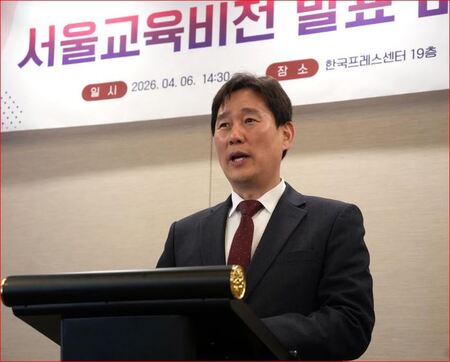
▲ 정길선 박사 ©브레이크뉴스 |
사료로 한계가 있고 구전(口傳)과 서술형태로 되어 있는 문학성 작품들인 <원조비사(元朝秘史)>, 몽골 라마불교에서 전래되어 내려오고 있는 보르지긴 관련 사료들도 모조리 파고 있다. 잘 없는 걸 하다보니 그 이전에부터 몽골이라 불렸는가의 여부에 대해서도 의문점이 상당히 많다. <구당서-동이, 북적전>의 실위(室韋)에 관한 기록도 몽골이 몽올실위(蒙兀室韋)에서부터 유래되었는지도 확실하지 않다. 이건 아직 실위를 내가 차후 연구로 넣었기 때문에 나중에 이야기하려고 한다.
칭기즈칸의 부족인 코리 족은 투르크계 위구르 제국의 해체 이후 바이칼 호수 방면에서 남하해 몽골 고원의 북동부에 분파하여 거주했다. 칭기즈칸의 생애를 서술한 몽골의 전설적인 역사서 <몽골비사>에 의하면, 그의 원조는 하늘의 명령을 받고, 바이칼 호수에 강림한 늑대 부르테 치노(Burte Chino)는 그의 아내가 될 흰 사슴인 코아이 마랄(Koai Maral)을 만나 혼인을 맺었다고 한다. 또한 부르테 치노의 11대 손인 “명궁”이라는 뜻을 가진 도분 메르겐(Dobun Mergen)은 “미인”이라는 뜻을 가진 알란 고아(Alan Goa)와의 사이에서 벨구누테이(Belgunutei)와 부구누테이(Bugunutei)를 낳았다고 전해진다. 벨구누테이는 벨구누드(Belgunud) 씨족의 조상이 되었고 부구누테이는 부구누드(Bugunud) 씨족의 조상이 되었다.
그러나 두 아들은 모두 일찍 사망했고, 남편인 도분 메르겐의 사후, 알란 고아는 하늘에서 내려온 텡그리의 빛을 받아 남편 없이 3명의 아들을 잉태했다. 이는 카타긴(Katagin) 씨족의 조상인 부쿠 카타기(Buku Katagi), 살지오드(Saljiod)씨족의 조상인 부카투 살지(Bukatu Salji), 보르지긴 씨족의 조상인 보돈차르 문카그(Bodonchar Munkhag)를 낳았다. 이들 자손 중, 보르지긴 씨의 선조가 되는 보돈차르 문카그는 칭기즈칸의 씨족으로 알란 고아가 낳은 아들들 중 막내였다. 보르지긴의 시조 보돈차르(Bodonchar)는 “사생아”라는 뜻의 “보돈치(Bodonchi)”에 지소접미사 “-아르(Ar)”가 결합된 것이고 “문카그(Munkhag)”는 “바보 멍청이”라는 뜻을 가지고 있다.
결국은 직역하면 “바보 멍청이 사생아 놈”이라는 뜻이 된다. 이는 보돈차르가 중세 몽골 부족들 사이에서 가지고 있던 역사적인 중요성과 대조되는 이름이라 할 수 있다. 보돈차르 이전부터 불렸던 보르지긴 가문은 몽골 제국의 원류이면서 칭기즈칸이 몽골을 통일하기 이전의 몽골 가문과 부족을 지칭하는 명칭이다. 보르지긴 족은 동호(東胡)의 갈래로 알려진 선비족 계통인 우문선비(宇文鮮卑)에서부터 시작되는 것으로 나타나며 거란과는 형제 부족으로 알려져 있다. 현재까지 중국학계에서는 보르지긴 족을 몽올실위(蒙兀室韋)로부터 유래되었다고 하였으나 한자로 된 음차로 알려진 상태에 불과해 이들이 보르지긴의 선조 부족인지에 대해서는 추가적인 고찰이 필요하다.
이 보르지긴이 5~7세기 사이에 요서와 요북에서의 분쟁으로 인해 흑룡강 및 바이칼 지역까지 밀려났고 이들은 퉁구스계 종족들을 규합하여 코리라는 이름으로 변경한 후, 10세기경부터 1206년 몽골 제국이 성립되기까지 케룰렌 강 유역을 중심으로까지 영역을 확장하여 부족 연합체로써 몽골 북쪽 지역에서 바이칼에 이르기까지 존속했다. 이후 보돈차르 문카그의 자손들은 더욱 번창하여 다양한 씨족을 형성했다. 보돈차르 문카그의 7대 손이자 카이두의 중손인 카불 칸(Kabul Khan, 재위 : 1120~1149) 이 처음으로 코리 족의 전체 지파를 통일하고, 카막 몽골을 건국한 이후, 대칸의 칭호를 획득했다. 카불 칸의 후계자는 그의 6촌인 암바가이 칸(Ambagai Khan, 재위 : 1149~1156)이 승계했다.
이후에 카불 칸의 후손들은 키야트(Qiyat) 가문, 암바가이 칸의 자손들은 타이치우드(Taichiud) 가문으로 분화되었다. 칭기즈칸의 아버지 예수게이는 카불 칸의 4남인 카막 몽골 울루스의 제3대 칸, 쿠툴라 칸(Kutula Khan, 재위 : 1156~1161)의 조카인 것으로 전해진다.
*필자/ 정길선.
노바토포스 회원, 역사학자, 고고인류학자, 칼럼니스트, 러시아 과학아카데미 유라시아 고고인류학연구소 연구교수.
*아래는 위 기사를 '구글 번역'으로 번역한 영문 기사의 [전문]입니다. '구글번역'은 이해도 높이기를 위해 노력하고 있습니다. 영문 번역에 오류가 있을 수 있음을 전제로 합니다.<*The following is [the full text] of the English article translated by 'Google Translate'. 'Google Translate' is working hard to improve understanding. It is assumed that there may be errors in the English translation.>
The story of the Borjigin family and the Kamak Mongol period
Columnist Jeong Gil-seon
I am digging up all the literary works that are limited in terms of historical materials and are in the form of oral tradition and narratives, such as <Secret History of the Yuan Dynasty>, and Borjigin-related historical materials that have been handed down in Mongolian Lama Buddhism. Since I am working on the little that I can find, there are many questions about whether Mongolia was called Mongolia before that time. It is also unclear whether the records of Shiwei (室韋) in <Old Book of Tang - Dongyi, Beiji Zhuan> indicate that Mongolia originated from Mongol Shiwei (蒙兀室韋). I will talk about this later because I have already included Shiwei in my future research.
The Kori tribe, Genghis Khan's tribe, moved south from Lake Baikal after the collapse of the Turkic Uyghur Empire and branched off to live in the northeastern part of the Mongolian Plateau. According to the legendary Mongolian historical book <Secret History of the Mongols> that describes the life of Genghis Khan, his ancestor was the wolf Burte Chino who descended to Lake Baikal under the command of heaven and met and married the white deer Koai Maral who would become his wife. It is also said that Burte Chino's 11th generation descendant, Dobun Mergen, meaning "great archer," gave birth to Belgunutei and Bugunutei with Alan Goa, meaning "beautiful woman." Belgunutei became the ancestor of the Belgunud clan, and Bugunutei became the ancestor of the Bugunud clan. However, both sons died early, and after the death of her husband Dobun Mergen, Alan Goa received the light of Tengri from heaven and conceived three sons without a husband. They gave birth to Buku Katagi, the ancestor of the Katagin clan, Bukatu Salji, the ancestor of the Saljiod clan, and Bodonchar Munkhag, the ancestor of the Borjigin clan. Among these descendants, Bodonchar Munkhag, who became the ancestor of the Borjigin clan, was the youngest of Alan Goa's sons in the clan of Genghis Khan. The founder of the Borjigins, Bodonchar, is a combination of “Bodonchi”, which means “illegitimate child”, and the diminutive suffix “-Ar”, and “Munkhag” means “foolish fool.”
In the end, a direct translation would mean “foolish foolish bastard.” This name contrasts with the historical significance Bodonchar had among the medieval Mongol tribes. The Borjigin clan, which was called before Bodonchar, is the name of the Mongol clan and tribe before Genghis Khan unified Mongolia, which was the origin of the Mongol Empire. The Borjigin clan is said to have originated from the Umun Xianbei (宇文鮮卑), a Xianbei tribe known as a branch of the Donghu (東胡), and is known as a brother tribe with the Khitans. Until now, Chinese academia has said that the Borjigin people originated from the Mongol Shiwei (蒙兀室韋), but since this is only known as a phonetic transcription in Chinese characters, further examination is needed to determine whether they are the ancestors of the Borjigin tribe.
These Borjigin people were pushed out to the Heilongjiang and Baikal regions due to conflicts in Liaoxi and Liaobei between the 5th and 7th centuries, and after they united with Tungusic tribes and changed their name to Kori, they expanded their territory to the Kerulen River basin from around the 10th century until the Mongol Empire was established in 1206, and as a tribal confederation, they existed from the northern part of Mongolia to Baikal. After this, the descendants of Bodonchar Munkhag prospered even more and formed various clans. Kabul Khan (reigned 1120–1149), the 7th generation descendant of Bodonchar Munkhag and the great-grandson of Kaidu, first united all the Kori tribes and established the Kamak Mongols, after which he acquired the title of Great Khan. Kabul Khan was succeeded by his 6th cousin, Ambagai Khan (reigned 1149–1156).
Afterwards, Kabul Khan's descendants became the Qiyat family, and Ambagai Khan's descendants became the Taichiud family. It is said that Genghis Khan's father Yesugei was the nephew of Kutula Khan (reigned 1156–1161), the 3rd Khan of the Kamak Mongol Ulus, the 4th son of Kabul Khan.