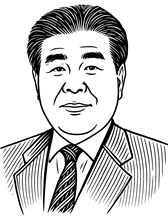
▲필자/ 정길선 박사 ©브레이크뉴스 |
스탈린은 낙후했던 러시아 제국 시대의 봉건 사회를 완전히 탈피하지 못했던 소련을 초강대국으로 만든 인물인 것은 부정할 수 없다. 원래부터 소련 공산주의의 기본 사상으로 알려진 마르크스주의는 과학을 표방했으며, 역사 발전의 원동력으로 집단 공동체가 하나가 되는 생산력을 가장 기본 지침으로 두었다. 스탈린은 생산력을 늘리는 것이 공산주의의 발전으로 가는 길이라 생각했고, 그와 같이 생각했기에 이러한 생산력 증가에 모든 것을 걸어야 했다. 특히 철강과 전기 생산은 스탈린의 체제에 절대로 빼놓을 수 없는 중점적인 사안으로 강조되었다. 그러한 결과로 인해 유럽의 후진국으로 몰락의 세월을 영위하던 소련은 1929년 뉴욕발 세계 대공황의 시기를 지나 서구 열강에 필적하는 막강한 공업국으로 성장하기에 이른다.
사실 우리가 오해하지 말아야 할 것은 전체적인 경제력면에서 여러모로 분석해 본다면 스탈린이 소련을 미국에 필적하는 경제대국으로 성장시켰다는 이야기는 명백히 과장된 것이라 볼 수 있다. 이는 막강한 공업국 = 경제대국으로 오인하여 생각할 수 있기 때문인에 이럴 때는 다양한 경제적인 지표를 함께 놓고 따져봐야 한다. 스탈린 시절의 소련은 공업강국이었을 때도 경제력이 미국의 1/4~1/3 수준에 불과했다. 그러한 이유로 인해 1944년 미국 달러화를 기축통화로 결정했던 브레튼 우즈(Bretton Woods) 회의 때 소련이 크게 반대하지 못했다. 다만 소련이 미국과 필적할 만한 초강대국으로 부각된 시점을 따져보면 보통 소련이 최초로 비대칭 전력을 보유하는데 성공한 시기인 1949년으로 보는 것이 합당하다. 당시는 RDS-1 실험이 성공하는 것을 시점으로 보는 것이 일반적으로 나타나는데 RDS-1 실험은 스탈린이 집권하고 있었던 1949년에 일어난 일이었기 때문이다.
이는 경제적인 관점이 아니라 다른 관점에서 본다면 스탈린이 소련을 미국에 필적하는 초강대국으로 성장시켰다는 것 자체가 틀린 말은 아니지만 적어도 경제대국으로 불릴 정도는 아니었다는 것을 말하는 바이다. 스탈린은 러시아 제국의 역사, 공산주의 유물론적인 사관을 정리하고 낙후한 체제를 개혁하기 위해 1928년부터 제1차 경제개발 5개년 계획을 수립했다. 그리고 소비에트 두마 최고회의에서 정부의 모든 행정력을 동원하여 산업화를 위해 모두가 집단 성장해야 한다고 역설했다. 특히 중화학 공업 분야 개혁을 강조했는데 이 소련의 중화학 공업화 주장은 사실 스탈린이 아니라 레프 트로츠키의 주장이기도 했지만 스탈린이 레프 트로츠키를 숙청한 뒤, 그의 주장 중 중공업화 주장을 절대적으로 옳다 생각하여 받아들인 것이었다. 이와 같이 스탈린이 직접 나서서 산업을 육성하는 것은 독일과 일본 그리고 장개석 치하의 중화민국, 아타튀르크 치하의 터키 공화국에서도 벌어진 일이었지만, 소련은 그에 대한 스케일이나 범위, 강도에서 독일과 일본, 중화민국, 터키를 훨씬 능가했다.
대부분의 개발 독재자들과 마찬가지로 스탈린도 기술력의 중요성을 이해하고 있었던데다 개인적으로 경제 개발에 큰 열의와 관심을 보였다. 물론 러시아 로마노프 제국 시절에도 공업화는 추진되었지만 귀족 지주들이 농노라는 인력과 토지를 독점했기 때문에 경제개발은 거의 이루어지지 않았고 결국 계속하여 낙후된 농업 국가로 남게 되었다. 그러나 스탈린은 자신의 절대 권력으로 귀족 지주들을 부르주아와 인민의 적으로 몰아 숙청하고 토지들을 몰수해 농업집산화를 이루어내면서 막대한 인력과 토지를 흡수했다. 이러한 기본 자산들을 통해 중공업 부문으로도 전환이 가능하게 되었다. 그리하여 1930년대 소련은 매년 10%가 넘는 경이적인 경제성장률을 기록하게 된다. 당시 세계대공황으로 전 세계의 경제성장률은 마이너스를 기록하고 있었기 때문에 소련의 10%가 넘는 경제성장률은 더욱 경이롭게 다가왔다.
그러한 결과로 인해 프랑스, 영국, 독일을 추월하더니만 1938년에는 세계 2위의 경제대국으로까지 성장하게 된다. 혁명과 내전으로 인해 국가 내부 자체가 파괴되어 당시 영국의 식민지인 인도 수준의 경제력을 가졌던 농업국가인 소련이 15년 만에 그동안 중공업으로 발전된 미국까지 마주할 수 있는 공업국가가 된 것이다. 제2차 세계대전이 일어나기 전에 이미 세계 2위의 경제대국이 되었기 때문에 소련은 전쟁에서도 승리할 수 있었다. 이와 같은 스탈린 주도의 경제개발은 단순한 총생산 증가에 그친 것이 아니라 소련 경제를 체질적으로 바꾸고 질적으로 성장했다는 것에 그 중요성에 있다. 더 나아가 스탈린 방식의 경제개발은 소련의 상하부 구조를 완전히 탈바꿈시켰다. 사실 러시아는 세계에서 국가 면적이 가장 큰 나라이기 때문에 18세기 이래 20세기 초반까지 영국, 프랑스, 독일, 미국과 더불어 세계 5대 강국에는 항상 들어가는 나라였다.
그럼에도 불구하고 러시아의 주된 산업은 농업이었으며, 공업의 비중은 매우 낮았고, 사회는 봉건 제도의 잔재가 강하게 남아 있는 후진 농업 사회였다. 그리하여 러시아 로마노프 제국은 20세기에 들어와서도 영토가 큰 국가와 국력에도 불구하고 초강대국으로 보기에는 많은 무리가 있었으며 내부 사정이 큰 문제로 자리잡고 있었기에 강대국으로써 외부에 보여지는 부분이 거품이라는 지적이 많았다. 그래서 러일전쟁과 제1차 세계대전 시기 러시아는 일선 병력 수십 만명에게 줄 소총과 탄약 조차 부족했으며 동서로 길게 늘려져 있는 광대한 영토로 인해 보급이 원활하지 못한 문제점을 드러내 일본에게 패배했고 우월한 공업 생산력을 지닌 독일 제국에게도 참패할 수 밖에 없었다. 그러나 스탈린은 사회주의 건설이라는 명분 하에 러시아의 모든 부분에서 질적인 변화를 가져오게 된다.
러시아 로마노프 제국 시절에 러시아의 과학기술은 유럽 본토에 비해서 2류로 간주되었고, 연구 기관이나 교육 기관 모두 형편 없었으나, 스탈린 시절 소련의 과학 기술은 마침내 뿌리를 내리고 급속도로 성장하여 20세기 중반에 미국과 맞먹을 정도로 발달하게 된다. 스탈린으로 인해 소련이 20세기 후반에 미국과 냉전시대의 한 축을 이루며 힘겨루기를 할 수 있었다고 봐도 과언이 아니다. 소련은 스탈린 이후 G2로 평가받았으며 스탈린 시절과 그 사후 40년 정도가 러시아가 세계사에서 보여준 최고의 전성기였다. 게다가 소련이 대조국 전쟁의 피해를 복구하는 도중 1950년대 스푸트니크와 보스토크로 우주시대를 열었으며 이는 스탈린 시절에 키워 놓은 중공업과 과학기술 덕택이었다. 스탈린이 전개한 공업화로 인해 1950년대 소련은 무상교육과 무상의료를 인민들에게 제공할 수 있었고, 사회의 많은 부분에서 복지정책이 실행되었다. 특히 실업률이 많이 낮아져 고용률 면에서도 확실한 성과를 거두게 된다.
히틀러의 침략으로 인해 발생한 대조국 전쟁으로 소련은 또 다시 황폐화 되었으나 종전 3년 만에 경제를 전쟁 전 수준으로 회복시키는 기적을 발휘한다. 스탈린이 죽은 1950년대에도 소련의 GNP 경제성장률은 평균 8%였고 소련의 국민 소득 대비 투자율은 28%로 아주 높은 수준에 이르고 있었다. 동북아시아의 일본이나 중국, 대만, 한국 등도 나중에 국가 주도로 경제를 발전시키는 것에는 소련과 동북아시아 국가들의 성장에 있어 비슷한 면이 많지만, 동북아시아 국가들은 미국이라는 거대한 시장을 잘 이용한 반면에 소련의 경우에는 거의 무에서 유를 창조해 낸 것이나 마찬가지라 이 시기에 소련의 경제성장은 더욱 경이롭게 보여졌다. 게다가 소련이 당시 자유주의 국가들과 해외시장에서 봉쇄된 것은 사실이었지만 많은 인구가 존재했고 세계 최대의 넓은 영토에서 막대한 지하자원들이 채굴되어 나왔다.
또한 소련은 혁명과 내전으로 황폐화 되기 이전의 러시아 로마노프 제국 시절에는 GDP로만 따지고 보면 프랑스보다도 더 높은 세계 5위에 랭크되어 있었다. 유럽에 비해 떨어진 것은 사실이나 세계적으로 강대국인 것은 부인할 수 없었고 전쟁으로 인해 전 국토가 황폐화 되었지만 원래 역사적으로 그와 같은 국토를 회복하는 과정에서 GDP 성장률은 높아지게 마련이다. 특히 제2차 세계대전 이후 50~60년대 전 세계가 GDP 성장률이 높았던 것은 각 국의 전후 수습의 영향 또한 크다 볼 수 있다. 1930년대 이오시프 스탈린의 진행한 소련의 공업화 정책은 또 다른 점에서 매우 성공적이었다고 할 수 있는데, 그것은 바로 1941년 히틀러가 소련을 침공했을 당시 하르코프와 같은 서부 지역에 위치한 소련의 주요 군수공장들을 스탈린이 모두 독일군의 공격에서 안전한 우랄 산맥으로 성공적으로 이전시켰고 그로 인해 우랄 열차공장과 마그니토고르스크(Магнитогорск) 제철소와 같이 우랄산맥 인근에 있는 공장들을 가동하여 독일군의 침략을 방어해내는데 필요한 탱크나 비행기 등을 대량 생산할 수 있었다.
물론 1941년 일본의 진주만 기습 공격 이후 랜드리스(Lend-Leas)라는 무기 대여법으로 인해 미국이 소련에게 상당한 물자를 제공한 것도 큰 영향이 있었지만, 소련 경제는 1942년 후반 6개월 동안 독일이 한 해를 통틀어 얻을 수 있었던 생산 수준에 도달했을 정도로 전쟁 수행에 있어 성공적으로 헌신했다. 그 수치는 주목할만 하는게 반년 동안 소련은 15,000대의 항공기와 13,000대의 탱크를 생산해냈다. 즉 탱크와 항공기 생산에서 엄청난 성과를 올려 독일군의 침략을 상대할 수 있었던 것이다. 대조국 전쟁 당시 소련의 대량의 군수물자 생산은 1930년대 공업화가 기반이 되었기에 가능했다. 스탈린의 소련은 총력전 체제를 실현시키며 그동안 마련한 막대한 군수 공업지대를 바탕으로 소련군의 전력을 일시에 회복시키고 성장시키면서 결국 스탈린그라드 전투와 바그라티온 작전에서 대승리의 기반을 마련할 수 있게 되었다. 소련은 스탈린이 이루어낸 신화적인 공업화를 바탕으로 대조국 전쟁에서 승리를 거둔 셈이다. lukybaby7@gmail.com
*필자/ 정길선.
노바토포스 회원, 역사학자, 고고인류학자, 칼럼니스트, 러시아 과학아카데미 유라시아 고고인류학연구소 연구교수.
*아래는 위 기사를 '구글 번역'으로 번역한 영문 기사의 [전문]입니다. '구글번역'은 이해도 높이기를 위해 노력하고 있습니다. 영문 번역에 오류가 있을 수 있음을 전제로 합니다.<*The following is [the full text] of the English article translated by 'Google Translate'. 'Google Translate' is working hard to improve understanding. It is assumed that there may be errors in the English translation.>
Stalin's Five-Year Economic Development Plan That Made the Soviet Union the World's G2
- Jeong Gil-seon Columnist
It cannot be denied that Stalin was the person who made the Soviet Union, which had not been able to completely escape the backward feudal society of the Russian Empire, a superpower. Marxism, originally known as the basic ideology of Soviet communism, advocated science and placed the productivity that unites the collective community as the driving force of historical development as the most basic guideline. Stalin believed that increasing productivity was the path to the development of communism, and because he thought so, he had to bet everything on this increase in productivity. In particular, steel and electricity production were emphasized as essential issues that could never be left out of Stalin's system. As a result, the Soviet Union, which had been suffering from the decline of a backward country in Europe, grew into a powerful industrial nation comparable to the Western powers after the Great Depression that began in New York in 1929.
In fact, what we should not misunderstand is that if we analyze the overall economic power in various ways, the story that Stalin made the Soviet Union grow into an economic power comparable to the United States is clearly an exaggeration. This is because it can be mistakenly thought of as a powerful industrial country = an economic power, and in such cases, various economic indicators should be considered together. Even when the Soviet Union during Stalin's time was an industrial power, its economic power was only 1/4 to 1/3 of that of the United States. For this reason, the Soviet Union did not strongly oppose the Bretton Woods conference in 1944, when the US dollar was decided to be the key currency. However, if we look at the time when the Soviet Union emerged as a superpower comparable to the United States, it is reasonable to see it as 1949, when the Soviet Union first succeeded in possessing asymmetric power. It is generally believed that the time was when the RDS-1 experiment was successful, because the RDS-1 experiment took place in 1949, when Stalin was in power. This is not an economic point of view, but from a different perspective, it is not wrong to say that Stalin developed the Soviet Union into a superpower comparable to the United States, but at least it was not enough to be called an economic power. Stalin established the First Five-Year Economic Development Plan in 1928 to organize the history of the Russian Empire, the communist materialist view of history, and to reform the backward system. And at the Supreme Council of the Soviet Duma, he mobilized all administrative power of the government and emphasized that everyone should grow together for industrialization. In particular, he emphasized reform in the heavy and chemical industry sector. In fact, this Soviet claim for heavy and chemical industrialization was not Stalin's but Leon Trotsky's claim, but after Stalin purged Leon Trotsky, he accepted his claim for heavy industrialization as absolutely correct. Stalin's direct promotion of industry also took place in Germany, Japan, the Republic of China under Chiang Kai-shek, and the Republic of Turkey under Ataturk, but the Soviet Union far surpassed Germany, Japan, the Republic of China, and Turkey in terms of scale, scope, and intensity.
Like most development dictators, Stalin understood the importance of technological prowess and personally showed great enthusiasm and interest in economic development. Of course, industrialization was promoted during the Romanov Empire in Russia, but economic development was hardly achieved because the aristocratic landowners monopolized the manpower and land in the form of serfs, and eventually the country continued to remain an underdeveloped agricultural country. However, Stalin used his absolute power to purge the aristocratic landowners by branding them enemies of the bourgeoisie and the people, and confiscated their lands to achieve agricultural collectivization, absorbing a huge amount of manpower and land. These basic assets also made it possible to transition to the heavy industry sector. As a result, the Soviet Union recorded an incredible economic growth rate of over 10% annually in the 1930s. At that time, the global economic growth rate was negative due to the Great Depression, so the Soviet Union's economic growth rate of over 10% was even more astonishing.
As a result, it surpassed France, Britain, and Germany, and by 1938, it had grown to become the world's second largest economy. The Soviet Union, which had been an agricultural country with an economic power similar to that of India, a British colony at the time, due to the internal destruction of the country itself due to revolution and civil war, became an industrial country that could compete with the United States, which had developed heavy industry, in just 15 years. Since it had already become the world's second largest economy before World War II broke out, the Soviet Union was able to win the war. The importance of this Stalin-led economic development was not limited to simply increasing total production, but also changing the Soviet economy in its constitution and qualitatively growing it. Furthermore, Stalin's economic development completely transformed the Soviet Union's upper and lower structures. In fact, Russia was the largest country in the world in terms of land area, so from the 18th century until the early 20th century, it was always included in the top five powers in the world along with Britain, France, Germany, and the United States.
Nevertheless, Russia's main industry was agriculture, the proportion of industry was very low, and society was a backward agricultural society with strong remnants of the feudal system. As a result, even in the 20th century, the Russian Romanov Empire, despite its large territory and national power, was difficult to view as a superpower, and because its internal affairs were major problems, many pointed out that its appearance as a great power was a bubble. As a result, during the Russo-Japanese War and World War I, Russia did not even have enough rifles and ammunition to supply hundreds of thousands of frontline troops, and because of its vast territory stretching from east to west, it had problems with smooth supply, and was defeated by Japan and was inevitably defeated by the German Empire, which had superior industrial production capabilities. However, Stalin brought about qualitative changes in all areas of Russia under the pretext of building socialism.
During the Romanov Empire, Russian science and technology were considered second-rate compared to those of mainland Europe, and both research institutes and educational institutions were poor, but during the Stalin era, Soviet science and technology finally took root and grew rapidly, reaching a level comparable to that of the United States in the mid-20th century. It is no exaggeration to say that thanks to Stalin, the Soviet Union was able to compete with the United States as one of the axes of the Cold War in the latter half of the 20th century. The Soviet Union was evaluated as G2 after Stalin, and the period of Stalin and the 40 years after his death were the greatest heyday that Russia had ever seen in world history. Furthermore, while the Soviet Union was recovering from the damage of the Great Patriotic War, it opened the space age with Sputnik and Vostok in the 1950s, and this was thanks to the heavy industry and science and technology that had been developed during the Stalin era. Due to the industrialization promoted by Stalin, the Soviet Union was able to provide free education and free medical care to its people in the 1950s, and welfare policies were implemented in many areas of society. In particular, the unemployment rate was greatly reduced, and there were clear results in terms of employment rate.
The Soviet Union was devastated again by the Great Patriotic War caused by Hitler's invasion, but it performed a miracle by restoring its economy to its pre-war level in just three years. Even in the 1950s when Stalin died, the Soviet Union's GNP economic growth rate was an average of 8%, and the investment rate compared to the national income of the Soviet Union was very high at 28%. Japan, China, Taiwan, and Korea in Northeast Asia also developed their economies later under state leadership, and there were many similarities between the growth of the Soviet Union and the Northeast Asian countries. However, while the Northeast Asian countries made good use of the huge market called the United States, the Soviet Union was practically creating something from nothing, so the economic growth of the Soviet Union during this period seemed even more amazing. Furthermore, although the Soviet Union was blocked from the liberal countries and overseas markets at the time, it had a large population and vast underground resources were mined from its largest territory in the world.
In addition, before the revolution and civil war devastated the Soviet Union, during the Russian Romanov Empire, it ranked 5th in the world in terms of GDP, higher than France. It is true that it fell behind Europe, but it was undeniable that it was a world power, and although the entire country was devastated by the war, historically, in the process of recovering such a country, the GDP growth rate tends to increase. In particular, the fact that the GDP growth rate was high worldwide in the 1950s and 1960s after World War II can be seen as a great influence of each country's post-war recovery. The Soviet Union's industrialization policy carried out by Joseph Stalin in the 1930s can be said to be very successful in another way. When Hitler invaded the Soviet Union in 1941, Stalin successfully relocated all of the Soviet Union's major military factories located in the western region, such as Kharkov, to the Ural Mountains, where they were safe from German attacks. As a result, factories near the Ural Mountains, such as the Ural Railway Factory and the Magnitogorsk Iron and Steel Works, were put into operation, enabling mass production of tanks and airplanes needed to defend against German invasion. Of course, the fact that the United States provided the Soviet Union with a significant amount of supplies through the Lend-Leas Act after the Japanese surprise attack on Pearl Harbor in 1941 had a big impact, but the Soviet economy was so successful in the war effort that it reached the level of production that Germany could achieve in a whole year in the last six months of 1942. The figures are noteworthy: in half a year, the Soviet Union produced 15,000 aircraft and 13,000 tanks. In other words, it achieved tremendous results in tank and aircraft production, enabling it to deal with the German invasion. The Soviet Union's massive production of military supplies during the Great Patriotic War was possible because it had been based on industrialization in the 1930s. Stalin's Soviet Union realized a total war system, and based on the enormous military industrial zone it had built, it was able to restore and grow the Soviet military's power at once, ultimately laying the foundation for the great victory in the Battle of Stalingrad and Operation Bagration. The Soviet Union won the Great Patriotic War based on the mythical industrialization that Stalin had achieved. lukybaby7@gmail.com
*Author/ Jeong Gil-seon.
Novatopos member, historian, paleoanthropologist, columnist, research professor at the Institute of Eurasian Paleoanthropology, Russian Academy of Sciences.