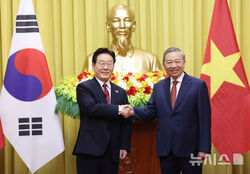
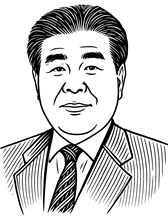
▲ 시진핑 중국 국가주석 ©브레이크뉴스 |
시진핑이 미국과 관세 전쟁에 나선 이후, 베트남을 필두로 동남아시아 3국 (베트남, 말레이시아, 캄보디아) 순방에 나섰다. 나는 이를 두 가지 측면에서 보고 있다.
1. 미국과 관세 전쟁에서 마음이 급한 시진핑
사상 유래없는 미국과 중국 간의 관세 전쟁이 개시됨에 따라 미국에 대항하기 위해, 가장 먼저 취할 부분은 자신들의 앞마당을 단속하는 일이다. 이는 미국도 마찬가지다. 중국의 앞 마당은 동남아시아이고, 미국의 앞마당은 중남미와 라틴아메리카다. 시진핑이 국경을 맞대고 있으면서도 가장 부담되는 동남아시아 국가는 베트남이다. 중국과 베트남은 서로 간의 민족 감정이 그다지 좋지 않지만 정치 외교적, 경제적으로 상호 교류를 꾸준히 지속해왔다. 중국이 동북아시아 문제에 온전히 집중하지 못하고 있는 이유 또한 베트남이 존재하고 있어서이다. 베트남은 중국과 멀리하지도, 가까이하지도 않으며 미국과 일본, 한국과도 교류를 강화하면서 중국을 견제했고 미국이 인도-태평양 일대에 영향을 끼치는 것을 경계해 중국과도 어느 정도 좋은 관계를 유지해왔다. 태국과 더불어 중립 외교, 흔히 대나무 외교라 말하는 균형 외교를 이끌어 왔는데 이러한 외교 방침이 베트남의 주권을 스스로 보호하고 서방과 중국, 모두의 기업들을 유치해 베트남의 급속한 경제 발전을 이끌어왔다.
한편 시진핑의 입장에서는 마음이 급하다. 베트남에 떨어진 46%의 관세율 때문에 미국과 협상하기 위해 협상진들이 미국에 급파되어 협상을 진행 중이다. 이러한 상황에서 베트남의 협상이 트럼프와 제대로 된 타결을 하게 된다면 중국 입장에서는 베트남이 중국의 배후에서 경제적인 부분으로 미국과 함께 중국을 공격할 수 있는 창의 역할을 할지도 모른다. 현재 동남아시아 국가 중에 미국과 관세에서 빠른 타결을 볼 수 있는 나라는 베트남이 유력하다. 그런 측면에서 시진핑의 입장에서는 미국을 함께 견제할 수 있는 우군이 절대적으로 필요하다. 보통 이런 정도면 왕이 외교 부장급 인사를 보내는 것이 중국의 관례였는데 시진핑이 직접 등판하여 나섰다는 것은 사안이 몹시 중대하고 마음이 급하기 때문이 아닌가 싶다. 즉, 미국의 대중국 관세율 인상을 아무것도 아니라 생각한게 아닌 진심 위협으로 생각했을 가능성이 높다. 이어 베트남의 서열 1~4위를 차례로 만났다는 것이 이를 반증한다. 사실 시진핑은 서열 1위인 또 람 총서기를 만나는 것에 그쳤다면 그저 그런 상황이 될 수 있었던 부분인데 2~4위 서열의 지도부까지 만났다는 것은 예사일이 아니다.
2. 전례없는 국빈방문, 베트남에 공들이는 시진핑
시진핑은 이번에 베트남을 방문하면서 "베트남은 오랜 동지와 같은 형제같은 나라(Việt Nam là đất nước như một người đồng chí, người anh em lâu năm)"라고 했다. 놀라운 일이다. 시진핑은 작년에도 또 람 서기장을 베이징에서 만났어도 이런 얘기를 한적이 없다. 그리고 시진핑은 또 람이 집권하기 전인 6년 전에 하노이를 방문하여 당시 총서기장인 응우옌 푸쫑과 회담을 한 바 있다. 이 때도 시진핑은 위의 상술한 내용을 언급한 적 없다. 더불어 올해는 베트남과 중국이 수교를 맺은 75주년을 맞이하고 있다만 시진핑이 방문해서 축하할 일은 아니다. 그런데 이번에 방베 하고서는 뜬금없이 "포괄적 전략 협력 동반자 관계(Comprehensive Strategic Cooperation Partnership)"를 강화하자고 했다. 현재 남중국해에서 파라셀 군도를 두고 중국과 영유권 싸움을 벌이고 있는 베트남 입장에서 "포괄적 전략 협력 동반자 관계"라는 것은 명목상에 불과하다. 그리고 "전략적 수준의 베-중 운명공동체 가속 구축에 관한 공동성명(Tuyên bố chung về việc đẩy nhanh việc thành lập cộng đồng chung vận mệnh Việt Nam - Trung Quốc cấp chiến lược)"을 발표했다 한다.
베트남과 중국은 역사적으로 서로 반드시 선결해야 할 문제가 남아있다. 특히 중국의 대베트남에 대한 역사공정, 그리고 남중국해 파라셀 군도에 대한 영유권 문제, 중국어선의 베트남 영해에서 불법 조업 등이다. 여기에서 중국과 운명공동체라는 부분은 베트남 일반 국민들의 입장에서는 받아들이기 힘든 이야기다. 역사적으로 해결해야 하는 문제를 묻어두고 미국과 맞설 운명공동체로써 함께 가야 할 정도로 가치가 있는 것인지, 중국을 항상 경계하고 이들의 진입을 그다지 달가워하지 않았던 호치민의 뜻과 이는 상충되는 부분인데 이를 무시하는 것인지, 등은 알 수 없는 부분이다. 그리고 뜬금없이 경제 협력 확대에 대해 의논했다. 더불어 양국 정부의 숙원 사업인 중국-베트남 고속 철도 사업 중 라오까이-하노이-하이퐁을 연결하는 철도 프로젝트의 협력을 비롯한 각종 인프라 및 과학기술 연구에 대한 협력을 논의했다 한다. 그런데 이 정도는 왕이 외교부장이 베트남을 방문하여 논의할 수 있는 부분이다. 굳이 시진핑이 오지 않고 해결할 수 있는 부분인 것이다. 이는 아닌 척 해도 미국의 관세 인상에 대한 불편한 심기와 더불어 이를 매우 중대한 사안으로 보고 있다는 확실한 증거다.
그리고 시진핑은 남중국해 지역의 공동 개발을 조속히 시작하며, 남중국해 행동준칙(COC) 체결을 앞당겨야 한다고 했다. 남중국해 영유권 싸움의 정점인 중국, 시진핑이 이런 말을 한다는 것은 매우 이례적이다. 남중국해 지역에 대해 중국 단독이 아닌 공동 개발을 하자는 것도 그 저의가 매우 의심스러운 부분이다. 또 람 총서기 중국과의 해상 분쟁을 적절히 처리하고 해상 안정을 유지하려는 의지가 있다며 다소 두루뭉술하게 얘기했다. 이는 남중국해 문제만큼은 중국을 믿지 않는다는 뜻을 우회적으로 밝힌 것이라 해석된다. 아직 또 람을 비롯한 베트남 정부는 시진핑이 내세운 전략적 결의의 강화와 더불어 열강의 일방적 괴롭힘에 공동으로 반대하자는 것에 확실한 답을 주지 않았다. 아마도 미국에 보낸 특사가 어떤 협상을 하고 돌아오느냐에 따라 시진핑의 제안을 다소 유보한 것으로 보여 진다. 트럼프와 46%의 관세율을 깎으며 어떤 협상을 할 수 있을지, 과연 시진핑의 제안을 받아들일 지는 두고 봐야 한다.
3. 시진핑의 또 다른 행선지의 목적은?
오늘 베트남을 떠난 시진핑은 술탄 이브라힘 국왕의 초청으로 12년 만에 말레이시아를 국빈 방문했다. 마침 말레이시아는 올해 아세안 회의 의장국이다. 회의 의장국은 발언들을 조정할 수 있는 막강한 권한을 갖고 있다. 게다가 다음 달 5월에 콸라룸푸르에서 아세안 정상회의가 열린다. 아마 동남아시아 각국에 부과된 관세 문제가 회의의 쟁점이 될 것이다. 시진핑은 의장국인 말레이시아를 방문해 아세안 국가들과의 공동 대응을 논의할 것으로 보인다. 게다가 말레이시아는 싱가포르, 인도네시아와 더불어 말라카 해협에 대한 권한을 갖고 있다. 인도-태평양-동, 남중국해의 물류 70% 이상을 담당하고 있는 말라카 해협은 중국의 입장에서 매우 중요한 곳이다.
말레이시아를 설득해 말라카 해협을 통과하는 미 상선들에 대한 관세율을 높게 책정할 것읗 제안할 가능성도 무시 못한다. 더불어 말라카는 각국의 영해들이 있는 해협으로 무해통항권이 허용되는 해협이 아니다. 말라카 해협의 중요성을 감지하고 있는 중국이기 때문에 동남아시아 지역의 해협들은 중국 입장에서는 매우 민감한 곳이다. 그리고 마지막으로 방문할 캄보디아의 경우, 인도차이나 지역 일대일로의 마지막 축을 이룰 국가다. 게다가 막대한 중국 자본을 쏟아 부으며 거의 중국의 경제력이 잠식하고 있는 곳이기도 하다. 동남아시아에서 일대일로의 끝 지역은 미얀마와 캄보디아, 두 곳인데 캄보디아의 경우 매우 중요한 곳이다. 혹시나 모를 베트남에 대한 지정학적 포위 및 고립을 완성시킬 수 있는 중요한 곳이기도 하고, 말라카와 타이만을 연결하여 중국의 내해로 만들 수 있는 중요한 항구가 캄보디아의 시아누크빌이다.
 ▲필자/ 정길선 박사 ©브레이크뉴스 |
그러한 여러 가지 요소에 미국으로 들어가는 중국 제품의 라벨갈이 역할을 오랫동안 하여 이번에 미국의 관세를 크게 얻어 맞았는데 미국과 협상할 수 있는 매개가 전무하다시피한 캄보디아의 입장에서는 중국에 더욱 밀착할 수밖에 없다. 결국 시진핑의 동남아시아 순방은 관세 전쟁에 앞서 앞마당 단속과 더불어, 미국에 대한 공동 대응을 모색해 보기 위해 직접 나선 것으로 해석된다. lukybaby7@gmail.com
*필자/ 정길선.
노바토포스 회원, 역사학자, 고고인류학자, 칼럼니스트, 러시아 과학아카데미 유라시아 고고인류학연구소 연구교수.
*아래는 위 기사를 '구글 번역'으로 번역한 영문 기사의 [전문]입니다. '구글번역'은 이해도 높이기를 위해 노력하고 있습니다. 영문 번역에 오류가 있을 수 있음을 전제로 합니다.<*The following is [the full text] of the English article translated by 'Google Translate'. 'Google Translate' is working hard to improve understanding. It is assumed that there may be errors in the English translation.>
How should we view Xi Jinping’s visit to Vietnam?
-Columnist Jeong Gil-seon
Since Xi Jinping entered into a tariff war with the United States, he has visited three Southeast Asian countries (Vietnam, Malaysia, and Cambodia) starting with Vietnam. I see this from two perspectives.
1. Xi Jinping is impatient in a tariff war with the United States
As an unprecedented tariff war between the United States and China has begun, the first thing they should do to counter the United States is to crack down on their own front yard. The United States is no different. China’s front yard is Southeast Asia, while the United States’ front yard is Central and South America and Latin America. The Southeast Asian country that Xi Jinping is most burdened by despite having a border with it is Vietnam. China and Vietnam do not have good national feelings toward each other, but they have continued to maintain political, diplomatic, and economic exchanges. The reason China cannot fully focus on Northeast Asian issues is also because of the existence of Vietnam. Vietnam neither stays far from nor close to China, but has strengthened exchanges with the United States, Japan, and South Korea to check China, and has maintained a somewhat good relationship with China, wary of the United States' influence in the Indo-Pacific region. Along with Thailand, it has pursued neutral diplomacy, commonly referred to as bamboo diplomacy, and balanced diplomacy. This diplomatic policy has protected Vietnam's sovereignty on its own and attracted companies from both the West and China, leading to Vietnam's rapid economic development.
Meanwhile, Xi Jinping is anxious. Negotiators have been dispatched to the United States to negotiate with the United States due to the 46% tariff rate that Vietnam has been hit with. In this situation, if Vietnam's negotiations with Trump are properly concluded, Vietnam may serve as a creative force to attack China economically together with the United States from behind China. Currently, among Southeast Asian countries, Vietnam is the most likely country to reach a quick settlement on tariffs with the United States. In that respect, Xi Jinping absolutely needs an ally who can check the United States together. Normally, it was China's custom for the king to send a foreign minister-level official, but the fact that Xi Jinping personally stepped forward seems to indicate that the matter was very serious and that he was in a hurry. In other words, it is highly likely that he did not think of the US tariff increase on China as nothing, but as a serious threat. The fact that he met with Vietnam's top 4 officials in turn proves this. In fact, if Xi Jinping had only met with General Secretary Lam, who was the top official, it could have been just that, but meeting with the leaders of the second to fourth ranks was no small matter. 2. Unprecedented State Visit, Xi Jinping Devoting Much to Vietnam
During his visit to Vietnam this time, Xi Jinping said, "Vietnam is a country like an old comrade and a brother (Việt Nam là đất nước như một người đồng chí, người anh em lâu năm)". This is surprising. Xi Jinping never said anything like this when he met General Secretary Lam in Beijing last year. And Xi Jinping also visited Hanoi six years ago, before Lam came to power, and met with then General Secretary Nguyen Phu Trong. At that time, Xi Jinping never mentioned the above-mentioned content. In addition, this year marks the 75th anniversary of the establishment of diplomatic relations between Vietnam and China, but this is not something Xi Jinping should visit and celebrate. But this time, out of the blue, Vietnam proposed to strengthen the "Comprehensive Strategic Cooperation Partnership." For Vietnam, which is currently engaged in a territorial dispute with China over the Paracel Islands in the South China Sea, the "Comprehensive Strategic Cooperation Partnership" is nothing more than a name. And it is said that they announced the "Joint Statement on Accelerating the Establishment of a Vietnam-China Community of Shared Future at the Strategic Level."
Vietnam and China still have historical issues that must be resolved first. In particular, China’s historical injustice toward Vietnam, the issue of sovereignty over the Paracel Islands in the South China Sea, and the illegal fishing by Chinese fishing boats in Vietnamese territorial waters. Here, the part about a community of shared destiny with China is a story that is difficult for ordinary Vietnamese people to accept. Whether it is worth going together as a community of shared destiny to confront the United States while burying historical issues that need to be resolved, or whether it is ignoring the part that conflicts with Ho Chi Minh’s will, who was always wary of China and did not particularly welcome its entry, is an unknown part. And out of the blue, they discussed expanding economic cooperation. In addition, they discussed cooperation on various infrastructure and scientific and technological research, including cooperation on the railway project connecting Lao Cai-Hanoi-Haiphong among the long-cherished projects of the two governments, the China-Vietnam high-speed railway project. However, this is something that Foreign Minister Wang Yi can discuss when he visits Vietnam. It is something that can be resolved without Xi Jinping coming. Even if they pretend not to know, this is clear evidence that they are viewing this as a very serious matter, along with their discomfort over the US tariff hike. And Xi Jinping said that joint development in the South China Sea region should begin as soon as possible and that the conclusion of the Code of Conduct in the South China Sea (COC) should be brought forward. It is very unusual for China, which is at the peak of the South China Sea territorial dispute, to make such a statement. The fact that China is suggesting joint development in the South China Sea region rather than just China’s own efforts is also very suspicious. In addition, General Secretary Lam spoke somewhat vaguely, saying that she has the will to properly handle maritime disputes with China and maintain maritime stability. This can be interpreted as an indirect expression of her intention not to trust China on the South China Sea issue. In addition, the Vietnamese government, including Lam, has not yet given a clear answer to Xi Jinping’s call for strengthening strategic resolve and jointly opposing unilateral bullying by major powers. It seems that Xi Jinping’s proposal has been somewhat reserved depending on what kind of negotiations the special envoy sent to the United States will return with. It remains to be seen whether they will accept Xi Jinping’s proposal or negotiate with Trump while cutting the 46% tariff rate. 3. What is the purpose of Xi Jinping's other destination?
Xi Jinping, who left Vietnam today, paid a state visit to Malaysia for the first time in 12 years at the invitation of Sultan Ibrahim. Malaysia happens to be the chair of the ASEAN meeting this year. The chair of the meeting has great power to adjust the speeches. In addition, the ASEAN summit will be held in Kuala Lumpur next May. The issue of tariffs imposed on Southeast Asian countries will likely be a point of contention at the meeting. Xi Jinping is expected to visit Malaysia, the chair, and discuss joint responses with ASEAN countries. In addition, Malaysia, along with Singapore and Indonesia, has authority over the Strait of Malacca. The Strait of Malacca, which handles more than 70% of the logistics of the Indo-Pacific-East and South China Seas, is very important to China.
It is also possible that Malaysia will be persuaded to set higher tariffs on US merchant ships passing through the Strait of Malacca. In addition, Malacca is a strait where each country has its own territorial waters, and it is not a strait where innocent passage is permitted. Since China is aware of the importance of the Malacca Strait, the straits in Southeast Asia are very sensitive to China. And the last country we will visit, Cambodia, is the last axis of the Belt and Road Initiative in the Indochina region. In addition, it is a place where China is pouring in a huge amount of Chinese capital and almost encroaching on China’s economic power. The two last areas of the Belt and Road Initiative in Southeast Asia are Myanmar and Cambodia, and Cambodia is a very important place. It is also an important place where it can complete the geopolitical encirclement and isolation of Vietnam, and Sihanoukville in Cambodia is an important port that can connect Malacca and the Gulf of Thailand to create an inland sea for China.
Due to these various factors, Cambodia has long played the role of relabeling Chinese products entering the United States, and this time, it has been hit hard by the US tariffs. With virtually no means of negotiating with the US, Cambodia has no choice but to become even closer to China. In the end, Xi Jinping's Southeast Asia tour is interpreted as a direct attempt to crack down on the front yard ahead of the tariff war and to seek a joint response to the United States. lukybaby7@gmail.com
*Author/ Jeong Gil-seon.
Novatopos member, historian, paleoanthropologist, columnist, research professor at the Institute of Eurasian Paleoanthropology, Russian Academy of Sciences.